Kirjojen hintavertailu. Mukana 12 363 183 kirjaa ja 12 kauppaa.

Kirjahaku

Etsi kirjoja tekijän nimen, kirjan nimen tai ISBN:n perusteella.

5 kirjaa tekijältä Michael J. Taylor

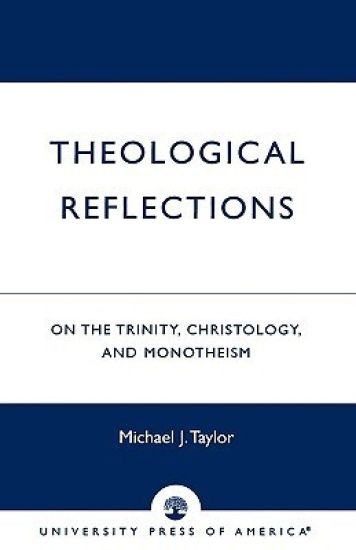
Theological Reflections

Theological Reflections

Michael J. Taylor

University Press of America
2001
nidottu
Few Christians can talk about the Trinity clearly or intelligently. When we ask theologians to speak of the doctrine in plain terms, they are not always helpful either. The early ecumenical councils (Nicea and Chalcedon particularly) attempted to define aspects of the mystery with precision, but their philosophical language made it difficult for average believers to understand their pronouncements. Because of the complexity of trinitarian terminology, Christianity over the years seemed to lose something of its monotheistic character. Taylor demonstrates with clarity the role of the human Jesus in the world's salvation. Theological Reflections should stimulate new and fresh thinking about the Trinity's meaning for Contemporary Christians.
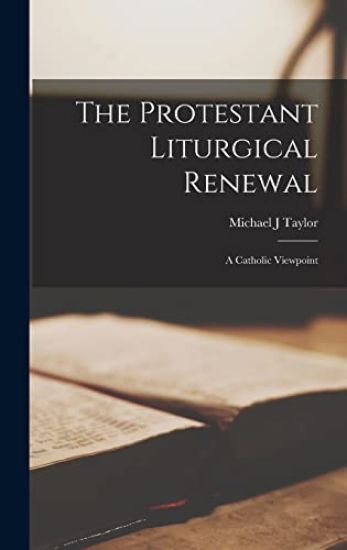
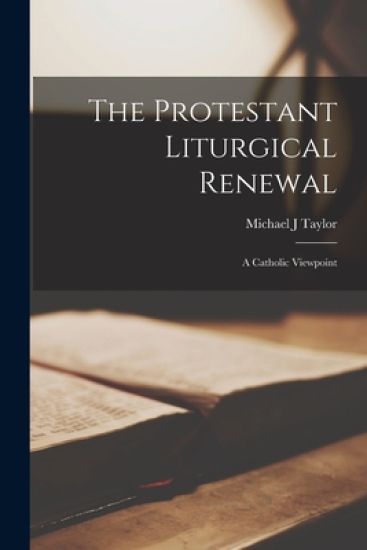
The Protestant Liturgical Renewal: a Catholic Viewpoint

The Protestant Liturgical Renewal: a Catholic Viewpoint

Michael J. Taylor

Hassell Street Press
2021
sidottu
This work has been selected by scholars as being culturally important and is part of the knowledge base of civilization as we know it.This work is in the public domain in the United States of America, and possibly other nations. Within the United States, you may freely copy and distribute this work, as no entity (individual or corporate) has a copyright on the body of the work.Scholars believe, and we concur, that this work is important enough to be preserved, reproduced, and made generally available to the public. To ensure a quality reading experience, this work has been proofread and republished using a format that seamlessly blends the original graphical elements with text in an easy-to-read typeface.We appreciate your support of the preservation process, and thank you for being an important part of keeping this knowledge alive and relevant.
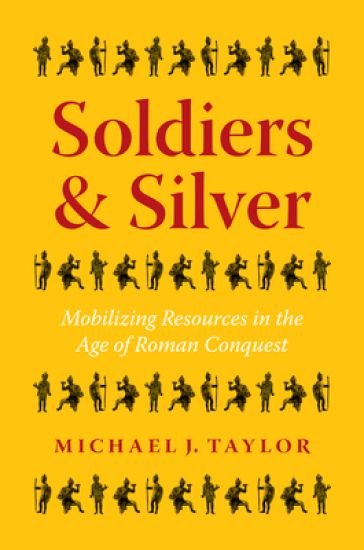
Soldiers and Silver

Soldiers and Silver

Michael J. Taylor

University of Texas Press
2020
sidottu
By the middle of the second century BCE, after nearly one hundred years of warfare, Rome had exerted its control over the entire Mediterranean world, forcing the other great powers of the region—Carthage, Macedonia, Egypt, and the Seleucid empire—to submit militarily and financially. But how, despite its relative poverty and its frequent numerical disadvantage in decisive battles, did Rome prevail? Michael J. Taylor explains this surprising outcome by examining the role that manpower and finances played, providing a comparative study that quantifies the military mobilizations and tax revenues for all five powers. Though Rome was the poorest state, it enjoyed the largest military mobilization, drawing from a pool of citizens, colonists, and allies, while its wealthiest adversaries failed to translate revenues into large or successful armies. Taylor concludes that state-level extraction strategies were decisive in the warfare of the period, as states with high conscription and low taxation raised larger, more successful armies than those that primarily sought to maximize taxation. Comprehensive and detailed, Soldiers and Silver offers a new and sophisticated perspective on the political dynamics and economies of these ancient Mediterranean empires.
Soldiers and Silver

Soldiers and Silver

Michael J. Taylor

UNIVERSITY OF TEXAS PRESS
2024
pokkari
By the middle of the second century BCE, after nearly one hundred years of warfare, Rome had exerted its control over the entire Mediterranean world, forcing the other great powers of the region—Carthage, Macedonia, Egypt, and the Seleucid empire—to submit militarily and financially. But how, despite its relative poverty and its frequent numerical disadvantage in decisive battles, did Rome prevail? Michael J. Taylor explains this surprising outcome by examining the role that manpower and finances played, providing a comparative study that quantifies the military mobilizations and tax revenues for all five powers. Though Rome was the poorest state, it enjoyed the largest military mobilization, drawing from a pool of citizens, colonists, and allies, while its wealthiest adversaries failed to translate revenues into large or successful armies. Taylor concludes that state-level extraction strategies were decisive in the warfare of the period, as states with high conscription and low taxation raised larger, more successful armies than those that primarily sought to maximize taxation. Comprehensive and detailed, Soldiers and Silver offers a new and sophisticated perspective on the political dynamics and economies of these ancient Mediterranean empires.