Kirjojen hintavertailu. Mukana 11 627 220 kirjaa ja 12 kauppaa.

Kirjahaku

Etsi kirjoja tekijän nimen, kirjan nimen tai ISBN:n perusteella.

9 kirjaa tekijältä Michael J. Thompson

Descent of the Dialectic

Descent of the Dialectic

Michael J. Thompson

TAYLOR FRANCIS LTD
2024
sidottu
This book reconstructs the concept and practice of dialectics as a means of grounding a critical theory of society. At the center of this project is the thesis of phronetic criticism or a form of reason that is able to synthesize human value with objective rationality.This book argues that defects in modern forms of social reason are the result of the powers of social structure and the norms and purposes they embody. Increasingly, modern societies are driven not by substantive values concerning human good but by the technical imperatives of economic management, leading to a cultural condition of nihilism that has eroded dialectical consciousness. The first half of the book demonstrates the various ways that social power erodes and undermines critical-rational forms of consciousness. The second part of the book constructs an alternative basis for critical reason by showing how it requires seeing human value as essentially ontological: that is, constituted by objective forms of sociality that either promote human freedom or pervert our capacities and drive toward pathological forms of life. The philosophical claim is that a critical theory of ethics must be rooted in these concrete forms of life and that this will serve as a critical vantage point for critical political judgment and transformational praxis.Descent of the Dialectic will be of interest to researchers working in philosophy, political theory, social theory, and critical theory.
Descent of the Dialectic

Descent of the Dialectic

Michael J. Thompson

TAYLOR FRANCIS LTD
2025
nidottu
This book reconstructs the concept and practice of dialectics as a means of grounding a critical theory of society. At the center of this project is the thesis of phronetic criticism or a form of reason that is able to synthesize human value with objective rationality. This book argues that defects in modern forms of social reason are the result of the powers of social structure and the norms and purposes they embody. Increasingly, modern societies are driven not by substantive values concerning human good but by the technical imperatives of economic management, leading to a cultural condition of nihilism that has eroded dialectical consciousness. The first half of the book demonstrates the various ways that social power erodes and undermines critical-rational forms of consciousness. The second part of the book constructs an alternative basis for critical reason by showing how it requires seeing human value as essentially ontological: that is, constituted by objective forms of sociality that either promote human freedom or pervert our capacities and drive toward pathological forms of life. The philosophical claim is that a critical theory of ethics must be rooted in these concrete forms of life and that this will serve as a critical vantage point for critical political judgment and transformational praxis. Descent of the Dialectic will be of interest to researchers working in philosophy, political theory, social theory, and critical theory.
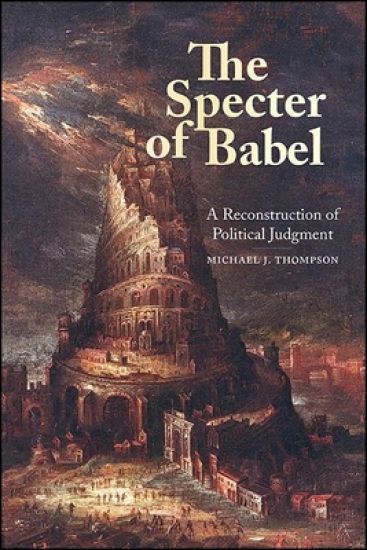
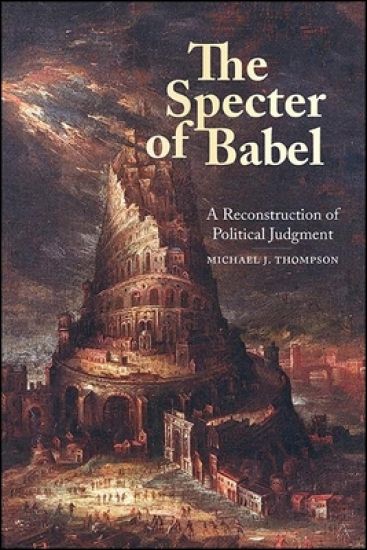
The Specter of Babel

The Specter of Babel

Michael J. Thompson

State University of New York Press
2020
sidottu
Presents a new way of thinking about fundamental political concepts such as freedom, justice, and the common good.In an age of rising groupthink, reactionary populism, social conformity, and democratic deficit, political judgment in modern society has reached a state of crisis. In The Specter of Babel, Michael J. Thompson offers a critical reconstruction of the concept of political judgment that can help resuscitate critical citizenship and democratic life. At the center of the book are two arguments. The first is that modern practical and political philosophy has made a postmetaphysical turn that is unable to guard against the effects of social power on consciousness and the deliberative powers of citizens. The second is that an alternative path toward a critical social ontology can provide a framework for a new theory of ethics and politics. This critical social ontology looks at human sociality not as mere intersubjectivity or communication, but rather as constituted by the shapes that our social-relational structures take as well as the kinds of purposes and ends toward which our social lives are organized. Only by calling these into question, Thompson boldly argues, can we once again attempt to revitalize social critique and democratic politics.
The Specter of Babel

The Specter of Babel

Michael J. Thompson

State University of New York Press
2021
pokkari
Presents a new way of thinking about fundamental political concepts such as freedom, justice, and the common good.In an age of rising groupthink, reactionary populism, social conformity, and democratic deficit, political judgment in modern society has reached a state of crisis. In The Specter of Babel, Michael J. Thompson offers a critical reconstruction of the concept of political judgment that can help resuscitate critical citizenship and democratic life. At the center of the book are two arguments. The first is that modern practical and political philosophy has made a postmetaphysical turn that is unable to guard against the effects of social power on consciousness and the deliberative powers of citizens. The second is that an alternative path toward a critical social ontology can provide a framework for a new theory of ethics and politics. This critical social ontology looks at human sociality not as mere intersubjectivity or communication, but rather as constituted by the shapes that our social-relational structures take as well as the kinds of purposes and ends toward which our social lives are organized. Only by calling these into question, Thompson boldly argues, can we once again attempt to revitalize social critique and democratic politics.
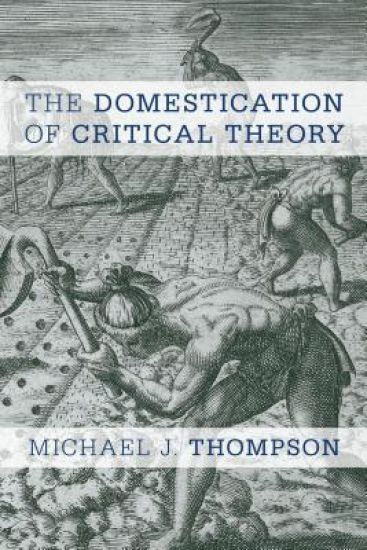
The Domestication of Critical Theory

The Domestication of Critical Theory

Michael J. Thompson

Rowman Littlefield International
2016
sidottu
Critical theory was one of the most vigorous and insightful intellectual traditions of the twentieth-century. At its core was a critique of culture and consciousness tied to instrumental rationality and capitalist economic life. Yet, Michael J. Thompson argues in this highly original book that this once critical tradition has been domesticated - it no longer offers a philosophically convincing nor politically viable form of social critique. Thompson demonstrates that critical theory has surrendered its concerns with domination, alienation, and the pathologies of capitalist modernity and shifted its focus toward neo-Idealist themes. This new critical theory has turned its back on the insights of the classical critical theorists. Thompson traces how this shift occurred and how we can reclaim critique in an age of conformism, apathy, and depoliticization. He goes on to defend the different aspects of critical theory that can be used to reformulate social critique, one that must be brought into a dialogue with contemporary political, social and moral philosophy that protects the lasting and crucial legacy of critical theory as an emancipatory political project.
The Domestication of Critical Theory

The Domestication of Critical Theory

Michael J. Thompson

Rowman Littlefield International
2016
nidottu
Critical theory was one of the most vigorous and insightful intellectual traditions of the twentieth-century. At its core was a critique of culture and consciousness tied to instrumental rationality and capitalist economic life. Yet, Michael J. Thompson argues in this highly original book that this once critical tradition has been domesticated - it no longer offers a philosophically convincing nor politically viable form of social critique. Thompson demonstrates that critical theory has surrendered its concerns with domination, alienation, and the pathologies of capitalist modernity and shifted its focus toward neo-Idealist themes. This new critical theory has turned its back on the insights of the classical critical theorists. Thompson traces how this shift occurred and how we can reclaim critique in an age of conformism, apathy, and depoliticization. He goes on to defend the different aspects of critical theory that can be used to reformulate social critique, one that must be brought into a dialogue with contemporary political, social and moral philosophy that protects the lasting and crucial legacy of critical theory as an emancipatory political project.
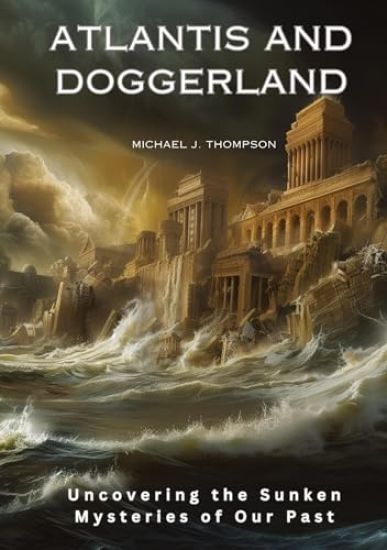
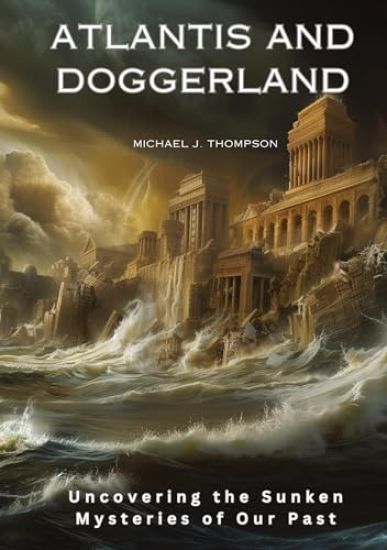
Atlantis and Doggerland: Uncovering the Sunken Mysteries of Our Past
In "Atlantis and Doggerland: Uncovering the Sunken Mysteries of Our Past," Michael J. Thompson embarks on a captivating journey to unravel the secrets of two of history's most intriguing enigmas. Merging meticulous research with vivid storytelling, Thompson explores the connections between the legendary Atlantis and the prehistoric landscape of Doggerland. This book promises to illuminate the shadows of our ancient world, offering readers a unique glimpse into the civilizations that may have thrived in these now-submerged lands. It's an inspiring exploration for anyone fascinated by the mysteries that lie beneath our oceans and the stories they hold.
Atlantis and Doggerland: Uncovering the Sunken Mysteries of Our Past
In "Atlantis and Doggerland: Uncovering the Sunken Mysteries of Our Past," Michael J. Thompson embarks on a captivating journey to unravel the secrets of two of history's most intriguing enigmas. Merging meticulous research with vivid storytelling, Thompson explores the connections between the legendary Atlantis and the prehistoric landscape of Doggerland. This book promises to illuminate the shadows of our ancient world, offering readers a unique glimpse into the civilizations that may have thrived in these now-submerged lands. It's an inspiring exploration for anyone fascinated by the mysteries that lie beneath our oceans and the stories they hold.