Kirjojen hintavertailu. Mukana 12 390 323 kirjaa ja 12 kauppaa.

Kirjahaku

Etsi kirjoja tekijän nimen, kirjan nimen tai ISBN:n perusteella.

6 kirjaa tekijältä Michael K. Johnson

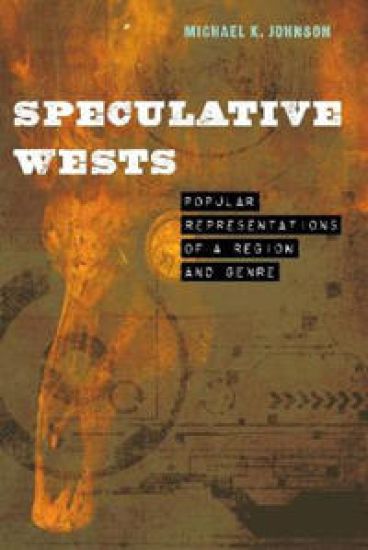
Speculative Wests

Speculative Wests

Michael K. Johnson

University of Nebraska Press
2023
sidottu
Winner of the 2024 Thomas J. Lyon Book Award Looking across the cultural landscape of the twenty-first century, its literature, film, television, comic books, and other media, we can see multiple examples of what Shelley S. Rees calls a “changeling western,” what others have called “weird westerns,” and what Michael K. Johnson refers to as “speculative westerns”-that is, hybrid western forms created by merging the western with one or more speculative genres or subgenres, including science fiction, fantasy, horror, and alternate history.Speculative Wests investigates both speculative westerns and other speculative texts that feature western settings. Just as “western” refers both to a genre and a region, Johnson’s narrative involves a study of both genre and place, a study of the “speculative Wests” that have begun to emerge in contemporary texts such as the zombie-threatened California of Justina Ireland’s Deathless Divide (2020), the reimagined future Navajo nation of Rebecca Roanhorse’s Sixth World series (2018–19), and the complex temporal and geographic borderlands of Alfredo VÉa’s time travel novel The Mexican Flyboy (2016). Focusing on literature, film, and television from 2016 to 2020, Speculative Wests creates new visions of the American West.
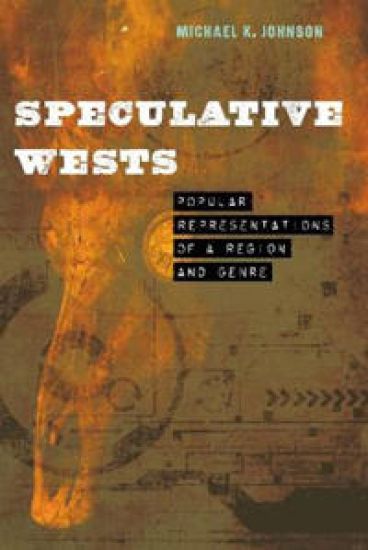
Speculative Wests

Speculative Wests

Michael K. Johnson

University of Nebraska Press
2023
pokkari
Winner of the 2024 Thomas J. Lyon Book Award Looking across the cultural landscape of the twenty-first century, its literature, film, television, comic books, and other media, we can see multiple examples of what Shelley S. Rees calls a “changeling western,” what others have called “weird westerns,” and what Michael K. Johnson refers to as “speculative westerns”-that is, hybrid western forms created by merging the western with one or more speculative genres or subgenres, including science fiction, fantasy, horror, and alternate history.Speculative Wests investigates both speculative westerns and other speculative texts that feature western settings. Just as “western” refers both to a genre and a region, Johnson’s narrative involves a study of both genre and place, a study of the “speculative Wests” that have begun to emerge in contemporary texts such as the zombie-threatened California of Justina Ireland’s Deathless Divide (2020), the reimagined future Navajo nation of Rebecca Roanhorse’s Sixth World series (2018–19), and the complex temporal and geographic borderlands of Alfredo VÉa’s time travel novel The Mexican Flyboy (2016). Focusing on literature, film, and television from 2016 to 2020, Speculative Wests creates new visions of the American West.
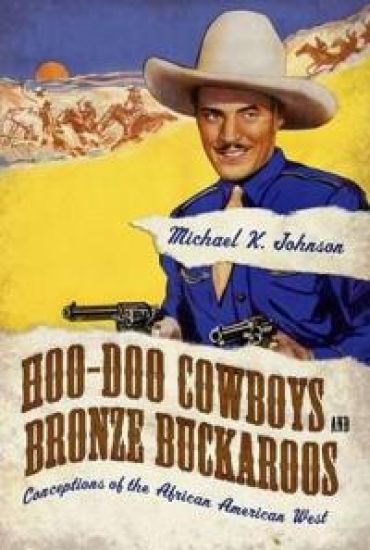
Hoo-Doo Cowboys and Bronze Buckaroos

Hoo-Doo Cowboys and Bronze Buckaroos

Michael K. Johnson

University Press of Mississippi
2015
nidottu
Hoo-Doo Cowboys and Bronze Buckaroos undertakes an interdisciplinary exploration of the African American West through close readings of texts from a variety of media. This approach allows for both an in-depth analysis of individual texts and a discussion of material often left out or underrepresented in studies focused only on traditional literary material. The book engages heretofore unexamined writing by Rose Gordon, who wrote for local Montana newspapers rather than for a national audience; memoirs and letters of musicians, performers, and singers (such as W. C. Handy and Taylor Gordon), who lived in or wrote about touring the American West; the novels and films of Oscar Micheaux; black-cast westerns starring Herb Jeffries; largely unappreciated and unexamined episodes from the ""golden age of western television"" that feature African American actors; film and television westerns that use science fiction settings to imagine a ""postracial"" or ""postsoul"" frontier; Percival Everett's fiction addressing contemporary black western experience; and movies as recent as Quentin Tarantino's Django Unchained.Despite recent interest in the history of the African American West, we know very little about how the African American past in the West has been depicted in a full range of imaginative forms. Hoo-Doo Cowboys and Bronze Buckaroos advances our discovery of how the African American West has been experienced, imagined, portrayed, and performed.
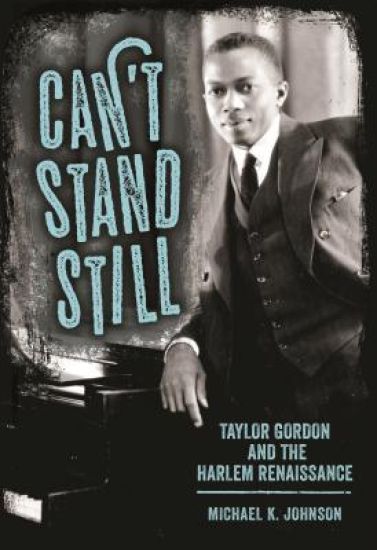
Can’t Stand Still

Can’t Stand Still

Michael K. Johnson

University Press of Mississippi
2019
sidottu
Born in 1893 into the only African American family in White Sulphur Springs, Montana, Emmanuel Taylor Gordon (1893–1971) became an internationally famous singer in the 1920s at the height of the Harlem Renaissance. With his musical partner, J. Rosamond Johnson, Gordon was a crucially important figure in popularizing African American spirituals as an art form, giving many listeners their first experience of black spirituals.Despite his fame, Taylor Gordon has been all but forgotten, until now. Michael K. Johnson illuminates Gordon's personal history and his cultural importance to the legacy of the Harlem Renaissance, arguing that during the height of his celebrity, Gordon was one of the most significant African American male vocalists of his era. Gordon's story—working in the White Sulphur Springs brothels as an errand boy, traveling the country in John Ringling's private railway car, performing on vaudeville stages from New York to Vancouver to Los Angeles, performing for royalty in England, becoming a celebrated author with a best-selling 1929 autobiography, and his long bout of mental illness—adds depth to the history of the Harlem Renaissance and makes him one of the most fascinating figures of the twentieth century. Through detailed documentation of Gordon's career—newspaper articles, reviews, letters, and other archival material—the author demonstrates the scope of Gordon's cultural impact. The result is a detailed account of Taylor's musical education, his career as a vaudeville performer, the remarkable performance history of Johnson and Gordon, his status as an in-demand celebrity singer and author, his time as a radio star, and, finally, his descent into madness. Can't Stand Still brings Taylor Gordon back to the center of the stage.
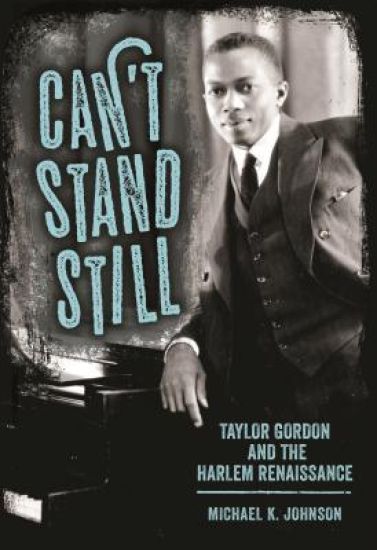
Can’t Stand Still

Can’t Stand Still

Michael K. Johnson

University Press of Mississippi
2019
nidottu
Born in 1893 into the only African American family in White Sulphur Springs, Montana, Emmanuel Taylor Gordon (1893–1971) became an internationally famous singer in the 1920s at the height of the Harlem Renaissance. With his musical partner, J. Rosamond Johnson, Gordon was a crucially important figure in popularizing African American spirituals as an art form, giving many listeners their first experience of black spirituals.Despite his fame, Taylor Gordon has been all but forgotten, until now. Michael K. Johnson illuminates Gordon's personal history and his cultural importance to the legacy of the Harlem Renaissance, arguing that during the height of his celebrity, Gordon was one of the most significant African American male vocalists of his era. Gordon's story—working in the White Sulphur Springs brothels as an errand boy, traveling the country in John Ringling's private railway car, performing on vaudeville stages from New York to Vancouver to Los Angeles, performing for royalty in England, becoming a celebrated author with a best-selling 1929 autobiography, and his long bout of mental illness—adds depth to the history of the Harlem Renaissance and makes him one of the most fascinating figures of the twentieth century. Through detailed documentation of Gordon's career—newspaper articles, reviews, letters, and other archival material—the author demonstrates the scope of Gordon's cultural impact. The result is a detailed account of Taylor's musical education, his career as a vaudeville performer, the remarkable performance history of Johnson and Gordon, his status as an in-demand celebrity singer and author, his time as a radio star, and, finally, his descent into madness. Can't Stand Still brings Taylor Gordon back to the center of the stage.
Hoo-Doo Cowboys and Bronze Buckaroos

Hoo-Doo Cowboys and Bronze Buckaroos

Michael K. Johnson

University Press of Mississippi
2014
sidottu
Hoo-Doo Cowboys and Bronze Buckaroos undertakes an interdisciplinary exploration of the African American West through close readings of texts from a variety of media. This approach allows for both an in-depth analysis of individual texts and a discussion of material often left out or underrepresented in studies focused only on traditional literary material. The book engages heretofore unexamined writing by Rose Gordon, who wrote for local Montana newspapers rather than for a national audience; memoirs and letters of musicians, performers, and singers (such as W. C. Handy and Taylor Gordon), who lived in or wrote about touring the American West; the novels and films of Oscar Micheaux; black-cast westerns starring Herb Jeffries; largely unappreciated and unexamined episodes from the ""golden age of western television"" that feature African American actors; film and television westerns that use science fiction settings to imagine a ""postracial"" or ""postsoul"" frontier; Percival Everett's fiction addressing contemporary black western experience; and movies as recent as Quentin Tarantino's Django Unchained.Despite recent interest in the history of the African American West, we know very little about how the African American past in the West has been depicted in a full range of imaginative forms. Hoo-Doo Cowboys and Bronze Buckaroos advances our discovery of how the African American West has been experienced, imagined, portrayed, and performed.