Kirjojen hintavertailu. Mukana 11 244 527 kirjaa ja 12 kauppaa.

Kirjahaku

Etsi kirjoja tekijän nimen, kirjan nimen tai ISBN:n perusteella.

9 kirjaa tekijältä Michael L. Morgan

Beyond Auschwitz

Beyond Auschwitz

Michael L. Morgan

Oxford University Press Inc
2001
nidottu
This book offers the first comprehensive overview of Post-Holocaust Jewish theology, quoting extensively from and interpreting all of the significant American writings of the movement. Morgan's lucid analysis clarifies the background of the movement in the postwar period, its origins, its character, and its legacy for subsequent thinking, theological and otherwise. Among the authors whose work he considers are Hannah Arendt, Richard Rubenstein, Eliezer Berkowitz, Irving Greenberg, Arthur Cohen, Emil Fackenheim, Eli Wiesel and many others. Ultimately, Morgan's primary purpose is to tell the story of the movement, to illuminate its real, deep point, and to demonstrate its continuing relevance today.
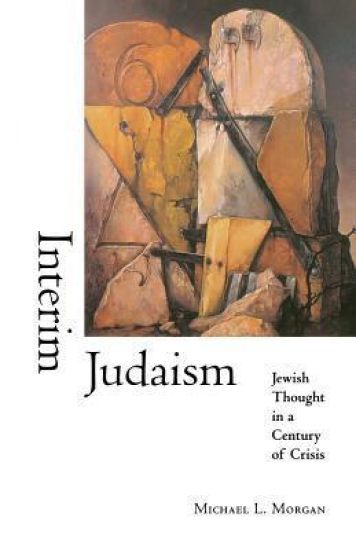
Interim Judaism

Interim Judaism

Michael L. Morgan

Indiana University Press
2001
pokkari
Confronting the challenges of the 20th century, from modernity and the Great War to the Holocaust and postmodern culture, Jewish thinkers have wrestled with such fundamental issues as redemption and revelation, eternity and history, messianism and politics. From the turn of the century through the 1920s, European Jewish intellectuals confronted alienation and the challenges of modernity by seeking secure grounds for a meaningful life. After the Holocaust and the fall of Nazism, the rich results of their thinking—on topics such as transcendence, redemption, revelation, and politics—were reinterpreted in an atmosphere of increasing disillusion and fragmentation. In Interim Judaism, Michael L. Morgan traces the evolution of this shift in values, as expressed in the work of social thinkers, novelists, artists, and poets as well as philosophers and theologians at the beginning and end of the century. Focusing on the problem of objectivity, the experience of the transcendent, and the relationship between redemption and politics, he argues that the outcome for contemporary Jews is a pragmatic style of religiosity that has abandoned traditional conceptions of Judaism and is searching and waiting for new ones, a condition that he describes as "interim Judaism." Published with the generous support of Hebrew Union College–Jewish Institute of Religion, Cincinnati
Dilemmas in Modern Jewish Thought

Dilemmas in Modern Jewish Thought

Michael L. Morgan

Indiana University Press
1992
sidottu
"MIchael Morgan has served up an intellectual treat. These subtle and carefully reasoned essays explore the dilemmas of the post-modern Jew who would take history seriously without losing the commanding presence Israel heard at Sinai. . . . It is a pleasure to be nourished by a fresh mind exploring the tension between reason and revelation, history and faith." —Rabbi Samuel Karff "This is without doubt one of the most significant works in modern Jewish thought and a must for a thoughtful student of contemporary Jewish philosophy." —Rabbie Sheldon Zimmerman "This may well mark the next stage in the long history of Jewish self-understanding." —Ethics " . . . rigorous history of modern Jewish thought . . . " —Choice Is Judaism a timeless, universal set of beliefs or, rather, is it historical and contingent in its relation to different times and places? Morgan clarifies the tensions and dilemmas that characterize modern thinking about the nature of Judaism and clears the way for Jews to appreciate their historical situation, yet locate enduring values and principles in a post-Holocaust world.
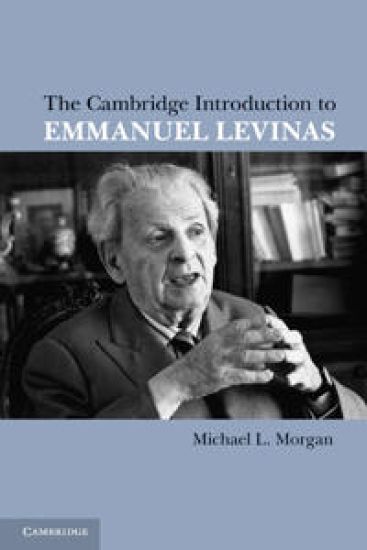
The Cambridge Introduction to Emmanuel Levinas

The Cambridge Introduction to Emmanuel Levinas

Michael L. Morgan

Cambridge University Press
2011
pokkari
This book provides a clear and helpful overview of the thought of Emmanuel Levinas, one of the most significant and interesting philosophers of the late twentieth century. Michael L. Morgan presents an overall interpretation of Levinas' central principle that human existence is fundamentally ethical and that its ethical character is grounded in our face-to-face relationships. He explores the religious, cultural and political implications of this insight for modern Western culture and how it relates to our conception of selfhood and what it is to be a person, our understanding of the ground of moral values, our experience of time and the meaning of history, and our experience of religious concepts and discourse. Includes an annotated list of recommended readings and a selected bibliography of books by and about Levinas. An excellent introduction to Levinas for readers unfamiliar with his work and even for those without a background in philosophy.
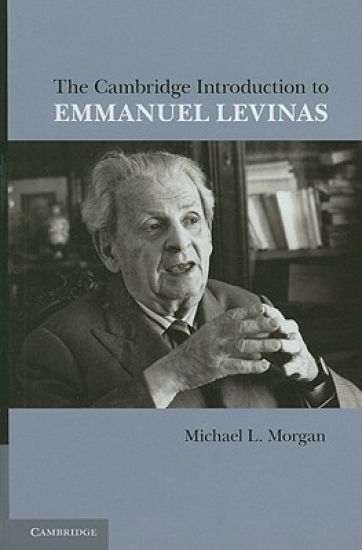
The Cambridge Introduction to Emmanuel Levinas

The Cambridge Introduction to Emmanuel Levinas

Michael L. Morgan

Cambridge University Press
2011
sidottu
This book provides a clear and helpful overview of the thought of Emmanuel Levinas, one of the most significant and interesting philosophers of the late twentieth century. Michael L. Morgan presents an overall interpretation of Levinas' central principle that human existence is fundamentally ethical and that its ethical character is grounded in our face-to-face relationships. He explores the religious, cultural and political implications of this insight for modern Western culture and how it relates to our conception of selfhood and what it is to be a person, our understanding of the ground of moral values, our experience of time and the meaning of history, and our experience of religious concepts and discourse. Includes an annotated list of recommended readings and a selected bibliography of books by and about Levinas. An excellent introduction to Levinas for readers unfamiliar with his work and even for those without a background in philosophy.
Discovering Levinas

Discovering Levinas

Michael L. Morgan

Cambridge University Press
2008
pokkari
In Discovering Levinas, Michael L. Morgan shows how this thinker faces in novel and provocative ways central philosophical problems of twentieth-century philosophy and religious thought. He tackles this task by placing Levinas in conversation with philosophers such as Donald Davidson, Stanley Cavell, John McDowell, Onora O'Neill, Charles Taylor, and Cora Diamond. He also seeks to understand Levinas within philosophical, religious, and political developments in the history of twentieth-century intellectual culture. Morgan demystifies Levinas by examining his unfamiliar and surprising vocabulary, interpreting texts with an eye to clarity, and arguing that Levinas can be understood as a philosopher of the everyday. Morgan also shows that Levinas's ethics is not morally and politically irrelevant nor is it excessively narrow and demanding in unacceptable ways. Neither glib dismissal nor fawning acceptance, this book provides a sympathetic reading that can form a foundation for a responsible critique.
Discovering Levinas

Discovering Levinas

Michael L. Morgan

Cambridge University Press
2007
sidottu
In Discovering Levinas, Michael L. Morgan shows how this thinker faces in novel and provocative ways central philosophical problems of twentieth-century philosophy and religious thought. He tackles this task by placing Levinas in conversation with philosophers such as Donald Davidson, Stanley Cavell, John McDowell, Onora O'Neill, Charles Taylor, and Cora Diamond. He also seeks to understand Levinas within philosophical, religious, and political developments in the history of twentieth-century intellectual culture. Morgan demystifies Levinas by examining his unfamiliar and surprising vocabulary, interpreting texts with an eye to clarity, and arguing that Levinas can be understood as a philosopher of the everyday. Morgan also shows that Levinas's ethics is not morally and politically irrelevant nor is it excessively narrow and demanding in unacceptable ways. Neither glib dismissal nor fawning acceptance, this book provides a sympathetic reading that can form a foundation for a responsible critique.
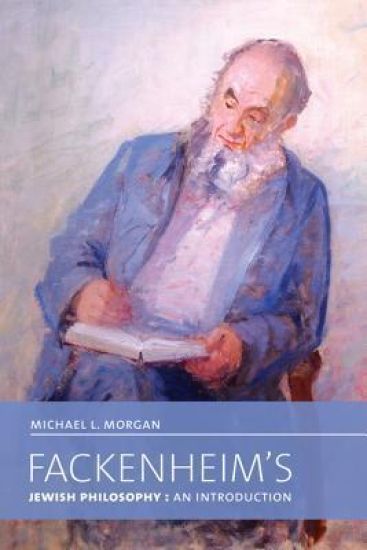
Fackenheim's Jewish Philosophy

Fackenheim's Jewish Philosophy

Michael L. Morgan

University of Toronto Press
2013
pokkari
Emil L. Fackenheim, one of the most significant Jewish thinkers of the twentieth century, is best known for his deep and rich engagement with the implications of the Nazi Holocaust on Jewish thought, Christian theology, and philosophy. However, his career as a philosopher and theologian began two decades prior to his first efforts to confront that horrific event. In this book, renowned Fackenheim expert Michael L. Morgan offers the first examination of the full scope of Fackenheim’s 60-year career, beyond simply his work on the Holocaust. Fackenheim’s Jewish Philosophy explores the most important themes of Fackenheim’s philosophical and religious thought and how these remained central, if not always in immutable ways, over his entire career. Morgan also provides insight into Fackenheim’s indebtedness to Kant, Hegel, and rabbinic midrash, as well as the changing character of his philosophical “voice.” The work concludes with a chapter evaluating Fackenheim’s legacy for present and future Jewish philosophy and philosophy more generally.
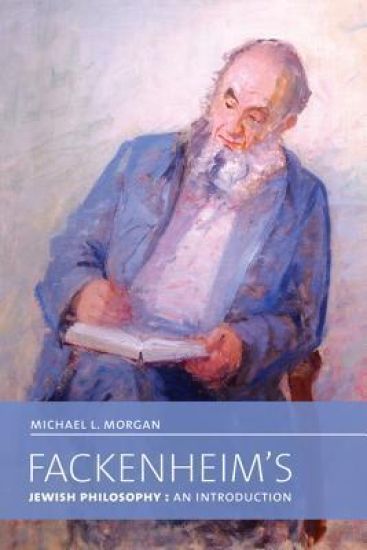
Fackenheim's Jewish Philosophy

Fackenheim's Jewish Philosophy

Michael L. Morgan

University of Toronto Press
2013
sidottu
Emil L. Fackenheim, one of the most significant Jewish thinkers of the twentieth century, is best known for his deep and rich engagement with the implications of the Nazi Holocaust on Jewish thought, Christian theology, and philosophy. However, his career as a philosopher and theologian began two decades prior to his first efforts to confront that horrific event. In this book, renowned Fackenheim expert Michael L. Morgan offers the first examination of the full scope of Fackenheim’s 60-year career, beyond simply his work on the Holocaust. Fackenheim’s Jewish Philosophy explores the most important themes of Fackenheim’s philosophical and religious thought and how these remained central, if not always in immutable ways, over his entire career. Morgan also provides insight into Fackenheim’s indebtedness to Kant, Hegel, and rabbinic midrash, as well as the changing character of his philosophical “voice.” The work concludes with a chapter evaluating Fackenheim’s legacy for present and future Jewish philosophy and philosophy more generally.