Kirjojen hintavertailu. Mukana 12 492 920 kirjaa ja 12 kauppaa.

Kirjahaku

Etsi kirjoja tekijän nimen, kirjan nimen tai ISBN:n perusteella.

11 kirjaa tekijältä Michael Lambek

The Ethical Condition

The Ethical Condition

Michael Lambek

University of Chicago Press
2015
sidottu
Written over a thirty-year span, Michael Lambek's essays in this collection point with definitive force toward a single central truth: ethics is intrinsic to social life. As he shows through rich ethnographic accounts and multiple theoretical traditions, our human condition is at heart an ethical one-we may not always be good or just, but we are always subject to their criteria. Detailing Lambek's trajectory as one anthropologist thinking deeply throughout a career on the nature of ethical life, the essays accumulate into a vibrant demonstration of the relevance of ethics as a practice and its crucial importance to ethnography, social theory, and philosophy. Organized chronologically, the essays begin among Malagasy speakers on the island of Mayotte and in northwest Madagascar. Building from ethnographic accounts there, they synthesize Aristotelian notions of practical judgment and virtuous action with Wittgensteinian notions of the ordinariness of ethical life and the importance of language, everyday speech, and ritual in order to understand how ethics are lived. They illustrate the multiple ways in which ethics informs personhood, character, and practice; explore the centrality of judgment, action, and irony to ethical life; and consider the relation of virtue to value. The result is a fully fleshed-out picture of ethics as a deeply rooted aspect of the human experience.
The Ethical Condition

The Ethical Condition

Michael Lambek

University of Chicago Press
2015
nidottu
Written over a thirty-year span, Michael Lambek's essays in this collection point with definitive force toward a single central truth: ethics is intrinsic to social life. As he shows through rich ethnographic accounts and multiple theoretical traditions, our human condition is at heart an ethical one-we may not always be good or just, but we are always subject to their criteria. Detailing Lambek's trajectory as one anthropologist thinking deeply throughout a career on the nature of ethical life, the essays accumulate into a vibrant demonstration of the relevance of ethics as a practice and its crucial importance to ethnography, social theory, and philosophy. Organized chronologically, the essays begin among Malagasy speakers on the island of Mayotte and in northwest Madagascar. Building from ethnographic accounts there, they synthesize Aristotelian notions of practical judgment and virtuous action with Wittgensteinian notions of the ordinariness of ethical life and the importance of language, everyday speech, and ritual in order to understand how ethics are lived. They illustrate the multiple ways in which ethics informs personhood, character, and practice; explore the centrality of judgment, action, and irony to ethical life; and consider the relation of virtue to value. The result is a fully fleshed-out picture of ethics as a deeply rooted aspect of the human experience.
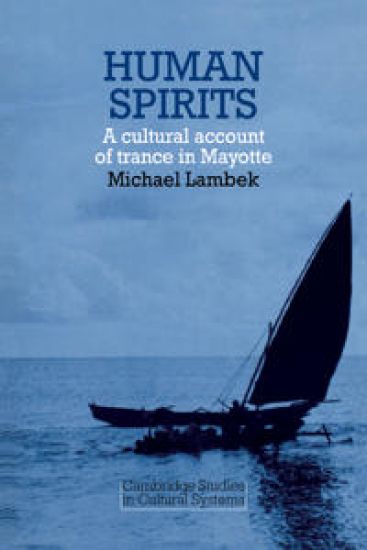
Human Spirits: A Cultural Account of Trance in Mayotte

Human Spirits: A Cultural Account of Trance in Mayotte

Michael Lambek

Cambridge University Press
1981
pokkari
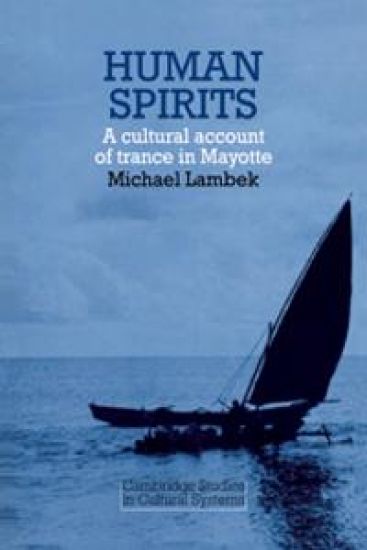
Based on intensive ethnographic fieldwork, this book describes and interprets trance behaviour among the Malagasy speakers of Mayotte, a small island in the Comoro Archipelago in the Indian Ocean, off the coast of East Africa. Professor Lambek describes how the people of Mayotte (most often women) enter into trances, during which they believe their bodies are inhabited by spirits. He then analyses the conventions for behaviour in trance and the process by which the individuals come to terms with the spirits in their midst. The book presents thorough case studies of spirit possession over time, providing one of the most detailed accounts of possession phenomena available for a single society. The author argues that trance can best be understood as a social activity within a defined system of cultural meaning rather than as a psychological problem, a simple deception or a means of manipulating others. This book should be of particular interest to those concerned with the study of ritual, symbols and non-Western religious systems.
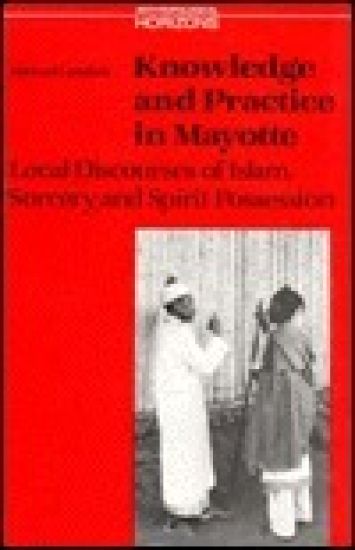
Knowledge and Practice in Mayotte

Knowledge and Practice in Mayotte

Michael Lambek

University of Toronto Press
1993
pokkari
On the East African island of Mayotte, Islam co-exists with two other systems of understanding and interpreting the world around its inhabitants: cosmology and spirit-mediumship. In a witty, evocative style accessible to both the specialist and non-specialist reader, Michael Lambek provides a significant contribution to writing on African systems of thought, on local forms of religious and therapeutic practice, on social accountability, and on the place of explicit forms of knowledge in the analysis of non-western societies. The "objectified" textual knowledge characteristic of Islam and of cosmology is contrasted with the "embodied" knowledge of spirit possession. Lambek emphasizes the power and authority constituted by each discipline, as well as the challenge that each kind of knowledge presents to the others and their resolution in daily practice. "Disciplines" are defined as an organized body of practitioners or adepts, a concept precise and useful when applied to the contexts of Lambek's own research and equally so in the study of comparable environments elsewhere. Essential reading for those interested in the comparative study of Islamic societies, Lambek's argument directly contributes to the main anthropological arguments of the day concerning the social and cultural basis of systems of knowledge and ethnographic strategies for depicting them.
Concepts and Persons

Concepts and Persons

Michael Lambek

University of Toronto Press
2021
sidottu
The Tanner Lectures are a collection of educational and scientific discussions relating to human values. Conducted by leaders in their fields, the lectures are presented at renowned institutions around the world, including the Universities of Oxford, Harvard, and Yale. In January 2019, University of Toronto’s Michael Lambek, professor, former Canada Research Chair, and member of the Royal Society of Canada, delivered the Tanner Lecture at the University of Michigan’s Department of Philosophy on the topic of "Concepts and Persons." As well as tracing his career in social and cultural anthropology, Lambek’s Tanner Lecture spoke on the intersection of anthropology and philosophy as a means of articulating the moral basis of human action. By elucidating where anthropology and philosophy might intersect, Lambek’s lecture is a profound examination of the human condition, and is beautifully captured in this publication. Concepts and Persons recounts the lecture as delivered at the prestigious event, the commentary of three distinguished respondents, and Lambek’s own response to that commentary. The book’s presentation of the lecture also includes a rich and layered set of notes that augment the lecture significantly, as well as additional clarification and thought that has developed since the event. Foreword Elizabeth Anderson, John Dewey Distinguished University Professor of Philosophy and Women’s Studies, University of Michigan Commentators Jonathan Lear, John U. Nef Distinguished Service Professor at the Committee on Social Thought and in the Department of Philosophy, University of Chicago Sherry B. Ortner, Distinguished Research Professor of Anthropology, UCLA Joel Robbins, Sigrid Rausing Professor of Social Anthropology, Cambridge University, and Fellow, Trinity College
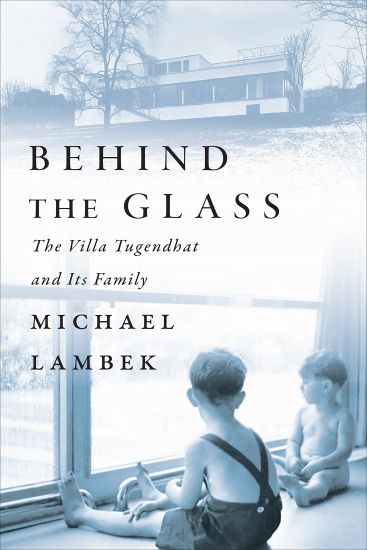
Behind the Glass

Behind the Glass

Michael Lambek

UNIVERSITY OF TORONTO PRESS
2022
sidottu
The Villa Tugendhat, designed by Mies van der Rohe in 1928, is an icon of architectural modernism and a UNESCO World Heritage site. Behind the Glass tells the true story of the large family connected to it, who rose to prominence through industrial textile manufacturing. The book traces the transformations in the life of the family, from their roots in a Jewish ghetto to part of the wealthy bourgeoisie in the Austro-Hungarian Empire to adaptation in interwar independent Czechoslovakia and flight in the face of Nazi invasion. Michael Lambek examines the generation born in the first decade of the twentieth century, especially Grete Tugendhat – Lambek’s maternal grandmother – who commissioned, inhabited, championed, and relinquished the distinctive modern house. An exploration of life in and surrounding the Villa Tugendhat offers a factual portrait that runs counter to the fictional one portrayed in Simon Mawer’s The Glass Room. The book also provides unpublished correspondence between Martin Heidegger and Ernst Tugendhat, Grete’s son, as well as a description of the impact of a 2017 family reunion. Behind the Glass reflects on the meaning of a "family" and suggests that it is more than a nuclear household – a family reproduces itself over generations, a product of how it represents itself and is represented by others.
Cohabiting with Spirits

Cohabiting with Spirits

Michael Lambek

UNIVERSITY OF TORONTO PRESS
2025
sidottu
Possession aptly describes the explicit manifestations of spirits when they temporarily displace individuals by assuming control of their bodies and minds, but the word does not account for what it means to cohabit with them. Cohabiting with Spirits offers an intimate portrait of the intertwined lives of a married couple together with the various spirits who came to possess each of them. Set against the backdrop of the island of Mayotte during the twentieth century, the book paints a vivid picture of the couple's lives, navigating the demands of their respective spirits while practising an art of cohabitation, both with the spirits and with each other.While studies of spirit possession often focus on ceremonial practices and dramatic performances of spirit mediums in trance, Michael Lambek shifts the focus to explore what it can be like to cohabit with spirits. The book examines the ways in which various spirits entered the lives of this married couple and how their presence shaped the hosts' careers as healers, leaving lasting impacts on their domestic and personal lives. Based on rich ethnographic research conducted over the course of several decades, Cohabiting with Spirits presents a rare biography of "ordinary" Africans in the twentieth century and celebrates the resilience of a strong marriage.
Cohabiting with Spirits

Cohabiting with Spirits

Michael Lambek

UNIVERSITY OF TORONTO PRESS
2025
pokkari
Possession aptly describes the explicit manifestations of spirits when they temporarily displace individuals by assuming control of their bodies and minds, but the word does not account for what it means to cohabit with them. Cohabiting with Spirits offers an intimate portrait of the intertwined lives of a married couple together with the various spirits who came to possess each of them. Set against the backdrop of the island of Mayotte during the twentieth century, the book paints a vivid picture of the couple's lives, navigating the demands of their respective spirits while practising an art of cohabitation, both with the spirits and with each other.While studies of spirit possession often focus on ceremonial practices and dramatic performances of spirit mediums in trance, Michael Lambek shifts the focus to explore what it can be like to cohabit with spirits. The book examines the ways in which various spirits entered the lives of this married couple and how their presence shaped the hosts' careers as healers, leaving lasting impacts on their domestic and personal lives. Based on rich ethnographic research conducted over the course of several decades, Cohabiting with Spirits presents a rare biography of "ordinary" Africans in the twentieth century and celebrates the resilience of a strong marriage.
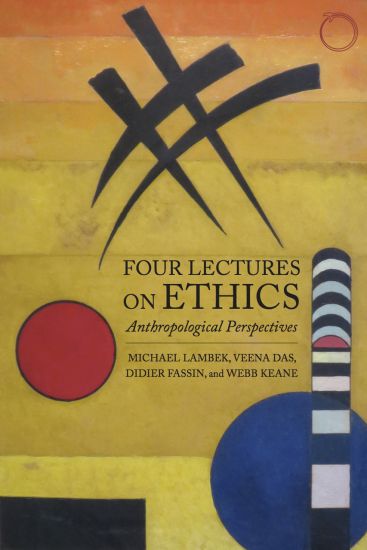
Four Lectures on Ethics – Anthropological Perspectives

Four Lectures on Ethics – Anthropological Perspectives

Michael Lambek; Veena Das; Didier Fassin; Webb Keane

HAU
2015
nidottu
Anthropology has recently seen a lively interest in the subject of ethics and comparative notions of morality and freedom. This masterclass brings together four of the most eminent anthropologists working in this field-Michael Lambek, Veena Das, Didier Fassin, and Webb Keane-to discuss, via lectures and responses, important topics facing anthropological ethics and the theoretical debates that surround it. The authors explore the ways we understand morality across many different cultural settings, asking questions such as: How do we recognize the ethical in different ethnographic worlds? What constitutes agency and awareness in everyday life? What might an anthropology of ordinary ethics look like? And what happens when ethics approaches the political in both Western and non-Western societies. Contrasting perspectives and methods-and yet in complimentary ways-this masterclass will serve as an essential guide for how an anthropology of ethics can be formulated in the twenty-first century.
Island in the Stream

Island in the Stream

Michael Lambek; Michael D. Jackson

University of Toronto Press
2018
pokkari
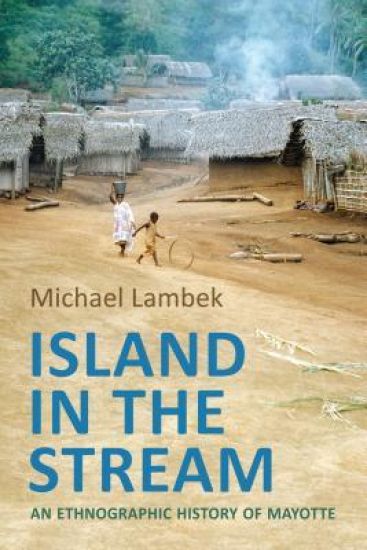
Island in the Stream introduces an original genre of ethnographic history as it follows a community on Mayotte, an East African island in the Mozambique Channel, through eleven periods of fieldwork between 1975 and 2015. Over this 40-year span Mayotte shifted from a declining and neglected colonial backwater to a full département of the French state. In a highly unusual postcolonial trajectory, citizens of Mayotte demanded this incorporation within France rather than joining the independent republic of the Comoros. The Malagasy-speaking Muslim villagers Michael Lambek encountered in 1975 practiced subsistence cultivation and lived without roads, schools, electricity, or running water; today they are educated citizens of the EU who travel regularly to metropolitan France and beyond. Offering a series of ethnographic slices of life across time, Island in the Stream highlights community members' ethical engagement in their own history as they looked to the future, acknowledged the past, and engaged and transformed local forms of sociality, exchange, and ritual performance. This is a unique account of the changing horizons and historical consciousness of an African community and an intimate portrait of the inhabitants and their concerns, as well as a glimpse into the changing perspective of the ethnographer.