Kirjojen hintavertailu. Mukana 11 244 527 kirjaa ja 12 kauppaa.

Kirjahaku

Etsi kirjoja tekijän nimen, kirjan nimen tai ISBN:n perusteella.

15 kirjaa tekijältä Michael Mack

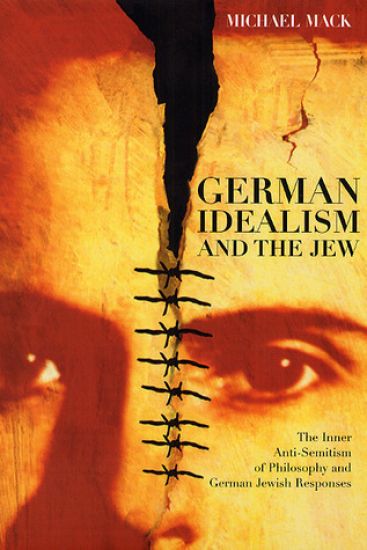
German Idealism and the Jew

German Idealism and the Jew

Michael Mack

University of Chicago Press
2003
sidottu
In "German Idealism and the Jew", Michael Mack uncovers the deep roots of anti-Semitism in the German philosophical tradition. While many have read German anti-Semitism as a reaction against Enlightenment philosophy, Mack instead contends that the redefinition of the Jews as irrational, oriental Others forms the very cornerstone of German idealism, including Kant's conception of universal reason. Offering the first analytical account of the connection between anti-Semitism and philosophy, Mack begins his exploration by showing how the fundamental thinkers in the German idealist tradition - Kant, Hegel, and, through them, Feuerbach and Wagner - argued that the human world should perform and enact the promises held out by a conception of an otherworldly heaven. But their respective philosophies all ran aground on the belief that the worldly proved incapable of transforming itself into this otherworldly ideal. To reconcile this incommensurability, Mack argues, philosophers created a construction of Jews as symbolic of the "worldliness" that hindered the development of a body politic and that served as a foil to Kantian autonomy and rationality. In the second part, Mack examines how Moses Mendelssohn, Heinrich Heine, Franz Rosenzweig and Freud, among others, grappled with being both German and Jewish. Each thinker accepted the philosophies of Kant and Hegel, in varying degrees, while simultaneously critiquing anti-Semitism in order to develop the modern Jewish notion of what it meant to be enlightened - a concept that differed substantially from that of Kant, Hegel, Feuerbach and Wagner. By speaking the unspoken in German philosophy, this book profoundly reshapes our understanding of it.
German Idealism and the Jew

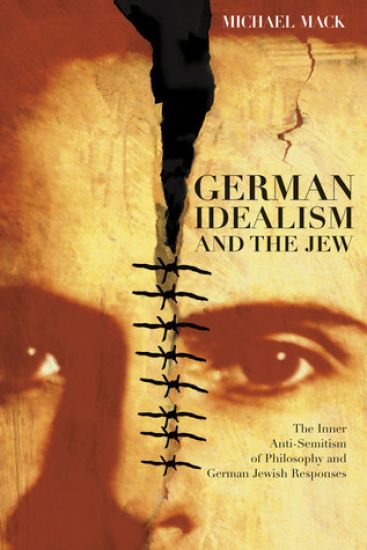
German Idealism and the Jew

Michael Mack

University of Chicago Press
2013
nidottu
In German Idealism and the Jew, Michael Mack uncovers the deep roots of anti-Semitism in the German philosophical tradition, contending that the redefinition of the Jews as an irrational, oriental Other forms the very cornerstone of German idealism. He shows how fundamental thinkers such as Kant and Hegel created a construction of Jews as symbolic of the worldlines that hindered the development of a body politic, and how thinkers such as Moses Mendelssohn, Heinrich Heine, Franz Rosenzweig, and Sigmund Freud grappled with being both German and Jewish-pinpointing the particular Jewish notion of enlightenment that came out of it. The first analytical account of the connection between anti-Semitism and philosophy, German Idealism and the Jew speaks the unspoken in German philosophy, profoundly reshaping our understanding of it.
Sidney's Poetics

Sidney's Poetics

Michael Mack

The Catholic University of America Press
2013
nidottu
While offering a new interpretation of Sir Philip Sidney's elegant and influential treatise, Apologie for Poetrie (c. 1582), Michael Mack also makes a case for a new understanding of the historical process by which human beings were first thought to be endowed with the power to create -- in Sidney's day a power still reserved for God alone. Showing that secularist accounts of modernity cannot explain the development of Sidney's idea of creativity, Mack offers a version of the birth of modernity in which sacred and secular values are not necessarily opposed. Unlike previous accounts, his accommodates what are now recognised to be the continuities between medieval and Renaissance culture, between the Renaissance and Romanticism, and between theological speculation and literary theory.
How Literature Changes the Way We Think

How Literature Changes the Way We Think

Michael Mack

Continuum Publishing Corporation
2011
sidottu
This book argues for the importance, and societal impact, of the study of the arts and humanities, and of literature in particular. The capacity of the arts and the humanities, and of literature in particular, to have a meaningful societal impact has been increasingly undervalued in recent history. Both humanists and scientists have tended to think of the arts as a means to represent the world via imagination. Mack maintains that the arts do not merely describe our world but that they also have the unique and under appreciated power to make us aware of how we can change accustomed forms of perception and action. Mack explores the works of prominent writers and thinkers, including Nietzsche, Foucault, Benjamin, Wilde, Roth, and Zizek, among others, to illustrate how literature interacts with both people and political as well as scientific issues of the real world. By virtue of its distance from the real world - its virtuality - the aesthetic has the capability to help us explore different and so far unthinkable forms of action and thereby to resist the repetition and perpetuation of harmful practices such as stereotyping, stigma, exclusion, and the exertion of violence.
Spinoza and the Specters of Modernity

Spinoza and the Specters of Modernity

Michael Mack

Continuum Publishing Corporation
2010
nidottu
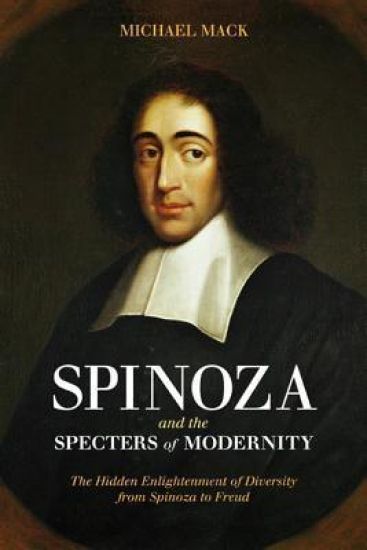
Spinoza and the Specters of Modernity draws new theoretical conclusions from a study of Spinoza's legacy in the age of Goethe and beyond, largely transmitted through the writings of Herder, that will have implications for the study of German intellectual history and, more broadly, the study of religion and literature. Michael Mack describes how a line of writers and thinkers re-configured Spinoza's ideas and how these ideas thus became effective in society at large. Mack shows that the legacy of Spinoza is important because he was the first thinker to theorize narrative as the constitutive fabric of politics, identity, society, religion and the larger sphere of culture. Indeed, Mack argues for Spinoza's writings on politics and ethics as an alternative to a Kantian conception of modernity.
How Literature Changes the Way We Think

How Literature Changes the Way We Think

Michael Mack

Continuum Publishing Corporation
2011
nidottu
This book argues for the importance, and societal impact, of the study of the arts and humanities, and of literature in particular. The capacity of the arts and the humanities, and of literature in particular, to have a meaningful societal impact has been increasingly undervalued in recent history. Both humanists and scientists have tended to think of the arts as a means to represent the world via imagination. Mack maintains that the arts do not merely describe our world but that they also have the unique and under appreciated power to make us aware of how we can change accustomed forms of perception and action. Mack explores the works of prominent writers and thinkers, including Nietzsche, Foucault, Benjamin, Wilde, Roth, and Zizek, among others, to illustrate how literature interacts with both people and political as well as scientific issues of the real world. By virtue of its distance from the real world - its virtuality - the aesthetic has the capability to help us explore different and so far unthinkable forms of action and thereby to resist the repetition and perpetuation of harmful practices such as stereotyping, stigma, exclusion, and the exertion of violence.
Spinoza and the Specters of Modernity

Spinoza and the Specters of Modernity

Michael Mack

Continuum Publishing Corporation
2010
sidottu
Spinoza and the Specters of Modernity draws new theoretical conclusions from a study of Spinoza's legacy in the age of Goethe and beyond, largely transmitted through the writings of Herder, that will have implications for the study of German intellectual history and, more broadly, the study of religion and literature. Michael Mack describes how a line of writers and thinkers re-configured Spinoza's ideas and how these ideas thus became effective in society at large. Mack shows that the legacy of Spinoza is important because he was the first thinker to theorize narrative as the constitutive fabric of politics, identity, society, religion and the larger sphere of culture. Indeed, Mack argues for Spinoza's writings on politics and ethics as an alternative to a Kantian conception of modernity.
Contaminations

Contaminations

Michael Mack

Edinburgh University Press
2016
sidottu
The figure of contamination as developed in this book offers a new perspective of negativity which questions the current influence of Hegelian dialectics in contemporary theory and philosophy (Le. Robert Pippin, Slavoj Zizek, Catherine Malabou). The book also offers an advanced critical introduction to the critique of dialectics to which it at the same time contributes as an original piece of research.
Disappointment

Disappointment

Michael Mack

Bloomsbury Academic USA
2021
sidottu
Considering the support behind Brexit and Donald Trump’s ‘America first’ policies, this book challenges the idea that they are motivated solely by fear and instead looks at the hope and promises that drive these renewed forms of nationalism. Addressing these neglected motivations within contemporary populism, Michael Mack explores how our current sense of disappointment with our ecological, economic and political state of affairs partakes of a history of failed promises that goes back to the inception of modernity; namely, to Spinoza’s radical enlightenment of diversity and equality.Through this innovative approach, Spinoza emerges less as a single isolated figure and more as a sign for an intellectual constellation of thinkers and writers who – from the romantics to contemporary theory and literature – have introduced various shifts in the way we see humanity as being limited and prone to disappointment. Combining intellectual history with literary and scientific theory, the book traces the collapse of traditional values and orders from Spinoza to Nietzsche and then to the literary modernism of Joseph Conrad and postmodernism of Philip Roth and Thomas Pynchon.
Disappointment

Disappointment

Michael Mack

Bloomsbury Academic USA
2021
nidottu
Considering the support behind Brexit and Donald Trump’s ‘America first’ policies, this book challenges the idea that they are motivated solely by fear and instead looks at the hope and promises that drive these renewed forms of nationalism. Addressing these neglected motivations within contemporary populism, Michael Mack explores how our current sense of disappointment with our ecological, economic and political state of affairs partakes of a history of failed promises that goes back to the inception of modernity; namely, to Spinoza’s radical enlightenment of diversity and equality.Through this innovative approach, Spinoza emerges less as a single isolated figure and more as a sign for an intellectual constellation of thinkers and writers who – from the romantics to contemporary theory and literature – have introduced various shifts in the way we see humanity as being limited and prone to disappointment. Combining intellectual history with literary and scientific theory, the book traces the collapse of traditional values and orders from Spinoza to Nietzsche and then to the literary modernism of Joseph Conrad and postmodernism of Philip Roth and Thomas Pynchon.
Philosophy and Literature in Times of Crisis

Philosophy and Literature in Times of Crisis

Michael Mack

Bloomsbury Academic USA
2014
sidottu
Highlighting literature and philosophy's potential impact on economics, health care, bioethics, public policy and theology, this book analyses the heuristic value of fiction. It alerts us to how we risk succumbing to the deceptions of fiction in our everyday lives, because fictional representations constantly feign to be of the real and claim a reality of their own. Philosophy and literature disclose how the substantive sphere of social, economic and medical practice is sometimes driven and shaped by the affect-ridden and subjective. Analysing a wide range of literature—from Augustine, Shakespeare, Spinoza and Deleuze to Kafka, Sylvia Plath, Philip Roth, W. G. Sebald and Jonathan Littell—Michael Mack rethinks ethical attitudes towards the long or eternal life. In so doing he shows how philosophy and literature turn representation against itself to expose the hollowness of theologically grand concepts that govern our secular approach towards ethics, economics and medicine. Philosophy and literature help us resist our current infatuation with numbers and the numerical and contribute towards a future politics that is at once singular and diverse.
Philosophy and Literature in Times of Crisis

Philosophy and Literature in Times of Crisis

Michael Mack

Bloomsbury Academic USA
2014
nidottu
Highlighting literature and philosophy's potential impact on economics, health care, bioethics, public policy and theology, this book analyses the heuristic value of fiction. It alerts us to how we risk succumbing to the deceptions of fiction in our everyday lives, because fictional representations constantly feign to be of the real and claim a reality of their own. Philosophy and literature disclose how the substantive sphere of social, economic and medical practice is sometimes driven and shaped by the affect-ridden and subjective. Analysing a wide range of literature—from Augustine, Shakespeare, Spinoza and Deleuze to Kafka, Sylvia Plath, Philip Roth, W. G. Sebald and Jonathan Littell—Michael Mack rethinks ethical attitudes towards the long or eternal life. In so doing he shows how philosophy and literature turn representation against itself to expose the hollowness of theologically grand concepts that govern our secular approach towards ethics, economics and medicine. Philosophy and literature help us resist our current infatuation with numbers and the numerical and contribute towards a future politics that is at once singular and diverse.
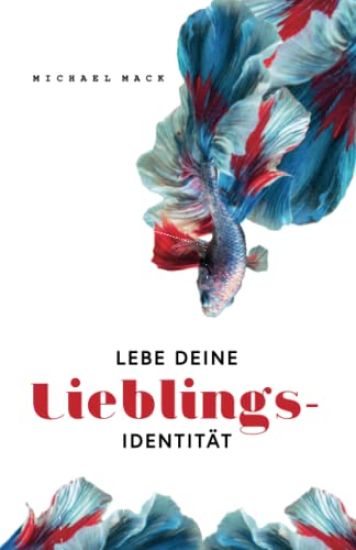
Lebe deine Lieblingsidentität

Lebe deine Lieblingsidentität

Michael Mack

Edition Mack
2022
pokkari
》Ratgeber f r ein neues Bewusstsein《 *EFFEKTIV-LIEBEVOLL-PRAKTISCH* Wer willst du sein?Wie willst du sein? Entdecke und entfalte deine liebste Identit t und Pers nlichkeit. kostenlose Leseprobe und mehr ber den Autor auf Instagram unter michaelmack.info oder auf www.michaelmack.info
Anthropology as Memory

Anthropology as Memory

Michael Mack

De Gruyter
2001
sidottu
Whereas many other post-Holocaust Jewish thinkers - including Derrida - have concentrated on a refusal of totality and celebration of 'otherness', the poet and intellectual Franz Baermann Steiner (1909-1952) combines this emphasis with an equal stress on the 'need' for certain collectively acknowledged limits. Next to the wider significance of this book for discussions of Holocaust studies in relation to current theoretical and social issues, it will also offer a new interpretation of Elias Canetti's work. This is the first detailed examination of Steiner's anthropology and philosophy and its relation to the work of his close intellectual friend Canetti.