Kirjojen hintavertailu. Mukana 11 342 296 kirjaa ja 12 kauppaa.

Kirjahaku

Etsi kirjoja tekijän nimen, kirjan nimen tai ISBN:n perusteella.

5 kirjaa tekijältä Michael Mooney

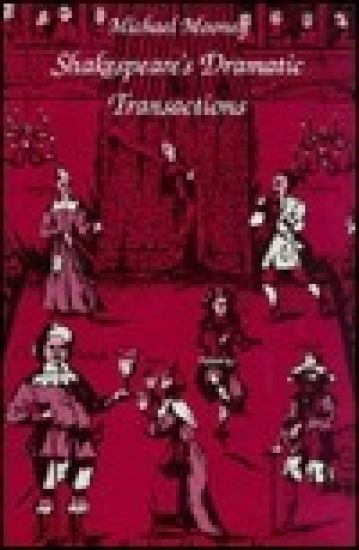
Shakespeare's Dramatic Transactions

Shakespeare's Dramatic Transactions

Michael Mooney

Duke University Press
1991
sidottu
Shakespeare’s Dramatic Transactions uses conventions of performance criticism-staging and theatrical presentation-to analyze seven major Shakespearean tragedies: Hamlet, Othello, King Lear, Macbeth, Antony and Cleopatra, Richard II, and Richard III. As scholars and readers increasingly question the theoretical models used to describe the concepts of “mimesis” and “representation,” this book describes how the actor’s stage presentation affects the actor’s representational role and the ways in which viewers experience Shakespearean tragedy.Michael Mooney draws on the work of East German critic Robert Weimann and his concept of figurenposition-the correlation between an actor’s stage location and the speech, action, and stylization associated with that position-to understand the actor/stage location relationship in Shakespeare’s plays. In his examination of the original staging of Shakespeare’s tragedies, Mooney looks at the traditional interplay between a downstage “place” and upstage “location” to describe the difference between non-illusionistic action (often staged near the audience) and the illusionistic, localized action that characterizes mimetic art.The innovative and insightful approach of Shakespeare’s Dramatic Transactions brings together the techniques of performance criticism and the traditional literary study of Shakespearean tragedy. In showing how the distinctions of stage location illuminate the interaction among language, representation, Mooney’s compelling argument enhances our understanding of Shakespeare and the theater.
Vico in the Tradition of Rhetoric

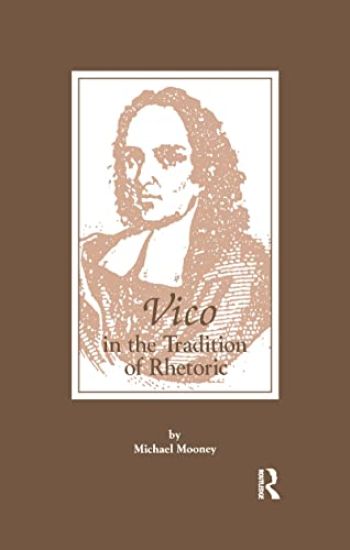
Vico in the Tradition of Rhetoric

Michael Mooney

Routledge
2016
nidottu
If among the many truths of Giambattista Vico's New Science there is one that is deepest, it is the truth that language, mind, and society are but three modes of a common reality. In Vico's term, that reality is the monde civile, the world of man. It is a world of many guises and faces. If reflected in a mirror, those faces would reveal an image of the full array of contemporary arts and sciences, all the disciplines of learning and technique by which, so Vico judged, humanity attains its perfection. Humanity in its perfection, however, is so rare a moment, so delicate and subtle a state, that it is never to be found among the nations of the world -- or is found in so fragile a form that it threatens always to crack and fall to the ground. In the West, a persistent line of thinking that has flourished from time to time holds that language is primary in culture, metaphor a necessity, and jurisprudence our highest achievement. This was the position of Vico, who not only received and cherished the tradition, but looked deeply into it, saw what its principles implied, and so made ready for the great social theorists of the nineteenth century. That is the thesis of this work. After an introductory chapter on Vico himself -- in which his intellectual world and his movements within it are sketched -- the work unfolds in three parts. These parts successively treat rhetoric, pedagogy, and culture, each proceeding from a major Vichian text.
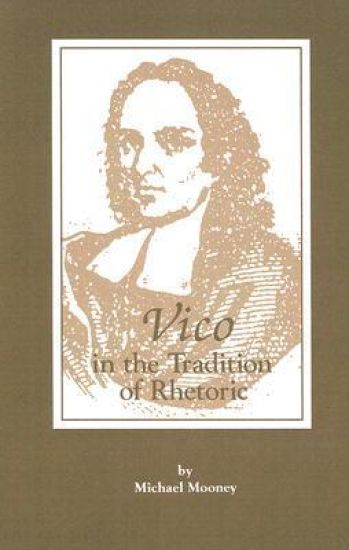
Vico in the Tradition of Rhetoric

Vico in the Tradition of Rhetoric

Michael Mooney

Lawrence Erlbaum Associates Inc
1995
sidottu
If among the many truths of Giambattista Vico's New Science there is one that is deepest, it is the truth that language, mind, and society are but three modes of a common reality. In Vico's term, that reality is the monde civile, the world of man. It is a world of many guises and faces. If reflected in a mirror, those faces would reveal an image of the full array of contemporary arts and sciences, all the disciplines of learning and technique by which, so Vico judged, humanity attains its perfection. Humanity in its perfection, however, is so rare a moment, so delicate and subtle a state, that it is never to be found among the nations of the world -- or is found in so fragile a form that it threatens always to crack and fall to the ground. In the West, a persistent line of thinking that has flourished from time to time holds that language is primary in culture, metaphor a necessity, and jurisprudence our highest achievement. This was the position of Vico, who not only received and cherished the tradition, but looked deeply into it, saw what its principles implied, and so made ready for the great social theorists of the nineteenth century. That is the thesis of this work. After an introductory chapter on Vico himself -- in which his intellectual world and his movements within it are sketched -- the work unfolds in three parts. These parts successively treat rhetoric, pedagogy, and culture, each proceeding from a major Vichian text.