Kirjojen hintavertailu. Mukana 11 627 067 kirjaa ja 12 kauppaa.

Kirjahaku

Etsi kirjoja tekijän nimen, kirjan nimen tai ISBN:n perusteella.

32 kirjaa tekijältä Michael Morris

A Place Called Wiregrass

A Place Called Wiregrass

Michael Morris

HarperOne
2004
nidottu
Erma Lee is on the run . . . Running from an abusive husband . . . running from a mother who doesn't care -- never cared. Running from a soul-numbing factory job that has held her down her entire life ...Erma Lee and her granddaughter, Cher, flee to the town of Wiregrass, Alabama, to escape the past and start over -- or so Erma Lee thinks. Erma Lee forms an unlikely friendship with Miss Claudia, an elderly socialite who is hiding a few details about her own past. Life in Wiregrass is different for Erma Lee and Cher, for here they find mercy and promise -- until, that is, the day Cher's convict father arrives in town, forcing all three women to come to terms with buried secrets.
Slow Way Home

Slow Way Home

Michael Morris

HarperSanFrancisco
2004
nidottu
Rather then following a court order to return their grandson Brandon to his drug-addicted mother, the child's grandparents flee with him and assume new identities in a turbulent Southern town. With surprising delicacy and insight, Morris offers a moving meditation on the power of faith and the meaning of home.
The Good and the True

The Good and the True

Michael Morris

Clarendon Press
1992
sidottu
This book provides a radical alternative to naturalistic theories of content, and offers a new conception of the place of mind in the world. Confronting head-on the scientific conception of the nature of reality that has dominated the Anglo-American philosophical tradition, Michael Morris here presents a detailed analysis of content and propositional attitudes, based on the idea that truth is a value. In the course of this analysis, he rejects the causal theory of the explanation of behaviour and replaces it with an alternative which depends upon a rich conception of the behaviour we explain with reference to states of mind. According to the theory presented here, our understanding of other people is inextricably involved with our evaluation of what they do, and the objectivity of truth depends on the objectivity of moral goodness. Dr Morris's lucid and detailed exposition of his controversial argument sounds an emphatic challenge to the naturalistic orthodoxy in areas as diverse as metaphysics, ethics, and cognitive science.
Real Likenesses

Real Likenesses

Michael Morris

Oxford University Press
2020
sidottu
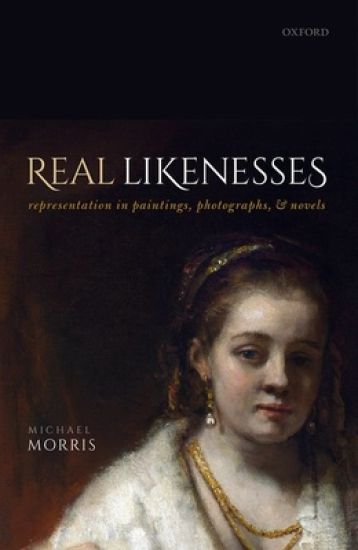
Real Likenesses presents a radical new approach to artistic representation. At its heart is a serious reconsideration of the relationship between medium and content in representational art, which counters currently dominant theories that make attention to the former inevitably a distraction from attending to the latter. Through close analysis of paintings, photographs, and novels, Michael Morris proposes a new understanding of the real likenesses we encounter in representational art; what they are, how they are made present to us, and how they are created. The result is an intuitive way of thinking about how these art forms work.
The Bringing of Wonder

The Bringing of Wonder

Michael Morris

Praeger Publishers Inc
1999
sidottu
In the relations between colonial European traders and the Indians of the southern backcountry, trade was a powerful manipulative tool used by both sides in their attempts to control each other. This anthropological and sociological study examines how European traders sought out native women as cultural instructors, translators, and sexual companions. The network of native women, fur traders, and colonial diplomats functioned as an invisible social, political, and economic web throughout the backcountry. Although this web was an integral part of the colonial struggle for the region, it is often overlooked or ignored in conventional histories. Women played a key role in this system of economic exchange. They benefitted materially from this arrangement, while the traders enjoyed increased political power as a result of the cohabitation. These Anglo-Indian unions helped to impose Euroamerican values on native societies, and, in part, the women functioned as unofficial diplomats for their people. Colonial governments hoped that the efforts of these frontier traders would impose stability on the tribes, but the profit-seeking of many such traders often resulted in bloody conflict instead.
Routledge Philosophy GuideBook to Wittgenstein and the Tractatus
Written by a leading expert, this is the ideal guide to the only book Wittgenstein published during his lifetime, the Tractatus Logico-Philosophicus. Michael Morris makes sense of Wittgenstein’s brief but often cryptic text, highlighting its key themes. He introduces and analyzes: Wittgenstein’s life and the background to the Tractatus the ideas and text of the Tractatus the continuing importance of Wittgenstein's work to philosophy today, Wittgenstein is the most important twentieth-century philosopher in the English speaking world. This book will be essential reading for all students of philosophy of language and metaphysics.
Routledge Philosophy GuideBook to Wittgenstein and the Tractatus
Written by a leading expert, this is the ideal guide to the only book Wittgenstein published during his lifetime, the Tractatus Logico-Philosophicus. Michael Morris makes sense of Wittgenstein’s brief but often cryptic text, highlighting its key themes. He introduces and analyzes: Wittgenstein’s life and the background to the Tractatus the ideas and text of the Tractatus the continuing importance of Wittgenstein's work to philosophy today, Wittgenstein is the most important twentieth-century philosopher in the English speaking world. This book will be essential reading for all students of philosophy of language and metaphysics.
An Introduction to the Philosophy of Language

An Introduction to the Philosophy of Language

Michael Morris

Cambridge University Press
2006
pokkari
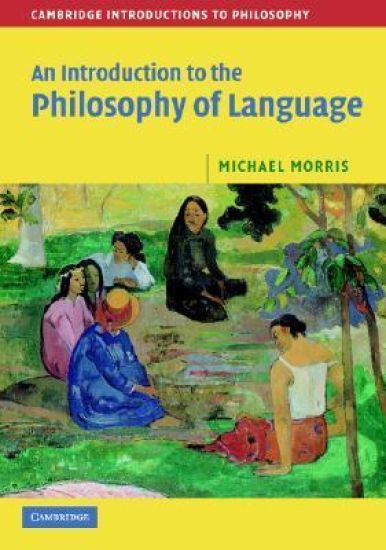
In this textbook, Michael Morris offers a critical introduction to the central issues of the philosophy of language. Each chapter focusses on one or two texts which have had a seminal influence on work in the subject, and uses these as a way of approaching both the central topics and the various traditions of dealing with them. Texts include classic writings by Frege, Russell, Kripke, Quine, Davidson, Austin, Grice and Wittgenstein. Theoretical jargon is kept to a minimum and is fully explained whenever it is introduced. The range of topics covered includes sense and reference, definite descriptions, proper names, natural-kind terms, de re and de dicto necessity, propositional attitudes, truth-theoretical approaches to meaning, radical interpretation, indeterminacy of translation, speech acts, intentional theories of meaning, and scepticism about meaning. The book will be invaluable to students and to all readers who are interested in the nature of linguistic meaning.
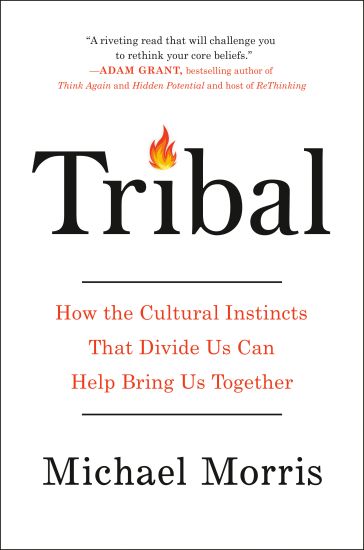
Tribal

Tribal

Michael Morris

Prentice Hall Press
2024
sidottu
A revelatory, paradigm-shifting work from a renowned Columbia professor and "one of the great social and cultural psychologists" (Amy Cuddy) that demystifies our tribal instincts and shows us how to use them to create positive change. Tribalism is our most misunderstood buzzword. We've all heard pundits bemoan its rise, and it's been blamed for everything from political polarization to workplace discrimination. But as acclaimed cultural psychologist and Columbia professor Michael Morris argues, our tribal instincts are humanity's secret weapon. Ours is the only species that lives in tribes: groups glued together by their distinctive cultures that can grow to a scale far beyond clans and bands. Morris argues that our psychology is wired by evolution in three distinctive ways. First, the peer instinct to conform to what most people do. Second, the hero instinct to give to the group and emulate the most respected. And third, the ancestor instinct to follow the ways of prior generations. These tribal instincts enable us to share knowledge and goals and work as a team to transmit the accumulated pool of cultural knowledge onward to the next generation. Countries, churches, political parties, and companies are tribes, and tribal instincts explain our loyalties to them and the hidden ways that they affect our thoughts, actions, and identities. Rather than deriding tribal impulses for their irrationality, we can recognize them as powerful levers that elevate performance, heal rifts, and set off shockwaves of cultural change. Weaving together deep research, current and historical events, and stories from business and politics, Morris cuts across conventional wisdom to completely reframe how we think about our tribes. Bracing and hopeful, Tribal unlocks the deepest secrets of our psychology and gives us the tools to manage our misunderstood superpower.
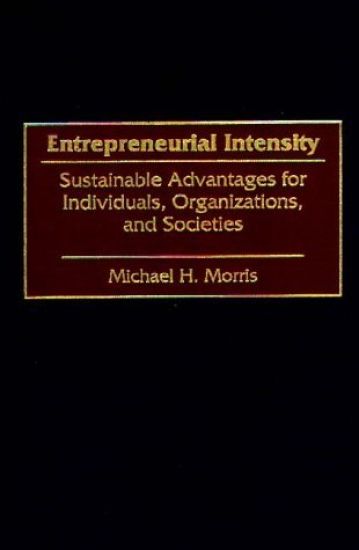
Entrepreneurial Intensity

Entrepreneurial Intensity

Michael Morris

Praeger Publishers Inc
1998
sidottu
The concept of entrepreneurial intensity captures how entrepreneurship fluctuates by degree and frequency, and how it applies to personal well-being, organizational performance, and the quality of societal life. Morris develops his ideas by challenging the 13 leading myths about entrepreneurship while integrating many diverse perspectives on them. Readers will find in the EI concept a new way of examining and understanding the entrepreneurial process and strategies for fostering entrepreneuriship. Rigorously grounded in research, this book is an important resource for the academic community and for business professionals.Entrepreneurship is a subject that has come into vogue rapidly. Governments are trying to foster it, individuals are practicing it in unprecedented numbers, and large organizations are desperately trying to return to their own entrepreneurial roots. Colleges and universities, in response, are now teaching courses on entrepreneurship, and are establishing programs devoted to it. Morris explores this new interest in entrepreneurship, why it matters, and how it can be encouraged. Many controversies and unresolved issues abound such as the basic questions: how should entrepreneurship be defined? and what will its role be in the future?. Morris examines the issues in-depth and gives readers a comprehensive summary of what entrepreneurship means for today's business organizations, their people, and society.
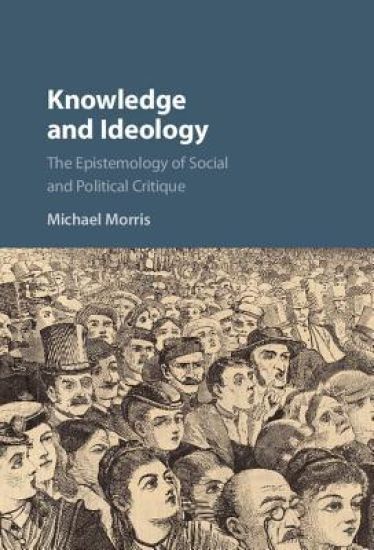
Knowledge and Ideology

Knowledge and Ideology

Michael Morris

Cambridge University Press
2016
sidottu
Ideology critique generally seeks to undermine selected theories and beliefs by demonstrating their partisan origins and their insidious social functions. This approach rightly reveals the socially implicated nature of much purported knowledge, but also brackets or bypasses its cognitive properties. In contrast, Michael Morris argues that it is possible to integrate the social and epistemic dimensions of belief in a way that preserves the cognitive and adjudicatory capacities of reason, while acknowledging that reason itself is inevitably social, historical, and interested. Drawing upon insights from Hegel, Lukács, Mannheim, and Habermas, he interprets and reconstructs Marx's critique of ideology as a positive theory of knowledge, one that reconciles the inherently interested and inextricably situated nature of thought with more traditional conceptions of rational adjudication, normativity, and truth. His wide-ranging examination of the social and epistemic dimensions of ideology will interest readers in political philosophy and political theory.
Scotland and the Caribbean, c.1740-1833
This book participates in the modern recovery of the memory of the long-forgotten relationship between Scotland and the Caribbean. Drawing on theoretical paradigms of world literature and transnationalism, it argues that Caribbean slavery profoundly shaped Scotland’s economic, social and cultural development, and draws out the implications for current debates on Scotland’s national narratives of identity. Eighteenth- to nineteenth-century Scottish writers are re-examined in this new light. Morris explores the ways that discourses of "improvement" in both Scotland and the Caribbean are mediated by the modes of pastoral and georgic which struggle to explain and contain the labour conditions of agricultural labourers, both free and enslaved. The ambivalent relationship of Scottish writers, including Robert Burns, to questions around abolition allows fresh perspectives on the era. Furthermore, Morris considers the origins of a hybrid Scottish-Creole identity through two nineteenth-century figures - Robert Wedderburn and Mary Seacole. The final chapter moves forward to consider the implications for post-devolution (post-referendum) Scotland. Underpinning this investigation is the conviction that collective memory is a key feature which shapes behaviour and beliefs in the present; the recovery of the memory of slavery is performed here in the interests of social justice in the present.
Scotland and the Caribbean, c.1740-1833
This book participates in the modern recovery of the memory of the long-forgotten relationship between Scotland and the Caribbean. Drawing on theoretical paradigms of world literature and transnationalism, it argues that Caribbean slavery profoundly shaped Scotland’s economic, social and cultural development, and draws out the implications for current debates on Scotland’s national narratives of identity. Eighteenth- to nineteenth-century Scottish writers are re-examined in this new light. Morris explores the ways that discourses of "improvement" in both Scotland and the Caribbean are mediated by the modes of pastoral and georgic which struggle to explain and contain the labour conditions of agricultural labourers, both free and enslaved. The ambivalent relationship of Scottish writers, including Robert Burns, to questions around abolition allows fresh perspectives on the era. Furthermore, Morris considers the origins of a hybrid Scottish-Creole identity through two nineteenth-century figures - Robert Wedderburn and Mary Seacole. The final chapter moves forward to consider the implications for post-devolution (post-referendum) Scotland. Underpinning this investigation is the conviction that collective memory is a key feature which shapes behaviour and beliefs in the present; the recovery of the memory of slavery is performed here in the interests of social justice in the present.
Knowledge and Ideology

Knowledge and Ideology

Michael Morris

Cambridge University Press
2019
pokkari
Ideology critique generally seeks to undermine selected theories and beliefs by demonstrating their partisan origins and their insidious social functions. This approach rightly reveals the socially implicated nature of much purported knowledge, but also brackets or bypasses its cognitive properties. In contrast, Michael Morris argues that it is possible to integrate the social and epistemic dimensions of belief in a way that preserves the cognitive and adjudicatory capacities of reason, while acknowledging that reason itself is inevitably social, historical, and interested. Drawing upon insights from Hegel, Lukács, Mannheim, and Habermas, he interprets and reconstructs Marx's critique of ideology as a positive theory of knowledge, one that reconciles the inherently interested and inextricably situated nature of thought with more traditional conceptions of rational adjudication, normativity, and truth. His wide-ranging examination of the social and epistemic dimensions of ideology will interest readers in political philosophy and political theory.
Live Like You Were Dying

Live Like You Were Dying

Michael Morris

Thomas Nelson Publishers
2008
nidottu
Live Like You Were Dying is the unforgettable story inspired by Tim McGraw's #1 Country Music song of the same name. It weaves a tale of the miracles that happen once you stop being so busy with life that you actually have time to live it.Millions have embraced the song's lyrics. Now experience the inspirational story that will touch your heart and soul.
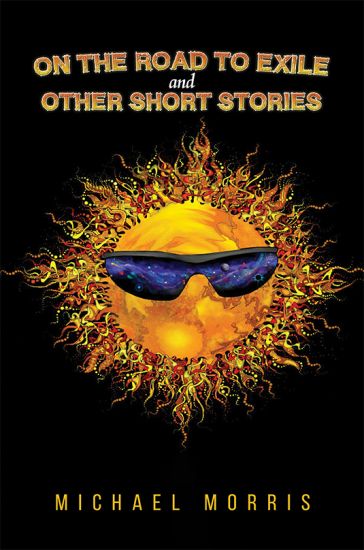
On the Road to Exile and Other Short Stories

On the Road to Exile and Other Short Stories

Michael Morris

austin macauley publishers llc
2024
pokkari
This book contains seven of the most unusual short stories ever written.In On the Road to Exile, a woman travels a thousand miles on her donkey, returning to the family she left a year earlier to find the only thing that has changed is her.In The Accidental Transvestite, a man wants only to get in his ex-girlfriend's pants but once he has them on, he soon realizes he would do anything to get them off.In How Much Further to Insanity?, a woman boards a train that takes her to the edge of madness, confronted by the strangest circumstances that begin with the insults of an Amish passenger and ends with the deprivations of a simeopath.In She Fell to Sleep, a man ruminates over the question of whether his girlfriend fell asleep or faked it.In Six Kittens, Six Victims, a man and his two children stand outside a grocery store, trying to find homes for their kittens.In This is Your Life, a man's perfect life turns complicated when his girlfriend finds him sharing a joint with two fatties, who were at his house due to unexplainable reasons.In Ode to a Shitonion, a man wakes from a coma and recalls the circumstances that led to him being charged with "...exhibiting a flagrant disregard for the sanctity of life while satisfying unnatural sexual impulses..." and the brief courtroom drama that follows.
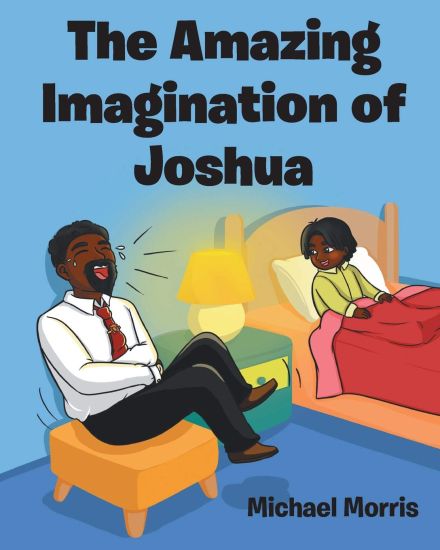
The Amazing Imagination of Joshua

The Amazing Imagination of Joshua

Michael Morris

Page Publishing, Inc
2021
pokkari
One day, I came home from work, and my son was at the dinner table playing with his toy dinosaurs. As I settled in on the couch to watch TV, I noticed how much fun he was having and wanted to play too. I sat down at the table with him and began to explain to me what he was doing. He told me how he was making his two favorite T. rex dinosaurs arm wrestle. He explained to me how the smaller one was the arm wrestling champ because he was so small that he has the most power. Thats how the story was born.
Your Life, Your Way

Your Life, Your Way

Michael Morris

Archway Publishing
2022
pokkari
Many people living in this country are unhappy with their overall quality of life. Michael Morris, a therapist of more than thirty years, knows that firsthand. He has helped thousands of people overcome emotional, psychological, physical, and other types of trauma. The Foundation Forty lifestyle is a tool that provides guidelines to create a high quality of life-one that is in line with your best interests. Position yourself to: - set in motion the dynamics of change for a happy and healthy life; - move past the unfortunate lifestyle that has become a reality for most Americans; - resolve disagreements and cultivate more meaningful relationships with others. The author also examines the reasons why so many people are unhappy, noting that most Americans have lived with the horrors of war and terrorism their entire lives. This level of stress, however comfortable you get with it, reduces the ability of society and individuals to function at their best.
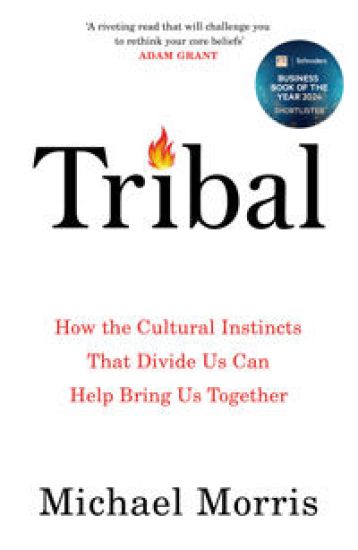
Tribal

Tribal

Michael Morris

Swift Press
2024
sidottu
SHORTLISTED FOR THE FINANCIAL TIMES BUSINESS BOOK OF THE YEAR 'A riveting read that will challenge you to rethink your core beliefs' Adam Grant 'Absolutely spot-on, timely message' Chip Heath 'A vision for collective change' Arianna Huffington Tribalism is our most misunderstood buzzword. We've all heard pundits bemoan its rise, and it's been blamed for everything from political polarization to workplace discrimination. But as acclaimed cultural psychologist and Columbia professor Michael Morris argues, our tribal instincts are humanity's secret weapon. Ours is the only species that lives in tribes: groups glued together by their distinctive cultures that can grow to a scale far beyond clans and bands. Morris argues that our psychology is wired by evolution in three distinctive ways. First, the peer instinct to conform to what most people do. Second, the hero instinct to give to the group and emulate the most respected. And third, the ancestor instinct to follow the ways of prior generations. These tribal instincts enable us to share knowledge and goals and work as a team to transmit the accumulated pool of cultural knowledge onward to the next generation. Countries, churches, political parties, and companies are tribes, and tribal instincts explain our loyalties to them and the hidden ways that they affect our thoughts, actions, and identities. Rather than deriding tribal impulses for their irrationality, we can recognize them as powerful levers that elevate performance, heal rifts, and set off shockwaves of cultural change. Weaving together deep research, current and historical events, and stories from business and politics, Morris cuts across conventional wisdom to completely reframe how we think about our tribes. Bracing and hopeful, Tribal unlocks the deepest secrets of our psychology and gives us the tools to manage our misunderstood superpower.