Kirjojen hintavertailu. Mukana 11 244 527 kirjaa ja 12 kauppaa.

Kirjahaku

Etsi kirjoja tekijän nimen, kirjan nimen tai ISBN:n perusteella.

16 kirjaa tekijältä Michael Muhammad Knight

Muhammad's Body

Muhammad's Body

Michael Muhammad Knight

The University of North Carolina Press
2020
sidottu
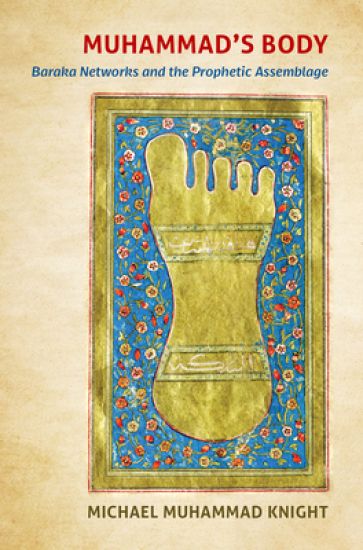
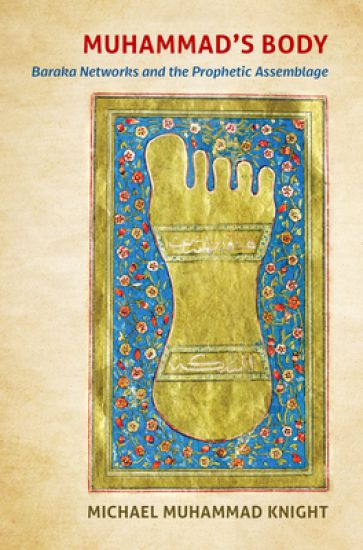
Muhammad's Body introduces questions of embodiment and materiality to the study of the Prophet Muhammad. Analyzing classical Muslim literary representations of Muhammad's body as they emerge in Sunni hadith and sira from the eighth through the eleventh centuries CE, Michael Muhammad Knight argues that early Muslims' theories and imaginings about Mu&7717;ammad's body contributed in significant ways to the construction of prophetic masculinity and authority.Knight approaches hadith and sira as important religiocultural and literary phenomena in their own right. In rich detail, he lays out the variety of ways that early believers imagined Muhammad's relationship to beneficent energy - baraka - and to its boundaries, effects, and limits. Drawing on insights from contemporary theory about the body, Knight shows how changing representations of the Prophet's body helped to legitimatize certain types of people or individuals as religious authorities, while marginalizing or delegitimizing others. For some Sunni Muslims, Knight concludes, claims of religious authority today remain connected to ideas about Muhammad's body.
Muhammad's Body

Muhammad's Body

Michael Muhammad Knight

The University of North Carolina Press
2020
nidottu
Muhammad's Body introduces questions of embodiment and materiality to the study of the Prophet Muhammad. Analyzing classical Muslim literary representations of Muhammad's body as they emerge in Sunni hadith and sira from the eighth through the eleventh centuries CE, Michael Muhammad Knight argues that early Muslims' theories and imaginings about Mu&7717;ammad's body contributed in significant ways to the construction of prophetic masculinity and authority. Knight approaches hadith and sira as important religiocultural and literary phenomena in their own right. In rich detail, he lays out the variety of ways that early believers imagined Muhammad's relationship to beneficent energy - baraka - and to its boundaries, effects, and limits. Drawing on insights from contemporary theory about the body, Knight shows how changing representations of the Prophet's body helped to legitimatize certain types of people or individuals as religious authorities, while marginalizing or delegitimizing others. For some Sunni Muslims, Knight concludes, claims of religious authority today remain connected to ideas about Muhammad's body.
Who Is Muhammad?

Who Is Muhammad?

Michael Muhammad Knight

THE UNIVERSITY OF NORTH CAROLINA PRESS
2023
sidottu
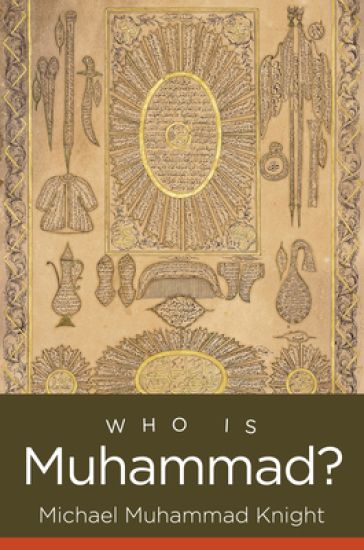
Combining insights from the best published historical and religious studies scholarship, original research, and rich first-person perspective, this highly readable book offers a comprehensive yet concise introduction to the founder and central figure of the Islamic tradition: the prophet Muhammad. Narrating Muhammad's life story, teachings, and daily practices, and assessing how his legacy is received, interpreted, and applied around the world, Michael Muhammad Knight reveals how the project has become simultaneously one of the most beloved historical figures in the world and also one of the most contested, challenged, and disparaged. Knight argues that there was never a singular Muslim vision of Muhammad but rather always multiple perspectives. While Muslims defend Muhammad's legacy against Islamophobic polemics, they also challenge each other regarding the proper authorities through which Muhammad's life and message become comprehensible and applicable in our world. Thinking across time and place, Knight argues that Muhammad is always contextual and contemporary.
Who Is Muhammad?

Who Is Muhammad?

Michael Muhammad Knight

THE UNIVERSITY OF NORTH CAROLINA PRESS
2023
pokkari
Combining insights from the best published historical and religious studies scholarship, original research, and rich first-person perspective, this highly readable book offers a comprehensive yet concise introduction to the founder and central figure of the Islamic tradition: the prophet Muhammad. Narrating Muhammad's life story, teachings, and daily practices, and assessing how his legacy is received, interpreted, and applied around the world, Michael Muhammad Knight reveals how the project has become simultaneously one of the most beloved historical figures in the world and also one of the most contested, challenged, and disparaged. Knight argues that there was never a singular Muslim vision of Muhammad but rather always multiple perspectives. While Muslims defend Muhammad's legacy against Islamophobic polemics, they also challenge each other regarding the proper authorities through which Muhammad's life and message become comprehensible and applicable in our world. Thinking across time and place, Knight argues that Muhammad is always contextual and contemporary.
Metaphysical Africa

Metaphysical Africa

Michael Muhammad Knight

Pennsylvania State University Press
2020
sidottu
The Ansaru Allah Community, also known as the Nubian Islamic Hebrews (AAC/NIH) and later the Nuwaubians, is a deeply significant and controversial African American Muslim movement. Founded in Brooklyn in the 1960s, it spread through the prolific production and dissemination of literature and lecture tapes and became famous for continuously reinventing its belief system. In this book, Michael Muhammad Knight studies the development of AAC/NIH discourse over a period of thirty years, tracing a surprising consistency behind a facade of serial reinvention.It is popularly believed that the AAC/NIH community abandoned Islam for Black Israelite religion, UFO religion, and Egyptosophy. However, Knight sees coherence in AAC/NIH media, explaining how, in reality, the community taught that the Prophet Muhammad was a Hebrew who adhered to Israelite law; Muhammad’s heavenly ascension took place on a spaceship; and Abraham enlisted the help of a pharaonic regime to genetically engineer pigs as food for white people. Against narratives that treat the AAC/NIH community as a postmodernist deconstruction of religious categories, Knight demonstrates that AAC/NIH discourse is most productively framed within a broader African American metaphysical history in which boundaries between traditions remain quite permeable.Unexpected and engrossing, Metaphysical Africa brings to light points of intersection between communities and traditions often regarded as separate and distinct. In doing so, it helps move the field of religious studies beyond conventional categories of “orthodoxy” and “heterodoxy,” challenging assumptions that inform not only the study of this particular religious community but also the field at large.
Metaphysical Africa

Metaphysical Africa

Michael Muhammad Knight

Pennsylvania State University Press
2022
pokkari
The Ansaru Allah Community, also known as the Nubian Islamic Hebrews (AAC/NIH) and later the Nuwaubians, is a deeply significant and controversial African American Muslim movement. Founded in Brooklyn in the 1960s, it spread through the prolific production and dissemination of literature and lecture tapes and became famous for continuously reinventing its belief system. In this book, Michael Muhammad Knight studies the development of AAC/NIH discourse over a period of thirty years, tracing a surprising consistency behind a facade of serial reinvention.It is popularly believed that the AAC/NIH community abandoned Islam for Black Israelite religion, UFO religion, and Egyptosophy. However, Knight sees coherence in AAC/NIH media, explaining how, in reality, the community taught that the Prophet Muhammad was a Hebrew who adhered to Israelite law; Muhammad’s heavenly ascension took place on a spaceship; and Abraham enlisted the help of a pharaonic regime to genetically engineer pigs as food for white people. Against narratives that treat the AAC/NIH community as a postmodernist deconstruction of religious categories, Knight demonstrates that AAC/NIH discourse is most productively framed within a broader African American metaphysical history in which boundaries between traditions remain quite permeable.Unexpected and engrossing, Metaphysical Africa brings to light points of intersection between communities and traditions often regarded as separate and distinct. In doing so, it helps move the field of religious studies beyond conventional categories of “orthodoxy” and “heterodoxy,” challenging assumptions that inform not only the study of this particular religious community but also the field at large.
Magic in Islam

Magic in Islam

Michael Muhammad Knight

TarcherPerigee
2016
nidottu
The progenitor of "Muslim punk rock" and one of today's freshest spiritual voices pushes back against the common assumption that the historic faiths have no occult or magical tradition in this richly learned historical and personal journey through the practice of magic in Islam. Magic in Islam offers a look at magical and occult technologies throughout Muslim history, starting with Islam's earliest and most canonical sources. In addition to providing a highly accessible introduction to magic as it is defined, practiced, condemned, and defended within Muslim traditions, Magic in Islam challenges common assumptions about organized religion. Michael Muhammad Knight's deeply original book fills a gap within existing literature on the place of magic in Islamic traditions and opens a new window on Islam for general readers and students of religion alike. In doing so, the book counters and complicates widespread perceptions of Islam, as well as of magic as it is practiced outside of European contexts. Magic in Islam also challenges our view of "organized religions" as clearly defined systems that can be reduced to checklists of key doctrines, texts, and rules. As a result, Magic in Islam throws a monkey wrench into the conventions of the "intro to Islam" genre, threatening to flip popular notions of a religion's "center" and "margins."
Sufi Deleuze

Sufi Deleuze

Michael Muhammad Knight

FORDHAM UNIVERSITY PRESS
2023
sidottu
"There is always an atheism to be extracted from a religion," Deleuze and Guattari write in their final collaboration, What Is Philosophy? Their claim that Christianity "secretes" atheism "more than any other religion," however, reflects the limits of their archive. Theological projects seeking to engage Deleuze remain embedded within Christian theologies and intellectual histories; whether they embrace, resist, or negotiate with Deleuze's atheism, the atheism in question remains one extracted from Christian theology, a Christian atheism. In Sufi Deleuze, Michael Muhammad Knight offers an intervention, engaging Deleuzian questions and themes from within Islamic tradition. Even if Deleuze did not think of himself as a theologian, Knight argues, to place Deleuze in conversation with Islam is a project of comparative theology and faces the challenge of any comparative theology: It seemingly demands that complex, internally diverse traditions can speak as coherent, monolithic wholes. To start from such a place would not only defy Islam's historical multiplicity but also betray Deleuze's model of the assemblage, which requires attention to not only the organizing and stabilizing tendencies within a structure but also the points at which a structure resists organization, its internal heterogeneity, and unpredictable "lines of flight." A Deleuzian approach to Islamic theology would first have to affirm that there is no such thing as a universal "Islamic theology" that can speak for all Muslims in all historical settings, but rather a multiplicity of power struggles between major and minor forces that contest each other over authenticity, authority, and the making of "orthodoxy." The discussions in Sufi Deleuze thus highlight Islam's extraordinary range of possibilities, not only making use of canonically privileged materials such as the Qur'an and major hadith collections, but also exploring a variety of marginalized resources found throughout Islam that challenge the notion of a singular "mainstream" interpretive tradition. To say it in Deleuze's vocabulary, Islam is a rhizome.
Sufi Deleuze

Sufi Deleuze

Michael Muhammad Knight

FORDHAM UNIVERSITY PRESS
2023
pokkari
"There is always an atheism to be extracted from a religion," Deleuze and Guattari write in their final collaboration, What Is Philosophy? Their claim that Christianity "secretes" atheism "more than any other religion," however, reflects the limits of their archive. Theological projects seeking to engage Deleuze remain embedded within Christian theologies and intellectual histories; whether they embrace, resist, or negotiate with Deleuze's atheism, the atheism in question remains one extracted from Christian theology, a Christian atheism. In Sufi Deleuze, Michael Muhammad Knight offers an intervention, engaging Deleuzian questions and themes from within Islamic tradition. Even if Deleuze did not think of himself as a theologian, Knight argues, to place Deleuze in conversation with Islam is a project of comparative theology and faces the challenge of any comparative theology: It seemingly demands that complex, internally diverse traditions can speak as coherent, monolithic wholes. To start from such a place would not only defy Islam's historical multiplicity but also betray Deleuze's model of the assemblage, which requires attention to not only the organizing and stabilizing tendencies within a structure but also the points at which a structure resists organization, its internal heterogeneity, and unpredictable "lines of flight." A Deleuzian approach to Islamic theology would first have to affirm that there is no such thing as a universal "Islamic theology" that can speak for all Muslims in all historical settings, but rather a multiplicity of power struggles between major and minor forces that contest each other over authenticity, authority, and the making of "orthodoxy." The discussions in Sufi Deleuze thus highlight Islam's extraordinary range of possibilities, not only making use of canonically privileged materials such as the Qur'an and major hadith collections, but also exploring a variety of marginalized resources found throughout Islam that challenge the notion of a singular "mainstream" interpretive tradition. To say it in Deleuze's vocabulary, Islam is a rhizome.
Why I am a Five Percenter

Why I am a Five Percenter

Michael Muhammad Knight

Jeremy P Tarcher
2011
nidottu
A thoughtful, insider view of The Five Percenters-a deeply complex and misunderstood community whose ideas and symbols influenced the rise of hip-hop. Misrepresented in the media as a black parallel to the Hell's Angels, portrayed as everything from a vicious street gang to quasi- Islamic revolutionaries, The Five Percenters are a movement that began as a breakaway sect from the Nation of Islam (NOI) in 1960s Harlem and went on to impact the formation of hip-hop. References to Five Percent language and ideas are found in the lyrics of wide-ranging artists, such as Nas, Rakim, the Wu-Tang Clan, and even Jay-Z.The Five Percenters are denounced by white America as racists, and orthodox Islam as heretics, for teaching that the black man is Allah. Michael Muhammad Knight ("the Hunter S. Thompson of Islamic literature" -The Guardian) has engaged this culture as both white and Muslim; and over the course of his relationship with The Five Percenters, his personal position changed from that of an outsider to an accepted participant with his own initiatory name (Azreal Wisdom). This has given him an intimate perch from which to understand and examine the controversial doctrines of this influential movement. In Why I Am a Five Percenter, Knight strips away years of sensationalism to offer a serious encounter with Five Percenter thought.Encoded within Five Percent culture is a profound critique of organized religion, from which the movement derives its name: Only Five Percent can act as "poor righteous teachers" against the evil Ten Percent, the power structure which uses religion to deceive the Eighty- Five Percent, the "deaf, dumb, and blind" masses. Questioning his own relationship to the Five Percent, Knight directly confronts the community's most difficult teachings. In Why I Am a Five Percenter, Knight not only illuminates a thought system that must appear bizarre to outsiders, but he also brilliantly dissects the very issues of"insiders" and "outsiders," territory and ownership, as they relate to religion and privilege, and to our conditioned ideas about race.
The Taqwacores

The Taqwacores

Michael Muhammad Knight

Soft Skull Press
2009
nidottu
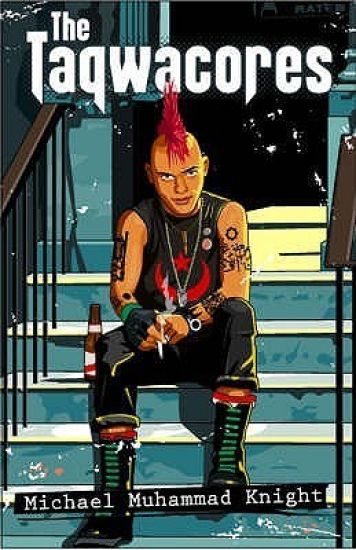
A Muslim punk house in Buffalo, New York, inhabited by burqa-wearing riot girls, mohawked Sufis, straightedge Sunnis, Shi a skinheads, Indonesian skaters, Sudanese rude boys, gay Muslims, drunk Muslims, and feminists. Their living room hosts parties and prayers, with a hole smashed in the wall to indicate the direction of Mecca. Their life together mixes sex, dope, and religion in roughly equal amounts, expressed in devotion to an Islamo-punk subculture, taqwacore, named for taqwa, an Arabic term for consciousness of the divine.Originally self-published on photocopiers and spiralbound by hand, The Taqwacores has now come to be read as a manifesto for Muslim punk rockers and a Catcher in the Rye for young Muslims. There are three different cover colors; red, white, and blue."
Blue-eyed Devil

Blue-eyed Devil

Michael Muhammad Knight

Soft Skull Press
2009
nidottu
Michael Muhammad Knight embarks on a quest for an indigenous American Islam in a series of interstate odysseys. Traveling 20,000 miles by Greyhound in sixty days, he squats in run-down mosques, pursues Muslim romance, is detained at the U.S.-Canadian border with a trunkload of Shia literature, crashes Islamic Society of North America conventions, stink-palms Cat Stevens, and limps across Chicago to find the grave of Noble Drew Ali, filling dozens of notebooks along the way. The result is this semi-autobiographical book, with multiple histories of Fard and the landscape of American Islam woven into Knight's own story. In the course of his adventures, Knight sorts out his own relationship to Islam as he journeys from punk provocateur to a recognized voice in the community, and watches first-hand the collapse of a liberal Islamic dream. The book's extensive cast of characters includes anarchist Sufi heretics, vegan kungfu punks, tattoo-sleeved converts in hard-core bands, spiritual drug dealers, Islamic feminists, slick media entrepreneurs, sages of the street, the grandsons of Elijah Muhammad and Malcolm X, and a group called Muslims for Bush.
William S. Burroughs Vs. The Qur'an

William S. Burroughs Vs. The Qur'an

Michael Muhammad Knight

Soft Skull Press
2012
nidottu
When Michael Muhammad Knight sets out to write the definitive biography of his "Anarcho-Sufi" hero and mentor, writer Peter Lamborn Wilson (aka Hakim Bey), he makes a startling discovery that changes everything. At the same time that he grows disillusioned with his idol, Knight finds that his own books have led to American Muslim youths making a countercultural idol of him, placing him on the same pedestal that he had given Wilson. In an attempt to forge his own path, Knight pledges himself to an Iranian Sufi order that Wilson had almost joined, attempts to write the Great American Queer Islamo-Futurist Novel, and even creates his own mosque in the wilderness of West Virginia. He also employs the "cut-up" writing method of Bey's friend, the late William S. Burroughs, to the Qur'an, subjecting Islam's holiest scripture to literary experimentation. William S. Burroughs vs. the Qur'an is the struggle of a hero-worshiper without heroes and the meeting of religious and artistic paths, the quest of a writer as spiritual seeker.
The Supreme Wisdom Lessons

The Supreme Wisdom Lessons

Michael Muhammad Knight

EQUINOX PUBLISHING LTD
2024
sidottu
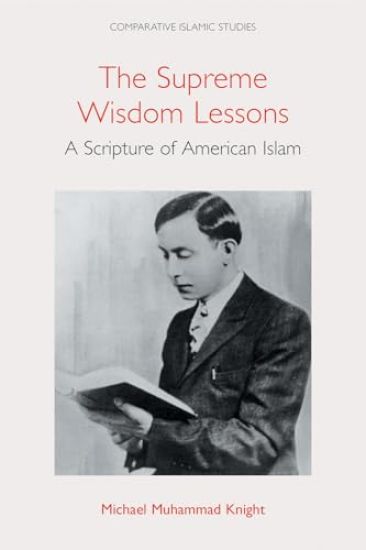
From its beginnings in 1930s Detroit, the Nation of Islam has relied on a guarded series of texts, known as the Supreme Wisdom Lessons, to initiate and educate members. These texts appear primarily as exchanges between Nation founder Fard Muhammad and his student, Elijah Muhammad. Memorization, recitation, and interpretation of the Lessons have been of central importance to the Nation throughout its history. Even after Elijah Muhammad's passing in 1975, the "orthodox" reforms of Elijah's son Wallace Muhammad (later Warith Deen Mohammed) were grounded in part on Wallace's authority to derive new meanings from the Lessons. The Lessons are also foundational for the Five Percenters, a community that emerged in 1960s Harlem through former Nation members' reinterpretation of the Lessons. This monograph, the first dedicated exclusively to the Lessons, places the Lessons in conversation with their historical milieu, exploring political and metaphysical discourses that informed Fard Muhammad's world. Attention is also given to the education programs offered to convicts at San Quentin, where Fard Muhammad was incarcerated in the 1920s, for insights into his pedagogy. This monograph additionally performs deep dives into the text of the Lessons, exploring the Lessons' process of codification, tracking differences between versions, and calling attention to points at which Elijah Muhammad appears to have performed edits within the text. Finally, The Supreme Wisdom Lessons looks at the diverse interpretive traditions surrounding the Lessons, and includes an annotated edition of the Lessons themselves.
The Taqwacores

The Taqwacores

Michael Muhammad Knight

Telegram Books
2007
nidottu
Yusef is living in Buffalo, New York with a group of Muslim punks. A pot-smoking mohawked Sufi called Jehangir plays the rooftop call to prayer on his electric guitar, while debates rage downstairs about the Quranic sources for Iggy Pop songs. With a living-room serving as mosque by day and hosting punk parties by night, and a hole in the wall marking the direction of Mecca, Yusef's friends are all dealing with what it means to be young and Muslim in modern-day America. Amidst all this, Yusef embarks on a fascinating, clumsy journey towards faith and love in this surprising and unsettling read.
The Five Percenters

The Five Percenters

Michael Muhammad Knight

Oneworld Publications
2008
nidottu
With a cast of characters ranging from Malcolm X to 50 Cent, Knight’s compelling work is the first detailed account of the movement inextricably linked with black empowerment, Islam, New York, and hip-hop. Whether discussing the stars of Five Percenter rap or 1980s crack empires, this fast-paced investigation uncovers the community’s icons and heritage, and examines its growing influence in urban American youth culture.