Kirjojen hintavertailu. Mukana 12 083 983 kirjaa ja 12 kauppaa.

Kirjahaku

Etsi kirjoja tekijän nimen, kirjan nimen tai ISBN:n perusteella.

37 kirjaa tekijältä Michael Novak

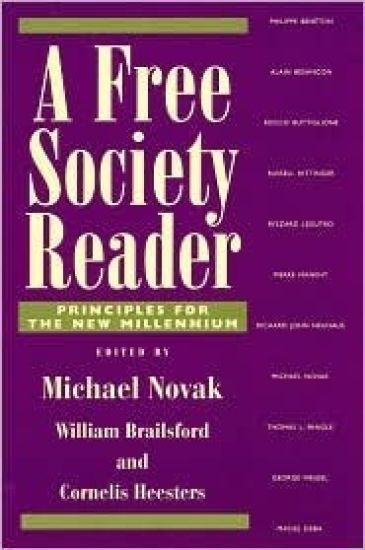
A Free Society Reader

A Free Society Reader

Michael Novak

Lexington Books
2000
sidottu
A Free Society Reader rises to the challenge of freedom in the twenty-first century, offering thoughts and insights with significant implications for citizens of today's brand new world. Our era's most prominent figures in the fields of Christianity and liberty speak about Pope John Paul II's vision of a free society, conceptualize Christianity and political economy, debate issues of democracy and the free society, and question the role of culture. Together for the first time in one volume, these preeminent thinkers provide inspiration and insight to scholars, students, and general readers charting the enormous changes the new millennium has seen.
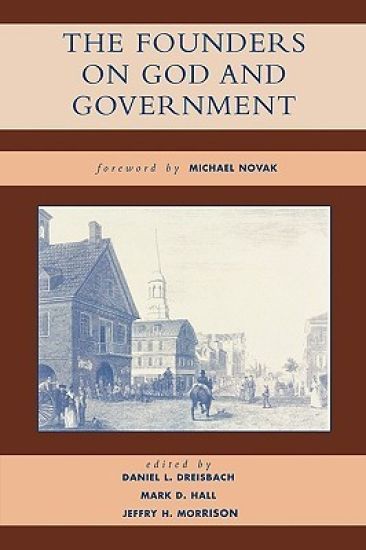
The Founders on God and Government

The Founders on God and Government

Michael Novak

Rowman Littlefield Publishers
2004
nidottu
'In God We Trust?' The separation of church and state is a widely contested topic in the American political arena. Whether for or against, debaters frequently base their arguments in the Constitution and the principles of the American founding. However, Americans' perception of the founding has narrowed greatly over the years, focusing on a handful of eminent statesmen. By exploring the work of nine founding fathers, including often overlooked figures like John Carroll and George Mason, The Founders on God and Government provides a more complete picture of America's origins. The contributors, all noted scholars, examine the lives of individual founders and investigate the relationship between their religious beliefs and political thought. Bringing together original documents and analytical essays, this book is an excellent addition to the library of literature on the founding, and sheds new light on religion's contributions to American civic culture.
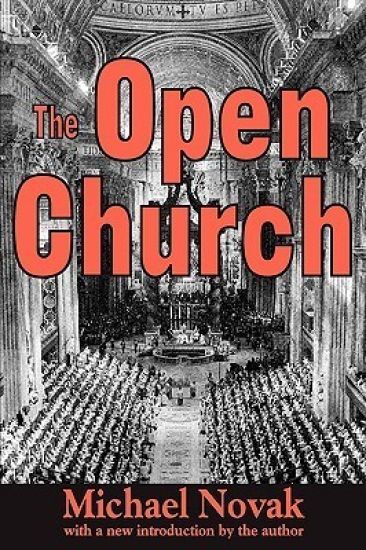
The Open Church

The Open Church

Michael Novak

Transaction Publishers
2001
nidottu
Michael Novak's eyewitness report on the second and pivotal session of Vatican II in 1964 vividly inter weaves pageantry, politics, and theology. An unusually well-informed lay intellectual, who had earned a theological degree just before the Council, Novak applauded the purposes of Pope John XXIII and his successor Paul VI-"to throw open the windows of the church." In this report, he coined the classic description of the foes of the reforms at Vatican II as the party of "nonhistorical orthodoxy," emphasizing the eternal and unchanging, neglecting history and contingency. The author recounts many moments of high drama-Pope Paul VI's opening speech, the vote on the collegiality of bishops, the plea of Cardinal Bea on behalf of the chapter on Jews, and Bishop De Smedt's defense of religious freedom. His colorful chapter on the American bishops in 1964 serves as a fascinating benchmark, as do his many insights into the new role of the laity. His final chapter is a moving tribute to the Open Church engaging the contemporary world, and his new introduction brings this report up to date. This work will be of compelling interest to those interested in the post-conciliar fall of Communism, under the great John Paul II-who took his name from his two predecessors at Vatican II. The winner of the million-dollar Templeton Prize for Progress in Religion (1994), Michael Novak is a theologian, author, and former U.S. ambassador. He currently holds the George Frederick Jewett Chair in Religion and Public Policy at the American Enterprise Institute in Washington, D.C. where he is director of social and political studies. His writings have appeared in every major Western language, and in Chinese, Bengali, Korean, and Japanese. Also available from Transaction are his Catholic Social Thought and Liberal Institutions, The Experience of Nothingness, The Guns of Lattimer, Unmeltable Ethnics, Belief and Unbelief, and Choosing Presidents.
Will it Liberate ?

Will it Liberate ?

Michael Novak

University Press of America
1991
pokkari
Michael Novak's work is challenging. We often disagree sharply in out interpretations and assessments of liberation theology, but he raises important issues which call for clarification and response.
This Hemisphere of Liberty

This Hemisphere of Liberty

Michael Novak

AEI Press
1992
pokkari
As nations undergo radical transformation in every quarter of the world, we have a greater need than ever before to re-examine the sources of strength and weakness in our political, social and economic institutions. This book explores fundamental questions of wealth and poverty, of freedom and responsibility, and traces our ideas about them to their sources in Aristotle, Aquinas, and the Judeo-Christian tradition. Novak shows how an understanding of these sources can liberate human potential for creativity, reinvigorate our institutions and lay the foundations for economic progress. Special attention is given to the roots of Latin America's problems of debt, capital flight, and poverty in its religious and philosophical outlook.
The Fire of Invention

The Fire of Invention

Michael Novak

Rowman Littlefield
1997
sidottu
Many Americans today consider the corporation to be the number one public enemy. Downsizing, corporate greed, an exclusive focus on the needs of shareholders at the expense of workers—the list of complaints from the left and right is long and growing. In this penetrating and insightful book, Michael Novak, regarded by some as America's foremost social thinker, and author of such internationally acclaimed bestsellers as The Spirit of Democratic Capitalism and Business as a Calling, argues that these critics ask the corporation to be something it is not, and they overlook the functions that it performs best—the cultivation of civil society, the fortification of democracy, and the elevation of the poor. Borrowing a phrase from Abraham Lincoln, Novak shows how the corporation weds "the fire of invention" to the "fuel of interest" to generate a creative, dynamic, and civic-minded citizenry. The Fire of Invention examines and illuminates many crucial debates: What is the purpose of the corporation? How should a corporation be governed? How much corporate independence from government regulation is desirable? How can businesses prepare for the complex economic and ethical challenges of the next century? This important book will fundamentally change the way Americans think about big business.
Legacy of Friedrich von Hayek DVD, Volume 3
Each of the seven DVDs in this series, represents one of a series of seven lectures sponsored in 1999 by Liberty Fund and the Committee on Social Thought at the University of Chicago in celebration of the hundredth anniversary of Friedrich von Hayek's birth. Approximate running time: 79 minutes.
The History of Science and the New Humanism

The History of Science and the New Humanism

Michael Novak

Transaction Publishers
1987
nidottu
In this classic work, the foremost historian of science in our time, George Sarton, sums up his reflections on the role of science and of the humanities in our culture. Voicing his opposition to the old-fashioned humanists on the one hand, and to the 'uneducated' men of science and technicians on the other, Sarton points out to the former that the humanities without scientific are essentially incomplete. He warns the latter that without history, without philosophy, without arts and letters, without a living religion, human life on this planet would cease to be worthwhile.After outlining his 'Faith of a Humanist' in the opening section, Sarton goes on to analyze 'The History of Science and the History of Civilization,' to discuss the progress of scientific thought since ancient times in 'East and West,' and to propose the solution for the educational and cultural crisis of our time in 'The New Humanism' and in 'The History of Science and the Problems of Today.' He concludes not only that science is a source of technological development that has changed the face of the earth and has convulsed our lives for good and evil, but that it nonetheless affords the best means of understanding the world, its people, and the multitude of their relationships. 'Science is the conscience of mankind.'Included in this edition is Robert M. Merton's address before the Sarton Centennial meeting of November 1984. It is a stunning tour de force in its own right, providing insights into Sarton, teaching and research at Harvard in the 1930s, and the personal interaction between Sarton the mentor, and Merton the pupil. The essay supplements May Sarton's earlier 'Informal Portrait of George Sarton.'
Catholic Social Thought and Liberal Institutions

Catholic Social Thought and Liberal Institutions

Michael Novak

Transaction Publishers
1988
nidottu
Increasingly, the religious leaders of the world are addressing problems of political economy, expressing concern about the poor. But will their efforts actually help the poor? Or harm them? Much depends, Michael Novak asserts, upon what kind of institutions are constructed, that is, upon realism and practicality.His thesis may be simply stated: Although the Catholic Church during the nineteenth and early twentieth centuries set itself against liberalism as an ideology, it has slowly come to admire liberal institutions such as democracy and free markets. Between the Catholic vision of social justice and liberal institutions, Novak argues, there is a profound consonance (but not identity). Both celebrate realism, respect for institutions, and prudence or practical wisdom. The Catholic tradition adds to liberal individualism a strong communitarian sense.This book was first published in 1984 as Freedom with Justice. This new edition adds both a lengthy introduction carrying forward the original argument and a long concluding chapter on Pope John Paul IPs controversial new encyclical of early 1988, Sollicitudo Rei Socialis.
The Myth of Romantic Love and Other Essays
Written by noted Catholic philosopher Michael Novak, the selections in The Myth of Romantic Love and Other Essays highlight the arc of his intellectual career. Collectively demonstrating the fundamental unity of Novak's work, the sixteen essays in this book span a broad range of political, economic, and social topics.The selections offer clarity of thinking for the sake of concrete ends. For example, "The Myth of Romantic Love," the chapter from which the title of this work is drawn, sharply distinguishes the "love" that popular culture portrays from the true Christian vision of love. And "The Family out of Favor" argues, "if things go well with the family, life is worth living; when the family falters, life falls apart." Thus, true Christian love manifest in marriage and family life is a greater resource for civilized society than any other institution.Although this collection shows that Novak's viewpoints did evolve over time, he remains a thinker that is clearly rooted in the ancient and medieval Catholic tradition. From his discussions of gender relations, to economics, culture, and politics, his perspective honors the primacy of man and his immediate experience, and thereby ultimately glorifies the Creator. Novak's writing will infuriate some readers, and inspire many others but both comrades-in-arms and intellectual opponents will find the clarity and intensity of his writings undeniable.
Belief and Unbelief

Belief and Unbelief

Michael Novak

Routledge
2017
sidottu
This is perhaps the most widely read of Michael Novak's books. Belief and Unbelief attempts to push intelligence and articulation as far as possible into the stuff of what so many philosophers set aside as subjectivity. It is an impassioned critique of the idea of an unbridgeable gap between the emotive and the cognitive ? and in its own way, represents a major thrust at positivist analysis.Written in a context of personal tragedy as well as intellectual search, the book is grounded in the belief that human experience is enclosed within a person to person relationship with the source of all things ? sometimes in darkness, other tunes in aridity, but always in deep encounter with community and courage. It is written with a deep fidelity to classical Catholic thought as well as a sense of the writings of sociology, anthropology, and political theory?from Harold Lasswell to Friedrich von Hayek.This third edition includes Novak's brilliant 1961 article "God in the Colleges" from Harper's ? a critique of the technification of university life that rules issues of love, death, and personal destiny out of bounds, and hence leaves aside the mysteries of contingency and risk, in favor of the certainties of research, production, and consumption. For such a "lost generation" Belief and Unbelief will remain of tremendous interest and impact.When the book first appeared thirty years ago, it was praised by naturalists and religious thinkers alike. Sidney Hook called it "a remarkable book, written with verve and distinction." James Collins termed it "a lively and valuable essay from which a reflective, religiously concerned reader can draw immense profit." And The Washington Post reviewer claimed that "Novak has written a rich, relentlessly honest introduction to the problem of belief. It is a deeply personal book, rigorous in argument and open ended in conclusions."
Catholic Social Thought and Liberal Institutions
Increasingly, the religious leaders of the world are addressing problems of political economy, expressing concern about the poor. But will their efforts actually help the poor? Or harm them? Much depends, Michael Novak asserts, upon what kind of institutions are constructed, that is, upon realism and practicality.His thesis may be simply stated: Although the Catholic Church during the nineteenth and early twentieth centuries set itself against liberalism as an ideology, it has slowly come to admire liberal institutions such as democracy and free markets. Between the Catholic vision of social justice and liberal institutions, Novak argues, there is a profound consonance (but not identity). Both celebrate realism, respect for institutions, and prudence or practical wisdom. The Catholic tradition adds to liberal individualism a strong communitarian sense.This book was first published in 1984 as Freedom with Justice. This new edition adds both a lengthy introduction carrying forward the original argument and a long concluding chapter on Pope John Paul IPs controversial new encyclical of early 1988, Sollicitudo Rei Socialis.
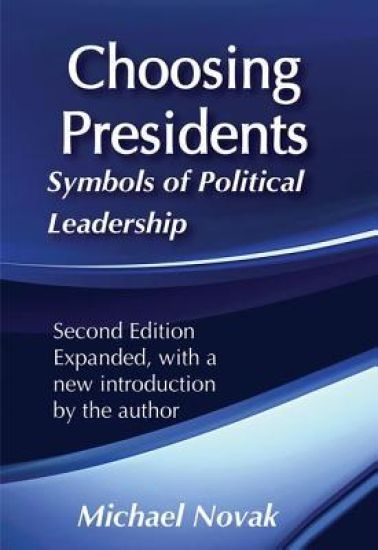
Choosing Presidents

Choosing Presidents

Michael Novak

Routledge
2017
sidottu
In Choosing Presidents, Novak uses the election of an American president as a means to dissect the symbols of our national life and politics, exposing many as distorted perceptions of American realities. This work is a guide to the complexities of electoral politics and a lasting contribution to our understanding of the presidency.The author is Michael Novak.