Kirjojen hintavertailu. Mukana 12 390 323 kirjaa ja 12 kauppaa.

Kirjahaku

Etsi kirjoja tekijän nimen, kirjan nimen tai ISBN:n perusteella.

9 kirjaa tekijältä Michael Olesker

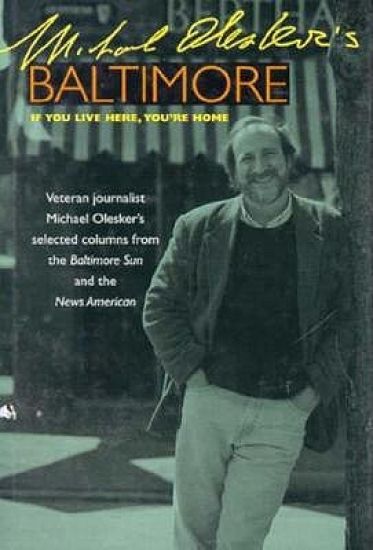
Michael Olesker's Baltimore

Michael Olesker's Baltimore

Michael Olesker

Johns Hopkins University Press
1996
sidottu
In this collection of humorous and poignant newspaper columns written for the Baltimore Sun and The News American over the last two decades, Michael Olesker captures the essence of Baltimore-a big city with the heart of a small town. Here in the closing years of the 20th century is Baltimore, with all its unexpected triumphs, crushing troubles, idiosyncratic characters, and lively neighborhoods. Michael Olesker's Baltimore offers a front row seat at the daily skirmishes that mark the city's life. Olesker draws intimate portraits of major politicians and local celebrities, of big names like William Donald Schaefer and Kurt Schmoke, Barbara Mikulski and Bea Gaddy, Artie Donovan and Brooks Robinson, Barry Levinson and John Waters. He gives equal time to players along the fringes-Block denizens, professional gamblers, petty street hustlers-and to the generally unsung heroes who keep the city vibrant and kicking. With articles about the price neighborhoods pay over racial conflicts and about the small deals that are made to get communities through a given day, Michael Olesker's Baltimore deepens our understanding of the city's people and their resilience. Olesker is hard-edged and straightforward but also warmhearted in his portrayal of Baltimore's colorful characters and their settings. In a style that combines police-blotter with Sunday-feature writing, he tells brief stories that show why-to visitors and residents alike-Baltimore feels like home. "Baltimore is a city of tribal rituals, of neighbors sharing steamed crabs in the back yard, and downtown waitresses who call their customers Hon without worrying about any vast sociological implications, and worshipful football fans who believe the snatching of their beloved Colts was the worst kidnapping since the Lindbergh baby."-from Michael Olesker's Baltimore
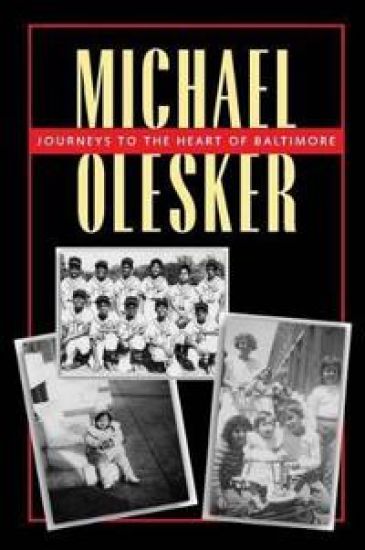
Journeys to the Heart of Baltimore

Journeys to the Heart of Baltimore

Michael Olesker

Johns Hopkins University Press
2001
sidottu
In Journeys to the Heart of Baltimore, veteran journalist Michael Olesker writes of the American melting pot-particularly Baltimore's-in all its rollicking, sentimental, good-natured, and chaotic essence. The stories come from neighborhood street corners and front stoops, playgrounds and school rooms, churches and synagogues, and families gathered around late-night kitchen tables. "Think of this as a love letter across the generations," Olesker writes. The D'Alesandro political dynasty comes to life here, and so do the legendary Baltimore Colts Lenny Moore and Artie Donovan. The old East Baltimore ethnic enclaves nurture youngsters named Barbara Mikulski and Ted Venetoulis, and out of West Baltimore comes the future Afro-American newspaper publisher Jake Oliver. Journeys to the Heart of Baltimore is a delightful reminder of the nation's ethnic and racial mosaic, where a future mayor named Martin O'Malley and a future Baltimore County executive named Dutch Ruppersberger first learn about the melting pot. Boys from Baltimore's Little Italy, like John Pica, go off to fight a war in Italy when they know their allegiance is being tested. And a city struggles through racial convulsions, remembered by those such as John Steadman and Father Constantine Sitaris. "We overlap-or what's the point of America?" Olesker writes. "We compromise, we shed the garments of the past. But we simultaneously strain to hold onto yesterdays. It is the hunger of memory."
The Colts' Baltimore

The Colts' Baltimore

Michael Olesker

Johns Hopkins University Press
2009
sidottu
This is Michael Olesker's nostalgic reminiscence of 1958, the year the Baltimore Colts defeated the New York Giants in sudden-death overtime in a game that still grips the emotions of Baltimoreans. Olesker recaptures the city's love affair with the Colts in a series of thoughtful and colorful stories that give voice to such notable characters as Colts players Johnny Unitas and Art Donovan, politicians Tommy D'Alesandro and Jack Pollack, entertainers Buddy Deane and Royal Parker, sportscasters Chuck Thompson and Vince Bagli, and filmmaker John Waters. The Colts' Baltimore also traces the changing cultural landscape of the city just entering an age of revolution-a time when schools were being racially integrated, rock and roll played on the radio, and Baltimore was planning to renew the dilapidated downtown. Revealing warm ties between Baltimore and its beloved Colts, Olesker's writing makes the events of 1958 seem like only yesterday.
Front Stoops in the Fifties

Front Stoops in the Fifties

Michael Olesker

Johns Hopkins University Press
2013
sidottu
Front Stoops in the Fifties recounts the stories of some of Baltimore's most famous personalities as they grew up during the "decade of conformity." Such familiar names as Jerry Leiber, Nancy Pelosi, Thurgood Marshall, and Barry Levinson figure prominently in Michael Olesker's gripping account, which draws on personal interviews and journalistic digging. Olesker marks the end of the fifties with the assassination of President John F. Kennedy. "It's as if millions will suddenly decide to act out their anxieties and their rage, as if Kennedy's murder exposed some hypocrisy at the heart of the American dream," he writes. Focusing on the period leading up to this turning point in U.S. history, Olesker looks to the individuals living through the changes that were just beginning to surface and would later come to prominence in the sixties. The fifties are often remembered with longing as a more innocent time. But it was also a suffocating time for many. Alongside innocence was ignorance. Olesker tells the story of Nancy D'Alesandro Pelosi, daughter of the mayor, who grew up in a political home and eventually became the first woman Speaker of the House. Thurgood Marshall, schooled in a racially segregated classroom, went on to argue Brown v. Board of Education of Topeka before the U.S. Supreme Court and rewrite race-relations law. Even the music changed. Olesker's doo-wop portrait of Baltimore is nostalgic, but it has a hard edge.
Journeys to the Heart of Baltimore

Journeys to the Heart of Baltimore

Michael Olesker

Johns Hopkins University Press
2015
pokkari
In Journeys to the Heart of Baltimore, veteran journalist Michael Olesker writes of Baltimore's melting pot in all its rollicking, sentimental, good-natured, and chaotic essence. The stories come from neighborhood street corners and front stoops, playgrounds and school rooms, churches and synagogues, and families gathered around late-night kitchen tables. The D'Alesandro political dynasty comes to life here, and so do Lenny Moore and Artie Donovan of the legendary Baltimore Colts. The old East Baltimore ethnic enclaves nurture youngsters named Barbara Mikulski and Ted Venetoulis, and out of West Baltimore comes the future Afro-American newspaper publisher Jake Oliver. Journeys to the Heart of Baltimore is a delightful reminder of the nation's ethnic and racial mosaic, home to a future governor named Martin O'Malley and a future US Representative named Dutch Ruppersberger. Boys from Baltimore's Little Italy, like John Pica, go off to fight a war in Italy when they know their allegiance is being tested. And a city struggles through racial convulsions, remembered by those such as John Steadman and Father Constantine Sitaris.
Front Stoops in the Fifties

Front Stoops in the Fifties

Michael Olesker

Johns Hopkins University Press
2018
pokkari
Front Stoops in the Fifties recounts the stories of some of Baltimore's most famous personalities as they grew up during the "decade of conformity." Such familiar names as Jerry Leiber, Nancy Pelosi, Thurgood Marshall, and Barry Levinson figure prominently in Michael Olesker's gripping account, which draws on personal interviews and journalistic digging. Olesker marks the end of the fifties with the assassination of President John F. Kennedy. "It's as if millions will suddenly decide to act out their anxieties and their rage, as if Kennedy's murder exposed some hypocrisy at the heart of the American dream," he writes. Focusing on the period leading up to this turning point in U.S. history, Olesker looks to the individuals living through the changes that were just beginning to surface and would later come to prominence in the sixties. The fifties are often remembered with longing as a more innocent time. But it was also a suffocating time for many. Alongside innocence was ignorance. Olesker tells the story of Nancy D'Alesandro Pelosi, daughter of the mayor, who grew up in a political home and eventually became the first woman Speaker of the House. Thurgood Marshall, schooled in a racially segregated classroom, went on to argue Brown v. Board of Education of Topeka before the U.S. Supreme Court and rewrite race-relations law. Even the music changed. Olesker's doo-wop portrait of Baltimore is nostalgic, but it has a hard edge.
Boogie

Boogie

Michael Olesker

Loyola College/Apprentice House
2022
pokkari
Millions of American movie fans first heard of the rascal street character "Boogie" in Barry Levinson's classic coming-of-age film, "Diner."But millions of American shoppers might have known about him from the stunning Merry-Go-Round clothing chain Leonard "Boogie" Weinglass created and then extended across most of the U.S.A. Now, in Boogie: Life on A Merry-Go-Round, veteran journalist Michael Olesker tells the life story of the rise from youthful poverty and street fighting, from the pool halls and the late-night Hilltop Diner of Baltimore, to multi-millionare businessman and philanthropist.Or, as Fortune Magazine once said, "Human history has produced exactly one Johann Sebastian Bach, one Sir Isaac Newton, and-for better or worse-one Leonard "Boogie" Weinglass...a true original, a streetwise Baltimore bad boy who grew up to be, by turns, hippie, founder of a successful retail chain, multi-millionaire, jet-setting Florida playboy..."What a ride...a $1 billion nationwide chain with nearly 1,500 stores and 15,000 employees, Merry-Go-Round became a Wall Street darling, and big-time players like Fidelity Investments, Bear Stearns, and Donald Trump tried to horn in on the action." It's an only-in-America tale about a once-in-a-lifetime character.