Kirjojen hintavertailu. Mukana 11 244 527 kirjaa ja 12 kauppaa.

Kirjahaku

Etsi kirjoja tekijän nimen, kirjan nimen tai ISBN:n perusteella.

3 kirjaa tekijältä Michael Penman

Robert the Bruce

Robert the Bruce

Michael Penman

Yale University Press
2018
pokkari
Robert the Bruce (1274–1329) famously defeated the English at Bannockburn and became the hero king responsible for Scottish independence. In this fascinating new biography of the renowned warrior, Michael Penman focuses on Robert’s kingship in the fifteen years that followed his triumphant victory and establishes Robert as not only a great military leader but a great monarch. Robert faced a slow and often troubled process of legitimating his authority, restoring government, rewarding his supporters, accommodating former enemies, and controlling the various regions of his kingdom, none of which was achieved overnight. Penman investigates Robert’s resettlement of lands and offices, the development of Scotland’s parliaments, his handling of plots to overthrow him, his relations with his family and allies, his piety and court ethos, and his conscious development of an image of kingship through the use of ceremony and symbol. In doing so, Penman repositions Robert within the context of wider European political change, religion, culture, and national identity as well as recurrent crises of famine and disease.
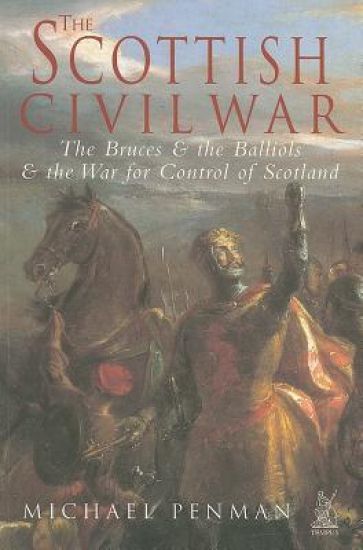
The Scottish Civil War

The Scottish Civil War

Michael Penman

The History Press Ltd
2002
nidottu
A controversial re-evaluation of the Scottish Wars of Independence which argues that the sixty years of civil war between two generations of rival claimants for the Scottish throne - each with their armed camps of ambitious nobles - had a far more devestating and revolutionary impact upon the kingdom of Scotland than the scrappy wars against England's Edwards I, II and III.
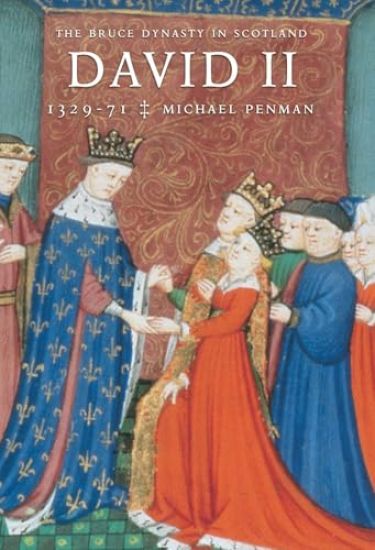
David II

David II

Michael Penman

JOHN DONALD PUBLISHERS LTD
2025
nidottu
David II (1329–1371), son of the hero King of Scots, Robert Bruce (1306–1329), has suffered a harsh historical press, condemned as a disastrous general, a womaniser and a sympathiser with Scotland’s ‘auld enemy’, England. Bringing together evidence from Scotland, England and France, Michael Penman offers a different view: that of a child king who survived usurpation, English invasion, exile and eleven years of English captivity after defeat in battle in 1326 to emerge as a formidable ruler of Scotland. Learning from Philip VI of France and Edward III of England in turn, David became the charismatic patron of a vibrant court focused on the arts of chivalry: had he lived longer, Scotland’s political landscape and national outlook might have been very different to that which emerged under his successors, the Stewart kings. But David’s was also a reign of internal tensions fuelled by his increasingly desperate efforts to determine the royal succession, overawe great magnates like his heir presumptive, Robert the Steward, and persuade his subjects of the need for closer relations with England after sixty years of war.