Kirjojen hintavertailu. Mukana 12 025 344 kirjaa ja 12 kauppaa.

Kirjahaku

Etsi kirjoja tekijän nimen, kirjan nimen tai ISBN:n perusteella.

10 kirjaa tekijältä Michael Potter

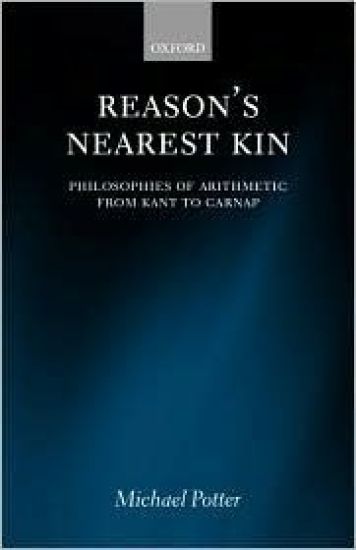
Reason's Nearest Kin

Reason's Nearest Kin

Michael Potter

Clarendon Press
2000
sidottu
How do we account for the truth of arithmetic? And if it does not depend for its truth on the way the world is, what constrains the world to conform to arithmetic? Reason's Nearest Kin is a critical examination of the astonishing progress made towards answering these questions from the late nineteenth to the mid-twentieth century. In the space of fifty years Frege, Dedekind, Russell, Wittgenstein, Ramsey, Hilbert, and Carnap developed accounts of the content of arithmetic that were brilliantly original both technically and philosophically. Michael Potter's innovative study presents them all as finding that content in various aspects of the complex linkage between experience, language, thought, and the world. Potter's reading places them all in Kant's shadow since it was his attempt to ground arithmetic in the spatio-temporal structure of reality that they were reacting against; but it places us in Gödel's shadow since his incompleteness theorems supply us with a measure of the richness of the content they were trying to explain. This stimulating reassessment of some of the classic texts in the philosophy of mathematics reveals many unexpected connections and illuminating comparisons, and offers a wealth of ideas for future work in the subject.
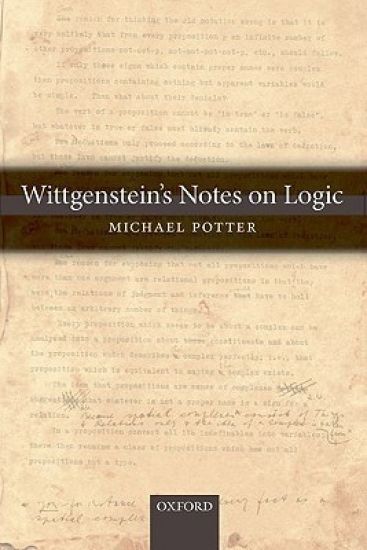
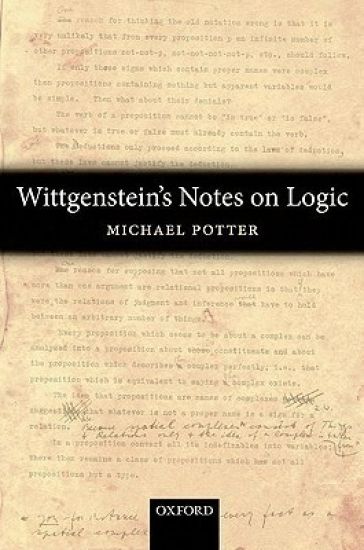
Wittgenstein's Notes on Logic

Wittgenstein's Notes on Logic

Michael Potter

Oxford University Press
2009
sidottu
Wittgenstein's philosophical career began in 1911 when he went to Cambridge to work with Russell. He compiled the Notes on Logic two years later as a kind of summary of the work he had done so far. Russell thought that they were 'as good as anything that has ever been done in logic', but he had Wittgenstein himself to explain them to him. Without the benefit of Wittgenstein's explanations, most later scholars have preferred to treat the Notes solely as an interpretative aid in understanding the Tractatus (which draws on them for material), rather than as a philosophical work in their own right. Michael Potter unequivocally demonstrates the philosophical and historical importance of the Notes for the first time. By teasing out the meaning of key passages, he shows how many of the most important insights in the Tractatus they contain. He discusses in detail how Wittgenstein arrived at these insights by thinking through ideas he obtained from Russell and Frege. And he uses a challenging blend of biography and philosophy to illuminate the methods Wittgenstein used in his work. The book features the complete text of the Notes in a critical edition, with a detailed discussion of the circumstances in which they were compiled, leading to a new understanding of how they should be read.
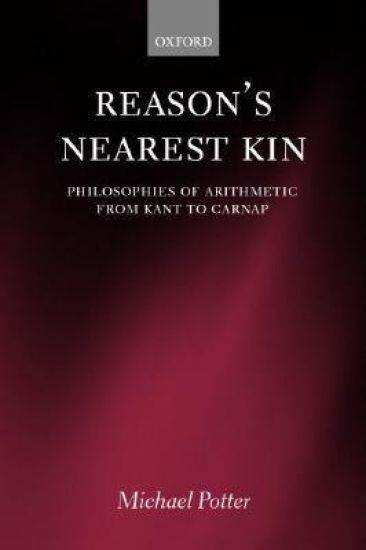
Reason's Nearest Kin

Reason's Nearest Kin

Michael Potter

Oxford University Press
2002
nidottu
How do we account for the truth of arithmetic? And if it does not depend for its truth on the way the world is, what constrains the world to conform to arithmetic? Reason's Nearest Kin is a critical examination of the astonishing progress made towards answering these questions from the late nineteenth to the mid-twentieth century. In the space of fifty years Frege, Dedekind, Russell, Wittgenstein, Ramsey, Hilbert, and Carnap developed accounts of the content of arithmetic that were brilliantly original both technically and philosophically. Michael Potter's innovative study presents them all as finding that content in various aspects of the complex linkage between experience, language, thought, and the world. Potter's reading places them all in Kant's shadow, since it was his attempt to ground arithmetic in the spatio-temporal structure of reality that they were reacting against; but it places us in Gödel's shadow since his incompleteness theorems supply us with a measure of the richness of the content they were trying to explain. This stimulating reassessment of some of the classic texts in the philosophy of mathematics reveals many unexpected connections and illuminating comparisons, and offers a wealth of ideas for future work in the subject.
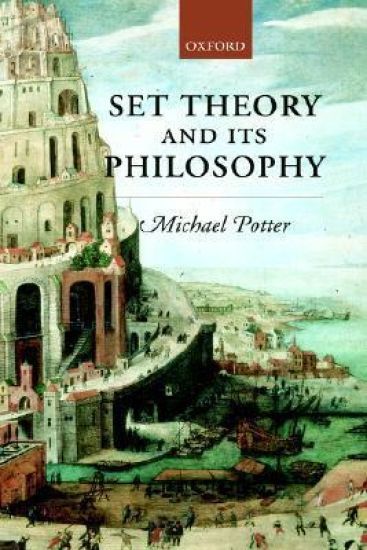
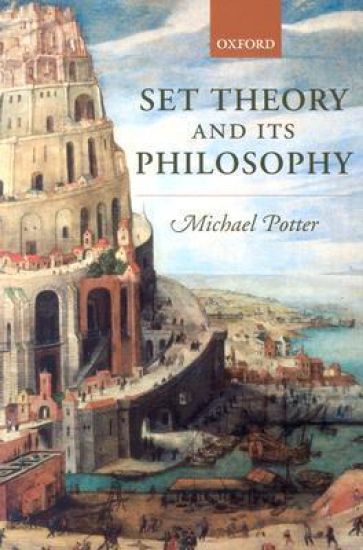
Set Theory and its Philosophy

Set Theory and its Philosophy

Michael Potter

Clarendon Press
2004
sidottu
A comprehensive philosophical introduction to set theory. Anyone wishing to work on the logical foundations of mathematics must understand set theory, which lies at its heart. Potter offers a thorough account of cardinal and ordinal arithmetic, and the various axiom candidates. He discusses in detail the project of set-theoretic reduction, which aims to interpret the rest of mathematics in terms of set theory. The key question here is how to deal with the paradoxes that bedevil set theory. Potter offers a strikingly simple version of the most widely accepted response to the paradoxes, which classifies sets by means of a hierarchy of levels. What makes the book unique is that it interweaves a careful presentation of the technical material with a penetrating philosophical critique. Potter does not merely expound the theory dogmatically but at every stage discusses in detail the reasons that can be offered for believing it to be true.
Set Theory and its Philosophy

Set Theory and its Philosophy

Michael Potter

Clarendon Press
2004
nidottu
Michael Potter presents a comprehensive new philosophical introduction to set theory. Anyone wishing to work on the logical foundations of mathematics must understand set theory, which lies at its heart. Potter offers a thorough account of cardinal and ordinal arithmetic, and the various axiom candidates. He discusses in detail the project of set-theoretic reduction, which aims to interpret the rest of mathematics in terms of set theory. The key question here is how to deal with the paradoxes that bedevil set theory. Potter offers a strikingly simple version of the most widely accepted response to the paradoxes, which classifies sets by means of a hierarchy of levels. What makes the book unique is that it interweaves a careful presentation of the technical material with a penetrating philosophical critique. Potter does not merely expound the theory dogmatically but at every stage discusses in detail the reasons that can be offered for believing it to be true. Set Theory and its Philosophy is a key text for philosophy, mathematical logic, and computer science.
Wittgenstein's Notes on Logic

Wittgenstein's Notes on Logic

Michael Potter

Oxford University Press
2011
nidottu
Wittgenstein's philosophical career began in 1911 when he went to Cambridge to work with Russell. He compiled the Notes on Logic two years later as a kind of summary of the work he had done so far. Russell thought that they were 'as good as anything that has ever been done in logic', but he had Wittgenstein himself to explain them to him. Without the benefit of Wittgenstein's explanations, most later scholars have preferred to treat the Notes solely as an interpretative aid in understanding the Tractatus (which draws on them for material), rather than as a philosophical work in their own right. Michael Potter unequivocally demonstrates the philosophical and historical importance of the Notes for the first time. By teasing out the meaning of key passages, he shows how many of the most important insights in the Tractatus they contain. He discusses in detail how Wittgenstein arrived at these insights by thinking through ideas he obtained from Russell and Frege. And he uses a challenging blend of biography and philosophy to illuminate the methods Wittgenstein used in his work. The book features the complete text of the Notes in a critical edition, with a detailed discussion of the circumstances in which they were compiled, leading to a new understanding of how they should be read.
The Rise of Analytic Philosophy, 1879–1930
In this book Michael Potter offers a fresh and compelling portrait of the birth of modern analytic philosophy, viewed through the lens of a detailed study of the work of the four philosophers who contributed most to shaping it: Gottlob Frege, Bertrand Russell, Ludwig Wittgenstein, and Frank Ramsey. It covers the remarkable period of discovery that began with the publication of Frege's Begriffsschrift in 1879 and ended with Ramsey's death in 1930. Potter—one of the most influential scholars of this period in philosophy—presents a deep but accessible account of the break with absolute idealism and neo-Kantianism, and the emergence of approaches that exploited the newly discovered methods in logic. Like his subjects, Potter focusses principally on philosophical logic, philosophy of mathematics, and metaphysics, but he also discusses epistemology, meta-ethics, and the philosophy of language. The book is an essential starting point for any student attempting to understand the work of Frege, Russell, Wittgenstein, and Ramsey, as well as their interactions and their larger intellectual milieux. It will also be of interest to anyone who wants to cast light on current philosophical problems through a better understanding of their origins.
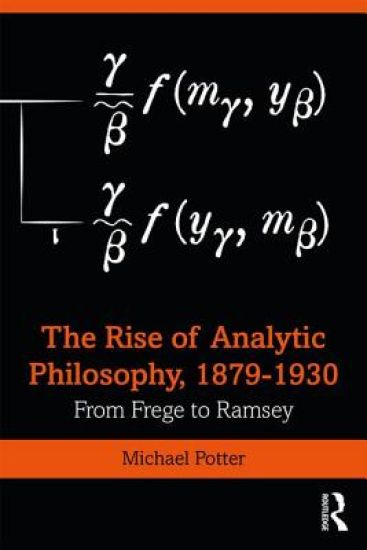
The Rise of Analytic Philosophy, 1879–1930
In this book Michael Potter offers a fresh and compelling portrait of the birth of modern analytic philosophy, viewed through the lens of a detailed study of the work of the four philosophers who contributed most to shaping it: Gottlob Frege, Bertrand Russell, Ludwig Wittgenstein, and Frank Ramsey. It covers the remarkable period of discovery that began with the publication of Frege's Begriffsschrift in 1879 and ended with Ramsey's death in 1930. Potter—one of the most influential scholars of this period in philosophy—presents a deep but accessible account of the break with absolute idealism and neo-Kantianism, and the emergence of approaches that exploited the newly discovered methods in logic. Like his subjects, Potter focusses principally on philosophical logic, philosophy of mathematics, and metaphysics, but he also discusses epistemology, meta-ethics, and the philosophy of language. The book is an essential starting point for any student attempting to understand the work of Frege, Russell, Wittgenstein, and Ramsey, as well as their interactions and their larger intellectual milieux. It will also be of interest to anyone who wants to cast light on current philosophical problems through a better understanding of their origins.
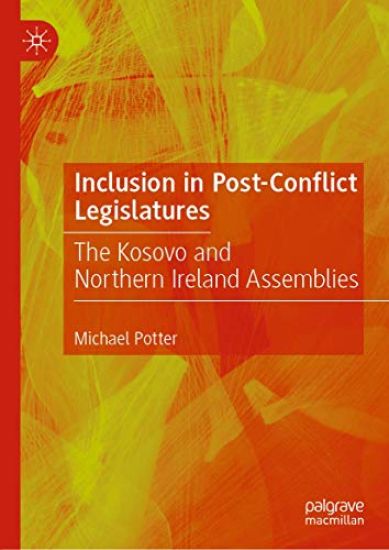
Inclusion in Post-Conflict Legislatures

Inclusion in Post-Conflict Legislatures

Michael Potter

Springer Nature Switzerland AG
2019
sidottu
“An excellent analysis of the complex dynamics of inclusion in post-conflict societies: theoretically grounded, empirically rich, and with a well-informed set of policy-relevant insights and recommendations with implications far beyond the cases of Kosovo and Northern Ireland.”Stefan Wolff, University of Birmingham, UK“Does the promotion of political accommodation between the contending parties in an ethno-nationalist conflict disadvantage other groups in society? This important question is at the heart of Michael Potter's nuanced study of post-settlement parliaments in Kosovo and Northern Ireland, in which he probes their record of representativeness, focusing on gender and ethnicity. His meticulous research, drawing on extensive fieldwork, shows that the domination of the parliaments by parties aligned to the conflict does indeed tend to marginalise other identities. His findings provide plenty of food for thought for practitioners in the field of conflict resolution. In particular, they underline the need for care in the design of institutional arrangements for deeply divided societies, so as to minimise potentially negative consequences that priority for accommodation and reconciliation may have for other issues and for the practice of inclusion.”Adrian Guelke, Queen’s University Belfast, UK“Identity is a central organising principle of politics in the 21st century. In this impressive book Michael Potter shows that a focus on gender and minority ethnic identities in newly-formed post-conflict assemblies provides a unique litmus test of the robustness of democratic politics. He analyses the cases of Kosovo and Northern Ireland with rigour and considerable insight. This book makes a highly original and lasting contribution to theory and practice in post-conflict settings world-wide.”Yvonne Galligan, Dublin Institute of Technology, IrelandThis book examines inclusion in post-conflict legislatures, using Northern Ireland and Kosovo as case studies and gender and minority ethnicity as indicators. The analysis uses an adapted framework developed by Yvonne Galligan and Sara Clavero to measure inclusion across a range of factors associated with deliberative democratic principles. The logic is that political systems designed to accommodate communities in conflict will prioritise certain identities over others. The aim of the book is to investigate how identities not directly associated with a conflict fare in a political system designed to manage identities in conflict. The book looks comparatively at the conflicts in Kosovo and Northern Ireland, then discusses approaches to conflict management, describing how political institutions were designed in those contexts. The themes of women and minority identities in those conflicts are then explored with a view to examining the extent of inclusion in the Northern Ireland and Kosovo Assemblies.
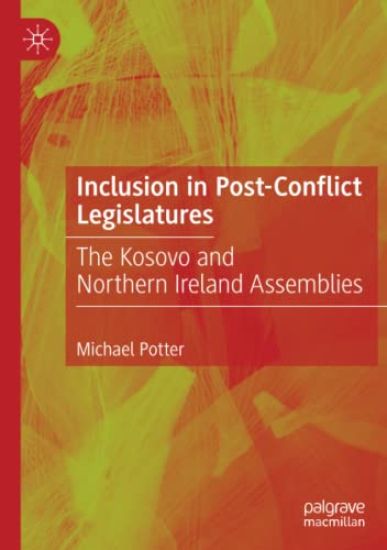
Inclusion in Post-Conflict Legislatures

Inclusion in Post-Conflict Legislatures

Michael Potter

Springer Nature Switzerland AG
2020
nidottu
“An excellent analysis of the complex dynamics of inclusion in post-conflict societies: theoretically grounded, empirically rich, and with a well-informed set of policy-relevant insights and recommendations with implications far beyond the cases of Kosovo and Northern Ireland.”Stefan Wolff, University of Birmingham, UK“Does the promotion of political accommodation between the contending parties in an ethno-nationalist conflict disadvantage other groups in society? This important question is at the heart of Michael Potter's nuanced study of post-settlement parliaments in Kosovo and Northern Ireland, in which he probes their record of representativeness, focusing on gender and ethnicity. His meticulous research, drawing on extensive fieldwork, shows that the domination of the parliaments by parties aligned to the conflict does indeed tend to marginalise other identities. His findings provide plenty of food for thought for practitioners in the field of conflict resolution. In particular, they underline the need for care in the design of institutional arrangements for deeply divided societies, so as to minimise potentially negative consequences that priority for accommodation and reconciliation may have for other issues and for the practice of inclusion.”Adrian Guelke, Queen’s University Belfast, UK“Identity is a central organising principle of politics in the 21st century. In this impressive book Michael Potter shows that a focus on gender and minority ethnic identities in newly-formed post-conflict assemblies provides a unique litmus test of the robustness of democratic politics. He analyses the cases of Kosovo and Northern Ireland with rigour and considerable insight. This book makes a highly original and lasting contribution to theory and practice in post-conflict settings world-wide.”Yvonne Galligan, Dublin Institute of Technology, IrelandThis book examines inclusion in post-conflict legislatures, using Northern Ireland and Kosovo as case studies and gender and minority ethnicity as indicators. The analysis uses an adapted framework developed by Yvonne Galligan and Sara Clavero to measure inclusion across a range of factors associated with deliberative democratic principles. The logic is that political systems designed to accommodate communities in conflict will prioritise certain identities over others. The aim of the book is to investigate how identities not directly associated with a conflict fare in a political system designed to manage identities in conflict. The book looks comparatively at the conflicts in Kosovo and Northern Ireland, then discusses approaches to conflict management, describing how political institutions were designed in those contexts. The themes of women and minority identities in those conflicts are then explored with a view to examining the extent of inclusion in the Northern Ireland and Kosovo Assemblies.