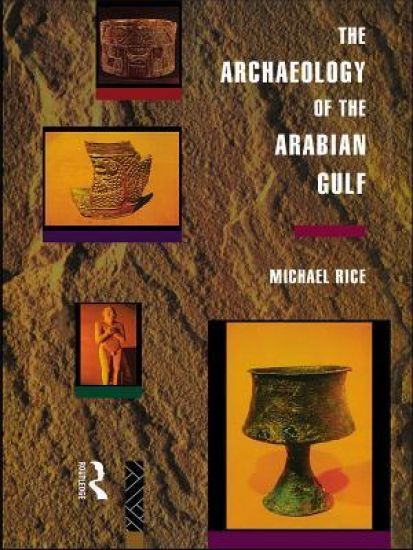
The archaeological remains in the Gulf area are astounding, and still relatively unexplored. Michael Rice has produced the first up-to-date book, which encompasses all the recent work in the area. He shows that the Gulf has been a major channel of commerce for millenia, and that its ancient culture was rich and complex, to be counted with its great contempororaries in Sumer, Egypt and south-west Persia.
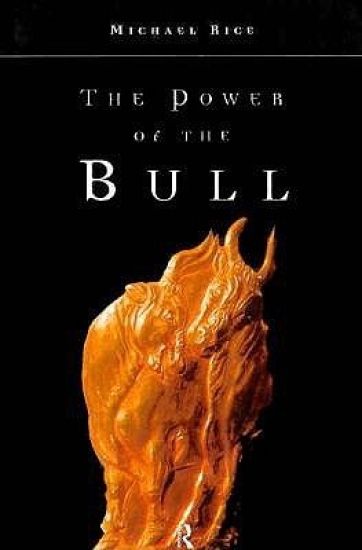
Everyone has heard of the Minotaur in the labyrinth on Crete and many know that the Greek gods would adopt the guise of a bull to seduce mortal women. But what lies behind these legends?The Power of the Bull discusses mankind's enduring obsession with bulls. The bull is an almost universal symbol throughout Indo-European cultures. Bull cults proliferated in the Middle East and in many parts of North Africa, and one cult, Mithraism, was the greatest rival to Christianity in the Roman Empire. The Cults are divergent yet have certain core elements in common.Michael Rice argues that the ancient bulls were the supreme sacrificial animal. An examination of evidence from earliest prehistory onwards reveals the bull to be a symbol of political authority, sexual potency, economic wealth and vast subterranean powers. In some areas representations of the bull have varied little from earliest times, in others it has changed vastly over centuries. This volume provides a well-illustrated and accessible analysis of the exceptionally rich artistic inheritance associated with the bull.
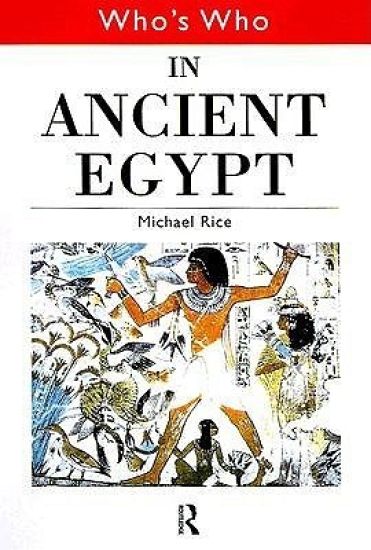
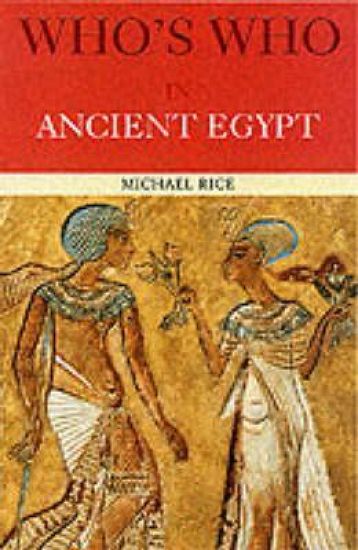
In this compelling guide and sourcebook, renowned author and scholar Michael Rice introduces us to the inhabitants of ancient Egypt, allowing us to encounter their world through their own eyes. Here are the great and the famous, from Cleopatra to Tutankhamun, but here also are the grave-robber Amenwah, Nakht the gardener and Sebaster the hairdresser. The whole arena of Egyptian life is expressed in these pages. Not only are there nearly a thousand biographies, there is also a chapter on 'Encountering Ancient Egyptians', sections on kingship and on religion, a chronology, a glossary and maps. A combination of erudite scholarship and a clear and accessible style, this volume opens up the world of the ancient Egyptians to all those with an interest in the subject in a way that has never been done before.
In this compelling guide and sourcebook, renowned author and scholar Michael Rice introduces us to the inhabitants of ancient Egypt, allowing us to encounter their world through their own eyes. Here are the great and the famous, from Cleopatra to Tutankhamun, but here also are the grave-robber Amenwah, Nakht the gardener and Sebaster the hairdresser. The whole arena of Egyptian life is expressed in these pages. Not only are there nearly a thousand biographies, there is also a chapter on 'Encountering Ancient Egyptians', sections on kingship and on religion, a chronology, a glossary and maps. A combination of erudite scholarship and a clear and accessible style, this volume opens up the world of the ancient Egyptians to all those with an interest in the subject in a way that has never been done before.
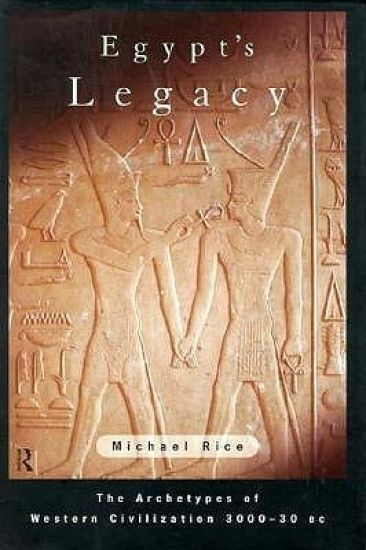
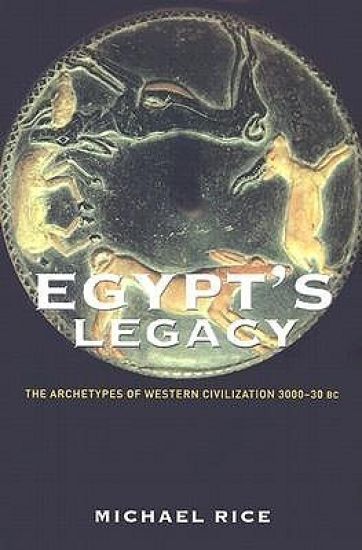
Drawing on Jungian psychology to show why Egypt has been so important in the history of Western civilisation, Michael Rice explains the majesty and enduring appeal of Egyptian civilization. Jung claimed that there exist certain psychological drives dormant in our shared unconscious: these are the archetypes. From the omnipotent god to the idea of the nation state, the formulation of most of these archetypes is owed to ancient Egypt.Michael Rice sets out to recover the sense of wonder that the Egyptians themselves felt as they contemplated the world in which they lived, and the way they expressed that wonder in the religion, art and literature. He traces the story of Egyptian civilization from its emergence in the third millennium BC to its transformation following the Macedonian conquest in 30 BC.
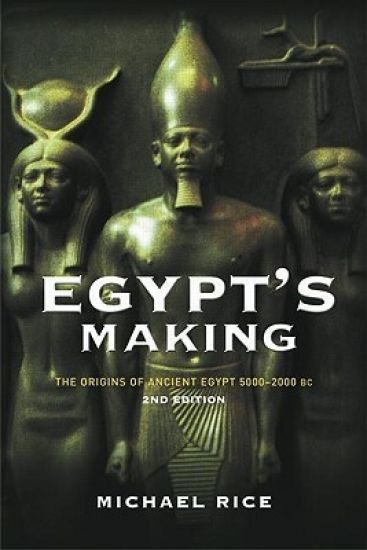
Already a classic and widely used text, this second edition has been wholly revised and updated in the light of the many discoveries made since its first publication. Michael Rice's bold and original work evokes the fascination and wonder of the most ancient period of Egypt's history.Covering a huge range of topics, including formative influences in the political and social organization and art of Egypt, the origins of kingship, the age of pyramids, the nature of Egypt's contact with the lands around the Arabian Gulf, and the earliest identifiable developments of the historic Egyptian personality.Egypt's Making is a scholarly yet readable and imaginative approach to this compelling ancient civilization.
Already a classic and widely used text, this second edition has been wholly revised and updated in the light of the many discoveries made since its first publication. Michael Rice's bold and original work evokes the fascination and wonder of the most ancient period of Egypt's history.Covering a huge range of topics, including formative influences in the political and social organization and art of Egypt, the origins of kingship, the age of pyramids, the nature of Egypt's contact with the lands around the Arabian Gulf, and the earliest identifiable developments of the historic Egyptian personality.Egypt's Making is a scholarly yet readable and imaginative approach to this compelling ancient civilization.
Drawing on Jungian psychology to show why Egypt has been so important in the history of Western civilisation, Michael Rice explains the majesty and enduring appeal of Egyptian civilization. Jung claimed that there exist certain psychological drives dormant in our shared unconscious: these are the archetypes. From the omnipotent god to the idea of the nation state, the formulation of most of these archetypes is owed to ancient Egypt.Michael Rice sets out to recover the sense of wonder that the Egyptians themselves felt as they contemplated the world in which they lived, and the way they expressed that wonder in the religion, art and literature. He traces the story of Egyptian civilization from its emergence in the third millennium BC to its transformation following the Macedonian conquest in 30 BC.
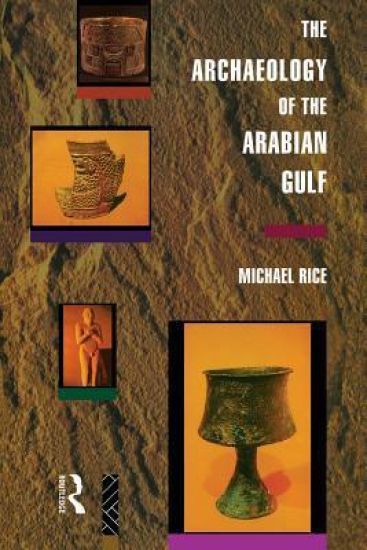
The archaeological remains in the Gulf area are astounding, and still relatively unexplored. Michael Rice has produced the first up-to-date book, which encompasses all the recent work in the area. He shows that the Gulf has been a major channel of commerce for millenia, and that its ancient culture was rich and complex, to be counted with its great contempororaries in Sumer, Egypt and south-west Persia.
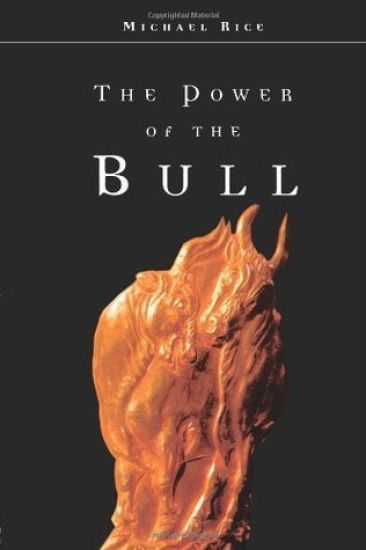
Everyone has heard of the Minotaur in the labyrinth on Crete and many know that the Greek gods would adopt the guise of a bull to seduce mortal women. But what lies behind these legends?The Power of the Bull discusses mankind's enduring obsession with bulls. The bull is an almost universal symbol throughout Indo-European cultures. Bull cults proliferated in the Middle East and in many parts of North Africa, and one cult, Mithraism, was the greatest rival to Christianity in the Roman Empire. The Cults are divergent yet have certain core elements in common.Michael Rice argues that the ancient bulls were the supreme sacrificial animal. An examination of evidence from earliest prehistory onwards reveals the bull to be a symbol of political authority, sexual potency, economic wealth and vast subterranean powers. In some areas representations of the bull have varied little from earliest times, in others it has changed vastly over centuries. This volume provides a well-illustrated and accessible analysis of the exceptionally rich artistic inheritance associated with the bull.
"You don't need to worry about 'Staring Memory in the Face' being yet another addition to the breast-beating literature of white boys or girls growing up in South Africa. Your book has many differences from that genre. Not least, it's well written ... The winter rain in 1943 you interpreted from the atmosphere of war around you, and the terror you describe brings a unique element into the childhood saga we know in South Africa. It's one of the best passages in the book, the rain becoming, for the child, Germans coming to kill you. The bewildering changes by which you became a South African youngster are a dimension that goes beyond the personal. They bring together undidacticly the mores and values of the colonial masters' world and those they created, we were to struggle with eventually, in one of the domains they had created. The end of Empire - and the beginning - of what? You show how it was to be part of that emergence. It's anembattled process within the self, of course, and the containment of solitude you had to deal with, not to refuse the frustrations, false starts, is strikingly conveyed, without excuses or self-pity, but with open-eyed analysis by hindsight. There comes through a strong, troubled personality, not as Norman Mailer put it, advertisements for oneself. Your growing political awareness is something you deal with as if you were going through it as you write; I find it refreshing that you don't make it more intense or urgent than it was, as our breast-beating writers do. It's taking place almost against the preoccupations of your 'ordinary' problems of personal relations."Nadine Gordimer
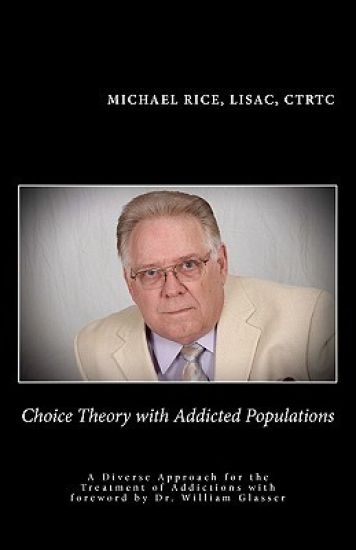
The foreword to this book is written by Dr William Glasser.This book is for both professionals in the field of substance abuse as well as those who may live with or love an addicted individual. It contains techniques, directives, ideas, and explanations for those who may be addicted to prescription meds, street drugs or alcohol. Also included are several exercises that Mike has developed over the years in working with groups that he has combined along with the work of Dr. William Glasser, M. D., the creator of Reality Therapy and most recently, Choice Theory. Not all of the information is user-friendly for the non-professional because a close friend or family member will never be able to establish a clinical relationship with the addict. The non-professional will always be recognized by the addict as Mom, Dad, Friend, Wife, Husband, etc which will inhibit the addict from taking them as someone who might understand and be able to help them. However, there are many other things in the book that the non-professional will be able to utilize that will make their personal life better by knowing what they can control and what they can't control with their loved one.Mike applies Choice Theory, the new Reality Therapy, by allowing the client to create their own personal treatment plan and not one that is necessarily designed by the therapist or agency. This allows for the client to feel s/he has control and choices rather than being coerced or forced to do something they don't want to do because someone else said they had to do it.People eventually learn that the drug or alcohol that they are consuming is effective for ridding themselves of unwanted emotions. Quite bluntly, they are unhappy. They are unhappy because of unsatisfying relationships with the important people in their life. After several weeks or months, they become biochemically addicted to the substance. They are now functioning on a daily basis with drug affected thoughts, emotions, and behaviors while causing harm to their internal organs. What they want mostly, satisfying relationships, are being destroyed by their behavior as well as the behavior of those whom they want in their life. While their drug of choice numbs their unwanted emotions, it also numbs their wanted emotions. The lack of these unwanted emotions fools them into thinking they are happy . . . a major misdiagnosis or identification. They are only feeling pleasure which they confuse for being happiness.This book is essential for understanding not only the wanted happiness of the addict, but the happiness of those who are involved with the addict as well. Understanding what motivates us is the key to satisfying our basic needs that create and maintain our happiness.
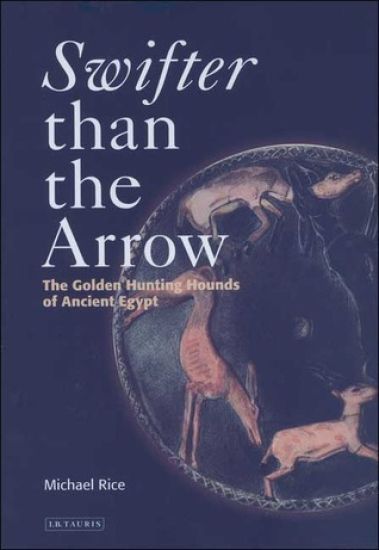
"Swifter than the Arrow" explores a little-known aspect of life in Ancient Egypt, celebrating the Egyptians as the first known civilisation to have formed the special bond with the dog that persists today as the most remarkable and enduring of human-animal relationships. Five thousand years ago the Egyptians selected and bred hounds for the chase and as the loved companions of both the 'Great Ones' - the ruling classes - and of less exalted folk. For more than twenty-five centuries they kept the breed true, a remarkable achievement to be counted alongside the development of stone architecture and the building of the pyramids, the invention of hieroglyphs, the creation of kingship and of the first nation-state in the world. The dogs on which the Egyptians lavished such loving care and skill were the elegant, slender, prick-eared golden hounds, familiar from a thousand tomb reliefs, that they called tjesm. They were given affectionate names and were the companions of kings, who honoured them with rich burials to ensure that they would be together for ever in the Afterlife. Numerous representations of dogs and their masters from predynastic rock-art through to elaborate tomb paintings and reliefs leave us in no doubt as to the sincerity of the affection that the Egyptians felt for their dog companions. The first named dog-lover in history was the earliest known queen, Herneith, who was buried with her hound at Saqqara. Dogs and other canines also played their roles in the rich pantheon of ancient Egyptian religion, figuring as semi-divine messengers between the worlds of the living and the dead. Perhaps the most familiar such deity is the sleek, black jackal-headed god Anubis, guardian of the Necropolis and attendant of the underworld. "Swifter than the Arrow" also examines the evidence that hounds living today - most notably modern breeds such as the so-called 'Pharaoh Hound' - are directly descended from the Egyptian hound. It reveals remarkable information about the ancestry of the hounds of the Mediterranean islands that unmistakably share the appearance and character of the dogs that once raced across the Egyptian deserts. This unique book throws fresh light on our understanding of ancient Egypt while providing a completely fresh insight into the development of mankind's remarkable bond with the domesticated dog.