Kirjahaku
Etsi kirjoja tekijän nimen, kirjan nimen tai ISBN:n perusteella.
64 kirjaa tekijältä Michael Schmidt

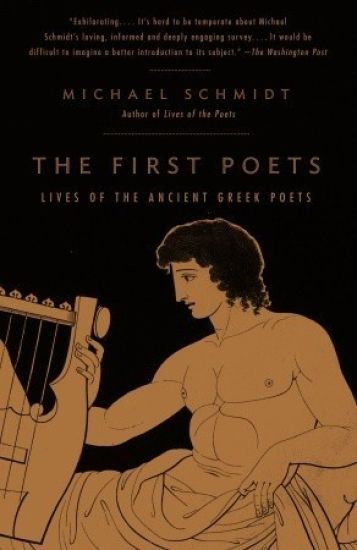
A dazzling literary exploration by acclaimed poet and critic Michael Schmidt, The First Poets brings to life for the general reader the great Greek poets who gave our poetic tradition its first bearings and whose works have had an enduring influence on our literature and our imagination. Starting with the legendary and possibly mythical Orpheus and with Homer, Schmidt conjures a host of our literary forebears. From Hipponax, "the dirty old man of poetry," to Theocritus, the father of pastoral; from Sappho, who threw herself from a cliff for love, to Hesiod, who claimed a visit from the Muses-the stories in The First Poets masterfully merge fact and conjecture into animated and compelling portraits of these ancestors of our culture.
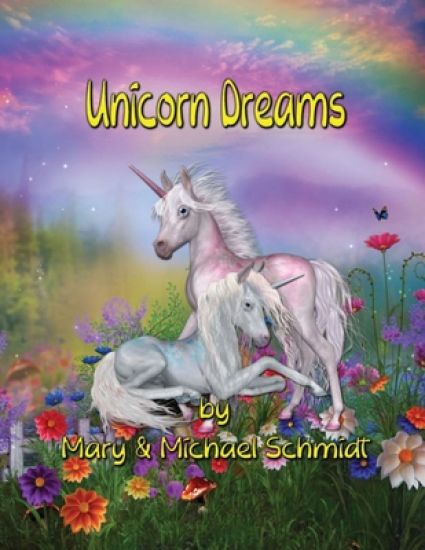
In Unicorn Dreams, children learn how to pretend play. It's important for children to learn the concept of, and how to pretend play (make-believe or imaginative play), as this fosters a child's creativity and sparks discussions with your child, which in turn helps your child's thinking skills when working out a new situation during play. Imaginative play contributes to the development of all children. Oftentimes, children may pretend to cook with toy dishes, or engage in tea parties with a friend, and some might pretend play when alone with a parent at home. A parent can provide a safe environment for a child to act out things that they cannot do in real life, such as having two dolls get married. The opportunity to interact with your child/children in this positive environment helps children with language and learning social skills with other children and adults. Pretend play also allows for play in which not all children will receive what they want (not all can be a king or queen), and parents help their child learn positive behaviors. Unicorn Dreams teaches children to pretend play and gives children positive thoughts before naptime or bedtime.

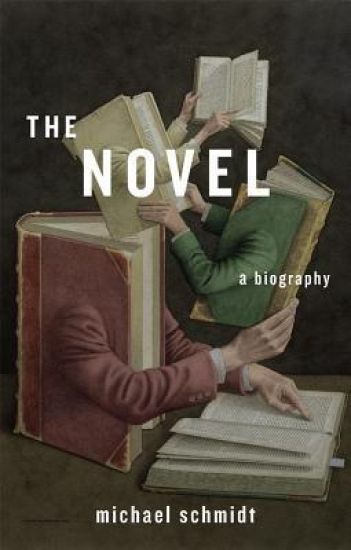
The 700-year history of the novel in English defies straightforward telling. Geographically and culturally boundless, with contributions from Great Britain, Ireland, America, Canada, Australia, India, the Caribbean, and Southern Africa; influenced by great novelists working in other languages; and encompassing a range of genres, the story of the novel in English unfolds like a richly varied landscape that invites exploration rather than a linear journey. In The Novel: A Biography, Michael Schmidt does full justice to its complexity.Like his hero Ford Madox Ford in The March of Literature, Schmidt chooses as his traveling companions not critics or theorists but “artist practitioners,” men and women who feel “hot love” for the books they admire, and fulminate against those they dislike. It is their insights Schmidt cares about. Quoting from the letters, diaries, reviews, and essays of novelists and drawing on their biographies, Schmidt invites us into the creative dialogues between authors and between books, and suggests how these dialogues have shaped the development of the novel in English.Schmidt believes there is something fundamentally subversive about art: he portrays the novel as a liberalizing force and a revolutionary stimulus. But whatever purpose the novel serves in a given era, a work endures not because of its subject, themes, political stance, or social aims but because of its language, its sheer invention, and its resistance to cliché—some irreducible quality that keeps readers coming back to its pages.
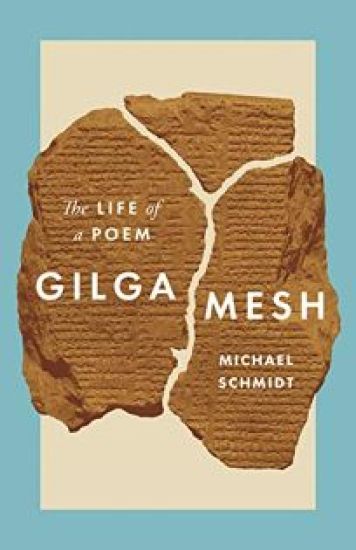
Reflections on a lost poem and its rediscovery by contemporary poetsGilgamesh is the most ancient long poem known to exist. It is also the newest classic in the canon of world literature. Lost for centuries to the sands of the Middle East but found again in the 1850s, it tells the story of a great king, his heroism, and his eventual defeat. It is a story of monsters, gods, and cataclysms, and of intimate friendship and love. Acclaimed literary historian Michael Schmidt provides a unique meditation on the rediscovery of Gilgamesh and its profound influence on poets today.Schmidt describes how the poem is a work in progress even now, an undertaking that has drawn on the talents and obsessions of an unlikely cast of characters, from archaeologists and museum curators to tomb raiders and jihadis. Fragments of the poem, incised on clay tablets, were scattered across a huge expanse of desert when it was recovered in the nineteenth century. The poem had to be reassembled, its languages deciphered. The discovery of a pre-Noah flood story was front-page news on both sides of the Atlantic, and the poem's allure only continues to grow as additional cuneiform tablets come to light. Its translation, interpretation, and integration are ongoing.In this illuminating book, Schmidt discusses the special fascination Gilgamesh holds for contemporary poets, arguing that part of its appeal is its captivating otherness. He reflects on the work of leading poets such as Charles Olson, Louis Zukofsky, and Yusef Komunyakaa, whose own encounters with the poem are revelatory, and he reads its many translations and editions to bring it vividly to life for readers.
Reflections on a lost poem and its rediscovery by contemporary poetsGilgamesh is the most ancient long poem known to exist. It is also the newest classic in the canon of world literature. Lost for centuries to the sands of the Middle East but found again in the 1850s, it is a story of monsters, gods, and cataclysms, and of intimate friendship and love. Acclaimed literary historian Michael Schmidt provides a unique meditation on the rediscovery of Gilgamesh, showing how part of its special fascination is its captivating otherness. He reflects on the work of leading poets such as Charles Olson, Louis Zukofsky, and Yusef Komunyakaa, whose own encounters with the poem are revelatory, and he reads its many translations and editions to bring it vividly to life for today's readers.
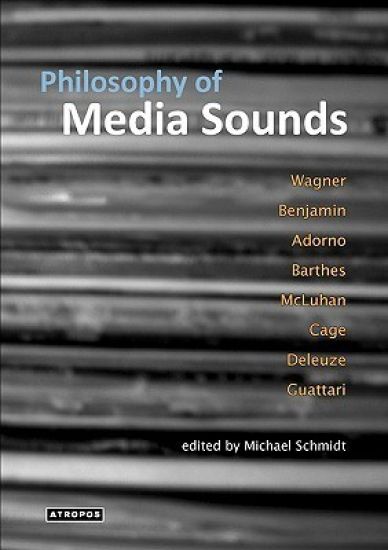
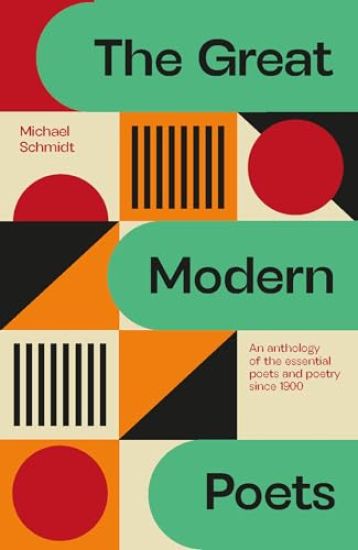
An essential introduction to the most significant poems and their works since 1900Reproduced within this collection are some of the greatest poems of the 20th century, featuring works from major writers such as T.S. Eliot and Sylvia Plath to Langston Hughes and W.B. Yeats. For each, Michael Schmidt provides an insight into their themes and the background to their work, opening for the reader a deeper understanding and enjoyment of these extraordinary poems.Poets include:W.B. YeatsRobert FrostEdward ThomasPhilip LarkinT.S. EliotTed HughesLangston HughesSylvia PlathC.S SissonDerek WalcottEzra Pound& many more!
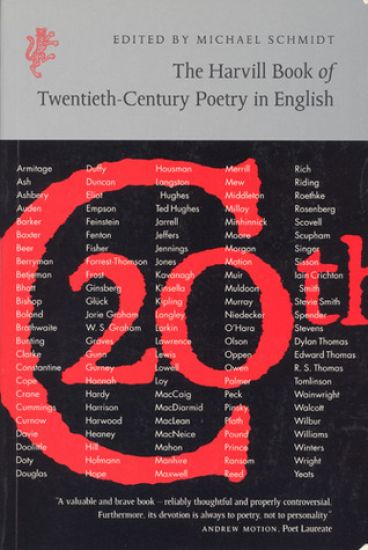
What links their diverse voices is a common language: each poem, in its own way, adds to the resources of the medium and makes it new. The poems in this book are allowed to slip free of their moorings in the biography and history of the last century to create new spaces and times.
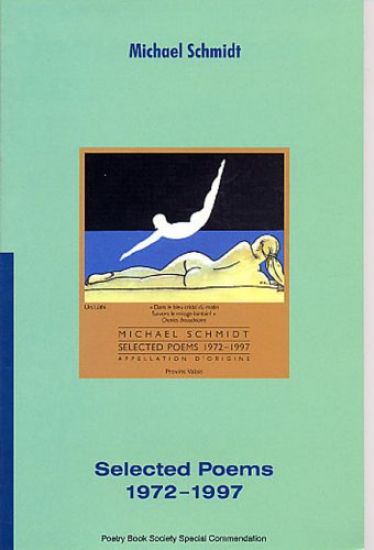
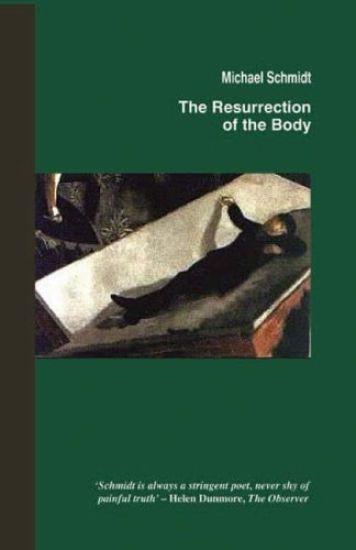
An exciting new collection from this acclaimed poet.
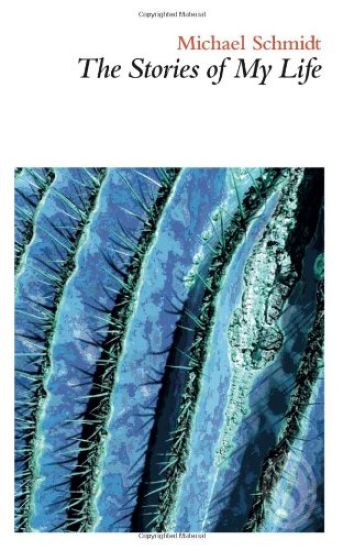
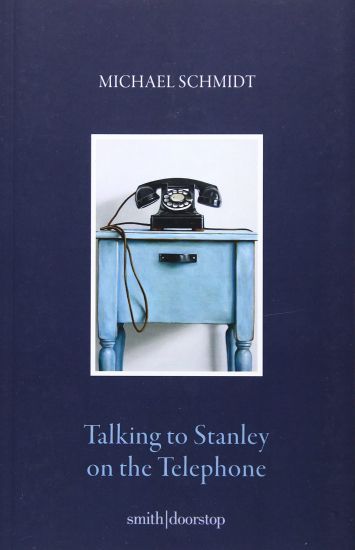

This volume examines the largely overlooked aesthetic writings of Karl Leonhard Reinhold before 1790, with which he aimed to anticipate Kant’s critique of taste. Contextually reconstructing Reinhold’s approach toward ?a complex theory of pleasure and drive reveals the originality of his transcendental philosophical aesthetics, which differed from those of Ernst Platner, and their historical relevance as a potential source of inspiration for Kant.
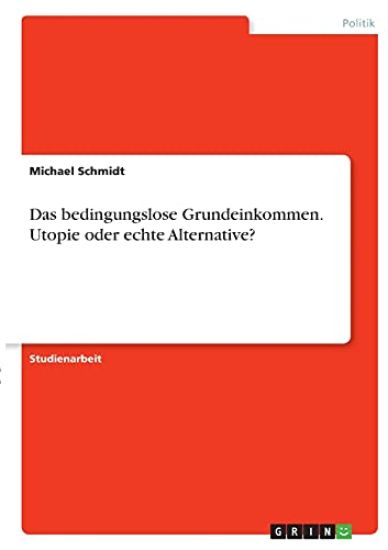
Das bedingungslose Grundeinkommen. Utopie oder echte Alternative?
Michael Schmidt
GRIN Verlag
2021
nidottu