Kirjojen hintavertailu. Mukana 11 342 296 kirjaa ja 12 kauppaa.

Kirjahaku

Etsi kirjoja tekijän nimen, kirjan nimen tai ISBN:n perusteella.

24 kirjaa tekijältä Michael Slote

From Enlightenment to Receptivity

From Enlightenment to Receptivity

Michael Slote

Oxford University Press Inc
2016
nidottu
This new book by Michael Slote argues that Western philosophy on the whole has overemphasized rational control and autonomy at the expense of the important countervailing value and virtue of receptivity. Recently the ideas of caring and empathy have received a great deal of philosophical and public attention, but both these notions rest on the deeper and broader value of receptivity, and in From Enlightenment to Receptivity, Slote seeks to show that we need to focus more on receptivity if we are to attain a more balanced sense and understanding of what is important to us. Beginning with a critique of Enlightenment thinking that calls into question its denial of any central role to considerations of emotion and empathy, he goes on to show how a greater emphasis on these factors and on the receptivity that underlies them can give us a more realistic, balanced, and sensitive understanding of our core ethical and epistemological values. This means rejecting post-modernism's blanket rejection of reason and of compelling real values and recognizing, rather, that receptivity should play a major role in how we lead our lives as individuals, in how we relate to nature, in how we acquire knowledge about the world, and in how we relate morally and politically with others.
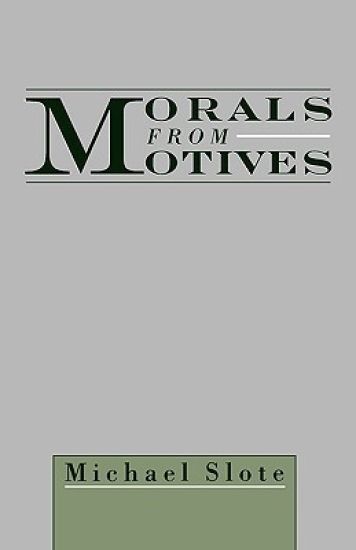
Morals from Motives

Morals from Motives

Michael Slote

Oxford University Press Inc
2001
sidottu
Morals from Motives develops a virtue ethics inspired more by moral sentimentalism than by recently-influential Aristotelianism. It argues that a reconfigured and expanded 'morality of caring' can offer a general account of right and wrong action and also (in its own terms) of social justice, and the book goes on to show how a motive-based 'pure' virtue theory can also help us to understand the nature of human well-being and practical reason.
Morals from Motives

Morals from Motives

Michael Slote

Oxford University Press Inc
2003
nidottu
Morals from Motives develops a virtue ethics inspired more by Hume and Hutcheson's moral sentimentalism than by recently-influential Aristotelianism. It argues that a reconfigured and expanded "morality of caring" can offer a general account of right and wrong action as well as social justice. Expanding the frontiers of ethics, it goes on to show how a motive-based "pure" virtue theory can also help us to understand the nature of human well-being and practical reason.
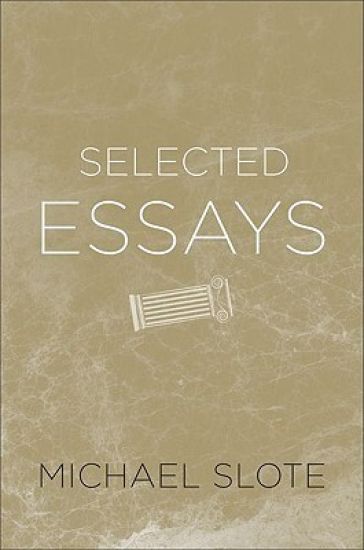
Selected Essays

Selected Essays

Michael Slote

Oxford University Press Inc
2010
sidottu
In Selected Essays Michael Slote collects some of the most important papers of his career, articles that were both influential as well as those that remain relevant to philosophical debates today. The papers range over a number of important topics--not all of them within or having to do with ethics. Three of the papers have to do with ways in which one might fill out or expand upon traditional utilitarian views--while remaining within the utilitarian tradition. Two of the papers focus on free will, and another pair discuss rational choice and argue that traditional views about individual rationality unduly limit our possibilities. The papers outside ethics deal with such topics as counterfactuals; Wittgensteinian accounts of "cluster terms;" some familiar concepts we use that cannot apply to reality; and a paradox about the possibility of circumstances where it is linguistically inappropriate to assert what one believes. In addition to the previously published essays, Slote includes more recent and unpublished papers that deal with the uses of empathy in the context of global issues of justice; the limitations of the "moral reasoning" model of normal moral thinking; and the relevance of empathy to the epistemic ideal of objectivity. The final paper of the volume speaks about recent developments in ethical theory and what they may tell us about the possibilities of future progress or lack of progress in that field.
Moral Sentimentalism

Moral Sentimentalism

Michael Slote

Oxford University Press Inc
2010
sidottu
There has recently been a good deal of interest in moral sentimentalism, but most of that interest has been exclusively either in meta-ethical questions about the meaning of moral terms or in normative issues about benevolence and/or caring and their place in morality. In Moral Sentimentalism Michael Slote attempts to deal with both sorts of issues and to do so, primarily, in terms of the notion or phenomenon of empathy. Hume sought to do something like this over two centuries ago, though he didn't have the term "empathy" and used "sympathy" instead. Slote therefore attempts to give moral sentimentalism a second wind. By relying so systematically on empathy in its account of normative morality and in what it has to say about the meaning of moral vocabulary, Slote offers a unified overall ethical picture that can then be tested against ethical rationalism. Rationalism has recently dominated the scene in ethics, but by showing how sentimentalism can make coherent and intuitive sense of such preferred rationalist notions as autonomy, respect, and justice-and by showing how a sentimentalism based in empathy can deal with ethically significant aspects of the moral life that rationalism tends to ignore or skimp on-Slote hopes a wider and more active debate between rationalism and sentimentalism can be set in motion. There are signs that sentimentalist modes of thought are gaining new footholds on the way ethics is done, and this new book is very hopeful about these possibilities.
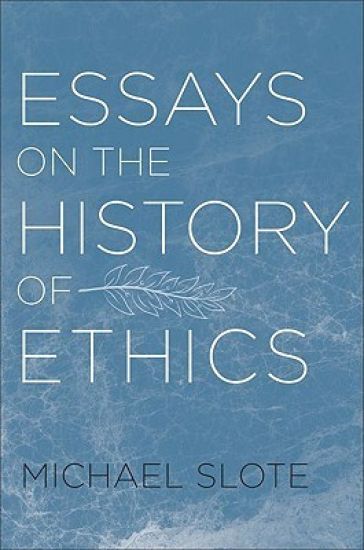
Essays on the History of Ethics

Essays on the History of Ethics

Michael Slote

Oxford University Press Inc
2010
sidottu
In Essays on the History of Ethics Michael Slote collects his essays that deal with aspects of both ancient and modern ethical thought and seek to point out conceptual/normative comparisons and contrasts among different views. Arranged in chronological order of the philosopher under discussion, the relationship between ancient ethical theory and modern moral philosophy is a major theme of several of the papers and, in particular, Plato, Aristotle, Hume, Kant, and/or utilitarianism feature centrally in (most of) the discussions. One essay seeks to show that there are three main ways to conceive the relationship between human well-being and virtue: one is dualistic a la Kant (they are disparate notions); one is the sort of reductionism familiar from the history of utilitarianismm; and one, not previously named by philosophers, is implicit in the approach the Stoics, Plato, and Aristotle take (in their different ways) to the topic of virtue and well-being. Slote names this third approach "elevationism" and argue that it is more promising than either reductionism or dualism. Two of the essays are narrowly focused on Hume's ethics, and one seeks to show that even Kant's opponents have reason to accept a number of important and original Kantian ideas. Finally, the two last essays in the volume talk about ethical thought during the last half of the twentieth century and the first few years of the twenty-first, arguing that the care ethics of Carol Gilligan and Nel Noddings has a distinctive and important contribution to make to ongoing ethical theorizing--and to our understanding of the history of ethics as well.
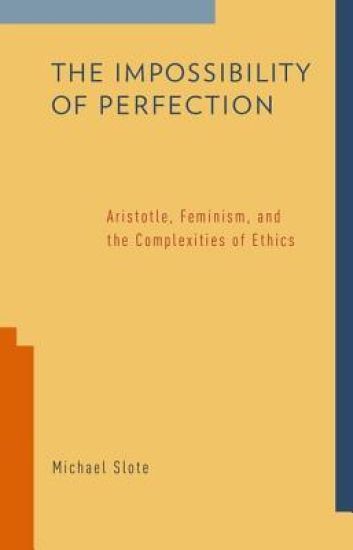
The Impossibility of Perfection

The Impossibility of Perfection

Michael Slote

Oxford University Press Inc
2014
nidottu
Most people think that the difficulty of balancing career and personal/family relationships is the fault of present-day society or is due to their own inadequacies. But in this major new book, eminent moral philosopher Michael Slote argues that the difficulty runs much deeper, that it is due to the essential nature of the divergent goods involved in this kind of choice. He shows more generally that perfect human happiness and perfect virtue are impossible in principle, a view originally enunciated by Isaiah Berlin, but much more thoroughly and synoptically defended here than ever before. Ancient Greek and modern-day Enlightenment thought typically assumed that perfection was possible, and this is also true of Romanticism and of most recent ethical theory. But if, as Slote maintains, imperfection is inevitable, then our inherited categories of virtue and personal good are far too limited and unqualified to allow us to understand and cope with the richer and more complex life that characterizes today's world. And The Impossibility of Perfection argues in particular that we need some new notions, new distinctions, and even new philosophical methods in order to distill some of the ethical insights of recent feminist thought and arrive at a fuller and more realistic picture of ethical phenomena.
A Sentimentalist Theory of the Mind

A Sentimentalist Theory of the Mind

Michael Slote

Oxford University Press Inc
2014
sidottu
Michael Slote argues that emotion is involved in all human thought and action on conceptual grounds, rather than merely being causally connected with other aspects of the mind. This kind of general sentimentalism about the mind goes beyond that advocated by Hume, and the book's main arguments are only partially anticipated in German Romanticism and in the Chinese philosophical tendency to avoid rigid distinctions between thought and emotion. The new sentimentalist philosophy of mind Slote proposes can solve important problems about the nature of belief and action that other approaches -- including Pragmatism -- fail to address. In arguing for the centrality of emotion within philosophy of the mind, A Sentimentalist Theory of the Mind continues the critique of rationalist philosophical views that began with Slote's Moral Sentimentalism (OUP, 2010) and continued in his From Enlightenment to Receptivity (OUP, 2013). This new book also delves into what is distinctive about human minds, arguing that there is a greater variety to ordinary human motives than has been recognized and that emotions play a central role in this complex psychology.
The Impossibility of Perfection

The Impossibility of Perfection

Michael Slote

Oxford University Press Inc
2011
sidottu
Most people think that the difficulty of balancing career and personal/family relationships is the fault of present-day society or is due to their own inadequacies. But in this major new book, eminent moral philosopher Michael Slote argues that the difficulty runs much deeper, that it is due to the essential nature of the divergent goods involved in this kind of choice. He shows more generally that perfect human happiness and perfect virtue are impossible in principle, a view originally enunciated by Isaiah Berlin, but much more thoroughly and synoptically defended here than ever before. Ancient Greek and modern-day Enlightenment thought typically assumed that perfection was possible, and this is also true of Romanticism and of most recent ethical theory. But if, as Slote maintains, imperfection is inevitable, then our inherited categories of virtue and personal good are far too limited and unqualified to allow us to understand and cope with the richer and more complex life that characterizes today's world. And The Impossibility of Perfection argues in particular that we need some new notions, new distinctions, and even new philosophical methods in order to distill some of the ethical insights of recent feminist thought and arrive at a fuller and more realistic picture of ethical phenomena.
From Enlightenment to Receptivity

From Enlightenment to Receptivity

Michael Slote

Oxford University Press Inc
2013
sidottu
This new book by Michael Slote argues that Western philosophy on the whole has overemphasized rational control and autonomy at the expense of the important countervailing value and virtue of receptivity. Recently the ideas of caring and empathy have received a great deal of philosophical and public attention, but both these notions rest on the deeper and broader value of receptivity, and in From Enlightenment to Receptivity, Slote seeks to show that we need to focus more on receptivity if we are to attain a more balanced sense and understanding of what is important to us. Beginning with a critique of Enlightenment thinking that calls into question its denial of any central role to considerations of emotion and empathy, he goes on to show how a greater emphasis on these factors and on the receptivity that underlies them can give us a more realistic, balanced, and sensitive understanding of our core ethical and epistemological values. This means rejecting post-modernism's blanket rejection of reason and of compelling real values and recognizing, rather, that receptivity should play a major role in how we lead our lives as individuals, in how we relate to nature, in how we acquire knowledge about the world, and in how we relate morally and politically with others.
Moral Sentimentalism

Moral Sentimentalism

Michael Slote

Oxford University Press Inc
2013
nidottu
There has recently been a good deal of interest in moral sentimentalism, but most of that interest has been exclusively either in metaethical questions about the meaning of moral terms or in normative issues about benevolence and/or caring and their place in morality. In Moral Sentimentalism Michael Slote attempts to deal with both sorts of issues and to do so, primarily, in terms of the notion or phenomenon of empathy. Hume sought to do something like this over two centuries ago, though he didn't have the term "empathy" and used "sympathy" instead; and in effect Slote is seeking to give moral sentimentalism a "second wind" in and for contemporary circumstances. By relying systematically on empathy in its account of normative morality and in what it has to say about the meaning of moral vocabulary, Moral Sentimentalism offers a unified overall ethical picture that can then be tested against ethical rationalism. Rationalism has recently dominated the scene in ethics, but by showing how sentimentalism can make coherent and intuitive sense of such preferred rationalist notions as autonomy, respect, and justice--and by showing how a sentimentalism based in empathy can deal with ethically significant aspects of the moral life that rationalism tends to ignore or skimp on--Slote hopes a wider and more active debate between rationalism and sentimentalism can be set in motion. There are signs that sentimentalist modes of thought are gaining new footholds on the way ethics is done, and this new book is very hopeful about these possibilities.
Education and Human Values

Education and Human Values

Michael Slote

Routledge
2012
sidottu
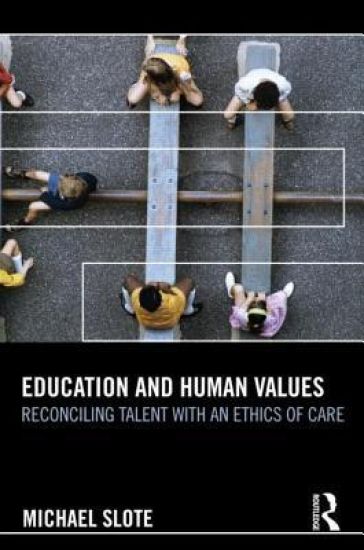
Two of our greatest educational theorists, John Dewey and Nel Noddings, have been reluctant to admit that some students are simply more talented than others. This was no doubt due to their feeling that such an admission was inconsistent with democratic concern for everyone. But there really is such a thing as superior talent; and the present book explains how that admission is compatible with our ideals of caring (and democracy). Traditionalists confident that some disciplines are more important than others haven’t worried that that way of putting things threatens to make those who are excluded feel quite bad about themselves. But an ethics of care can show us how to make these differences much less hurtful and more morally acceptable than anything that has been proposed by traditionalists. So the present book offers a middle way between the denial of the reality of superior talents and an insensitive insistence on that reality. It argues that care ethics gives us a way to do this, and it bases that claim largely on the promise of such an ethics for moral education in schools and in homes. It is argued on psychological grounds that caring can only take place on the basis of empathy for others, and the book shows in great detail how empathy can be encouraged or develop in school and home contexts. Other approaches to moral education—like Kantian cognitive-developmentalism and Aristotelian character education—can’t account for (increasing) moral motivation in the way that an emphasis on the development of empathy allows. And in the end, it is only students educated via care ethics who will be sensitive to one another in a way that largely undercuts the negative psychological impact of educational institutions and practices that acknowledge the greater talents or creativity that some students have.
The Ethics of Care and Empathy

The Ethics of Care and Empathy

Michael Slote

Routledge
2007
sidottu
Eminent moral philosopher Michael Slote argues that care ethics presents an important challenge to other ethical traditions and that a philosophically developed care ethics should, and can, offer its own comprehensive view of the whole of morality. Taking inspiration from British moral sentimentalism and drawing on recent psychological literature on empathy, he shows that the use of that notion allows care ethics to develop its own sentimentalist account of respect, autonomy, social justice, and deontology. Furthermore, he argues that care ethics gives a more persuasive account of these topics than theories offered by contemporary Kantian liberalism. The most philosophically rich and challenging exploration of the theory and practice of care to date, The Ethics of Care and Empathy also shows the manifold connections that can be drawn between philosophical issues and leading ideas in the fields of psychology, education, and women's studies.
The Ethics of Care and Empathy

The Ethics of Care and Empathy

Michael Slote

Routledge
2007
nidottu
Eminent moral philosopher Michael Slote argues that care ethics presents an important challenge to other ethical traditions and that a philosophically developed care ethics should, and can, offer its own comprehensive view of the whole of morality. Taking inspiration from British moral sentimentalism and drawing on recent psychological literature on empathy, he shows that the use of that notion allows care ethics to develop its own sentimentalist account of respect, autonomy, social justice, and deontology. Furthermore, he argues that care ethics gives a more persuasive account of these topics than theories offered by contemporary Kantian liberalism. The most philosophically rich and challenging exploration of the theory and practice of care to date, The Ethics of Care and Empathy also shows the manifold connections that can be drawn between philosophical issues and leading ideas in the fields of psychology, education, and women's studies.
Beyond Optimizing

Beyond Optimizing

Michael Slote

Harvard University Press
1989
sidottu
Philosophy, economics, and decision theory have long been dominated by the idea that rational choice consists of seeking or achieving one's own greatest good. "Beyond Optimizing" argues that our ordinary understanding of practical reason is more complex than this, and also that optimizing/maximizing views are inadequately supported by the considerations typically offered in their favor. Michael Slote challenges the long-dominant conception of individual rationality, which has to a large extent shaped the very way we think about the essential problems and nature of rationality, morality, and the relations between them. He contests the accepted view by appealing to a set of real-life examples, claiming that our intuitive reaction to these examples illustrates a significant and prevalent, if not always dominant, way of thinking. Slote argues that common sense recognizes that one can reach a point where "enough is enough," be satisfied with what one has, and, hence, rationally decline an optimizing alternative. He suggests that, in the light of common sense, optimizing behavior is often irrational. Thus, Slote is not merely describing an alternative mode of rationality; he is offering a rival theory. And the numerous parallels he points out between this common-sense theory of rationality and common-sense morality are then shown to have important implications for the long-standing disagreement between commonsense morality and utilitarian consequentialism. "Beyond Optimizing" is notable for its use of a much richer vocabulary of criticism than optimizing/maximizing models ever call upon. And it further argues that recent empirical investigations of the development of altruism and moral motivation need to be followed up by psychological studies of how moderation, and individual rationality more generally, take shape within developing individuals.
Between Psychology and Philosophy

Between Psychology and Philosophy

Michael Slote

Saint Philip Street Press
2020
pokkari
This open access book discusses a variety of important but unprecedented ways in which psychology can be useful to philosophy. The early chapters illustrate this theme via comparisons between Chinese and Western philosophy. It is argued that the Chinese notion of a heart-mind is superior to the Western concept of mind, but then, more even-handedly, the relative strengths and weaknesses of Chinese and Western thought overall are critically examined. In later chapters, the philosophical uses of psychology are treated more specifically in relation to major issues in Western philosophy. Michael Slote shows that empathy and emotion play a role in speech acts (like assertion and thanking) that speech act theory has totally ignored. Similarly, he treats the age-old question of whether justice pays using psychological material that has not previously been recognized. Finally, the implications of psychological egoism are discussed in terms of some new psychological and, indeed, human distinctions. Human life is pervaded by instincts and aspirations that are neither egoistic nor altruistic, and recognizing that fact can help put egoism in its place. It is less of a challenge to morality than we have realized. This work was published by Saint Philip Street Press pursuant to a Creative Commons license permitting commercial use. All rights not granted by the work's license are retained by the author or authors.
Between Psychology and Philosophy

Between Psychology and Philosophy

Michael Slote

Saint Philip Street Press
2020
sidottu
This open access book discusses a variety of important but unprecedented ways in which psychology can be useful to philosophy. The early chapters illustrate this theme via comparisons between Chinese and Western philosophy. It is argued that the Chinese notion of a heart-mind is superior to the Western concept of mind, but then, more even-handedly, the relative strengths and weaknesses of Chinese and Western thought overall are critically examined. In later chapters, the philosophical uses of psychology are treated more specifically in relation to major issues in Western philosophy. Michael Slote shows that empathy and emotion play a role in speech acts (like assertion and thanking) that speech act theory has totally ignored. Similarly, he treats the age-old question of whether justice pays using psychological material that has not previously been recognized. Finally, the implications of psychological egoism are discussed in terms of some new psychological and, indeed, human distinctions. Human life is pervaded by instincts and aspirations that are neither egoistic nor altruistic, and recognizing that fact can help put egoism in its place. It is less of a challenge to morality than we have realized. This work was published by Saint Philip Street Press pursuant to a Creative Commons license permitting commercial use. All rights not granted by the work's license are retained by the author or authors.
Education and Human Values

Education and Human Values

Michael Slote

Routledge
2015
nidottu
Two of our greatest educational theorists, John Dewey and Nel Noddings, have been reluctant to admit that some students are simply more talented than others. This was no doubt due to their feeling that such an admission was inconsistent with democratic concern for everyone. But there really is such a thing as superior talent; and the present book explains how that admission is compatible with our ideals of caring (and democracy). Traditionalists confident that some disciplines are more important than others haven’t worried that that way of putting things threatens to make those who are excluded feel quite bad about themselves. But an ethics of care can show us how to make these differences much less hurtful and more morally acceptable than anything that has been proposed by traditionalists. So the present book offers a middle way between the denial of the reality of superior talents and an insensitive insistence on that reality. It argues that care ethics gives us a way to do this, and it bases that claim largely on the promise of such an ethics for moral education in schools and in homes. It is argued on psychological grounds that caring can only take place on the basis of empathy for others, and the book shows in great detail how empathy can be encouraged or develop in school and home contexts. Other approaches to moral education—like Kantian cognitive-developmentalism and Aristotelian character education—can’t account for (increasing) moral motivation in the way that an emphasis on the development of empathy allows. And in the end, it is only students educated via care ethics who will be sensitive to one another in a way that largely undercuts the negative psychological impact of educational institutions and practices that acknowledge the greater talents or creativity that some students have.
Between Psychology and Philosophy

Between Psychology and Philosophy

Michael Slote

Springer Nature Switzerland AG
2019
sidottu
This open access book discusses a variety of important but unprecedented ways in which psychology can be useful to philosophy. The early chapters illustrate this theme via comparisons between Chinese and Western philosophy. It is argued that the Chinese notion of a heart-mind is superior to the Western concept of mind, but then, more even-handedly, the relative strengths and weaknesses of Chinese and Western thought overall are critically examined. In later chapters, the philosophical uses of psychology are treated more specifically in relation to major issues in Western philosophy. Michael Slote shows that empathy and emotion play a role in speech acts (like assertion and thanking) that speech act theory has totally ignored. Similarly, he treats the age-old question of whether justice pays using psychological material that has not previously been recognized. Finally, the implications of psychological egoism are discussed in terms of some new psychological and, indeed, human distinctions. Human life is pervaded by instincts and aspirations that are neither egoistic nor altruistic, and recognizing that fact can help put egoism in its place. It is less of a challenge to morality than we have realized.