Kirjojen hintavertailu. Mukana 12 390 323 kirjaa ja 12 kauppaa.

Kirjahaku

Etsi kirjoja tekijän nimen, kirjan nimen tai ISBN:n perusteella.

26 kirjaa tekijältä Michael Sommer

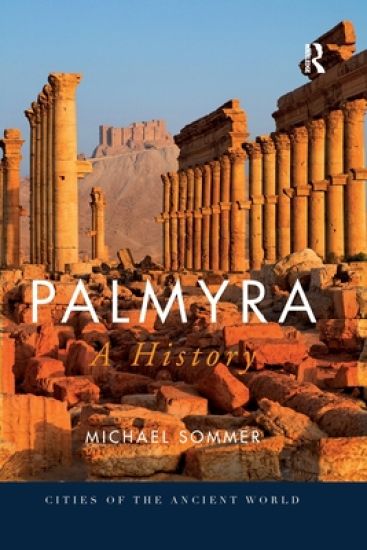
Palmyra

Palmyra

Michael Sommer

Routledge
2020
nidottu
Palmyra: A History examines Palmyra, the city in the Syrian oasis of Tadmur, from its beginnings in the Bronze Age, through the classical period and its discovery and excavation, to the present day. It aims at reconstructing Palmyra’s past from literary accounts – classical and post-classical – as well as material evidence of all kinds: inscriptions, coins, art and of course the remains of Palmyra’s monumental architecture.After exploring the earliest inhabitation of Tadmur, the volume moves through the Persian and Hellenistic periods, to the city’s zenith. Under the Romans, Palmyra was unique among the cities of the empire because it became a political factor in its own right in the third century AD, when the Roman military was overpowered by Sassanian invaders and Palmyrene troops stepped in. Sommer’s assessment of Palmyra under Rome therefore considers how Palmyra achieved such an exceptional role in the Roman Near East, before its demise under the Umayyad Empire. The volume also examines the century-long history of archaeological and historical research at Palmyra, from its beginnings under Ottoman rule and the French mandate in the 1920s to the recent satellite based prospection carried out by German archaeologists. A closing chapter examines the occupation of the site by ISIS during the Syrian conflict, and the implications of the destruction there on the ruins, the archaeological finds and future investigations, and heritage in Syria more broadly.Palmyra offers academics, students and the interested reader alike the first full treatment in English of this fascinating site, providing a comprehensive account of the city’s origins, rise and fall.
Palmyra

Palmyra

Michael Sommer

Routledge
2017
sidottu
Palmyra: A History examines Palmyra, the city in the Syrian oasis of Tadmur, from its beginnings in the Bronze Age, through the classical period and its discovery and excavation, to the present day. It aims at reconstructing Palmyra’s past from literary accounts – classical and post-classical – as well as material evidence of all kinds: inscriptions, coins, art and of course the remains of Palmyra’s monumental architecture.After exploring the earliest inhabitation of Tadmur, the volume moves through the Persian and Hellenistic periods, to the city’s zenith. Under the Romans, Palmyra was unique among the cities of the empire because it became a political factor in its own right in the third century AD, when the Roman military was overpowered by Sassanian invaders and Palmyrene troops stepped in. Sommer’s assessment of Palmyra under Rome therefore considers how Palmyra achieved such an exceptional role in the Roman Near East, before its demise under the Umayyad Empire. The volume also examines the century-long history of archaeological and historical research at Palmyra, from its beginnings under Ottoman rule and the French mandate in the 1920s to the recent satellite based prospection carried out by German archaeologists. A closing chapter examines the occupation of the site by ISIS during the Syrian conflict, and the implications of the destruction there on the ruins, the archaeological finds and future investigations, and heritage in Syria more broadly.Palmyra offers academics, students and the interested reader alike the first full treatment in English of this fascinating site, providing a comprehensive account of the city’s origins, rise and fall.

Anti-Postone

Anti-Postone

Michael Sommer

Cosmonaut Press
2022
pokkari
Around the turn of the century, anti-fascism in Germany underwent a transformation. Instead of denouncing the prevailing social order as the natural breeding ground of fascist movements, the focus of the critique shifted onto regressive, unenlightened, or "abridged" forms of anti-capitalism. Asserting that capitalism is "abstract rule," it set out to accuse its various adversaries of easily sliding into antisemitism, construed by anti-fascists as a "hatred of the abstract."The theory behind this new type of anti-fascism was originally devised by Moishe Postone in his seminal essay "Anti-Semitism and National Socialism." However, as Michael Sommer convincingly demonstrates, Postone's arguments are based on a misreading of Marx and are theoretically unsustainable. What is more, they have provided the groundwork for an "uncritical critique", aiding in the degeneration of anti-fascism from a left-wing endeavor into an ideology that is fully affirmative of liberal capitalism.This translation of Sommer's German-language text of 2014 comes with an extensive new introduction by Mike Macnair that links these changes to more recent developments in the Anglophone world, as well as situating Postone's theory in a broader historical context.
Der Tag der Plagen

Der Tag der Plagen

Michael Sommer

Mohr Siebeck
2015
nidottu
Die Johannesoffenbarung ist ein Text, in dem sehr viele Erzählfäden der Schriften Israels zusammenlaufen. Johannes formte aus Anspielungen auf Israels Traditionen einen Text sui generis. Der Text, den er auf diese Weise geschaffen hat, ist darüber hinaus nichts Geringeres als ein literaturarchitektonisches Meisterwerk, das auf einem regelrechten Arsenal aus Stichwort- und Motivverknüpfungen aufbaut. Michael Sommer entschlüsselt in der vorliegenden Untersuchung eine größere Linie dieses komplexen Textes. Er möchte zeigen, dass Offb 6,12-16,21 innerhalb der apokalyptischen Visionszyklen als eine Art kohärente Subeinheit begriffen werden kann, in der Johannes der Tradition des großen Gottestages Ausdruck verleihen wollte. Hierbei ließ er zwei Traditionen miteinander verschmelzen, die des großen Gottestages selbst und die der ägyptischen Plagen.
Witwen, Recht und Gerechtigkeit

Witwen, Recht und Gerechtigkeit

Michael Sommer

Mohr Siebeck
2025
sidottu
Seit dem ausgehenden 19. Jahrhundert stellen Wissenschaftlerinnen und Wissenschaftler immer wieder die Frage nach Besitzverhältnissen von "christlichen" Witwen, ihrer sozialen Stellung in der römisch-hellenistischen Welt und ihrer Rolle in den frühchristlichen Gemeinden. Viele dieser Untersuchungen konzentrieren sich allerdings nur auf Quellenmaterial mit einer hohen Dichte an sozialgeschichtlich relevanten Informationen, wohingegen Quellen, die Witwen nur kurz erwähnen, ohne ihre Lebensumstände näher zu beschreiben, nicht ausführlich untersucht werden. Um genau diese Texte geht es in der vorliegenden Studie. Michael Sommer zeigt, dass ein anderer methodischer Blickwinkel einen essenziellen Beitrag zur Erforschung des frühen Christentums liefern kann, auch wenn er sozialgeschichtlich auf den ersten Blick wenig aussagekräftig erscheinen mag.
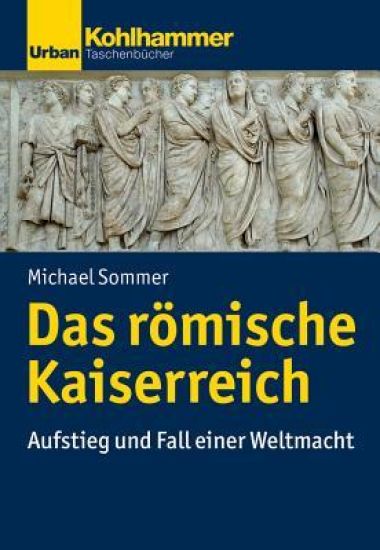
Das Romische Kaiserreich: Aufstieg Und Fall Einer Weltmacht
Rom uberschritt mit der Herrschaft des Kaisers Augustus eine "Schwelle" Der Machtbereich der Republik, die sich in einem beispiellosen Eroberungszug in einem Vierteljahrtausend das gesamte Mittelmeerbecken unterworfen hatte, wurde zu einem Imperium: einem Reich, das diesen Namen auch verdiente und mit dem sich die Mehrheit der Menschen, die in ihm lebten, innerlich identifizierte. Unter den Kaisern, die auf Augustus folgten, steuerte die Verflechtungsgeschichte der antiken Welt ihrem Hohepunkt entgegen: Menschen, Guter und Ideen waren mobiler, als sie es je zuvor gewesen waren. Wie lebte es sich unter Roms Caesaren? Und welche Krafte hielten das Reich zusammen, das im 3. Jahrhundert n. Chr. auf seine erste, fast todliche Belastungsprobe zusteuerte? Michael Sommers Einfuhrung in Geschichte, Gesellschaft und Kultur der romischen Kaiserzeit schlagt chronologisch den Bogen von Augustus bis zur Tetrarchie (27 v. Chr.-305 n. Chr.).
Die Phönizier

Die Phönizier

Michael Sommer

Kroener Alfred GmbH + Co.
2005
sidottu
Kaum ein Volk hat dem antiken Europa - erst Hellas, dann Rom - so viele Impulse gegeben wie die Phönizier, kulturell, wirtschaftlich, gesellschaftlich und politisch. Von der Küste des heutigen Syrien und Libanon ausgehend, gründeten sie ab 1000 v.Chr. zahlreiche Kolonien entlang der Mittelmeerküste. Trotzdem ist von diesen erfahrenen Seefahrern und gewitzten Kaufleuten, den Gründern Karthagos und Überbringern der Alphabetschrift, nur wenig überliefert. Nachdem die Städte der Phönizier dem Erdboden gleich gemacht worden waren, tilgten die Sieger auch ihre Spuren aus dem kulturellen Gedächtnis des Abendlands. Dennoch stehen am Anfang vieler Entwicklungen, die für typisch europäisch gehalten werden, Innovationen und Kulturtechniken, welche die Phönizier aus Vorderasien über das Mittelmeer gebracht haben. Michael Sommer präsentiert den neuesten Forschungsstand in einer gut lesbaren Kulturgeschichte.