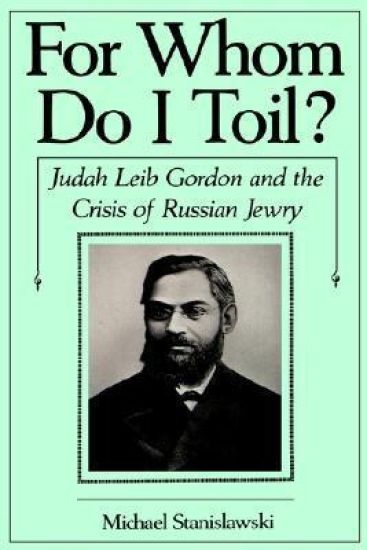
This is the first full-length biography, in any language, of Judah Leib Gordon, one of the pivotal intellectual and cultural figures in Russian Jewry, and the most important Hebrew poet of the nineteenth century. Setting Gordon's life and work amidst the political, cultural, and religious upheavals of his society, Stanislawski attempts to counter traditional stereotypical readings of Eastern European Jewish history. Judah Leib Gordon's personal story is a fascinating drama that both symbolizes and summarizes the cultural and political challenges facing Russian Jewry at a crucial time in history, challenges that remain pertinent and controversial today.
In this Very Short Introduction, Michael Stanislawski presents an impartial and disinterested history of Zionist ideology from its origins to the present. Sharp and accessible, he charts the crucial moments in the ideological development of Zionism, including the emergence of modern Jewish nationalism in early nineteenth century Europe, the founding of the Zionist movement by Theodor Herzl in 1897, right through to the rise of the âPeace Nowâ movement, and the election of conservative prime minister Benjamin Netanyahu. Stanislawski's balanced analysis of these controversial events illuminates why, despite the undeniable success in its goal of creating a Jewish state, profound questions remain today about the long-term viability of Zionist ideology in a rapidly destabilizing Middle East. ABOUT THE SERIES: The Very Short Introductions series from Oxford University Press contains hundreds of titles in almost every subject area. These pocket-sized books are the perfect way to get ahead in a new subject quickly. Our expert authors combine facts, analysis, perspective, new ideas, and enthusiasm to make interesting and challenging topics highly readable.
Autobiographical Jews examines the nature of autobiographical writing by Jews from antiquity to the present, and the ways in which such writings can legitimately be used as sources for Jewish history. Drawing on current literary theory, which questions the very nature of autobiographical writing and its relationship to what we normally designate as the truth, and, to a lesser extent, the new cognitive neurosciences, Michael Stanislawski analyzes a number of crucial and complex autobiographical texts written by Jews through the ages.Stanislawski considers The Life by first-century historian Josephus; compares the early modern autobiographies of Asher of Reichshofen (Book of Memories) and Glikl of Hameln (Memoirs); analyzes the radically different autobiographies of two Russian Jewish writers, the Hebrew Enlightenment author Moshe Leib Lilienblum and the famous Russian poet Osip Mandelstam; and looks at two autobiographies written out of utter despair in the midst and in the wake of World War II, Stefan Zweig's The World of Yesterday and Sarah Kofman's Rue Ordener, Rue Labat.These writers' attempts to portray their private and public struggles, anxieties, successes, and failures are expressions of a basic drive for selfhood which is both timeless and time-bound, universal and culturally specific. The challenge is to attempt to unravel the conscious from the unconscious distortions in these texts and to regard them as artifacts of individuals' quests to make sense of their lives, first and foremost for themselves and then, if possible, for their readers.
Autobiographical Jews examines the nature of autobiographical writing by Jews from antiquity to the present, and the ways in which such writings can legitimately be used as sources for Jewish history. Drawing on current literary theory, which questions the very nature of autobiographical writing and its relationship to what we normally designate as the truth, and, to a lesser extent, the new cognitive neurosciences, Michael Stanislawski analyzes a number of crucial and complex autobiographical texts written by Jews through the ages.Stanislawski considers The Life by first-century historian Josephus; compares the early modern autobiographies of Asher of Reichshofen (Book of Memories) and Glikl of Hameln (Memoirs); analyzes the radically different autobiographies of two Russian Jewish writers, the Hebrew Enlightenment author Moshe Leib Lilienblum and the famous Russian poet Osip Mandelstam; and looks at two autobiographies written out of utter despair in the midst and in the wake of World War II, Stefan Zweig's The World of Yesterday and Sarah Kofman's Rue Ordener, Rue Labat.These writers' attempts to portray their private and public struggles, anxieties, successes, and failures are expressions of a basic drive for selfhood which is both timeless and time-bound, universal and culturally specific. The challenge is to attempt to unravel the conscious from the unconscious distortions in these texts and to regard them as artifacts of individuals' quests to make sense of their lives, first and foremost for themselves and then, if possible, for their readers.
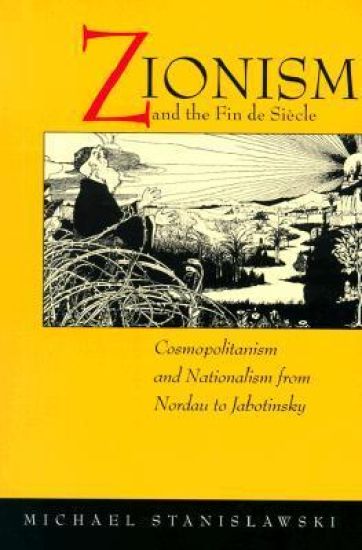
Michael Stanislawski's provocative study of Max Nordau, Ephraim Moses Lilien, and Vladimir Jabotinsky reconceives the intersection of the European fin de siecle and early Zionism. Stanislawski takes up the tantalizing question of why Zionism, at a particular stage in its development, became so attractive to certain cosmopolitan intellectuals and artists. With the help of hundreds of previously unavailable documents, published and unpublished, he reconstructs the ideological journeys of writer and critic Nordau, artist Lilien, and political icon Jabotinsky. He argues against the common conception of Nordau and Jabotinsky as nineteenth-century liberals, insisting that they must be understood against the backdrop of Social Darwinism in the West and the Positivism of Russian radicalism in the fin de siecle, as well as Symbolism, Decadence, and Art Nouveau. When these men turned to Zionism, Stanislawski says, far from abandoning their aesthetic and intellectual preconceptions, they molded Zionism according to their fin de siecle cosmopolitanism. Showing how cosmopolitanism turned to nationalism in the lives and work of these crucial early Zionists, this story is a fascinating chapter in European and Russian, as well as Jewish, cultural and political history.
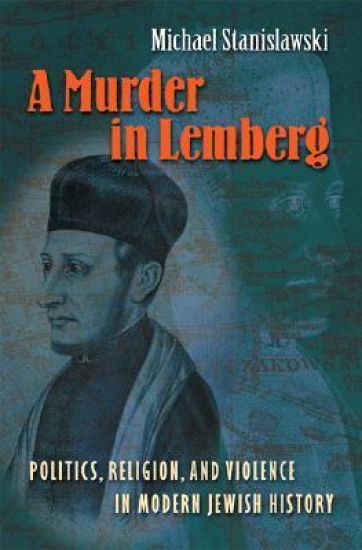
How could a Jew kill a Jew for religious and political reasons? Many people asked this question after an Orthodox Jew assassinated Israeli Prime Minister Itshak Rabin in 1995. But historian Michael Stanislawski couldn't forget it, and he decided to find out everything he could about an obscure and much earlier event that was uncannily similar to Rabin's murder: the 1848 killing--by an Orthodox Jew--of the Reform rabbi of Lemberg (now L'viv, Ukraine). Eventually, Stanislawski concluded that this was the first murder of a Jewish leader by a Jew since antiquity, a prelude to twentieth-century assassinations of Jews by Jews, and a turning point in Jewish history. Based on records unavailable for decades, A Murder in Lemberg is the first book about this fascinating case. On September 6, 1848, Abraham Ber Pilpel entered the kitchen of Rabbi Abraham Kohn and his family and poured arsenic in the soup that was being prepared for their dinner. Within hours, the rabbi and his infant daughter were dead. Was Kohn's murder part of a conservative Jewish backlash to Jewish reform and liberalization in a year of European revolution? Or was he killed simply because he threatened taxes that enriched Lemberg's Orthodox leaders? Vividly recreating the dramatic story of the murder, the trial that followed, and the political and religious fallout of both, Stanislawski tries to answer these questions and others. In the process, he reveals the surprising diversity of Jewish life in mid-nineteenth-century eastern Europe. Far from being uniformly Orthodox, as is often assumed, there was a struggle between Orthodox and Reform Jews that was so intense that it might have led to murder.