Kirjojen hintavertailu. Mukana 11 342 296 kirjaa ja 12 kauppaa.

Kirjahaku

Etsi kirjoja tekijän nimen, kirjan nimen tai ISBN:n perusteella.

5 kirjaa tekijältä Michael T. Gilmore

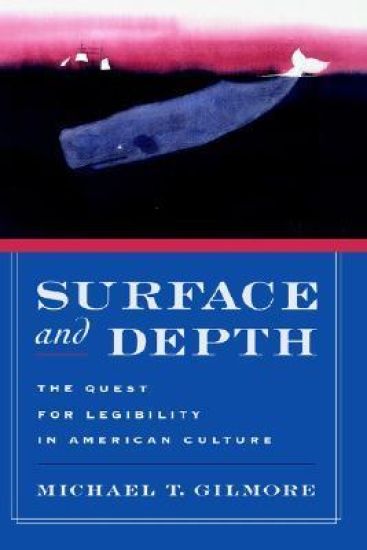
Surface and Depth

Surface and Depth

Michael T. Gilmore

Oxford University Press Inc
2003
sidottu
The idea of a common American culture has been in retreat for a generation or more. Arguments emphasizing difference have discredited the grand synthetic studies that marginalized groups and perspectives at odds with the master narrative. Surface and Depth: The Quest for Legibility in American Culture is a fresh attempt to revitalize an interpretive overview. It seeks to recuperate a central tradition while simultaneously recognizing how much that tradition has occluded. The book focuses on the American zeal for knowing or making accessible. This compulsion has a long history stretching back to Puritan anti-monasticism; to the organization of the landscape into clearly delineated gridwork sections; and to the creation of a national government predicted on popular vigilance. It can be observed in the unmatched American receptivity to the motion pictures and to psychoanalysis: the first a technology of visual surfaces, the second a technique for plumbing interior depths. Popular literature, especially the Western and the detective story, has reinscribed the cult of legibility. Each genre features a plot that drives through impediments to transparent resolution. Elite literature has adopted a more contradictory stance. The landmarks of the American canon typically embark on journeys of discovery while simultaneously renouncing the possibility of full disclosure (as in Ahab's doomed pursuit of the "inscrutable" white whale). The notorious modernism of American literature, its precocious attraction to obscurity and multiple meaning, evolved as an effort to block the intrusions of a hegemonic cultural dynamic. The American passion for knowability has been prolific of casualties. Acts of making visible have always entailed the erasure and invisibility of racial minorities. American society has also routinely trespassed on customary areas of reserve. A nation intolerant of the hidden paradoxically pioneered the legal concept of privacy, but it did so in reaction to its own invasive excesses.
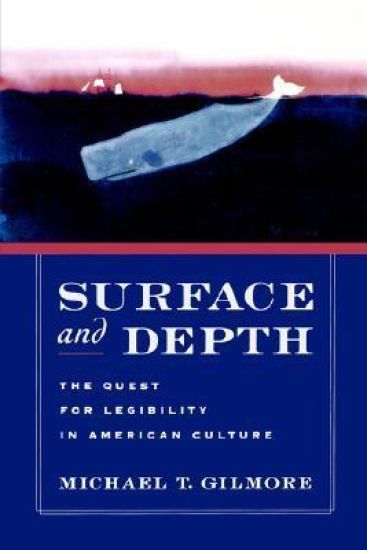
Surface and Depth

Surface and Depth

Michael T. Gilmore

Oxford University Press Inc
2006
nidottu
The idea of a common American culture has been in retreat for a generation or more. Arguments emphasizing difference have discredited the grand synthetic studies that marginalized groups and perspectives at odds with the master narrative. Surface and Depth: The Quest for Legibility in American Culture is a fresh attempt to revitalize an interpretive overview. It seeks to recuperate a central tradition while simultaneously recognizing how much that tradition has occluded. The book focuses on the American zeal for knowing or making accessible. This compulsion has a long history stretching back to Puritan anti-monasticism; to the organization of the landscape into clearly delineated gridwork sections; and to the creation of a national government predicted on popular vigilance. It can be observed in the unmatched American receptivity to the motion pictures and to psychoanalysis: the first a technology of visual surfaces, the second a technique for plumbing interior depths. Popular literature, especially the Western and the detective story, has reinscribed the cult of legibility. Each genre features a plot that drives through impediments to transparent resolution. Elite literature has adopted a more contradictory stance. The landmarks of the American canon typically embark on journeys of discovery while simultaneously renouncing the possibility of full disclosure (as in Ahab's doomed pursuit of the "inscrutable" white whale). The notorious modernism of American literature, its precocious attraction to obscurity and multiple meaning, evolved as an effort to block the intrusions of a hegemonic cultural dynamic. The American passion for knowability has been prolific of casualties. Acts of making visible have always entailed the erasure and invisibility of racial minorities. American society has also routinely trespassed on customary areas of reserve. A nation intolerant of the hidden paradoxically pioneered the legal concept of privacy, but it did so in reaction to its own invasive excesses.
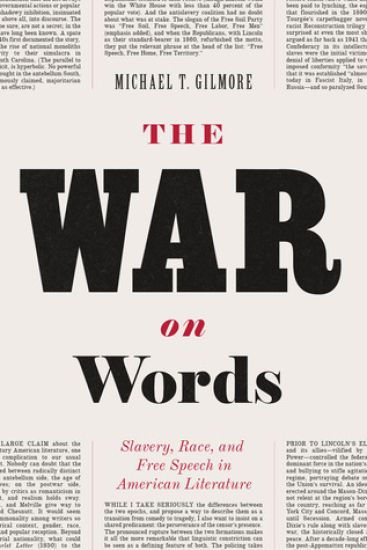
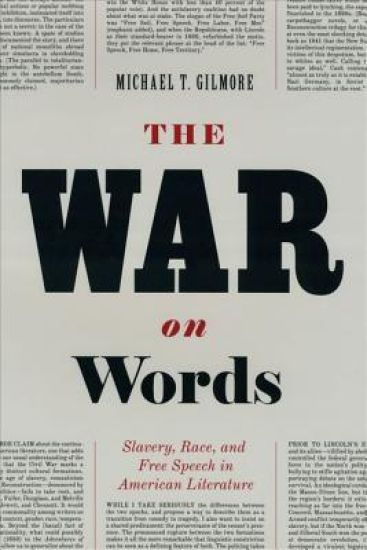
The War on Words

The War on Words

Michael T. Gilmore

University of Chicago Press
2013
nidottu
How did slavery and race affect American literature in the nineteenth century? In this ambitious book, Michael T. Gilmore argues that they were the carriers of linguistic restriction, and writers from Frederick Douglass to Stephen Crane wrestled with the demands for silence and circumspection that accompanied the antebellum fear of disunion and the postwar reconciliation between the North and South. Proposing a radical new interpretation of nineteenth-century American literature, The War on Words examines struggles over permissible and impermissible utterance in works ranging from Thoreau's "Civil Disobedience" to Henry James' The Bostonians. Combining historical knowledge with groundbreaking readings of some of the classic texts of the American past, The War on Words places Lincoln's Cooper Union address in the same constellation as Margaret Fuller's feminism and Thomas Dixon's defense of lynching. Arguing that slavery and race exerted coercive pressure on freedom of expression, Gilmore offers here a transformative study that alters our understanding of nineteenth-century literary culture and its fraught engagement with the right to speak.
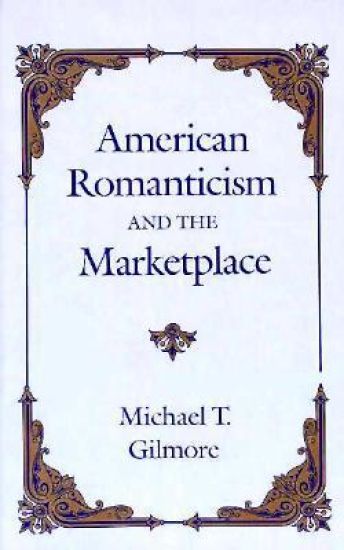
American Romanticism and the Marketplace

American Romanticism and the Marketplace

Michael T. Gilmore

University of Chicago Press
1988
nidottu
"This book can take its place on the shelf beside Henry Nash Smith's Virgin Land and Leo Marx's The Machine in the Garden."—Choice "[Gilmore] demonstrates the profound, sustained, engagement with society embodied in the works of Emerson, Hawthorne, Thoreau and Melville. In effect, he relocates the American Renaissance where it properly belongs, at the centre of a broad social, economic, and ideological movement from the Jacksonian era to the Civil War. Basically, Gilmore's argument concerns the writers' participation in what Thoreau called 'the curse of trade.' He details their mixed resistance to and complicity in the burgeoning literary marketplace and, by extension, the entire ' economic revolution' which between 1830 and 1860 'transformed the United States into a market society'. . . . "The result is a model of literary-historical revisionism. Gilmore's opening chapters on Emerson and Thoreau show that 'transcendental' thought and language can come fully alive when understood within the material processes and ideological constraints of their time. . . . The remaining five chapters, on Hawthorne and Melville, contain some of the most penetrating recent commentaries on the aesthetic strategies of American Romantic fiction, presented within and through some of the most astute, thoughtful considerations I know of commodification and the 'democratic public' in mid-nineteenth-century America. . . . Practically and methodologically, American Romanticism and the Marketplace has a significant place in the movement towards a new American literary history. It places Gilmore at the forefront of a new generation of critics who are not just reinterpreting familiar texts or discovering new texts to interpret, but reshaping our ways of thinking about literature and culture."—Sacvan Bercovitch, Times Literary Supplement"Gilmore writes with energy, clarity, and wit. The reader is enriched by this book." William H. Shurr, American Literature
The War on Words

The War on Words

Michael T. Gilmore

University of Chicago Press
2010
sidottu
How did slavery and race impact American literature in the nineteenth century? In this ambitious book, Michael T. Gilmore argues that they were the carriers of linguistic restriction, and writers from Frederick Douglass to Stephen Crane wrestled with the demands for silence and circumspection that accompanied the antebellum fear of disunion and the postwar reconciliation between the North and South. Proposing a radical new interpretation of nineteenth-century American literature, "The War on Words" examines struggles over permissible and impermissible utterance in works ranging from Thoreau's "Civil Disobedience" to Henry James' "The Bostonians". Combining historical knowledge with groundbreaking readings of some of the classic texts of the American past, "The War on Words" places Lincoln's Cooper Union address in the same constellation as Margaret Fuller's feminism and Thomas Dixon's defense of lynching. Arguing that slavery and race exerted coercive pressure on freedom of expression, Gilmore offers here a transformative study that alters our understanding of nineteenth-century literary culture and its fraught engagement with the right to speak.