Kirjojen hintavertailu. Mukana 12 083 983 kirjaa ja 12 kauppaa.

Kirjahaku

Etsi kirjoja tekijän nimen, kirjan nimen tai ISBN:n perusteella.

4 kirjaa tekijältä Michael W. Cole

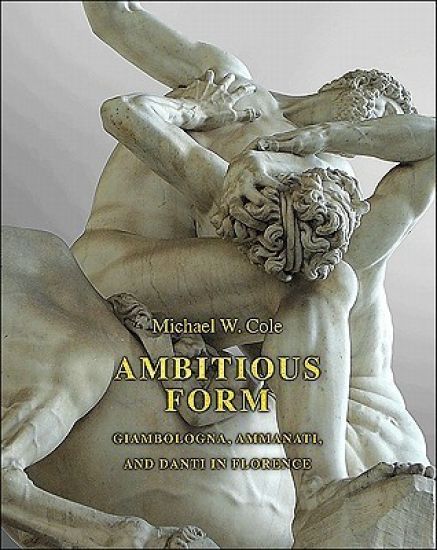
Ambitious Form

Ambitious Form

Michael W. Cole

Princeton University Press
2010
sidottu
Ambitious Form describes the transformation of Italian sculpture during the neglected half century between the death of Michelangelo and the rise of Bernini. The book follows the Florentine careers of three major sculptors--Giambologna, Bartolomeo Ammanati, and Vincenzo Danti--as they negotiated the politics of the Medici court and eyed one another's work, setting new aims for their art in the process. Only through a comparative look at Giambologna and his contemporaries, it argues, can we understand them individually--or understand the period in which they worked. Michael Cole shows how the concerns of central Italian artists changed during the last decades of the Cinquecento. Whereas their predecessors had focused on specific objects and on the particularities of materials, late sixteenth-century sculptors turned their attention to models and design. The iconic figure gave way to the pose, individualized characters to abstractions. Above all, the multiplicity of master crafts that had once divided sculptors into those who fashioned gold or bronze or stone yielded to a more unifying aspiration, as nearly every ambitious sculptor, whatever his training, strove to become an architect.
Sofonisba's Lesson

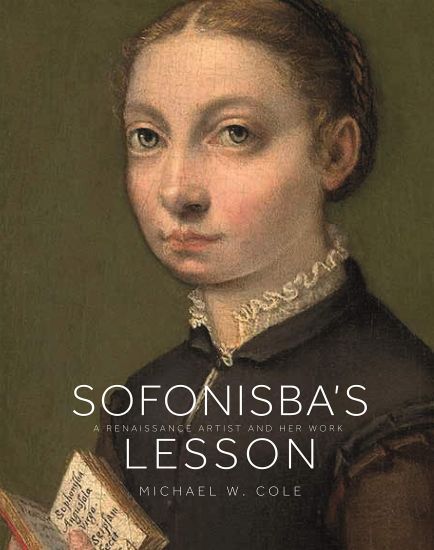
Sofonisba's Lesson

Michael W. Cole

PRINCETON UNIVERSITY PRESS
2020
sidottu
The formation and career of the first major woman artist of the RenaissanceSofonisba Anguissola (ca. 1535–1625) was the daughter of minor Lombard aristocrats who made the unprecedented decision to have her trained as a painter outside the family house. She went on to serve as an instructor to Isabel of Valois, the young queen of Spain. Sofonisba’s Lesson sheds new light on Sofonisba’s work, offering a major reassessment of a Renaissance painter who changed the image of women’s education in Europe—and who transformed Western attitudes about who could be an artist.In this book, Michael Cole demonstrates how teaching and learning were central themes of Sofonisba’s art, which shows women learning to read, play chess, and paint. He looks at how her pictures challenged conventional ideas about the teaching of young girls, and he discusses her place in the history of the amateur, a new Renaissance type. The book examines Sofonisba’s relationships with the group of people for whom her practice was important—her father Amilcare, her teacher Bernardino Campi, the men and women who sought to be associated with her, and her sisters and the other young women who followed her path.Sofonisba’s Lesson concludes with a complete illustrated catalog of the more than two hundred known paintings and drawings that writers have associated with Sofonisba over the past 450 years, with a full accounting of modern scholarly opinion on each.
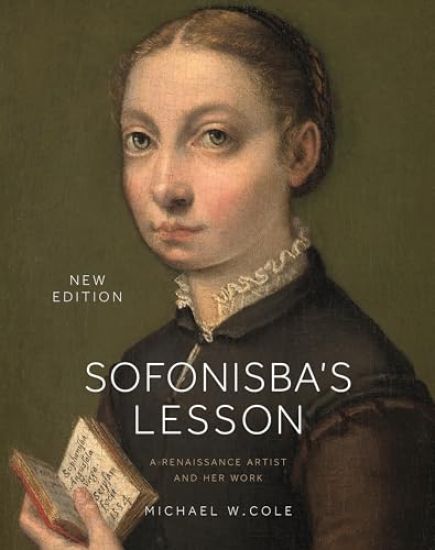
Sofonisba's Lesson, New Edition

Sofonisba's Lesson, New Edition

Michael W. Cole

PRINCETON UNIVERSITY PRESS
2026
sidottu
The landmark study of the first major woman painter of the Renaissance—now revised and expanded to include new discoveries Since it was first published, Sofonisba’s Lesson has ushered in a major reassessment of Sofonisba Anguissola (1532–1625), a remarkable painter who changed the image of women’s education in Europe and transformed Western attitudes about who could be an artist. In this revised and expanded edition, Michael Cole reconsiders some central questions of authorship and shares the major discoveries that have been made since this influential book first came out. The daughter of minor Lombard aristocrats who made the unprecedented decision to have her trained as a painter outside the family house, Sofonisba produced more self-portraits than any known painter before her. She was the first known artist to use her parents and siblings as primary subjects and may have painted the first group portrait featuring only women. Recent research also reveals her to have been not only a key model for painters around her but also the rare early modern Italian artist to take up a subject demonstrably related to the reform of the Catholic Church. The expanded volume offers new assessments of paintings whose status has long been uncertain. Providing a comprehensive and up-to-date illustrated catalog of the more than two hundred known paintings and drawings that writers have associated with Sofonisba over the centuries, Sofonisba’s Lesson will remain the definitive account of the artist and her work for decades to come.
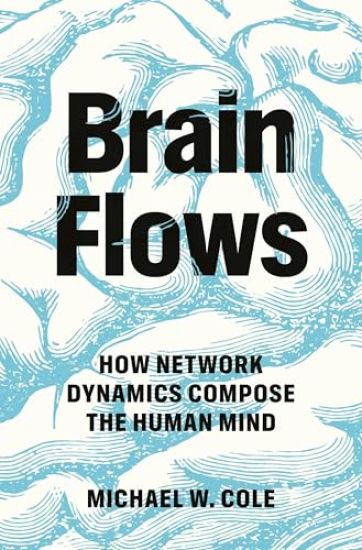
Brain Flows

Brain Flows

Michael W. Cole

PRINCETON UNIVERSITY PRESS
2026
sidottu
A pioneering theory of how brain network flows compose the neural symphonies that make us who we are What enables us not only to comprehend the world but also to find meaning in it? How does a brain engender a mind? In Brain Flows, cognitive neuroscientist Michael Cole argues that movements (flows) of activity through brain networks create an improvised electrochemical symphony that generates our thoughts, feelings, perceptions, and actions. Drawing on his decades of brain research, Cole traces the brain’s complex network organization, which transforms brain flows into representations, goal pursuits, and entire minds. Central to this transformation, he explains, is compositionality, which allows neural representations to be reused and recombined to produce a brain state rich enough not only to perceive the constant novelty of the world but also to help generate it. Cole describes the work of brain flows layer by layer, from simple network interactions to hallmarks of the human mind: consciousness, intelligence, free will, mental health, and creativity. After laying the groundwork—introducing the idea of brain flows and discussing goal pursuit, novelty, and hierarchies—he offers an innovative account of how brain flow patterns create the mind, putting cognitive and network neuroscience findings within rich theoretical and empirical contexts. Throughout , he offers lively examples from daily life that shed light on the dynamic origin of our minds. Ultimately, Cole shows that brain flows are central to what the brain does and thus who we are.