Kirjojen hintavertailu. Mukana 11 699 587 kirjaa ja 12 kauppaa.

Kirjahaku

Etsi kirjoja tekijän nimen, kirjan nimen tai ISBN:n perusteella.

9 kirjaa tekijältä Michael W. Eysenck

Simply Psychology

Simply Psychology

Michael W. Eysenck

TAYLOR FRANCIS LTD
2022
nidottu
Simply Psychology, fifth edition, is an engaging and reader-friendly introduction to the key principles of psychology. Organised around the major approaches to the subject, it covers biological, developmental, social, and cognitive psychology, as well as individual differences.Supported by a wealth of colour illustrations, this textbook provides students new to the subject with straightforward and clear explanations of all the key topics within contemporary psychology. The features spread throughout the book are designed to help readers to engage with the material and include: highlighted key terms and comprehensive glossary chapter introductions and summaries further reading and evaluation boxes structured essay and self-assessment questions case studies and examples illustrating the application of key theories a practical chapter that offers students tips and advice to help them improve their study skills and get the most out of the book and their studies.Additional features new to the fifth edition include: new quizzes updated further reading advice an extra chapter on clinical psychology an expanded section on quantitative research methods additional coverage of popular topics, like sleep.This is an ideal text for students new to psychology and those in related fields such as nursing, social work, and the social sciences.
Simply Psychology

Simply Psychology

Michael W. Eysenck

TAYLOR FRANCIS LTD
2022
sidottu
Simply Psychology, fifth edition, is an engaging and reader-friendly introduction to the key principles of psychology. Organised around the major approaches to the subject, it covers biological, developmental, social, and cognitive psychology, as well as individual differences.Supported by a wealth of colour illustrations, this textbook provides students new to the subject with straightforward and clear explanations of all the key topics within contemporary psychology. The features spread throughout the book are designed to help readers to engage with the material and include: highlighted key terms and comprehensive glossary chapter introductions and summaries further reading and evaluation boxes structured essay and self-assessment questions case studies and examples illustrating the application of key theories a practical chapter that offers students tips and advice to help them improve their study skills and get the most out of the book and their studies.Additional features new to the fifth edition include: new quizzes updated further reading advice an extra chapter on clinical psychology an expanded section on quantitative research methods additional coverage of popular topics, like sleep.This is an ideal text for students new to psychology and those in related fields such as nursing, social work, and the social sciences.
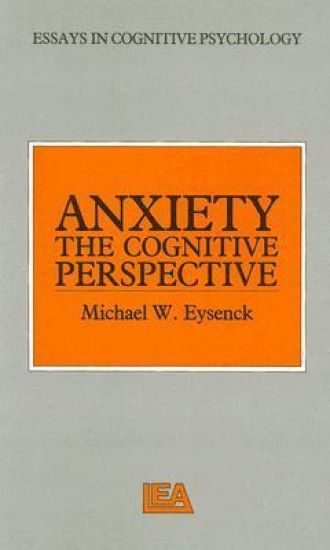
Anxiety

Anxiety

Michael W. Eysenck

Psychology Press Ltd
1992
sidottu
Correction notice: In chapter 4, on pages 70-71, Christos Halkiopoulos should have been credited for his role in the design and execution of the experiment discussed in Eysenck, M. W. (1991 a). Trait anxiety and cognition. In C. D. Spielberger, I. G. Sarason, Z. Kulczar, and J. Van Heck (Eds.), Stress and Emotion, Vol. 14. London: Hemisphere.Theorists are increasingly arguing that it is fruitful to approach anxiety from the cognitive perspective, and the empirical evidence supports that contention. The cognitive perspective is also adopted in this book, but the approach represents a development and extension of earlier ones. For example, most previous theories and research have been based on anxiety either in clinical or in normal groups. In contrast, one of the central themes of this book is that there are great advantages to be gained from a joint consideration of clinical and normal anxiety.Another theme of this book is that it is of major importance to establish whether or not there is a cognitive vulnerability factor which is associated with at least some forms of clinical anxiety. It is argued (with supporting evidence) that there is a latent cognitive vulnerability factor for generalized anxiety disorder which manifests itself under stressful conditions. This vulnerability factor is characterized by hypervigilance, and is found predominantly in normals high in the personality dimension of trait anxiety.The scope of the book extends to the effects of anxiety on performance and to the phenomenon of worry, which is regarded as the cognitive component of anxiety. In both cases, a new theoretical framework is presented.
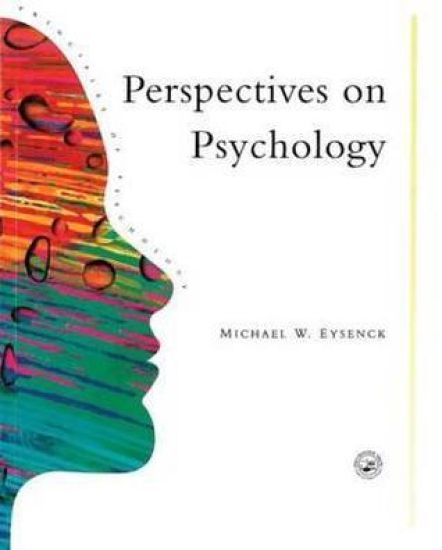
Perspectives On Psychology

Perspectives On Psychology

Michael W. Eysenck

Psychology Press Ltd
1994
nidottu
This is a title in the modular "Principles in Psychology Series", designed for A-level and other introductory courses, aiming to provide students embarking on psychology courses with the necessary background and context. One aspect of this is to consider contemporary psychology in the light of its historical development. Another aspect is to examine some of the major controversies which have dominated psychology over the centuries. Yet another aspect is to consider some of the major areas of psychology eg social, developmental, cognitive in terms of what they have to offer in the quest for an understanding of human behaviour.; The book also addresses key issues which need to be considered as psychology matures into a fully fledged experimental and scientific discipline. For example, how much do laboratory experiments tell us about how people behave in the real world? And how far is it ethically permissable for psychologists to go in their pursuit of knowledge?
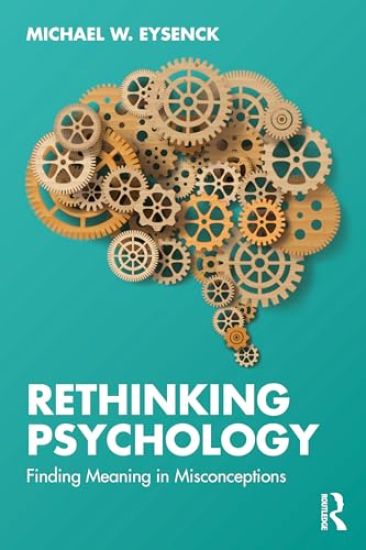
Rethinking Psychology

Rethinking Psychology

Michael W. Eysenck

TAYLOR FRANCIS LTD
2025
nidottu
Can subliminal messages motivate behaviour? Can you train your brain to increase your intelligence? Does parenting style affect personality?Psychologists and non-psychologists looking to understand human behaviour and cognition are forced to contend with a number of complexities unique to the field. Not least amongst these is the fact that psychology lacks the superficially attractive precision of theories in the hard sciences. It is inevitable, then, that non-psychologists are susceptible to numerous psychological myths.In this thought-provoking exploration of 43 of the most common psychological myths, Michael W. Eysenck examines the complexity of psychological science as well as the distortion of data, not only through the media, but also by researchers, textbook writers, and individuals themselves. He challenges the notion that the substantial progress made by psychology has provided enough convincing experimental evidence to successfully demolish these inaccuracies and explores the ways in which psychological research should be systematically improved so that psychology can take its place as a robust scientific discipline. Highly engaging, this is an informative read for psychologists at all levels, as well as members of the general public interested in challenging their own psychological understanding.
Rethinking Psychology

Rethinking Psychology

Michael W. Eysenck

TAYLOR FRANCIS LTD
2025
sidottu
Can subliminal messages motivate behaviour? Can you train your brain to increase your intelligence? Does parenting style affect personality?Psychologists and non-psychologists looking to understand human behaviour and cognition are forced to contend with a number of complexities unique to the field. Not least amongst these is the fact that psychology lacks the superficially attractive precision of theories in the hard sciences. It is inevitable, then, that non-psychologists are susceptible to numerous psychological myths.In this thought-provoking exploration of 43 of the most common psychological myths, Michael W. Eysenck examines the complexity of psychological science as well as the distortion of data, not only through the media, but also by researchers, textbook writers, and individuals themselves. He challenges the notion that the substantial progress made by psychology has provided enough convincing experimental evidence to successfully demolish these inaccuracies and explores the ways in which psychological research should be systematically improved so that psychology can take its place as a robust scientific discipline. Highly engaging, this is an informative read for psychologists at all levels, as well as members of the general public interested in challenging their own psychological understanding.
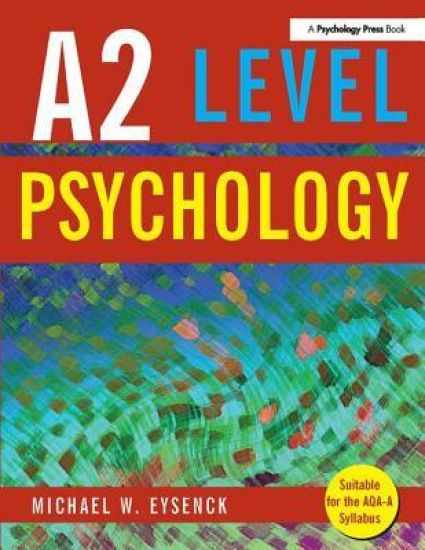
A2 Level Psychology

A2 Level Psychology

Michael W. Eysenck

Psychology Press Ltd
2017
sidottu
This thoroughly updated edition of the bestselling Psychology for A2 Level has been written specifically for the new AQA-A Psychology A2-level specification for teaching from September 2009. It is the ideal follow-up to AS Level Psychology, 4th edition by the same author, but also to any AS-level textbook. This full-colour book, which builds on the ideas and insights explored at AS Level to promote a deeper understanding of psychology, is written in an engaging and accessible style by a highly experienced author. It incorporates contributions, advice and feedback from a host of A-Level teachers and psychologists including Philip Banyard, Evie Bentley, Clare Charles, Diana Dwyer, Mark Griffiths and Craig Roberts. At this level, students select options from a range of specified topics and this book includes chapters on all of the compulsory and optional topics that are on the new A2 syllabus in sufficient depth for the requirements of the course. It has a new focus on the nature and scope of psychology as a science with an emphasis on how science works, and guidance on how to engage students in practical scientific research activities. Presented in a clear, reader-friendly layout, the book is packed with advice on exam technique, hints and tips to give students the best chance possible of achieving the highest grade. The book is supported by our comprehensive package of online student and teacher resources, A2 Psychology Online. Student resources feature a wealth of multimedia materials to bring the subject to life, including our new A2 revision guide and A2 Workbook, multiple choice quizzes, revision question tips, interactive exercises and podcasts by key figures in psychology. Teacher resources include a teaching plan, chapter-by-chapter lecture presentations, and classroom exercises and activities.
Anxiety

Anxiety

Michael W. Eysenck

Psychology Press Ltd
2015
nidottu
Theorists are increasingly arguing that it is fruitful to approach anxiety from the cognitive perspective, and the empirical evidence supports that contention. The cognitive perspective is also adopted in this book, but the approach represents a development and extension of earlier ones. For example, most previous theories and research have been based on anxiety either in clinical or in normal groups. In contrast, one of the central themes of this book is that there are great advantages to be gained from a joint consideration of clinical and normal anxiety.Another theme of this book is that it is of major importance to establish whether or not there is a cognitive vulnerability factor which is associated with at least some forms of clinical anxiety. It is argued (with supporting evidence) that there is a latent cognitive vulnerability factor for generalized anxiety disorder which manifests itself under stressful conditions. This vulnerability factor is characterized by hypervigilance, and is found predominantly in normals high in the personality dimension of trait anxiety.The scope of the book extends to the effects of anxiety on performance and to the phenomenon of worry, which is regarded as the cognitive component of anxiety. In both cases, a new theoretical framework is presented.Correction notice: In chapter 4, on pages 70-71, Christos Halkiopoulos should have been credited for his role as the inventor of the Dot Probe Paradigm and for the design and execution of the experiment discussed in Eysenck, M. W. (1991 a). Trait anxiety and cognition. In C. D. Spielberger, I. G. Sarason, Z. Kulczar, and J. Van Heck (Eds.), Stress and Emotion, Vol. 14. London: Hemisphere.
A2 Level Psychology

A2 Level Psychology

Michael W. Eysenck

Psychology Press Ltd
2009
nidottu
This thoroughly updated edition of the bestselling Psychology for A2 Level has been written specifically for the new AQA-A Psychology A2-level specification for teaching from September 2009. It is the ideal follow-up to AS Level Psychology, 4th edition by the same author, but also to any AS-level textbook.This full-colour book, which builds on the ideas and insights explored at AS Level to promote a deeper understanding of psychology, is written in an engaging and accessible style by a highly experienced author. It incorporates contributions, advice and feedback from a host of A-Level teachers and psychologists including Philip Banyard, Evie Bentley, Clare Charles, Diana Dwyer, Mark Griffiths and Craig Roberts.At this level, students select options from a range of specified topics and this book includes chapters on all of the compulsory and optional topics that are on the new A2 syllabus in sufficient depth for the requirements of the course. It has a new focus on the nature and scope of psychology as a science with an emphasis on how science works, and guidance on how to engage students in practical scientific research activities. Presented in a clear, reader-friendly layout, the book is packed with advice on exam technique, hints and tips to give students the best chance possible of achieving the highest grade.The book is supported by our comprehensive package of online student and teacher resources, A2 Psychology Online. Student resources feature a wealth of multimedia materials to bring the subject to life, including our new A2 revision guide and A2 Workbook, multiple choice quizzes, revision question tips, interactive exercises and podcasts by key figures in psychology. Teacher resources include a teaching plan, chapter-by-chapter lecture presentations, and classroom exercises and activities.