
Kirjahaku
Etsi kirjoja tekijän nimen, kirjan nimen tai ISBN:n perusteella.
19 kirjaa tekijältä Michael Wheeler
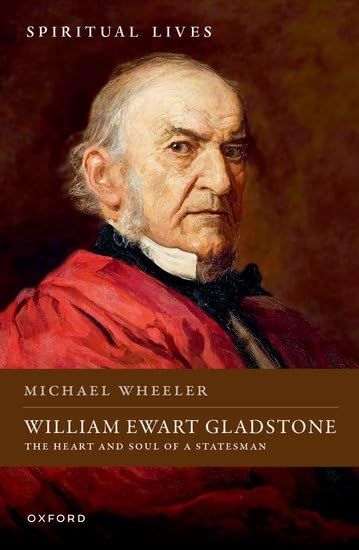
The leading statesman of nineteenth-century Britain, a figure who bestrode the political world like a Colossus, is 'Gladstone' to modern biographers. In order to signal the difference between Wheeler's approach and those of earlier biographers, the subject of this book is known as William, his baptismal name. His autobiographical fragments of 1892 included a disclaimer: 'I do not indeed intend in these notes to give a history of the inner life, which I think has with me been extraordinarily dubious, vacillating, and (above all) complex'. William Gladstone: The Heart and Soul of a Statesman is about the spiritual dimension of his complex inner life. In tracing the movements of his heart and soul, the book works from the inner to the outer aspects of a rich and varied life, from William's daily disciplines of prayer and reflection to his earnest attempts to follow the precepts of Christianity through action in the public realm and in private philanthropy, and in the writing of numerous reviews, articles, and books. He remained an independent intellectual, eschewing party labels within the Church of England and working out his own stance in relation to specific Liberal party policies in politics. He was as much a man of letters as he was a politician. Later in his political career, 'the people's William' appealed to public opinion through a series of national moral campaigns. His fiercest battles, however, were spiritual, as he castigated himself for falling short of the ideals set out in Jesus' sermon on the mount, particularly with regard to sexual desire as he sought to rescue women from a life of prostitution and became infatuated with a former courtesan. His longest crusade was against the enemy within.
In Reconstructing the Cognitive World, Michael Wheeler argues that we should turn away from the generically Cartesian philosophical foundations of much contemporary cognitive science research and proposes instead a Heideggerian approach. Wheeler begins with an interpretation of Descartes. He defines Cartesian psychology as a conceptual framework of explanatory principles and shows how each of these principles is part of the deep assumptions of orthodox cognitive science (both classical and connectionist). Wheeler then turns to Heidegger's radically non-Cartesian account of everyday cognition, which, he argues, can be used to articulate the philosophical foundations of a genuinely non-Cartesian cognitive science. Finding that Heidegger's critique of Cartesian thinking falls short, even when supported by Hubert Dreyfus's influential critique of orthodox artificial intelligence, Wheeler suggests a new Heideggerian approach. He points to recent research in "embodied-embedded" cognitive science and proposes a Heideggerian framework to identify, amplify, and clarify the underlying philosophical foundations of this new work. He focuses much of his investigation on recent work in artificial intelligence-oriented robotics, discussing, among other topics, the nature and status of representational explanation, and whether (and to what extent) cognition is computation rather than a noncomputational phenomenon best described in the language of dynamical systems theory.Wheeler's argument draws on analytic philosophy, continental philosophy, and empirical work to "reconstruct" the philosophical foundations of cognitive science in a time of a fundamental shift away from a generically Cartesian approach. His analysis demonstrates that Heideggerian continental philosophy and naturalistic cognitive science need not be mutually exclusive and shows further that a Heideggerian framework can act as the "conceptual glue" for new work in cognitive science.
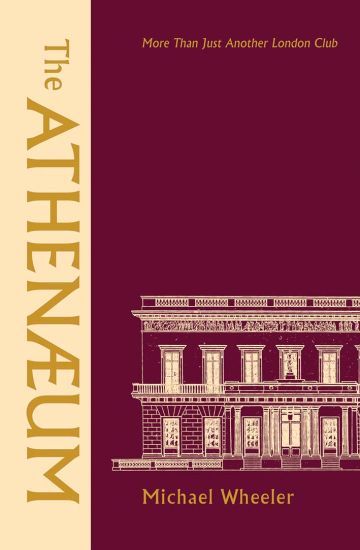
A compelling history of the famous London club and its members’ impact on Britain’s scientific, creative, and official life When it was founded in 1824, the Athenæum broke the mold. Unlike in other preeminent clubs, its members were chosen on the basis of their achievements rather than on their background or political affiliation. Public rather than private life dominated the agenda. The club, with its tradition of hospitality to conflicting views, has attracted leading scientists, writers, artists, and intellectuals throughout its history, including Charles Darwin and Matthew Arnold, Edward Burne-Jones and Yehudi Menuhin, Winston Churchill and Gore Vidal. This book is not presented in the traditional, insular style of club histories, but devotes attention to the influence of Athenians on the scientific, creative, and official life of the nation. From the unwitting recruitment of a Cold War spy to the welcome admittance of women, this lively and original account explores the corridors and characters of the club; its wider political, intellectual, and cultural influence; and its recent reinvention.
"Vote early and often" is an old American joke. The funny thing is, we now do that year in and year out in the form of endless public opinion polls that have reached the point of being confused with elections and with public opinion itself. Michael Wheeler's is the first book to take on the polls and the pollsters and deal forthrightly with the questions the people must ask. For example, can polls be rigged? Do they affect voters? Do they affect policy decisions? According to the author, the answer to each of these questions is yes. To back all of his considerable digging, he makes use of direct interviews with leading pollsters like George Gallup and Louis Harris, and a host of politicians, ranging from Senators Kennedy and Humphrey to former Nixon aides Colson and Ehrlichman. In one revealing chapter he follows a typical interviewer around for a day and gives the reader a real feeling for the ragged edges of opinion sampling. Even the pollsters admit that their record is marred by serious errors. The author shows that it is very much worse than they will admit. Lies, Dam Lies, and Statistics is not only about political polls, even though that is its most important subject. There is a section on commercial polls, which may be even less reliable than the others, and one on polls and television, in which the emperor's clothes of the Nielsen ratings are described. There is also a chapter on policing the polls, which the public ought to find imperative in view of the rest of the book. An exposé with an alternative, this is a book whose time has come.

In this 1999 book, Michael Wheeler challenges critical orthodoxy by arguing that John Ruskin's writing is underpinned by a sustained trust in divine wisdom: a trust nurtured by his imaginative engagement with King Solomon and the temple in Jerusalem, and with the wisdom literature of the Old Testament. In Modern Painters, The Seven Lamps of Architecture and The Stones of Venice, belief in the wisdom of God the Father informed Ruskin's Evangelical natural theology and his celebration of Turner's landscape painting, while the wisdom of God the Son lay at the heart of his Christian aesthetics. Whereas 'the author of Modern Painters' sought to teach his readers how to see architecture, paintings and landscapes, the 'Victorian Solomon' whose religious life was troubled, and who created various forms of modern wisdom literature in works such as Unto this Last, The Queen of the Air and Fors Clavigera, wished to teach them how to live.
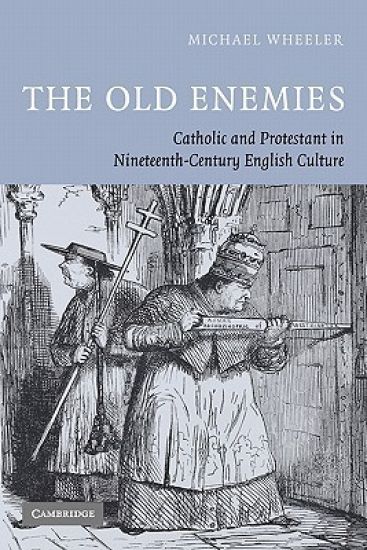
Divisions between Catholics and Protestants have been a feature of English history since the Reformation. Even into the industrial nineteenth century, age-old theological disagreements were the cause of religious and cultural conflicts. The Old Enemies asks why these ancient divisions were so deep, why they continued into the nineteenth century and how novelists and poets, theologians and preachers, historians and essayists reinterpreted the religious debates. Michael Wheeler, a leading authority on the literature and theology of the period, explains how each side misunderstood the other's deeply held beliefs about history, authority, doctrine and spirituality, and, conversely, how these theological conflicts were a source of inspiration and creativity in the arts. This wide-ranging, well-illustrated study sheds light on nineteenth-century history, literature and religion.
The Victorians were obsessed with death, bereavement, and funeral rituals, and speculated vigorously on the nature of heaven, hell, and divine judgment. This popular abridgement of Michael Wheeler's award-winning Death and the Future Life in Victorian Literature and Theology looks at the literary implications of Victorian views of death and the life beyond, and recreates vividly the fear and hope embodied in the theological positions of the novelists and poets of the age. Now accessible to a wide readership, Heaven, Hell, and the Victorians offers a wide-ranging and attractively illustrated cultural history of nineteenth-century religious experience, belief, and language in the face of death.
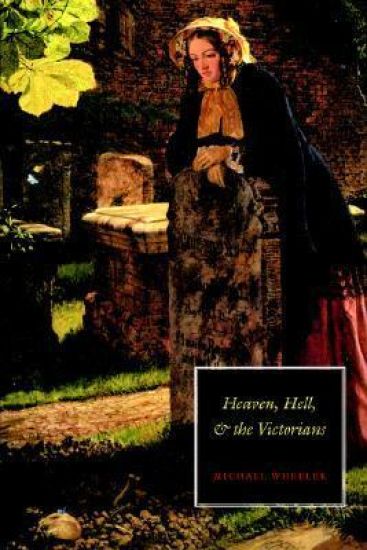
The Victorians were obsessed with death, bereavement, and funeral rituals, and speculated vigorously on the nature of heaven, hell, and divine judgment. This popular abridgement of Michael Wheeler’s award-winning Death and the Future Life in Victorian Literature and Theology looks at the literary implications of Victorian views of death and the life beyond, and recreates vividly the fear and hope embodied in the theological positions of the novelists and poets of the age. Now accessible to a wide readership, Heaven, Hell, and the Victorians offers a wide-ranging and attractively illustrated cultural history of nineteenth-century religious experience, belief, and language in the face of death.
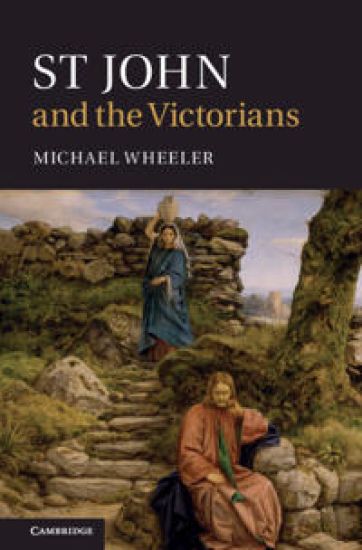
The Gospel according to St John, often regarded as the most important of the gospels in the account it gives of Jesus' life and divinity, received close attention from nineteenth-century biblical scholars and prompted a significant response in the arts. This original interdisciplinary study of the cultural afterlife of John in Victorian Britain places literature, the visual arts and music in their religious context. Discussion of the Evangelist, the Gospel and its famous prologue is followed by an examination of particular episodes that are unique to John. Michael Wheeler's research reveals the depth of biblical influence on British culture and on individuals such as Ruskin, Holman Hunt and Tennyson. He makes a significant contribution to the understanding of culture, religion and scholarship in the period.
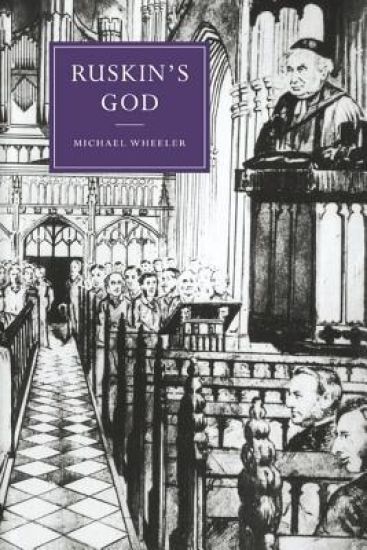
Michael Wheeler challenges critical orthodoxy by arguing that John Ruskin’s writing is underpinned by a sustained trust in divine wisdom: a trust nurtured by his imaginative engagement with King Solomon and the temple in Jerusalem, and with the wisdom literature of the Old Testament. In Modern Painters, The Seven Lamps of Architecture and The Stones of Venice, belief in the wisdom of God the Father informed Ruskin’s Evangelical natural theology and his celebration of Turner’s landscape painting, while the wisdom of God the Son lay at the heart of his Christian aesthetics. Whereas ‘the author of Modern Painters’ sought to teach his readers how to see architecture, paintings and landscapes, the ‘Victorian Solomon’ whose religious life was troubled, and who created various forms of modern wisdom literature in works such as Unto this Last, The Queen of the Air and Fors Clavigera, wished to teach them how to live.
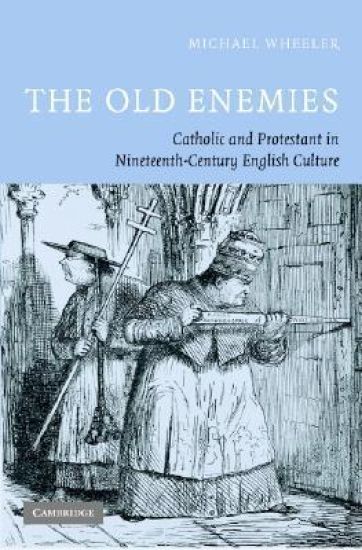
Divisions between Catholics and Protestants have been a feature of English history since the Reformation. Even into the industrial nineteenth century, age-old theological disagreements were the cause of religious and cultural conflicts. The Old Enemies asks why these ancient divisions were so deep, why they continued into the nineteenth century and how novelists and poets, theologians and preachers, historians and essayists reinterpreted the religious debates. Michael Wheeler, a leading authority on the literature and theology of the period, explains how each side misunderstood the other's deeply held beliefs about history, authority, doctrine and spirituality, and, conversely, how these theological conflicts were a source of inspiration and creativity in the arts. This wide-ranging, well-illustrated study sheds light on nineteenth-century history, literature and religion.
Professor Wheeler's widely-acclaimed survey of the nineteenth-century fiction covers both the major writers and their works and encompasses the genres and "minor" fiction of the period. This excellent introduction and reference source has been revised for this second edition to include new material on lesser-known writers and a comprehensively updated bibliography.
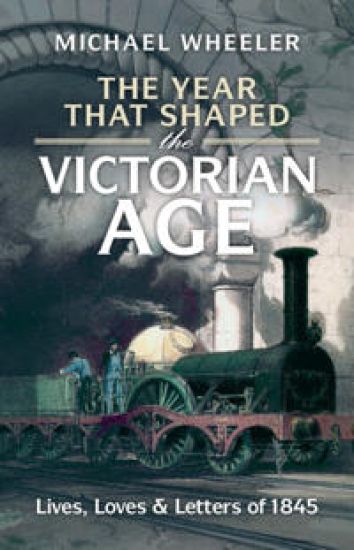
What was special about 1845 and why does it deserve particular scrutiny? In his much-anticipated new book, one of the leading authorities on the Victorian age argues that this was the critical year in a decade which witnessed revolution on continental Europe, the threat of mass insurrection at home and radical developments in railway transport, communications, religion, literature and the arts. The effects of the new poor law now became visible in the workhouses; a potato blight started in Ireland, heralding the Great Famine; and the Church of England was rocked to its foundations by John Henry Newman's conversion to Roman Catholicism. What Victorian England became was moulded, says Michael Wheeler, in the crucible of 1845. Exploring pivotal correspondence, together with pamphlets, articles and cartoons, the author tells the riveting story of a seismic epoch through the lives, loves and letters of leading contemporaneous figures.
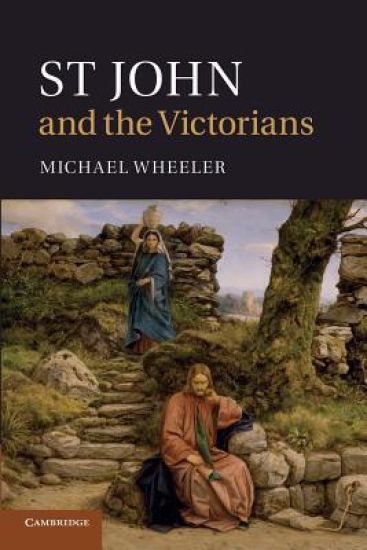
The Gospel according to St John, often regarded as the most important of the gospels in the account it gives of Jesus' life and divinity, received close attention from nineteenth-century biblical scholars and prompted a significant response in the arts. This original interdisciplinary study of the cultural afterlife of John in Victorian Britain places literature, the visual arts and music in their religious context. Discussion of the Evangelist, the Gospel and its famous prologue is followed by an examination of particular episodes that are unique to John. Michael Wheeler's research reveals the depth of biblical influence on British culture and on individuals such as Ruskin, Holman Hunt and Tennyson. He makes a significant contribution to the understanding of culture, religion and scholarship in the period.

Professor Wheeler's widely-acclaimed survey of the nineteenth-century fiction covers both the major writers and their works and encompasses the genres and "minor" fiction of the period. This excellent introduction and reference source has been revised for this second edition to include new material on lesser-known writers and a comprehensively updated bibliography.
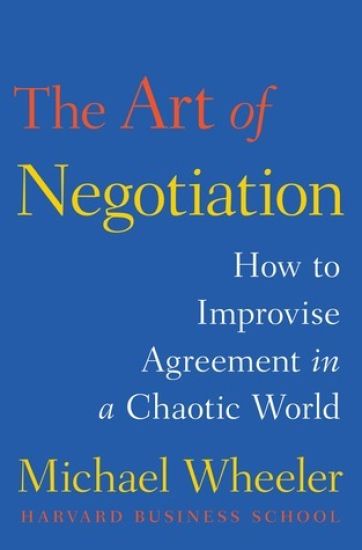
The Art of Negotiation: How to Improvise Agreement in a Chaotic World
Michael Wheeler
SIMON SCHUSTER
2013
sidottu
A member of the world renowned Program on Negotiation at Harvard Law School introduces the powerful next-generation approach to negotiation. For many years, two approaches to negotiation have prevailed: the "win-win" method exemplified in Getting to Yes by Roger Fisher, William Ury, and Bruce Patton; and the hard-bargaining style of Herb Cohen's You Can Negotiate Anything. Now award-winning Harvard Business School professor Michael Wheeler provides a dynamic alternative to one-size-fits-all strategies that don't match real world realities. The Art of Negotiation shows how master negotia-tors thrive in the face of chaos and uncertainty. They don't trap themselves with rigid plans. Instead they understand negotiation as a process of exploration that demands ongoing learning, adapting, and influencing. Their agility enables them to reach agreement when others would be stalemated. Michael Wheeler illuminates the improvisational nature of negotiation, drawing on his own research and his work with Program on Negotiation colleagues. He explains how the best practices of diplomats such as George J. Mitchell, dealmaker Bruce Wasserstein, and Hollywood producer Jerry Weintraub apply to everyday transactions like selling a house, buying a car, or landing a new contract. Wheeler also draws lessons on agility and creativity from fields like jazz, sports, theater, and even military science.