Kirjojen hintavertailu. Mukana 11 673 184 kirjaa ja 12 kauppaa.

Kirjahaku

Etsi kirjoja tekijän nimen, kirjan nimen tai ISBN:n perusteella.

9 kirjaa tekijältä Michael Whitby

The Emperor Maurice and his Historian

The Emperor Maurice and his Historian

Michael Whitby

Clarendon Press
1988
sidottu
Theophylact Simocatta, the last historian of classical antiquity, has in the past deterred investigators by the idiosyncrasies of his style. Through examination of Theophylact's narrative, and collation with other available evidence, Dr Whitby has unpicked the obscurities, biases, and errors to clear the way for a more accurate appreciation of the events of the reign of Emperor Maurice (582-602). Maurice's reign witnessed great struggles as the Romans attempted to defend their traditional frontiers on the Danube and in Mesopotamia and Armenia. In both areas, Maurice achieved great successes: in the Balkans, migrations of Slavs and invasions by Avars were held in check, if not completely halted; and in the east the emperor reinstated Khusro II, the legitimate Persian king, and attempted to forge a long-term peace. These events are important both in the historical geography of the Balkans and eastern frontier, and for understanding the fate of the post-Justinian Roman Empire. Whitby reveals the History as a work worthy of serious study in its own right as a product of the last flowering of classical Greek literature in antiquity.
Rome at War AD 293-696

Rome at War AD 293-696

Michael Whitby

Routledge
2003
sidottu
In the early third century AD, the Roman Empire was a force to be reckoned with, controlling vast territories and wielding enormous political power from Scotland to the Sahara. Four hundred years later, this mighty empire was falling apart in the face of ongoing problems and the government's failure to deal with them. In this challenging new volume, Michael Whitby tackles the fundamental issues (such as the rise of Christianity) that led to the decline and fall of the Roman Empire, and offers a startling reassessment of the performance of the late Roman army.
Sparta

Sparta

Michael Whitby

Edinburgh University Press
2001
nidottu
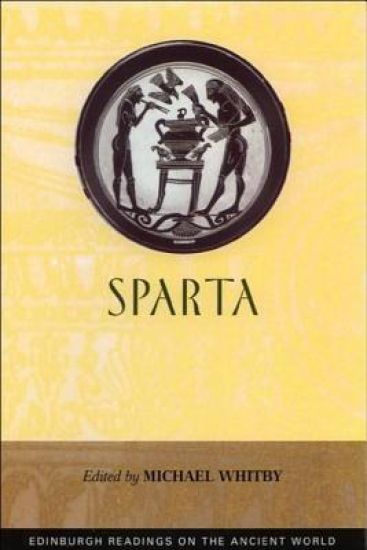
This volume introduces the reader to every important aspect of the society of Sparta, the dominant power in southern Greece from the seventh century BC and the great rival of democratic Athens in the fifth and fourth centuries. During this period Sparta evolved a unique social and political system that combined egalitarian structures, military ideals and brutal oppression, and permitted male citizens to focus on the practice of war. The system fascinated scholars at the time and has done so ever since: its outlines are clear, but because of the nature of the evidence almost all detailed aspects of Spartan social practices and constitutional affairs are open to debate. Michael Whitby introduces and presents some of the most outstanding contributions to the history of Sparta. Together they cover the key aspects of Spartan history and society: its problematic early history, social and economic organisation (especially the different categories of citizens and non-citizens), international relations and military achievements, religious practices and culture, the role of women, and sexual conduct and values. He has chosen them partly for their clarity and importance, and partly too for the questions they raise about the problems of studying Sparta - what evidence to consider, what precautions need to be observed in considering it, and what sorts of conclusions it is reasonable to draw. His intention is not to pretend that definitive answers can be offered to the main problems of Sparta but to encourage readers to formulate their own approaches and judgements with due respect for the limitations of the evidence and awareness of the benefits of informed speculation.
Sparta

Sparta

Michael Whitby

Edinburgh University Press
2001
sidottu
This volume introduces the reader to every important aspect of the society of Sparta, the dominant power in southern Greece from the seventh century BC and the great rival of democratic Athens in the fifth and fourth centuries. During this period Sparta evolved a unique social and political system that combined egalitarian structures, military ideals and brutal oppression, and permitted male citizens to focus on the practice of war. The system fascinated scholars at the time and has done so ever since: its outlines are clear, but because of the nature of the evidence almost all detailed aspects of Spartan social practices and constitutional affairs are open to debate. Michael Whitby introduces and presents some of the most outstanding contributions to the history of Sparta. Together they cover the key aspects of Spartan history and society: its problematic early history, social and economic organisation (especially the different categories of citizens and non-citizens), international relations and military achievements, religious practices and culture, the role of women, and sexual conduct and values. He has chosen them partly for their clarity and importance, and partly too for the questions they raise about the problems of studying Sparta - what evidence to consider, what precautions need to be observed in considering it, and what sorts of conclusions it is reasonable to draw. His intention is not to pretend that definitive answers can be offered to the main problems of Sparta but to encourage readers to formulate their own approaches and judgements with due respect for the limitations of the evidence and awareness of the benefits of informed speculation.
The Wars of Justinian I

The Wars of Justinian I

Michael Whitby

Pen Sword Military
2021
sidottu
Justinian I was the last great conquering Roman emperor, who dramatically increased the size of his realm although he never actually led an army in person. His long reign (527-565) was devoted to the challenging project of _renovatio imperii_, that is the renovation of Empire. His was the will and vision behind campaigns that saw the reconquest of Rome itself and Italy from the Ostrogoths, North Africa from the Vandals, and parts of Spain from the Visigoths. These grand schemes were largely accomplished through the services of two talented generals, Belisarius and Narses, and in spite of the distractions of wars against the Persians in the east for most of his reign and the devastation caused by bubonic plague. This is the only book available devoted to analysing all of Justinian's campaigns on the basis of the full range of sources. Besides narrating the course and outcome of these wars, Michael Whitby analyses the Roman army of the period, considering its equipment, organization, leadership, strategy and tactics, and considers the longer-term impact of Justinian's military ventures on the stability of the empire.
Theodore Syncellus: The Homilies ‘On the Robe’ and ‘On the Siege’
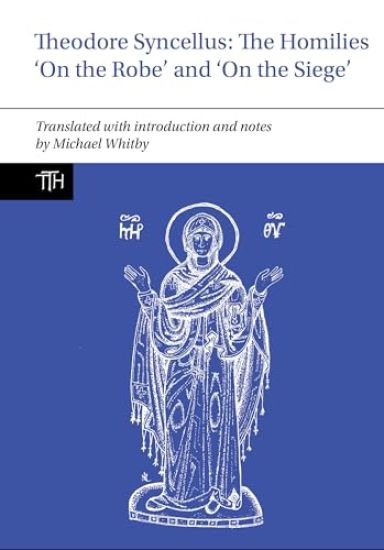
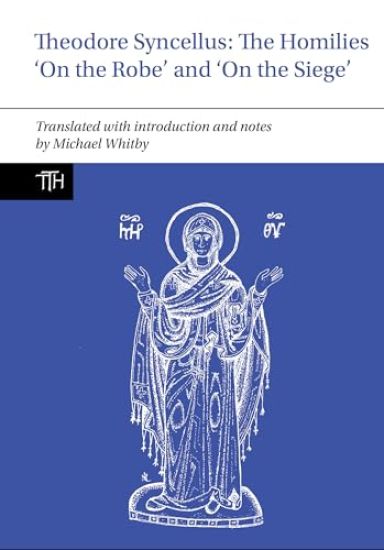
Theodore Syncellus was a prominent member of the clergy in Constantinople in the 620s, being a close advisor to Patriarch Sergius. As such he was chosen to participate in a delicate mission to the Avar khagan during the siege of the city in 626 and to deliver celebratory sermons. The first, ‘On the Robe’, commemorated the restoration of the miraculous relic of the Virgin’s Robe to the shrine at Blachernae, just outside the city walls, after it had been removed to protect it from Avar looting in 623. The second, ‘On the Siege’, analysed and gave thanks for the city’s escape from a joint attack by Avars and Persians in 626. The two speeches provide important evidence for popular devotion in the capital, especially to the Virgin Mary who now acquires the status of the city's special protector, for the role of Patriarch Sergius and others in leading the city during the long absence on campaign of the emperor Heraclius, and for how contemporary events could be fitted into Biblical contexts to elevate Constantinople and its inhabitants to the status of the new Israel. This new English translation of these two sermons (the first complete translation of 'On the Robe' and the first of 'On the Siege') sheds light on both the religious history of the eastern Roman Empire at the end of antiquity and on events in seventh-century Constantinople.
Theodore Syncellus: The Homilies ‘On the Robe’ and ‘On the Siege’
Theodore Syncellus was a prominent member of the clergy in Constantinople in the 620s, being a close advisor to Patriarch Sergius. As such he was chosen to participate in a delicate mission to the Avar khagan during the siege of the city in 626 and to deliver celebratory sermons. The first, ‘On the Robe’, commemorated the restoration of the miraculous relic of the Virgin’s Robe to the shrine at Blachernae, just outside the city walls, after it had been removed to protect it from Avar looting in 623. The second, ‘On the Siege’, analysed and gave thanks for the city’s escape from a joint attack by Avars and Persians in 626. The two speeches provide important evidence for popular devotion in the capital, especially to the Virgin Mary who now acquires the status of the city's special protector, for the role of Patriarch Sergius and others in leading the city during the long absence on campaign of the emperor Heraclius, and for how contemporary events could be fitted into Biblical contexts to elevate Constantinople and its inhabitants to the status of the new Israel. This new English translation of these two sermons (the first complete translation of 'On the Robe' and the first of 'On the Siege') sheds light on both the religious history of the eastern Roman Empire at the end of antiquity and on events in seventh-century Constantinople.
Rome at War AD 293–696

Rome at War AD 293–696

Michael Whitby

Osprey Publishing
2002
nidottu
In the early third century AD the Roman Empire was a force to be reckoned with, controlling vast territories and wielding enormous political power from Scotland to the Sahara. Four hundred years later this mighty empire was falling apart in the face of successive problems that the rulers failed to deal with. In this volume, Michael Whitby tackles the fundamental issues (such as the rise of Christianity) that led to the "decline and fall" of the Roman Empire, and offers a reassessment of the performance of the late Roman army.
Monastic Saints

Monastic Saints

Michael Whitby

LIVERPOOL UNIVERSITY PRESS
2026
sidottu
The five holy men and one holy woman presented in this volume represent five significant monastic figures from the years 370 to 470 whose Lives are not currently available in English translation. Isaac confronted Emperor Valens and predicted his death at Adrianople before accepting the patronage of Saturninus; Hypatius built up a community at a deserted monastery south of Chalcedon, which he led for four decades; Marcellus was the third leader of the ‘Sleepless’ monastery at Irenaeum on the Bosporus; Domnica established a female community outside the city with the support of the patriarch; Auxentius abandoned service in the imperial guards to take up residence on a hill south of Chalcedon, where he attracted both male and female devotees; John the Calybite, if he existed, left the Sleepless community to place himself as a beggar outside his parents’ grand house in Constantinople, only revealing himself when near death. Their interactions, not always positive, with Constantinople’s religious and secular leadership, as well as their care for ordinary people, cast light on the life of the capital and the needs and beliefs of its inhabitants.