Kirjojen hintavertailu. Mukana 11 244 527 kirjaa ja 12 kauppaa.

Kirjahaku

Etsi kirjoja tekijän nimen, kirjan nimen tai ISBN:n perusteella.

110 kirjaa tekijältä Michael Williams

Michael Williams

Michael Williams

Michael Williams

Carnegie Museum of Art,U.S.
2017
sidottu
Over the last 10 years, Los Angeles–based Michael Williams (born 1978) has created paintings known for their layered imagery, eye-popping color and use of airbrushing and inkjet printing. His large-scale works begin as drawings either on paper or on the computer screen before they are printed or transferred to canvas and then embellished with oil paint. Williams’ narrative content reveals a dark sense of humor about everyday life, often exploring the role of the painter as observer. Wickedly funny allegories merge with abstract painting as free-form amoebic shapes frequently fill the entirety of his canvases. The resulting paintings offer a dense and absorbing terrain of color and form. Michael Williams is published to accompany the artist’s first US solo museum exhibition, at Carnegie Museum of Art, where he presents a new body of his large-scale paintings as well as drawings that mix collage and free-associative mark-making.
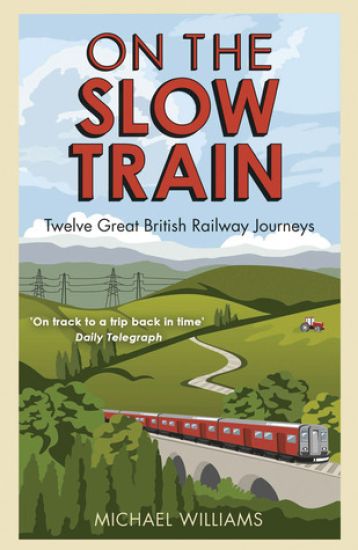
On the Slow Train Again

On the Slow Train Again

Michael Williams

Arrow Books Ltd
2012
pokkari
Michael Williams has spent the past year travelling along the fascinating rail byways of Britain for this new collection of journeys. Here is the 'train to the end of the world' running for more than four splendid hours through lake, loch and moorland from Inverness to Wick, the most northerly town in Britain. He discovers a perfect country branch line in London's commuterland, and travels on one of the slowest services in the land along the shores of the lovely Dovey estuary to the far west of Wales. He takes the stopping train across the Pennines on a line with so few services that its glorious scenery is a secret known only to the regulars. Here, too, is the Bittern Line in Norfolk and the Tarka Line in North Devon as well as the little branch line to the fishing port of Looe in Cornwall, rescued from closure in the 1960s and now celebrating its 150th anniversary taking families on holiday to the seaside. From the most luxurious and historic - aboard the Orient Express - to the most futuristic - on the driverless trains of London's Docklands Light Railway - here is a unique travel companion celebrating the treasures of our railway heritage from one of Britain's most knowledgeable railway writers.
The Trains Now Departed

The Trains Now Departed

Michael Williams

Arrow Books Ltd
2016
pokkari
SOMETIMES you come across a lofty railway viaduct, marooned in the middle of a remote country landscape. Or a crumbling platform from some once-bustling junction buried under the buddleia. If you are lucky you might be able to follow some rusting tracks, or explore an old tunnel leading to…well, who knows where? Listen hard. Is that the wind in the undergrowth? Or the spectre of a train from a golden era of the past panting up the embankment?These are the ghosts of The Trains Now Departed. They are the railway lines, and services that ran on them that have disappeared and gone forever. Our lost legacy includes lines prematurely axed, often with a gripping and colourful tale of their own, as well as marvels of locomotive engineering sent to the scrapyard, and grand termini felled by the wrecker's ball. Then there are the lost delights of train travel, such as haute cuisine in the dining car, the grand expresses with their evocative names, and continental boat trains to romantic far-off places.The Trains Now Departed tells the stories of some of the most fascinating lost trains of Britain, vividly evoking the glories of a bygone age. In his personal odyssey around Britain Michael Williams tells the tales of the pioneers who built the tracks, the yarns of the men and women who operated them and the colourful trains that ran on them. It is a journey into the soul of our railways, summoning up a magic which, although mired in time, is fortunately not lost for ever.THIS EDITION REVISED AND UPDATED TO INCLUDE MAPS.
Problems of Knowledge

Problems of Knowledge

Michael Williams

Oxford University Press
2001
nidottu
What is epistemology or 'the theory of knowledge'? What is it really about? Why does it matter? What makes theorising about knowledge 'philosophical'? Why do some philosophers argue that epistemology - perhaps even philosophy itself - is dead? In this exciting and original introduction, Michael Williams shows how epistemological theorizing is sensitive to a range of questions about the nature, limits, methods, and value of knowing. He pays special attention to the challenge of philosophical scepticism: does our 'knowledge' rest on brute assumptions? Does the rational outlook undermine itself? Williams explains and criticises all the main contemporary philopsophical perspectives on human knowledge, such as foundationalism, the coherence theory, and 'naturalistic' theories. As an alternative to all of them, he defends his distinctive contextualist approach. While accessible to the undergraduate and general reader, this book contains Williams' own original ideas and is essential reading for all philosophers concerned with the theory of knowledge.
Civil-Military Relations and Peacekeeping

Civil-Military Relations and Peacekeeping

Michael Williams

Oxford University Press Inc
1998
nidottu
Peacekeeping in the late 1990s is a complex and diverse task, in which civilian and military personnel are working together to a greater degree than ever before. However, when an international body such as the UN takes strategic decisions, it does so with inadequate input from the military; in the field, there are clashes of culture, confusion over command and control arrangements and insufficient operational coordination. These issues also affect regional organisations such as NATO. The awkward management of operations and their uneven level of achievement have contributed to a decline in the number of UN peacekeeping operations since 1994. This paper argues that the balance between civilian and military expertise and advice at all levels of a peacekeeping mission - strategic, tactical and operational - needs to be reappraised.At the strategic level: * mandates must be clear, and must respond both to the needs of the situation and to the resources available * there must be regular dialogue between all the principal players, military and civilian; the military-staff capacity at UN headquarters should be made more effective, and should be responsible to the Security Council * major troop-contributing countries should be systematically involved in determining mandates, as well as in reviewing operational plans * senior military officers from all large troop-contributing countries should be based at a mission's field headquarters. At the operational level: * the office of the Special Representative of the Secretary-General - the head of a UN peacekeeping mission - should be strengthened.In non-UN operations, the authority of the High Representative needs to be increased * a cadre of civilian officials with peacekeeping experience needs to be developed; standard operating procedures for the civilian head of a mission to follow when dealing with the military need to be developed * greater emphasis should be placed on the 'softer' aspects of military science - managing resources, civilian control and human rights * the reluctance of civilians and non-governmental organisations to engage with the military should be addressed. Much experience has been gained from the peacekeeping operations of the 1990s, but both military and civilian participants must make considerably more progress before they can be said to have forged a partnership that makes them an effective intervention force
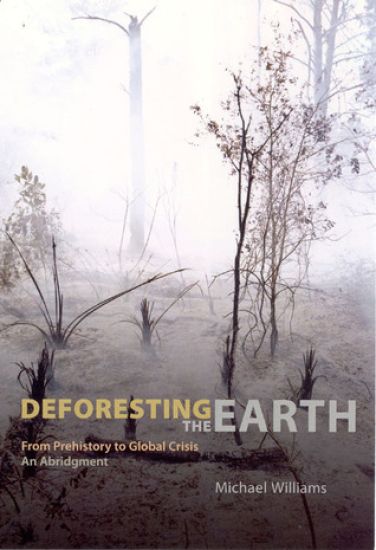
Deforesting the Earth

Deforesting the Earth

Michael Williams

University of Chicago Press
2006
nidottu
Published in 2002, "Deforesting the Earth" was a landmark study of the history and geography of deforestation. Now available as an abridgement, this edition retains the breadth of the original while rendering its arguments accessible to a general readership. Deforestation - the thinning, changing, and wholesale clearing of forests for fuel, shelter, and agriculture - is among the most important ways humans have transformed the environment. Surveying ten thousand years to trace human-induced deforestation's effect on economies, societies, and landscapes around the world, "Deforesting the Earth" is the pre-eminent history of this process and its consequences. Beginning with the return of the forests after the ice age to Europe, North America, and the tropics, Michael Williams traces the impact of human-set fires for gathering and hunting, land clearing for agriculture, and other activities from the Paleolithic age through the classical world and the medieval period. He then focuses on forest clearing both within Europe and by European imperialists and industrialists abroad, from the 1500s to the early 1900s, in such places as the New World, India, and Latin America, and considers indigenous clearing in India, China, and Japan. Finally, he covers the current alarming escalation of deforestation, with our ever-increasing human population placing a potentially unsupportable burden on the world's forests.
30 Old Testament Passages with Deeper Meaning
Feed your curiosity of the Bible by exploring the deeper meaning behind familiar Old Testament passages.Below the surface of every seemingly ordinary Bible verse lies a deeper meaning just waiting to be discovered. And these hidden insights aren't just reserved for scholars, academics, or pastors. Anyone who knows where to look can uncover the surprisingly significant messages that the biblical authors intended for us to hear.In 30 Old Testament Passages with Deeper Meaning, Michael Williams seeks to lead believers to a deeper comprehension and appreciation of biblical truth. In each easy-to-read chapter, Williams focuses on one Old Testament verse or passage, and:Examines its cultural, historical, linguistic, and/or theological context.Explains how it is enhanced by the added context and perspective.Provides questions to facilitate further reflection, study, and discussion.Helping to bridge the gap between the academy and the church, this broadly accessible and edifying book will help everyday Christians get more out of their Bible. Plus, the insightful questions at the end of each chapter make this an ideal small group, Bible study, or expository preaching resource.
How to Read the Bible through the Jesus Lens
Many Christians today experience Bible teaching in isolated, unconnected pieces, receiving little or no guidance into how these pieces form a coherent picture in Christ. How to Read the Bible through the Jesus Lens presents Christ as the central focus of each biblical book and the primary way the Bible relates to contemporary circumstances. It shows how each book of the Bible has an identifiable theme ultimately fulfilled in the person and work of Christ.Williams provides the following for his readers:A succinct statement of the theme of every biblical bookAn explanation of how that theme finds its focus in ChristA brief discussion of how the New Testament treats that theme as fulfilled in ChristSuggestions for contemporary implicationsScripture memory electronic flashcardsA convenient summary chartAn excellent tool for Bible teachers, ministry leaders, and students, How to Read the Bible through the Jesus Lens facilitates other Christian disciplines such as Bible reading, Scripture memory and evangelism. By demonstrating how each theme relates to living the Christian life, this book promises to be an invaluable guide for reading and understanding the Bible.
Basics of Ancient Ugaritic

Basics of Ancient Ugaritic

Michael Williams

Zondervan
2012
nidottu
Basics of Ancient Ugaritic is a teaching grammar of this ancient language, one of vital importance for understanding the wider world and culture surrounding the Old Testament text. It begins with the alphabet, and each new lesson builds on the ones before it. It is not, therefore, a synthetic Ugaritic grammar—these types of texts often prove to be overwhelming for students. Instead, Basics of Ancient Ugaritic can be used for learning the language by individuals on their own or in a classroom setting. Each chapter concludes with a set of exercises allowing students to know whether they are grasping the fundamentals of the language. In short, Basics of Ancient Ugaritic represents an ideal first text for entering the larger world of Semitic languages.
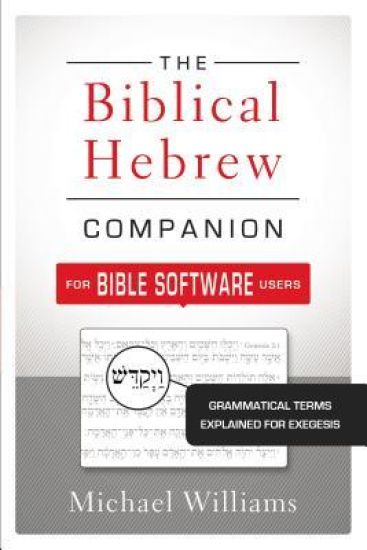
The Biblical Hebrew Companion for Bible Software Users
The Biblical Hebrew Companion for Bible Software Users helps users understand the exegetical significance of Hebrew grammatical terminology identified by the program. This resource provides students who utilize biblical language software the insight they need to make sense of the data provided by the program, giving them deeper insight into the biblical text that they could not get by solely reading an English translation.The Biblical Hebrew Companion for Bible Software Users is ideally suited for:Pastors and ministry leaders who may have learned Hebrew at one time but have experienced the loss of much of that learningCollege and seminary students who are learning Hebrew and need a guide to help understand the significance of the grammatical terminologyBible software users who never formally learned Hebrew in the classroom and need help understanding the meaning of the terms they encounterWith grammatical terms laid out and discussed in an intuitive and user-friendly format, readers can now spend time focusing on exegesis and applying their findings to their preaching, teachings, study, and writing instead of puzzling over the significance of grammatical terminology and how to apply it.
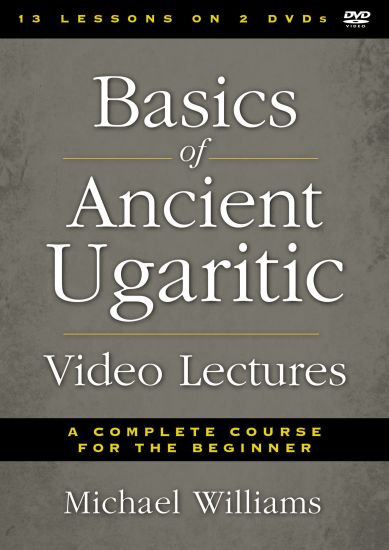
Basics of Ancient Ugaritic Video Lectures
Basics of Ancient Ugaritic Video Lectures provides 13 easy-to-follow lessons (on 2 DVDs) introducing this ancient language that is of vital importance for understanding the wider world and culture surrounding the biblical text. The video lectures are intended to be used alongside Michael Williams's introductory grammar Basics of Ancient Ugaritic.
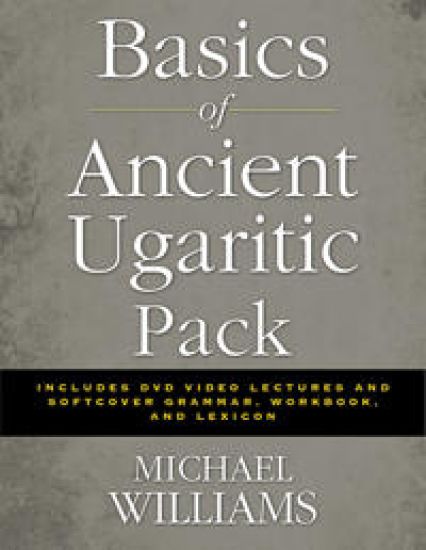
Basics of Ancient Ugaritic Pack

Basics of Ancient Ugaritic Pack

Michael Williams

Zondervan
2016
muu
Ugaritic is an ancient language of Canaan, written in cuneiform on tablets of clay. Ugaritic is of vital importance for understanding the wider world and culture surrounding the Old Testament text.When using the resources in the Basics of Ancient Ugaritic Pack students begin by learning the alphabet, and each new lesson builds on the ones before it. Each chapter in the grammar concludes with a set of exercises allowing students to know whether they are grasping the fundamentals of the language. An answer key to the exercises is included in the back of the book.The Basics of Ancient Ugaritic Pack includes:Basics of Ancient Ugaritic, this concise grammar, workbook, and lexicon is an ideal first text for learning UgariticBasics of Ancient Ugaritic Video Lectures, featuring a video lecture for each of the 13 chapters in the textbook, approximately 5 hours of video contentThe Basics of Ancient Ugaritic Pack contains everything you need to master the fundamentals of ancient Ugaritic, whether you are enrolled in a class or learning on your own.Session Titles and Runtimes:1 - Ugarit in a Nutshell (19 min)2 - Language Basics (17 min)3 - Nouns (20 min)4 - Adjectives (23 min)5 - Prepositions (14 min)6 - Pronouns (28 min)7 - Verbs (26 min)8 - Moods (22 min)9 - Infinitives (16 min)10 - Thematic Stems (33 min)11 - Weak Verbs (32 min)12 - Adverbs (18 min)13 - Miscellanea (19 min)
Now Is the Time for Running

Now Is the Time for Running

Michael Williams

Little, Brown Books for Young Readers
2013
nidottu
When tragedy strikes, Deo's love of soccer is all he has left. Can he use that gift to find hope once more? Just down the road from their families, Deo and his friends play soccer in the dusty fields of Zimbabwe, cheered on by Deo's older brother, Innocent. It is a day like any other ..until the soldiers arrive and Deo and Innocent are forced to run for their lives, fleeing the wreckage of their village for the distant promise of safe haven. Along the way, they face the prejudice and poverty that await refugees everywhere, and must rely on the kindness of people they meet to make it through. Relevant, timely, and accessibly written, Now Is the Time For Running is a staggering story of survival that follows Deo and his mentally handicapped older brother on a transformative journey that will stick with readers long after the last page.
Diamond Boy

Diamond Boy

Michael Williams

Little, Brown Books for Young Readers
2016
nidottu
My father says that a journey should always change your life in some way. Well, when you have nothing, I suppose a journey promises everything. "Diamonds for everyone." That's what fifteen-year-old Patson Moyo hears when his family arrives in the Marange diamond fields. Soon Patson is working in the mines along with four friends, pooling their profits for a chance at a better life. Each of them hopes to find a girazi, a priceless stone that could change their circumstances forever. But when the government's soldiers come to Marange, Patson's world is shattered. Set against the backdrop of Zimbabwe's brutal recent history, Diamond Boy is the story of a young man who succumbs to greed but finds his way out through a transformative journey to South Africa in search of his missing sister, in search of freedom, and in search of himself. A high-stakes, harrowing adventure in the blood-diamond fields of southern Africa, from the critically acclaimed author of Now Is the Time for Running.
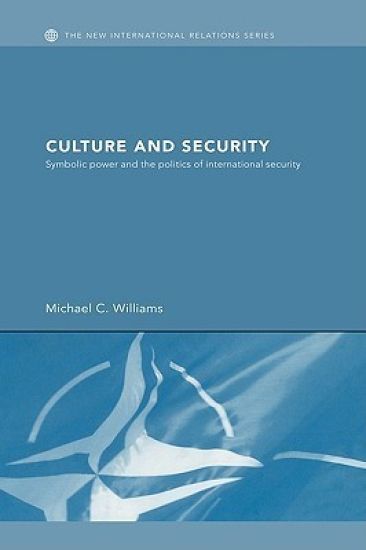
Culture and Security

Culture and Security

Michael Williams

Routledge
2006
sidottu
This book examines the role of culture in contemporary security policies, providing a critical overview of the ways in which culture has been theorized in security studies. Developing a theoretical framework that stresses the relationship between culture, power, security and strategy, the volume argues that cultural practices have been central to transformations in European and US security policy in the wake of the Cold War – including the evolution of NATO and the expansion of the EU. Michael C. Williams maintains that cultural practices continue to play powerful roles in international politics today, where they are essential to grasping the ascendance of neoconservatism in US foreign policy. Investigating the rise in popularity of culture and constructivism in security studies in relation to the structure and exercise of power in post-Cold War security relations, the book contends that this poses significant challenges for considering the connection between analytic and political practices, and the relationship between scholarship and power in the construction of security relations. Culture and Security will be of interest to students and researchers in the fields of international relations, security studies and European politics.
Culture and Security

Culture and Security

Michael Williams

Routledge
2007
nidottu
This book examines the role of culture in contemporary security policies, providing a critical overview of the ways in which culture has been theorized in security studies. Developing a theoretical framework that stresses the relationship between culture, power, security and strategy, the volume argues that cultural practices have been central to transformations in European and US security policy in the wake of the Cold War – including the evolution of NATO and the expansion of the EU. Michael C. Williams maintains that cultural practices continue to play powerful roles in international politics today, where they are essential to grasping the ascendance of neoconservatism in US foreign policy. Investigating the rise in popularity of culture and constructivism in security studies in relation to the structure and exercise of power in post-Cold War security relations, the book contends that this poses significant challenges for considering the connection between analytic and political practices, and the relationship between scholarship and power in the construction of security relations. Culture and Security will be of interest to students and researchers in the fields of international relations, security studies and European politics.
The Draining of the Somerset Levels

The Draining of the Somerset Levels

Michael Williams

Cambridge University Press
1970
sidottu
This is a detailed study of how the Somerset Levels, originally a large tract of marsh, were drained and reclaimed to becomes one of the most agriculturally productive areas of south-west England. The story of the draining of this region brings to light significant comparisons and contrasts with other reclaimed lowlands and extends our knowledge of one of the processes by which the British landscape has changed. This is an important book, which brings together information on an area that has until now received very little attention; it also shows just how early massive reclamation began. It will be of interest to both geographers and historians.
The Draining of the Somerset Levels

The Draining of the Somerset Levels

Michael Williams

Cambridge University Press
2009
pokkari
This is a detailed study of how the Somerset Levels, originally a large tract of marsh, were drained and reclaimed to becomes one of the most agriculturally productive areas of south-west England. The story of the draining of this region brings to light significant comparisons and contrasts with other reclaimed lowlands and extends our knowledge of one of the processes by which the British landscape has changed. This is an important book, which brings together information on an area that has until now received very little attention; it also shows just how early massive reclamation began. It will be of interest to both geographers and historians.
Authorised Lives in Early Christian Biography

Authorised Lives in Early Christian Biography

Michael Williams

Cambridge University Press
2011
pokkari
What was distinctive about Christian biography in late antiquity? In this book, Dr Williams examines a range of biographies of prominent Christians written in the fourth and fifth centuries, and suggests that they share a purpose and function which sets them apart from their non-Christian equivalents. This was an age in which the lives of saints first emerged as a literary phenomenon, and a broad perspective on this developing genre is complemented by close readings of more problematic works such as Eusebius of Caesarea's Life of Constantine and the Confessions of Augustine of Hippo. In including such idiosyncratic examples, the aim is to provide a definition of Christian biography which extends beyond mere hagiography, and which expresses an understanding of the world and the place of individuals within it. It was a world in which lives might be authored by Christians, but could be authorised only by God.