Kirjojen hintavertailu. Mukana 12 390 323 kirjaa ja 12 kauppaa.

Kirjahaku

Etsi kirjoja tekijän nimen, kirjan nimen tai ISBN:n perusteella.

8 kirjaa tekijältä Michael Z. Newman

Indie

Indie

Michael Z. Newman

Columbia University Press
2011
sidottu
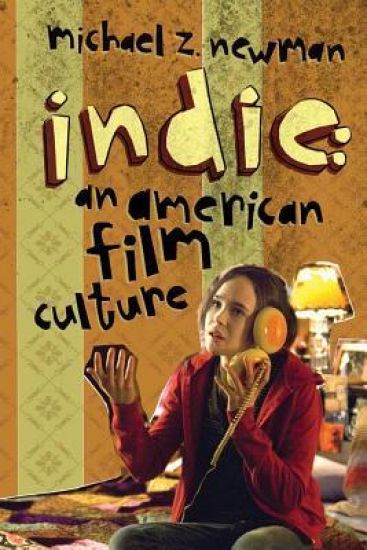
America's independent films often seem to defy classification. Their strategies of storytelling and representation range from raw, no-budget projects to more polished releases of Hollywood's "specialty" divisions. Yet understanding American indies involves more than just considering films. Filmmakers, distributors, exhibitors, festivals, critics, and audiences all shape the art's identity, which is always understood in relation to the Hollywood mainstream. By locating the American indie film in the historical context of the "Sundance-Miramax" era (the mid-1980s to the end of the 2000s), Michael Z. Newman considers indie cinema as an alternative American film culture. His work isolates patterns of character and realism, formal play, and oppositionality and the functions of the festivals, art houses, and critical media promoting them. He also accounts for the power of audiences to identify indie films in distinction to mainstream Hollywood and to seek socially emblematic characters and playful form in their narratives. Analyzing films such as Welcome to the Dollhouse (1996), Lost in Translation (2003), Pulp Fiction (1994), and Juno (2007), along with the work of Nicole Holofcener, Jim Jarmusch, John Sayles, Steven Soderbergh, and the Coen brothers, Newman investigates the conventions that cast indies as culturally legitimate works of art. He binds these diverse works together within a cluster of distinct viewing strategies and invites a reevaluation of the difference of independent cinema and its relationship to class and taste culture.
Indie

Indie

Michael Z. Newman

Columbia University Press
2011
pokkari
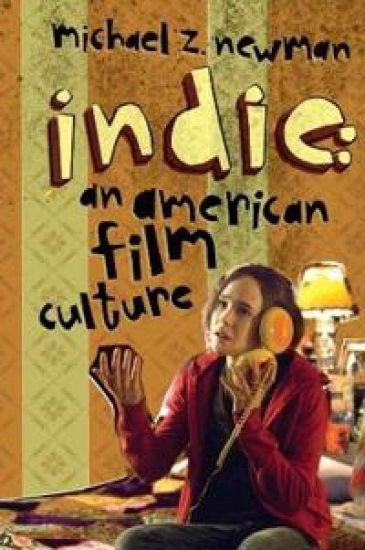
America's independent films often seem to defy classification. Their strategies of storytelling and representation range from raw, no-budget projects to more polished releases of Hollywood's "specialty" divisions. Yet understanding American indies involves more than just considering films. Filmmakers, distributors, exhibitors, festivals, critics, and audiences all shape the art's identity, which is always understood in relation to the Hollywood mainstream. By locating the American indie film in the historical context of the "Sundance-Miramax" era (the mid-1980s to the end of the 2000s), Michael Z. Newman considers indie cinema as an alternative American film culture. His work isolates patterns of character and realism, formal play, and oppositionality and the functions of the festivals, art houses, and critical media promoting them. He also accounts for the power of audiences to identify indie films in distinction to mainstream Hollywood and to seek socially emblematic characters and playful form in their narratives. Analyzing films such as Welcome to the Dollhouse (1996), Lost in Translation (2003), Pulp Fiction (1994), and Juno (2007), along with the work of Nicole Holofcener, Jim Jarmusch, John Sayles, Steven Soderbergh, and the Coen brothers, Newman investigates the conventions that cast indies as culturally legitimate works of art. He binds these diverse works together within a cluster of distinct viewing strategies and invites a reevaluation of the difference of independent cinema and its relationship to class and taste culture.
Video Revolutions

Video Revolutions

Michael Z. Newman

Columbia University Press
2014
pokkari
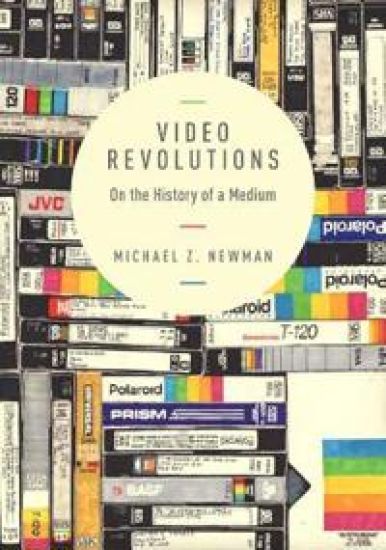
Since the days of early television, video has been an indispensable part of culture, society, and moving-image media industries. Over the decades, it has been an avant-garde artistic medium, a high-tech consumer gadget, a format for watching movies at home, a force for democracy, and the ultimate, ubiquitous means of documenting reality. In the twenty-first century, video is the name we give all kinds of moving images. We know it as an adaptable medium that bridges analog and digital, amateur and professional, broadcasting and recording, television and cinema, art and commercial culture, and old media and new digital networks. In this history, Michael Z. Newman casts video as a medium of shifting value and legitimacy in relation to other media and technologies, particularly film and television. Video has been imagined as more or less authentic or artistic than movies or television, as more or less democratic and participatory, as more or less capable of capturing the real. Techno-utopian rhetoric has repeatedly represented video as a revolutionary medium, promising to solve the problems of the past and the present-often the very problems associated with television and the society shaped by it-and to deliver a better future. Video has also been seen more negatively, particularly as a threat to movies and their culture. This study considers video as an object of these hopes and fears and builds an approach to thinking about the concept of the medium in terms of cultural status.
Atari Age

Atari Age

Michael Z. Newman

MIT Press
2018
pokkari
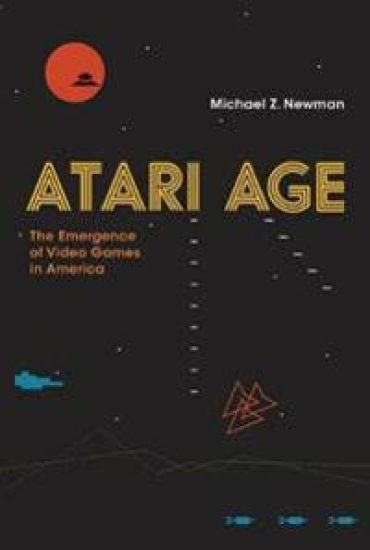
The cultural contradictions of early video games: a medium for family fun (but mainly for middle-class boys), an improvement over pinball and television (but possibly harmful)Beginning with the release of the Magnavox Odyssey and Pong in 1972, video games, whether played in arcades and taverns or in family rec rooms, became part of popular culture, like television. In fact, video games were sometimes seen as an improvement on television because they spurred participation rather than passivity. These "space-age pinball machines" gave coin-operated games a high-tech and more respectable profile. In Atari Age, Michael Newman charts the emergence of video games in America from ball-and-paddle games to hits like Space Invaders and Pac-Man, describing their relationship to other amusements and technologies and showing how they came to be identified with the middle class, youth, and masculinity.Newman shows that the "new media" of video games were understood in varied, even contradictory ways. They were family fun (but mainly for boys), better than television (but possibly harmful), and educational (but a waste of computer time). Drawing on a range of sources-including the games and their packaging; coverage in the popular, trade, and fan press; social science research of the time; advertising and store catalogs; and representations in movies and television-Newman describes the series of cultural contradictions through which the identity of the emerging medium worked itself out. Would video games embody middle-class respectability or suffer from the arcade's unsavory reputation? Would they foster family togetherness or allow boys to escape from domesticity? Would they make the new home computer a tool for education or just a glorified toy? Then, as now, many worried about the impact of video games on players, while others celebrated video games for familiarizing kids with technology essential for the information age.
The Media Studies Toolkit

The Media Studies Toolkit

Michael Z. Newman

TAYLOR FRANCIS LTD
2022
nidottu
In this critical primer, Michael Z. Newman introduces newcomers to the key concepts, issues, and vocabulary of media studies. Across ten chapters, Newman examines topics from text and audience to citizenship and consumerism, drawing on a myriad of examples of media old and new. Film and TV rub shoulders with mobile games and social media, and popular music and video sharing platforms with journalism and search engines. While the book takes a critical, cultural approach, it covers topics that apply across many kinds of media scholarship, bridging the humanities and the social sciences and looking at media as a global phenomenon. It considers media in relation to society and its unequal structures of power, and relates media representations to their conditions of production in media industries and consumption in the everyday lives of audiences and users. Spanning the historical periods of mass media and online participatory culture, it also probes assumptions about media that were formulated in a previous era and looks at how to update our thinking to address an ever-changing digital mediascape. With its clear and accessible style, this book is tailor-made for undergraduate students of media, communication, and cultural studies, as well as anyone who would like to better understand media.
The Media Studies Toolkit

The Media Studies Toolkit

Michael Z. Newman

TAYLOR FRANCIS LTD
2022
sidottu
In this critical primer, Michael Z. Newman introduces newcomers to the key concepts, issues, and vocabulary of media studies. Across ten chapters, Newman examines topics from text and audience to citizenship and consumerism, drawing on a myriad of examples of media old and new. Film and TV rub shoulders with mobile games and social media, and popular music and video sharing platforms with journalism and search engines. While the book takes a critical, cultural approach, it covers topics that apply across many kinds of media scholarship, bridging the humanities and the social sciences and looking at media as a global phenomenon. It considers media in relation to society and its unequal structures of power, and relates media representations to their conditions of production in media industries and consumption in the everyday lives of audiences and users. Spanning the historical periods of mass media and online participatory culture, it also probes assumptions about media that were formulated in a previous era and looks at how to update our thinking to address an ever-changing digital mediascape. With its clear and accessible style, this book is tailor-made for undergraduate students of media, communication, and cultural studies, as well as anyone who would like to better understand media.
The Media Studies Toolkit

The Media Studies Toolkit

Michael Z. Newman

TAYLOR FRANCIS LTD
2026
nidottu
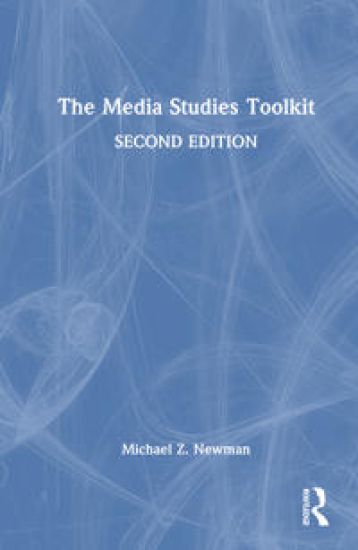
In the second edition of this critical primer, Michael Z. Newman introduces newcomers to the key concepts, issues, and vocabulary of media studies. Across ten chapters, Newman examines topics from text and audience to citizenship and consumerism, drawing on a myriad of examples of media old and new. Film and TV rub shoulders with mobile games and social media, and popular music and video-sharing platforms with journalism and search engines. While the book takes a critical, cultural approach, it covers topics that apply across many kinds of media scholarship, bridging the humanities and the social sciences and looking at media as a global phenomenon. It considers media in relation to society and its unequal structures of power, and relates media representations to their conditions of production in media industries and consumption in the everyday lives of audiences and users. Spanning the historical periods of mass media and online participatory culture, it also probes assumptions about media that were formulated in a previous era and looks at how to update our thinking to address an ever-changing digital mediascape. With its clear and accessible style, this book is tailor made for undergraduate students of media, communication, and cultural studies, as well as anyone who would like to better understand media.
The Media Studies Toolkit

The Media Studies Toolkit

Michael Z. Newman

TAYLOR FRANCIS LTD
2026
sidottu
In the second edition of this critical primer, Michael Z. Newman introduces newcomers to the key concepts, issues, and vocabulary of media studies. Across ten chapters, Newman examines topics from text and audience to citizenship and consumerism, drawing on a myriad of examples of media old and new. Film and TV rub shoulders with mobile games and social media, and popular music and video-sharing platforms with journalism and search engines. While the book takes a critical, cultural approach, it covers topics that apply across many kinds of media scholarship, bridging the humanities and the social sciences and looking at media as a global phenomenon. It considers media in relation to society and its unequal structures of power, and relates media representations to their conditions of production in media industries and consumption in the everyday lives of audiences and users. Spanning the historical periods of mass media and online participatory culture, it also probes assumptions about media that were formulated in a previous era and looks at how to update our thinking to address an ever-changing digital mediascape. With its clear and accessible style, this book is tailor made for undergraduate students of media, communication, and cultural studies, as well as anyone who would like to better understand media.