Kirjojen hintavertailu. Mukana 11 699 587 kirjaa ja 12 kauppaa.

Kirjahaku

Etsi kirjoja tekijän nimen, kirjan nimen tai ISBN:n perusteella.

7 kirjaa tekijältä Michel Fabre

The French Critical Reception of African-American Literature
The first real reviewing of African-American literature in France began in 1844, when audiences welcomed the romantic dramas of Victor Sejour. With the passing of time, African-American works have become increasingly known in France, where they are now translated almost as soon as they come out in the United States. This bibliography charts the French critical response to African-American literature from the 19th century to 1970.The bulk of the items selected were published between 1900 and 1970, and all were printed in French. The selection has been limited to responses to the works of creative writers, along with some important and influential autobiographical writings. Entries are arranged in chronological sections, and then alphabetically within each section. Annotations summarize the critical views expressed in the work cited. As a whole, the bibliography is a valuable guide to changing French critical attitudes toward African-American literature and is an index to the growing popularity of African-American literature in France.
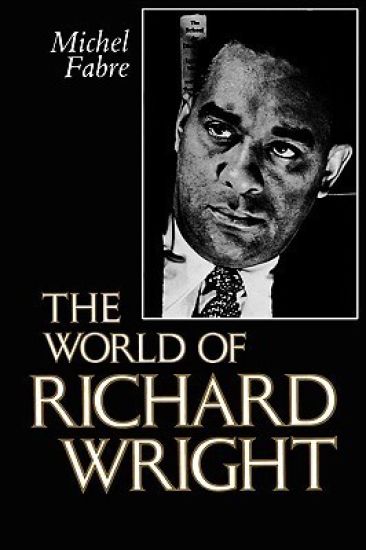
The World of Richard Wright

The World of Richard Wright

Michel Fabre

University Press of Mississippi
2007
nidottu
Richard Wright, the Mississippi-born black writer, saw himself as ""an outsider between two cultures,"" a man searching. In these twelve essays written over the last two decades Michel Fabre, Wright's biographer, follows Wright's search in an investigation of the novelist's life and career. Although the essays were not originally intended as a collection, their organization her underscores Wright's literary and intellectual development.The essays range in time from a bibliographical study of Wright's first scanty personal library to his interest at the end of his life in Negritude and African writing. Other essays probe his first use of the Gothic and his subsequent first efforts at ""naturalistic"" fiction, in which he moved away from the ideology of the American Communist Party, to which he belonged for some ten years after 1933, to more personal modes of self-expression. Also explored within these pieces are Wright's use of the psychological approach, his interest in the link between sex and racism, and his obsessive exploration of the unconscious determinants in so-called criminal behavior. One essay examines Wright's poetry from the days when he wrote ideological poems published in New Masses and other radical magazines, to his later composition of blues, to his final mastery of the Japanese poetic form of haiku.Included is an interview with Simone De Beauvoir, who discusses her friendship with Wright, and in an essay never before published, Fabre explores the relationship of Wright--""as much as soon of Mississippi as is William Faulkner""--not only to the South but to his illiterate sharecropper father and Wright's use of both as negative metaphors in his work. Fabre also delves into Wright's view of his past and his use of it in an ideological construction that asserts, in the best Afro-American literary tradition, the development of a Promethean will towards education and literacy.The final essays address Wright's career and intellectual development during the last sixteen years of his life, spent as an American expatriate in Paris. A final essay focuses on Wright's turn at the end of his life to nofiction and his introduction of African readers to the complexities of the racial situation in the United States and the aims of the Civil Rights Movement then taking place in the U.S.
Richard Wright

Richard Wright

Michel Fabre

University Press of Mississippi
2008
nidottu
This bibliography of Richard Wright's library and reading serves as a key to understanding the development, philosophies, and aesthetics of this great writer and provides accurate information for the study of intertextuality in his works. Richard Wright, born in Mississippi in 1908, was largely self-taught. His only formal schooling was high school. As he recounts in Black Boy, he used a white friend's library card at the Memphis Public Library, where blacks were not allowed. That books were almost ""living companions"" for Wright is easily understandable. Through books and, later, through relationships with writers, he broadened his perspectives, his understanding of society, and the very craft of writing. In the history of Richard Wright, perhaps more than with other writers, a knowledge of what he actually read, and of what authors he preferred, is essential in explaining his intellectual development. Michel Fabre, Wright's biographer and foremost Wright scholar, details the volumes in Wright's library and the facts of Wright's reading habits. This listing of books that formed and influenced him includes second-hand books he bought while living in extreme poverty in Chicago, some borrowed books never returned, books purchased in New York and Paris, books Wright deemed required reading for a growing novelist, gift books, and others in a comprehensive list on such subjects as contemporary American literature, classic European works, criminology, psychiatry, and social sciences. In compiling this listing Fabre goes beyond the actual contents of Wright's library, for he includes also titles drawn from references in Wright's works and from accounts of people who knew him and his reading habits. Included also is an appendix that collects for the first time reviews written by Wright, his prefaces, forewords, and blurbs. They show his appreciation of diverse genres and styles, although his ideological commitment remained the same. In them one sees Wright as an author ready to help younger writers, black and white, American and French.
Philosophie Et Pedagogie

Philosophie Et Pedagogie

Michel Fabre

Librarie Philosophique J. Vrin
2009
nidottu
Le vocabulaire du probleme et de la problematisation envahit le champ de l'education et de la formation. On s'en rejouirait s'il s'agissait bien de conjuguer apprentissage et pensee, selon le souhait de Dewey. Malheureusement, une sorte de malediction affecte les bonnes idees qui ne manquent pas de se denaturer au fur et a mesure qu'elles se repandent, au point de susciter l'indignation des peres la rigueur, prompts a jeter le bebe avec l'eau du bain. Il importe donc de poser la question dans sa radicalite: qu'est-ce qu'un probleme? Que veut dire problematiser? On s'efforcera de retracer la genese plurielle du paradigme du probleme a travers les philosophies de John Dewey, de Gaston Bachelard, de Gilles Deleuze et de Michel Meyer qui toutes s'efforcent d'imaginer des alternatives au dilemme de Menon et a ses avatars modernes. Comment penser la recherche et l'apprentissage autrement que comme reminiscence? Quel role y joue le questionnement, la problematisation? Peut-on imaginer - contre toutes les theories de la connaissance de la modernite - une epistemologie, voire une logique de la decouverte, de l'invention? Et une pedagogie du probleme? Car epistemologie et pedagogie s'averent inseparables des le debut, comme Socrate l'avait bien vu, dans la lecon du Menon. A travers ces etudes philosophiques, il s'agira d'eclairer si possible les questions pedagogiques ou didactiques qui se posent aujourd'hui a l'enseignant ou au formateur en mal de problematisation.