Kirjojen hintavertailu. Mukana 11 342 296 kirjaa ja 12 kauppaa.

Kirjahaku

Etsi kirjoja tekijän nimen, kirjan nimen tai ISBN:n perusteella.

173 kirjaa tekijältä Michel Foucault

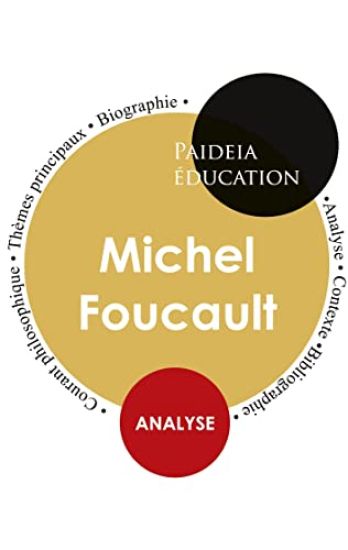
Fiche de lecture Surveiller et Punir de Michel Foucault (Analyse philosophique de référence et résumé complet)
La collection Conna tre une oeuvre vous offre la possibilit de tout savoir de Surveiller et Punir de Michel Foucault gr ce une fiche de lecture aussi compl te que d taill e. La r daction, claire et accessible, a t confi e un sp cialiste universitaire. Cette fiche de lecture r pond une charte qualit mise en place par une quipe d'enseignants. Ce livre contient la biographie de Michel Foucault, la pr sentation de Surveiller et Punir, le r sum d taill , les raisons du succ s, les th mes principaux et l' tude du courant philosophique de l'auteur.
Michel Foucault

Michel Foucault

Michel Foucault

Paideia Education
2023
pokkari
D cryptez la pens e de Michel Foucault avec l'analyse de Paideia ducation Que faut-il retenir de l'oeuvre du philosophe ? Retrouvez tout ce que vous devez savoir de Michel Foucault dans une analyse de r f rence pour comprendre rapidement le sens de sa pens e. R dig e de mani re claire et accessible par un enseignant, cette analyse propose notamment une biographie du philosophe, une tude de sa pens e et une bibliographie de ses principaux ouvrages. Une analyse philosophique compl te et d taill e pour mieux comprendre le philosophe Paideia ducation en deux mots: Pl biscit aussi bien par les passionn s de philosophie que par les lyc ens, Paideia ducation est consid r comme une r f rence en mati re d'analyses d'oeuvres litt raires et philosophiques. Celles-ci ont t con ues pour guider les lecteurs et rendre accessible des ouvrages et philosophes de premier plan. Nos auteurs appartiennent aux milieux universitaire et de l' ducation, gage de s rieux pour vous faire d couvrir les plus grands auteurs de la philosophie mondiale.
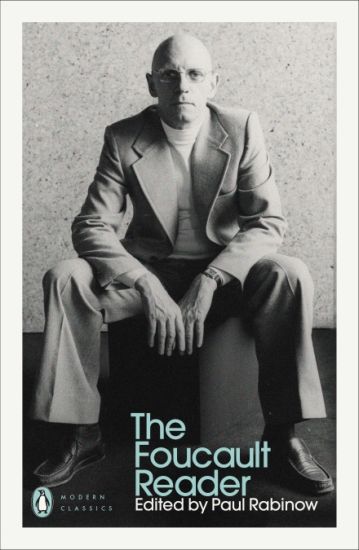
The Foucault Reader

The Foucault Reader

Michel Foucault

Penguin Classics
2020
pokkari
'The most innovative and influential French thinker of the contemporary era' GuardianThis is the ideal introduction to one of the most significant and radical philosophers of the past century. It includes detailed excerpts from all of Foucault's major works, including Discipline and Punish and The History of Sexuality, as well as many of his most revealing interviews, covering subjects from madness to desire, art to the nature of truth. No other writer has made us think more about the structures of power and control in our society, both past and present.'Scarcely any philosopher working on the history of philosophy or historian working on the history of institutions, social science or sexuality can avoid confronting the challenge of Foucault's books' Michael IgnatieffEdited by Paul Rabinow
The Foucault Reader

The Foucault Reader

Michel Foucault

Random House USA Inc
1988
nidottu
Michel Foucault was one of the most influential thinkers in the contemporary world, someone whose work has affected the teaching of half a dozen disciplines ranging from literary criticism to the history of criminology. But of his many books, not one offers a satisfactory introduction to the entire complex body of his work. The Foucault Reader was commissioned precisely to serve that purpose.The Reader contains selections from each area of Foucault's work as well as a wealth of previously unpublished writings, including important material written especially for this volume, the preface to the long-awaited second volume of The History of Sexuality, and interviews with Foucault himself, in the course of which he discussed his philosophy at first hand and with unprecedented candor.This philosophy comprises an astonishing intellectual enterprise: a minute and ongoing investigation of the nature of power in society. Foucault's analyses of this power as it manifests itself in society, schools, hospitals, factories, homes, families, and other forms of organized society are brought together in The Foucault Reader to create an overview of this theme and of the broad social and political vision that underlies it.
Fiche de lecture Histoire de la folie de Foucault (analyse philosophique et résumé détaillé)
La collection Conna tre une oeuvre vous offre la possibilit de tout savoir de l'Histoire de la folie de Michel Foucault, gr ce une fiche de lecture aussi compl te que d taill e. La r daction, claire et accessible, a t confi e un sp cialiste universitaire. Cette fiche de lecture r pond une charte qualit mise en place par une quipe d'enseignants. Ce livre contient la biographie de Michel Foucault, la pr sentation de l'oeuvre, le r sum d taill (chapitre par chapitre), les raisons du succ s, les th mes principaux et l' tude du courant philosophique de l'auteur.
Foucault Live

Foucault Live

Michel Foucault

Semiotext (E)
1996
pokkari
The most accessible and exhaustive introduction to Foucault's thought to date, including every extant interview made by Foucault from the mid-60s until his death in 1984. Currently in its fourth printing, Foucault Live is the most accessible and exhaustive introduction to Foucault's thought to date. Composed of every extant interview made by Foucault from the mid-60s until his death in 1984, Foucault Live sheds new light on the philosopher's ideas about friendship, the intent behind his classical studies, while clarifying many of the professional and popular misinterpretations of his ideas over the course of his career. As Gilles Deleuze noted, "the interviews in this book go much further than anything Foucault ever wrote, and they are indispensable in understanding his life work." Most notably, Foucault Live includes interviews he made with the gay underground press during his stays in America during the 1970s. In them, Foucault suggests that homosexuality presents a new paradigm for ways of living beyond the predictable, binary couple. All of the philosopher's interests, from madness and delinquency to film and sexuality, and their resultant writings, are probed by knowledgeable critics and journalists. After reading this book, the reader can explore key notions such as episteme, savoir and connaissance, archeology, and archive, without the knitted brow that plagued Foucault's public when he was alive. This is the guide to Foucault's life as an agent provocateur in the world of philosophy and scholarship.
Madness: The Invention of an Idea

Madness: The Invention of an Idea

Michel Foucault

HARPER PERENNIAL
2011
nidottu
Michel Foucault's first exploration of insanity as a social construct--and his debut work of criticism, published nearly a decade before Madness and Civilization--Madness offers an invaluable lens through which to observe the seminal social critic's philosophical evolution. Previously published as Mental Illness and Psychology, this exciting and accessible new edition offers unique insight into both Foucault's early engagement with the psychoanalytic tradition and his critical break from Freud, giving readers a crucial look at the thinking that prefigured The History of Sexuality, The Archeology of Knowledge, and more.
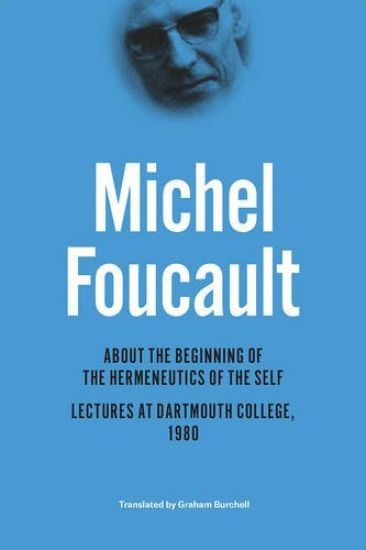
About the Beginning of the Hermeneutics of the Self

About the Beginning of the Hermeneutics of the Self

Michel Foucault

University of Chicago Press
2015
sidottu
In 1980, Michel Foucault began a vast project of research on the relationship between subjectivity and truth, an examination of conscience, confession, and truth-telling that would become a crucial feature of his life-long work on the relationship between knowledge, power, and the self. The lectures published here offer one of the clearest pathways into this project, contrasting Greco-Roman techniques of the self with those of early Christian monastic culture in order to uncover, in the latter, the historical origin of many of the features that still characterize the modern subject. They are accompanied by a public discussion and debate as well as by an interview with Michael Bess, all of which took place at the University of California, Berkeley, where Foucault delivered an earlier and slightly different version of these lectures. Foucault analyzes the practices of self-examination and confession in Greco-Roman antiquity and in the first centuries of Christianity in order to highlight a radical transformation from the ancient Delphic principle of "know thyself" to the monastic precept of "confess all of your thoughts to your spiritual guide." His aim in doing so is to retrace the genealogy of the modern subject, which is inextricably tied to the emergence of the "hermeneutics of the self"-the necessity to explore one's own thoughts and feelings and to confess them to a spiritual director-in early Christianity. According to Foucault, since some features of this Christian hermeneutics of the subject still determine our contemporary "gnoseologic" self, then the genealogy of the modern subject is both an ethical and a political enterprise, aiming to show that the "self" is nothing but the historical correlate of a series of technologies built into our history. Thus, from Foucault's perspective, our main problem today is not to discover what "the self" is, but to try to analyze and change these technologies in order to change its form.
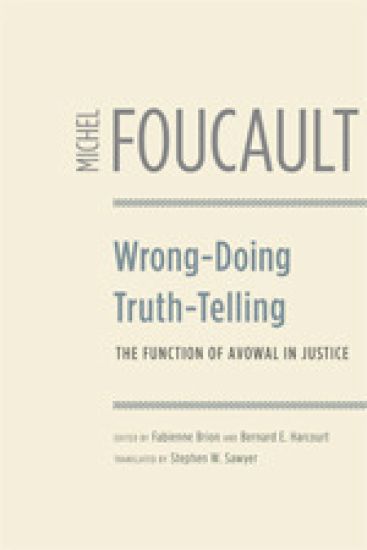
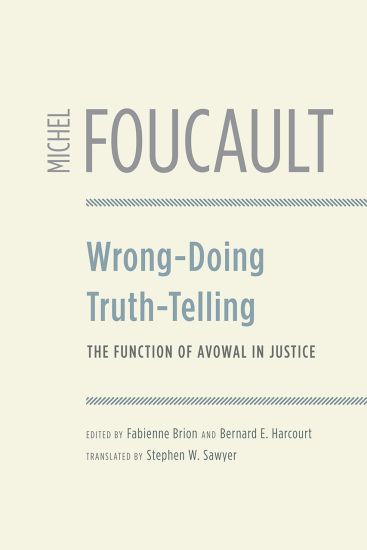
Wrong-Doing, Truth-Telling

Wrong-Doing, Truth-Telling

Michel Foucault

University of Chicago Press
2014
sidottu
Three years before his death, Michel Foucault delivered a series of lectures at the Catholic University of Louvain that until recently remained almost unknown. These lectures - which focus on the role of avowal, or confession, in the determination of truth and justice-provide the missing link between Foucault's early work on madness, delinquency, and sexuality and his later explorations of subjectivity in Greek and Roman antiquity. Ranging broadly from Homer to the twentieth century, Foucault traces the early use of truth-telling in ancient Greece and follows it through to practices of self-examination in monastic times. By the nineteenth century, the avowal of wrong-doing was no longer sufficient to satisfy the call for justice; there remained the question of who the "criminal" was and what formative factors contributed to his wrong-doing. The call for psychiatric expertise marked the birth of the discipline of psychiatry in the nineteenth and twentieth centuries as well as its widespread recognition as the foundation of criminology and modern criminal justice. Published here for the first time, the 1981 lectures are accompanied by two contemporaneous interviews with Foucault in which he elaborates on a number of key themes. "Wrong-Doing, Truth-Telling" will take its place as one of the most significant works by Foucault to appear in decades.
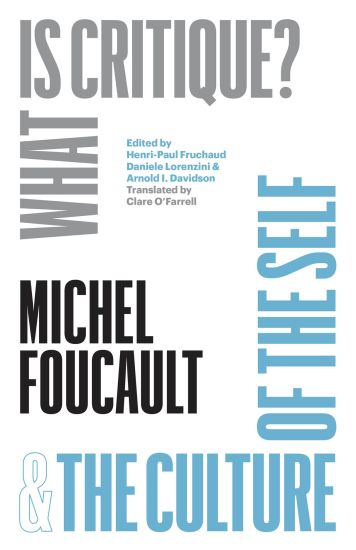
"What Is Critique?" and "The Culture of the Self"

"What Is Critique?" and "The Culture of the Self"

Michel Foucault

THE UNIVERSITY OF CHICAGO PRESS
2024
sidottu
Newly published lectures by Foucault on critique, Enlightenment, and the care of the self. On May 27, 1978, Michel Foucault gave a lecture to the French Society of Philosophy where he redefined his entire philosophical project in light of Immanuel Kant’s 1784 text “What Is Enlightenment?” Foucault strikingly characterizes critique as the political and moral attitude consisting in the “art of not being governed like this,” one that performs the function of destabilizing power relations and creating the space for a new formation of the self within the “politics of truth.” This volume presents the first critical edition of this crucial lecture alongside a previously unpublished lecture about the culture of the self and three public debates with Foucault at the University of California, Berkeley, in April 1983. There, for the first time, Foucault establishes a direct connection between his reflections on the Enlightenment and his analyses of Greco-Roman antiquity. However, far from suggesting a return to the ancient culture of the self, Foucault invites his audience to build a “new ethics” that bypasses the traditional references to religion, law, and science.
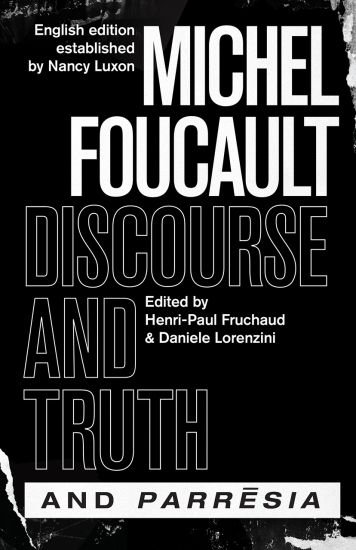
"discourse and Truth" and "parresia"

"discourse and Truth" and "parresia"

Michel Foucault

University of Chicago Press
2019
sidottu
The volume collects a series of lectures given by the renowned French thinker Michel Foucault late in his career. The book is composed of two parts: a talk, "Parresia," delivered at the University of Grenoble in 1982, and a series of lectures entitled "Discourse and Truth," given at the University of California, Berkeley in 1983, which appears here for the first time in its full and correct form. Together, they provide an unprecedented account of Foucault's reading of the Greek concept of parresia, often translated as "truth-telling" or "frank speech." In typically Foucauldian style, the lectures trace the transformation of this concept across Greek, Roman, and early Christian thought, from its origins in pre-Socratic Greece to its role as a central element of the relationship between teacher and student. In mapping the concept's history, Foucault's concern is not to advocate for free speech; rather, his aim is to explore the moral and political position one must occupy in order to take the risk to speak truthfully. In his analysis of parresia, Foucault both advances his project of a history of the present and paves the way for a genealogy of the critical attitude in modern and contemporary societies. These essays--carefully edited and including notes and introductory material to fully illuminate Foucault's insights--are a major addition to Foucault's English-language corpus that no scholar of ancient or modern philosophy will want to miss.
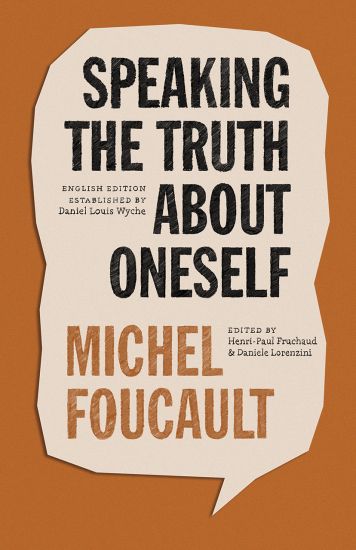
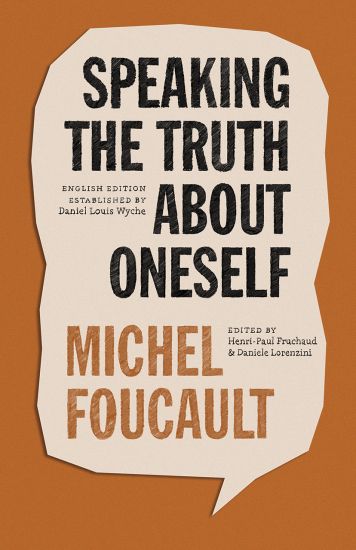
Speaking the Truth about Oneself

Speaking the Truth about Oneself

Michel Foucault

University of Chicago Press
2021
sidottu
Just before the summer of 1982, French philosopher Michel Foucault gave a series of lectures at Victoria University in Toronto. In these lectures, which were part of his project of writing a genealogy of the modern subject, he is concerned with the care and cultivation of the self, a theme that becomes central to the second, third, and fourth volumes of his History of Sexuality. Throughout his career, Foucault had always been interested in the question of how constellations of knowledge and power produce and shape subjects, and in the last phase of his life, he became especially interested not only in how subjects are formed by these forces, but in how they ethically constitute themselves. In this lecture series and accompanying seminar, Foucault focuses on antiquity, starting with classical Greece, the early Roman Empire, and concluding with Christian monasticism in the fourth and fifth centuries AD. Foucault traces the development of a new kind of verbal practice-"speaking the truth about oneself"-in which the subject increasingly comes to be defined by its inner thoughts and desires. He deemed this new form of "hermeneutical" subjectivity important not just for historical reasons but also due to its enduring significance in modern society. Is another form of the self possible today?
Wrong-Doing, Truth-Telling

Wrong-Doing, Truth-Telling

Michel Foucault

University of Chicago Press
2020
pokkari
Three years before his death, Michel Foucault delivered a series of lectures at the Catholic University of Louvain that until recently remained almost unknown. These lectures--which focus on the role of avowal, or confession, in the determination of truth and justice--provide the missing link between Foucault's early work on madness, delinquency, and sexuality and his later explorations of subjectivity in Greek and Roman antiquity. Ranging broadly from Homer to the twentieth century, Foucault traces the early use of truth-telling in ancient Greece and follows it through to practices of self-examination in monastic times. By the nineteenth century, the avowal of wrongdoing was no longer sufficient to satisfy the call for justice; there remained the question of who the "criminal" was and what formative factors contributed to his wrong-doing. The call for psychiatric expertise marked the birth of the discipline of psychiatry in the nineteenth and twentieth centuries as well as its widespread recognition as the foundation of criminology and modern criminal justice. Published here for the first time, the 1981 lectures have been superbly translated by Stephen W. Sawyer and expertly edited and extensively annotated by Fabienne Brion and Bernard E. Harcourt. They are accompanied by two contemporaneous interviews with Foucault in which he elaborates on a number of the key themes. An essential companion to Discipline and Punish, Wrong-Doing, Truth-Telling will take its place as one of the most significant works of Foucault to appear in decades, and will be necessary reading for all those interested in his thought.
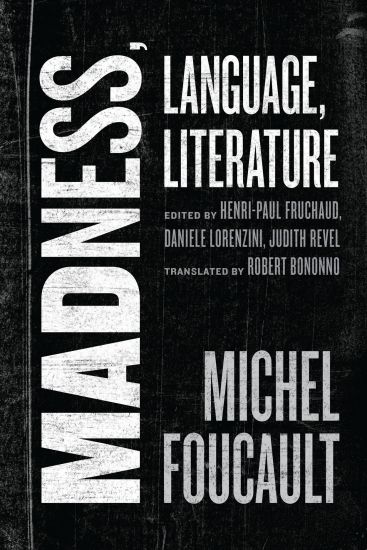
Madness, Language, Literature

Madness, Language, Literature

Michel Foucault

THE UNIVERSITY OF CHICAGO PRESS
2023
sidottu
Newly published lectures by Foucault on madness, literature, and structuralism. Perceiving an enigmatic relationship between madness, language, and literature, French philosopher Michel Foucault developed ideas during the 1960s that are less explicit in his later, more well-known writings. Collected here, these previously unpublished texts reveal a Foucault who undertakes an analysis of language and experience detached from their historical constraints. Three issues predominate: the experience of madness across societies; madness and language in Artaud, Roussel, and Baroque theater; and structuralist literary criticism. Not only do these texts pursue concepts unique to this period such as the “extra-linguistic,” but they also reveal a far more complex relationship between structuralism and Foucault than has typically been acknowledged.
Speaking the Truth about Oneself

Speaking the Truth about Oneself

Michel Foucault

THE UNIVERSITY OF CHICAGO PRESS
2023
nidottu
Now in paperback, this collection of Foucault’s lectures traces the historical formation and contemporary significance of the hermeneutics of the self. Just before the summer of 1982, French philosopher Michel Foucault gave a series of lectures at Victoria University in Toronto. In these lectures, which were part of his project of writing a genealogy of the modern subject, he is concerned with the care and cultivation of the self, a theme that becomes central to the second, third, and fourth volumes of his History of Sexuality. Foucault had always been interested in the question of how constellations of knowledge and power produce and shape subjects, and in the last phase of his life, he became especially interested not only in how subjects are formed by these forces but in how they ethically constitute themselves. In this lecture series and accompanying seminar, Foucault focuses on antiquity, starting with classical Greece, the early Roman empire, and concluding with Christian monasticism in the fourth and fifth centuries AD. Foucault traces the development of a new kind of verbal practice—“speaking the truth about oneself”—in which the subject increasingly comes to be defined by its inner thoughts and desires. He deemed this new form of “hermeneutical” subjectivity important not just for historical reasons, but also due to its enduring significance in modern society.
Binswanger and Existential Analysis

Binswanger and Existential Analysis

Michel Foucault

Columbia University Press
2025
sidottu
In the early 1950s, the young Michel Foucault took a keen interest in the method of existential analysis—Daseinsanalyse—developed by the Swiss psychiatrist Ludwig Binswanger. He gave a lecture course on this topic at the University of Lille in the spring of 1953 and wrote a detailed introduction to the 1954 French translation of Binswanger’s Dream and Existence (1930), in which he promised a forthcoming book that would “situate existential analysis within the development of contemporary reflection on man.” This book presents Foucault’s unpublished manuscript on Binswanger and existential analysis for the first time in English, offering crucial insight into his intellectual development.Foucault carries out a systematic examination of Daseinsanalyse, contrasting it with psychiatry, psychoanalysis, and phenomenology and championing its ambition to understand mental illness. In his critique of existential analysis, Foucault began his turn toward emphasizing the primacy of experience, which would lead to the radically new perspective and genealogical methods of The History of Madness and The History of Sexuality. Revealing a little-known influence on Foucault’s historicist approach, Binswanger and Existential Analysis reminds us of his unparalleled ability to destabilize our conceptions of self.
Binswanger and Existential Analysis

Binswanger and Existential Analysis

Michel Foucault

Columbia University Press
2025
pokkari
In the early 1950s, the young Michel Foucault took a keen interest in the method of existential analysis—Daseinsanalyse—developed by the Swiss psychiatrist Ludwig Binswanger. He gave a lecture course on this topic at the University of Lille in the spring of 1953 and wrote a detailed introduction to the 1954 French translation of Binswanger’s Dream and Existence (1930), in which he promised a forthcoming book that would “situate existential analysis within the development of contemporary reflection on man.” This book presents Foucault’s unpublished manuscript on Binswanger and existential analysis for the first time in English, offering crucial insight into his intellectual development.Foucault carries out a systematic examination of Daseinsanalyse, contrasting it with psychiatry, psychoanalysis, and phenomenology and championing its ambition to understand mental illness. In his critique of existential analysis, Foucault began his turn toward emphasizing the primacy of experience, which would lead to the radically new perspective and genealogical methods of The History of Madness and The History of Sexuality. Revealing a little-known influence on Foucault’s historicist approach, Binswanger and Existential Analysis reminds us of his unparalleled ability to destabilize our conceptions of self.