Kirjojen hintavertailu. Mukana 11 244 527 kirjaa ja 12 kauppaa.

Kirjahaku

Etsi kirjoja tekijän nimen, kirjan nimen tai ISBN:n perusteella.

4 kirjaa tekijältä Michele Alacevich

Albert O. Hirschman

Albert O. Hirschman

Michele Alacevich

Columbia University Press
2021
sidottu
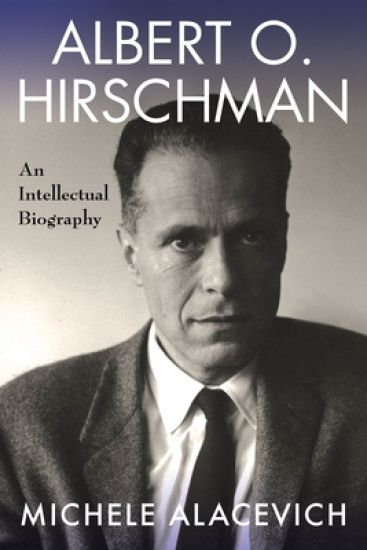
Winner, 2023 Best Book Award, Italian Association for the History of Economic ThoughtOne of the most original social scientists of the twentieth century, Albert O. Hirschman led an uncommonly dramatic life. After fleeing Nazi Germany as a youth, he fought in the Spanish Civil War, took part in antifascist activities in Italy, and organized an underground rescue operation in Marseille through which more than 2,000 people, including Marc Chagall, Arthur Koestler, and Hannah Arendt, escaped Europe. Hirschman moved across topics, methodologies, and disciplinary boundaries as fluidly as he did among countries and languages. His work is marked by a deep suspicion of all-encompassing theories, valuing instead doubt and a sensitivity to contingencies and unexpected consequences.In this intellectual biography, the economic historian Michele Alacevich explores the development and trajectory of Hirschman’s characteristic approach to social-scientific questions. He traces the many strands of Hirschman’s thought and their place in his multifaceted body of work, considering their limitations as well as their strengths. Alacevich puts Hirschman’s ideas into context, following his participation in the major intellectual and political debates of his times. He examines Hirschman’s pioneering work in development studies and his analyses of social change, the history of capitalism, and the workings of democracy alongside his activities in the postwar reconstruction of Europe and economic development in Latin America. A compelling intellectual portrait of a profoundly distinctive thinker, this book also reflects on Hirschman’s legacy and lasting influence.
Albert O. Hirschman

Albert O. Hirschman

Michele Alacevich

Columbia University Press
2022
pokkari
Winner, 2023 Best Book Award, Italian Association for the History of Economic ThoughtOne of the most original social scientists of the twentieth century, Albert O. Hirschman led an uncommonly dramatic life. After fleeing Nazi Germany as a youth, he fought in the Spanish Civil War, took part in antifascist activities in Italy, and organized an underground rescue operation in Marseille through which more than 2,000 people, including Marc Chagall, Arthur Koestler, and Hannah Arendt, escaped Europe. Hirschman moved across topics, methodologies, and disciplinary boundaries as fluidly as he did among countries and languages. His work is marked by a deep suspicion of all-encompassing theories, valuing instead doubt and a sensitivity to contingencies and unexpected consequences.In this intellectual biography, the economic historian Michele Alacevich explores the development and trajectory of Hirschman’s characteristic approach to social-scientific questions. He traces the many strands of Hirschman’s thought and their place in his multifaceted body of work, considering their limitations as well as their strengths. Alacevich puts Hirschman’s ideas into context, following his participation in the major intellectual and political debates of his times. He examines Hirschman’s pioneering work in development studies and his analyses of social change, the history of capitalism, and the workings of democracy alongside his activities in the postwar reconstruction of Europe and economic development in Latin America. A compelling intellectual portrait of a profoundly distinctive thinker, this book also reflects on Hirschman’s legacy and lasting influence.
The Political Economy of the World Bank

The Political Economy of the World Bank

Michele Alacevich

Stanford University Press
2009
sidottu
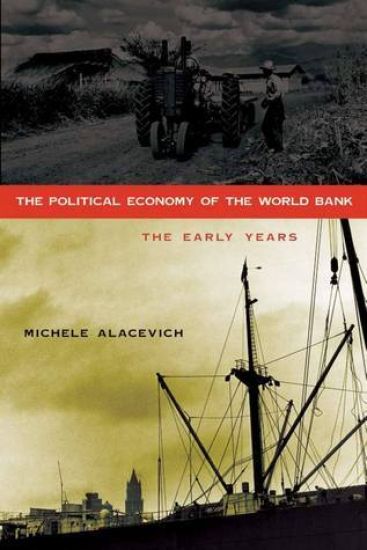
The Political Economy of the World Bank: The Early Years is a fascinating study of economic history. This text describes perhaps what is the most crucial time for development economics: the birth of the "third world," the creation of development economics as a discipline, and the establishment of the World Bank's leading role in development. Using previously unavailable archival material, Michele Alacevich takes a close look at the years during which the International Bank for Reconstruction and Development-now known as the World Bank- turned its attention from reconstruction to development, having been upstaged by the Marshall Plan.He describes the "Currie Mission" to Colombia (1949-1954), the World Bank's first general survey mission in a developing nation. With the Currie Mission as a starting point and a case study, Alacevich analyzes the complexities of the Bank's first steps toward economic and social development in poorer nations, and helps the reader understand some foundational questions about development that are still of great relevance today. The Political Economy of the World Bank: The Early Years is essential reading for anyone interested in the economic history of international development as a lens for better understanding current development issues.
The Political Economy of the World Bank

The Political Economy of the World Bank

Michele Alacevich

Stanford University Press
2009
pokkari
The Political Economy of the World Bank: The Early Years is a fascinating study of economic history. This text describes perhaps what is the most crucial time for development economics: the birth of the "third world," the creation of development economics as a discipline, and the establishment of the World Bank's leading role in development. Using previously unavailable archival material, Michele Alacevich takes a close look at the years during which the International Bank for Reconstruction and Development-now known as the World Bank- turned its attention from reconstruction to development, having been upstaged by the Marshall Plan.He describes the "Currie Mission" to Colombia (1949-1954), the World Bank's first general survey mission in a developing nation. With the Currie Mission as a starting point and a case study, Alacevich analyzes the complexities of the Bank's first steps toward economic and social development in poorer nations, and helps the reader understand some foundational questions about development that are still of great relevance today. The Political Economy of the World Bank: The Early Years is essential reading for anyone interested in the economic history of international development as a lens for better understanding current development issues.