Kirjojen hintavertailu. Mukana 12 016 292 kirjaa ja 12 kauppaa.

Kirjahaku

Etsi kirjoja tekijän nimen, kirjan nimen tai ISBN:n perusteella.

5 kirjaa tekijältä Michelle Bentley

The Biological Weapons Taboo

The Biological Weapons Taboo

Michelle Bentley

Oxford University Press
2023
sidottu
The non-use of biological weapons has been described as the 'great mystery of biological warfare.' The Biological Weapons Taboo solves that mystery by analysing the bioweapons taboo, in the first comprehensive study of the concept. Bentley explains precisely why bioweapons are perceived as repulsive and how this sentiment is consequently expressed in the form of political behaviours, including the refusal to engage in biological aggression. Drawing on extensive archival evidence, this volume looks back on United States' foreign policy decision-making (particularly in relation to the Geneva Protocol and the Biological Weapons Convention) to demonstrate how and why the taboo has comprised a decisive factor in shaping both biowarfare strategy and political rhetoric - and why the taboo needs to be recognised as a necessary consideration in the study of bioweapons. In analysing a taboo, the volume also takes the debate on international norms forward by questioning and challenging the wider analytic comprehension of 'taboo' itself. Rejecting current definitions of the concept as inadequate, Bentley proposes a new and original model of understanding based on the normative characteristics of disgust, stigmatization, and fetishization.
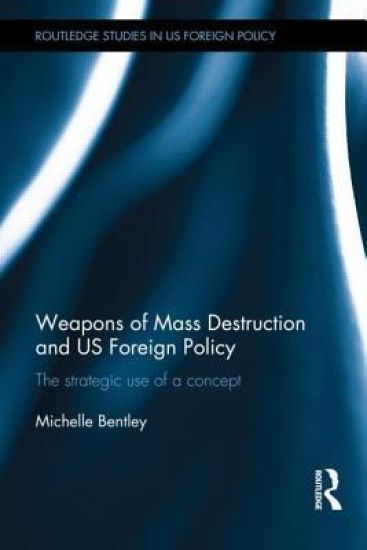
Weapons of Mass Destruction and US Foreign Policy
This book examines the use of concepts – specifically ‘weapons of mass destruction’ (WMD) – in US foreign policy discourse. Current analysis of WMD definition has made headway into identifying the repercussions that the conceptual conflation of such diverse weapons – typically understood as a reference to nuclear, biological and chemical weapons – has for international security. While the concept assumes these weapons are ‘equal’, the vast disparity between them, and their disparity from the conventional weapons from which they are supposedly distinct, means this approach is seen as unreflective of reality, causing miscalculations in security policy. Not least, this has highlighted that the issue of WMD definition is a priority concern where this has direct implications for strategy. In contrast, Weapons of Mass Destruction and US Foreign Policy argues that this approach does not accurately portray conceptual meaning, particularly where it overlooks how political language is constructed. In demonstrating this, the book presents a conceptual history of WMD detailing how this has been defined and used since its emergence into political discourse c.1945. Specifically, it argues that definition is an inherently strategic act; policymakers have deliberately included (or excluded) certain weapons and threats from the classification in order to shape foreign policy dialogues. As such, understanding the WMD concept is not a search for a single interpretation, but an analysis that seeks to comprehend what the concept means at any given time, especially where this relates to the political circumstances of its use. By identifying a variety of ways in which WMD has been defined, the book constructs a dynamic view of conceptual meaning that recognises and, more importantly explains, the inherent diversity in interpretation as the consequence of epistemic and institutional context and the strategic response of policymakers.This book will be of much interest to students of Weapons of Mass Destruction, US foreign and security policy, security studies, political narratives and IR.
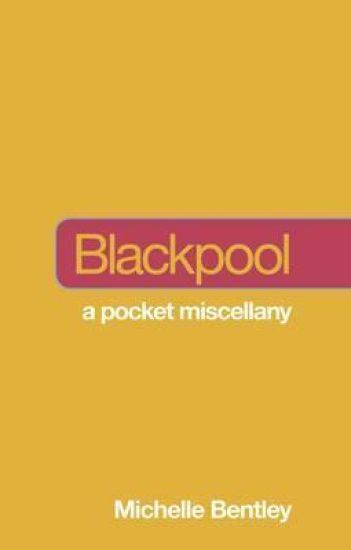
Not a Guide to: Blackpool

Not a Guide to: Blackpool

Michelle Bentley

The History Press Ltd
2012
nidottu
Did you know? In 1939 the famous Illumination lights were set up but never switched on, due to the outbreak of the Second World War. High winds can make the Blackpool Tower sway up to an inch. Blackpool can boast some of the best examples of Victorian architecture in Britain. From the momentous to the outlandish, this book is packed full of fun facts and trivia about everything to do with the self-styled ‘Vegas of the North’. Much more than a tourist guide, residents too will discover things they never knew about the town. Facts, history, humour; it’s all here in this engaging little book.
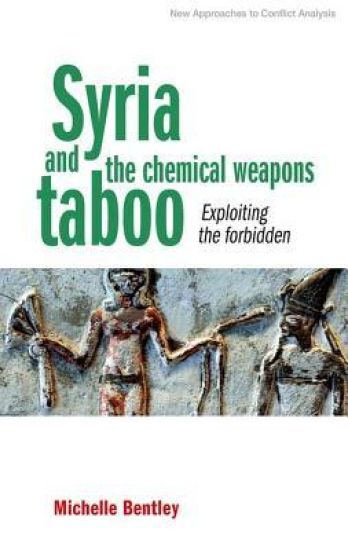
Syria and the Chemical Weapons Taboo

Syria and the Chemical Weapons Taboo

Michelle Bentley

Manchester University Press
2016
sidottu
This book analyses the Syria crisis and the role of chemical weapons in relation to US foreign policy. The Syrian government's use of such weapons and their subsequent elimination has dominated the US response to the conflict, where these are viewed as particularly horrific arms - a repulsion known as the chemical taboo. On the surface, this would seem to be an appropriate reaction: these are nasty weapons and eradicating them would ostensibly comprise a 'good' move. But this book reveals two new aspects of the taboo that challenge this prevailing view. First, actors use the taboo strategically to advance their own self-interested policy objectives. Second, that applying the taboo to Syria has actually exacerbated the crisis. As such, this book not only provides a timely analysis of Syria, but also a major and original rethink of the chemical taboo, as well as international norms more widely.
Syria and the Chemical Weapons Taboo

Syria and the Chemical Weapons Taboo

Michelle Bentley

Manchester University Press
2016
nidottu
This book analyses the Syria crisis and the role of chemical weapons in relation to US foreign policy. The Syrian government's use of such weapons and their subsequent elimination has dominated the US response to the conflict, where these are viewed as particularly horrific arms - a repulsion known as the chemical taboo. On the surface, this would seem to be an appropriate reaction: these are nasty weapons and eradicating them would ostensibly comprise a 'good' move. But this book reveals two new aspects of the taboo that challenge this prevailing view. First, actors use the taboo strategically to advance their own self-interested policy objectives. Second, that applying the taboo to Syria has actually exacerbated the crisis. As such, this book not only provides a timely analysis of Syria, but also a major and original rethink of the chemical taboo, as well as international norms more widely.