Kirjojen hintavertailu. Mukana 11 342 296 kirjaa ja 12 kauppaa.

Kirjahaku

Etsi kirjoja tekijän nimen, kirjan nimen tai ISBN:n perusteella.

6 kirjaa tekijältä Michelle Cliff

Abeng

Abeng

Michelle Cliff

Plume Books
2008
nidottu
A lyrical coming-of-age story and an essential retelling of the colonial history of Jamaica. Originally published in 1984, this critically acclaimed novel is the story of Clare Savage, a light-skinned, middle-class twelve-year-old growing up in Jamaica in the 1950s. As Clare tries to find her own identity and place in her culture, she carries the burden of her mixed heritage. There are the Maroons, who used the conch shell--the abeng--to pass messages as they fought against their English enslavers. And there is her white great-great-grandfather, Judge Savage, who committed a terrible act of violence on the eve of emancipation. In Clare's struggle to reconcile the conflicting legacies of her own personal lineage, esteemed Caribbean author Michelle Cliff dramatically confronts the cultural and psychological brutality inflicted upon the island and its people by colonialism.
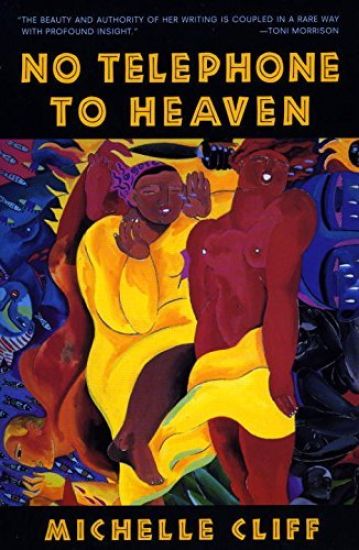
No Telephone to Heaven

No Telephone to Heaven

Michelle Cliff

Plume Books
1996
nidottu
A brilliant Jamaican-American writer takes on the themes of colonialism, race, myth, and political awakening. Originally published in 1987, this critically acclaimed novel is the continuation of the story that began in Abeng following Clare Savage, a mixed-race woman who returns to her Jamaican homeland after years away. In this deeply poetic novel, Clare must make sense of her middle-class childhood memories in contrast with another side of Jamaica which she is only now beginning to see: one of extreme poverty. And Jamaica--almost a character in the book--comes to life with its extraordinary beauty, coexisting with deep human tragedy. Through the course of the book, Clare sees the violence that rises out of extreme oppression, the split loyalties of a colonized person, and what it means to be neither white nor Black in that environment. The result is a deeply moving, canonical work.
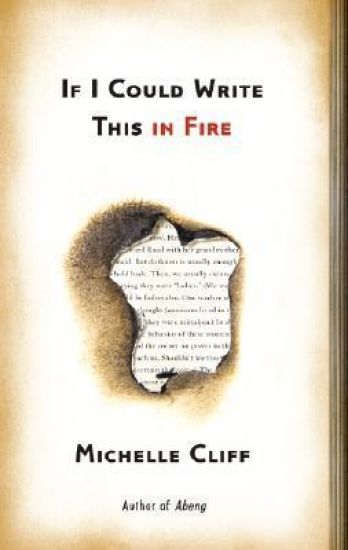
If I Could Write This in Fire

If I Could Write This in Fire

Michelle Cliff

University of Minnesota Press
2008
sidottu
A deeply personal meditation on history and memory, place and displacement by a major writerBorn in a Jamaica still under British rule, the acclaimed and influential writer Michelle Cliff embraced her many identities, shaped by her experiences with the forces of colonialism and oppression: a light-skinned Creole, a lesbian, an immigrant in both England and the United States. In her celebrated novels and short stories, she has probed the intersection of prejudice and oppression with a rare and striking lyricism.In her first book-length collection of nonfiction, Cliff displays the same poetic intensity, interweaving reflections on her life in Jamaica, England, and the United States with a powerful and sustained critique of racism, homophobia, and social injustice. If I Could Write This in Fire begins by tracing her transatlantic journey from Jamaica to England, coalescing around a graceful, elliptical account of her childhood friendship with Zoe, who is dark-skinned and from an impoverished, rural background; the divergent life courses that each is forced to take; and the class and color tensions that shape their lives as adults. The personal is interspersed with fragments of Jamaica’s history and the plight of people of color living both under imperial rule and in contemporary Britain. In other essays and poems, Cliff writes about the discovery of her distinctive, diasporic literary voice, recalls her wild colonial girlhood and sexual awakening, and recounts traveling through an American landscape of racism, colonialism, and genocide-a history of violence embodied in seemingly innocuous souvenirs and tourist sites. A profound meditation on place and displacement, If I Could Write This in Fire explores the complexities of identity as they meet with race, gender, sexuality, nationality, and the legacies of the Middle Passage and European imperialism.
Everything Is Now

Everything Is Now

Michelle Cliff

University of Minnesota Press
2009
sidottu
A tour de force of short fiction from an acclaimed authorEverything Is Now brings together all the short fiction of Michelle Cliff, featuring fourteen new pieces as well as the stories from her two previous short fiction collections, Bodies of Water and The Store of a Million Items. Cliff, born in Jamaica and raised both there and in New York, skillfully weaves her own experiences into her fiction, exploring race, gender, sexuality, and colonialism. With stunning lyricism, intelligence, and passion, Cliff confronts the dualities of our complex world: black and white, America and the third world, past and present, femininity and masculinity, colonialism and revolution. Touching on such vital themes as memory, the passage of time, familial relationships, the presence of death, and the cross-influence of cultures, Michelle Cliff’s stories are broad in scope, rich in substance, and urgent in their message.
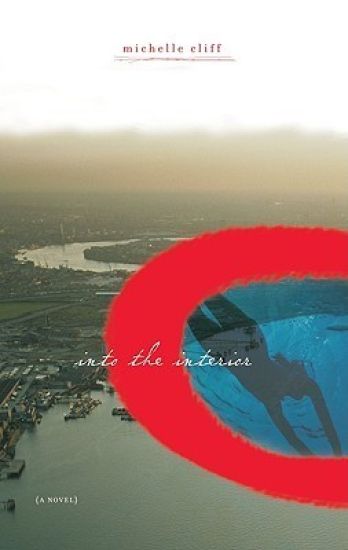
Into the Interior

Into the Interior

Michelle Cliff

University of Minnesota Press
2010
sidottu
In her previous novels, Michelle Cliff explored potent themes of colonialism, race, myth, and identity with rare intelligence, lyrical intensity, and a profound sense of both history and place. Now, with Into the Interior, she has written her most intimate, courageous work of fiction yet, a searing and ultimately moving reflection on the legacy of empire and the restless search for a feeling of belonging. “I grew up to be someone adept at leaving,” confesses Into the Interior’s unnamed narrator, a bisexual Caribbean woman of color, and Cliff traces her travels from Jamaica to New York to London. Educated in admiration for Western culture-she goes to London to study art history-she penetrates further and further into its emotional shadow life in an attempt to overcome her own deep sense of displacement. Reversing the journey Joseph Conrad’s Marlow took from the imperial capital to a colonial outpost, she discovers a “heart of darkness” in the former capital of the British Empire. Moving among its fragmented personalities and social life, she witnesses-and experiences-its propensity for racism and homophobia, misogyny and abusive patriarchy, hypocrisy and sadism. Deftly shifting between present and past, between a childhood in Jamaica-her memories, both disconcerting and humor-tinged, beautifully rendered by Cliff’s elliptical prose-and her purposeful wanderings as an adult that result in intellectual, sexual, and political awakenings, Into the Interior is both deeply personal and charged by a world-historical awareness of the persistent injustices that colonialism imposes on its former subjects.
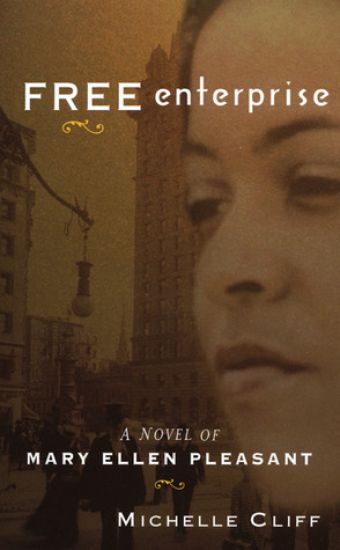
Free Enterprise

Free Enterprise

Michelle Cliff

City Lights Books
2004
pokkari
In 1858, two black women meet at a restaurant and begin to plot a revolution. Mary Ellen Pleasant owns a string of hotels in San Francisco that secretly double as havens for runaway slaves. Her comrade, Annie, is a young Jamaican who has given up her life of privilege to fight for the abolitionist cause. Together they join John Brown's doomed enterprise and barely escape with their lives. With mesmerizing skill, Cliff weaves a multitude of voices into a gripping, poignant story of the struggle for liberation that began not long after the first slaves landed on America's shores. Michelle Cliff is the author of No Telephone to Heaven, among other books of fiction, and a forthcoming essay collection, Apocalypso. She lives in Santa Cruz, CA.