Kirjojen hintavertailu. Mukana 11 342 296 kirjaa ja 12 kauppaa.

Kirjahaku

Etsi kirjoja tekijän nimen, kirjan nimen tai ISBN:n perusteella.

9 kirjaa tekijältä Michelle Tusan

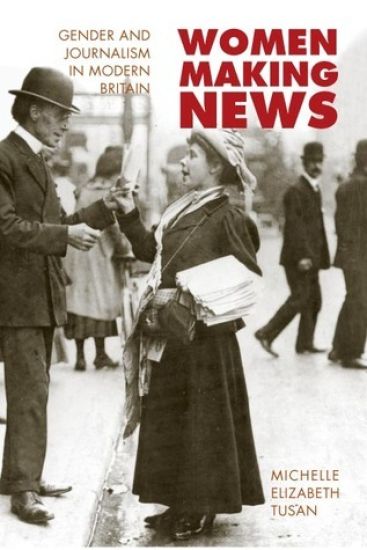
Women Making News

Women Making News

Michelle Tusan

University of Illinois Press
2005
sidottu
Starting in the mid-nineteenth century, female editors and journalists created a new genre of political journal they proclaimed to be both for and by women. Specialized periodicals like Women's Penny Paper and Shafts fostered the proliferation of diverse political agendas aimed at reimagining women's status in society. At the same time, the institutional infrastructure of the women's press provided women with job opportunities in a nontraditional field. Michelle Tusan tells two stories. First, she examines alternative print-based political cultures that women developed during the late nineteenth and early twentieth centuries. Second, she explores how British female subjects forged a wide range of new political identities through the pages of "their press." Tusan employs social and cultural historical analysis in the reading of popular printed texts, as well as rare and previously unpublished personal correspondence and business records from archives throughout Britain. Insightful and filled with fascinating detail, Women Making News uncovers how the relationship between print culture and gender politics provided a vehicle for women's mobilization in the political culture of modern Britain.
Smyrna's Ashes

Smyrna's Ashes

Michelle Tusan

University of California Press
2012
pokkari
Today the West tends to understand the Middle East primarily in terms of geopolitics: Islam, oil, and nuclear weapons. But in the nineteenth century it was imagined differently. The interplay of geography and politics found definition in a broader set of concerns that understood the region in terms of the moral, humanitarian, and religious commitments of the British empire. Smyrna's Ashes re-evaluates how this story of the "Eastern Question" shaped the cultural politics of geography, war, and genocide in the mapping of a larger Middle East after World War I.
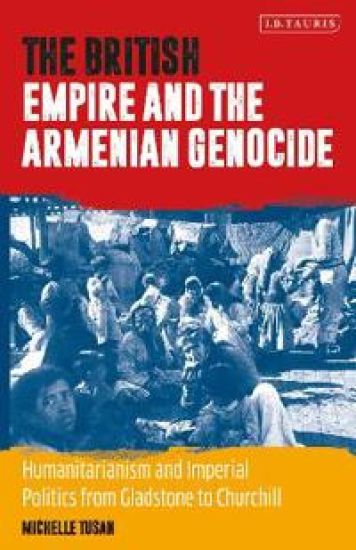
The British Empire and the Armenian Genocide
An estimated one million Armenians were killed in the dying days of the Ottoman Empire in 1915. Against the backdrop of World War I, reports of massacre, atrocity, genocide and exile sparked the largest global humanitarian response up to that date. Britain and its empire - the most powerful internationalist institutional force at the time - played a key role in determining the global response to these events. This book considers the first attempt to intervene on behalf of the victims of the massacres and to prosecute those responsible for 'crimes against humanity' using newly uncovered archival material. It looks at those who attempted to stop the violence and to prosecute the Ottoman perpetrators of the atrocities. In the process it explores why the Armenian question emerged as one of the most popular humanitarian causes in British society, capturing the imagination of philanthropists, politicians and the press. For liberals, it was seen as the embodiment of the humanitarian ideals espoused by their former leader (and four-time Prime Minister), W.E. Gladstone. For conservatives, as articulated most clearly by Winston Churchill, it proved a test case for British imperial power.In looking at the British response to the events in Anatolia, Michelle Tusan provides a new perspective on the genocide and sheds light on one of the first ever international humanitarian campaigns.
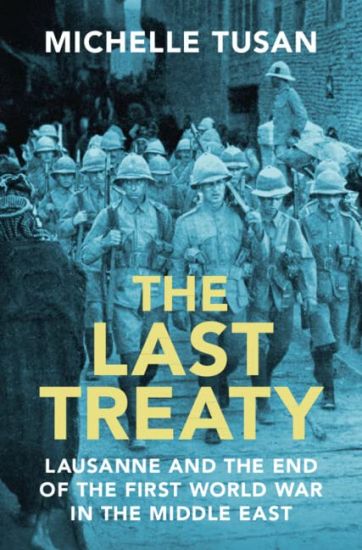
The Last Treaty

The Last Treaty

Michelle Tusan

Cambridge University Press
2023
sidottu
In The Last Treaty, Michelle Tusan profoundly reshapes the story of how the First World War ended in the Middle East. Tracing Europe's war with the Ottoman Empire through to the signing of Lausanne, which finally ended the war in 1923, she places the decisive Allied victory over Germany in 1918 in sharp relief against the unrelenting war in the East and reassesses the military operations, humanitarian activities and diplomatic dealings that continued after the signing of Versailles in 1919. She shows how, on the Middle Eastern Front, Britain and France directed Allied war strategy against a resurgent Ottoman Empire to sustain an imperial system that favored Europe's dominance within the nascent international system. The protracted nature of the conflict and ongoing humanitarian crisis proved devastating for the civilian populations caught in its wake and increasingly questioned old certainties about a European-led imperial order and humanitarian intervention. Its consequences would transform the postwar world.
The Last Treaty

The Last Treaty

Michelle Tusan

Cambridge University Press
2025
pokkari
In The Last Treaty, Michelle Tusan profoundly reshapes the story of how the First World War ended in the Middle East. Tracing Europe's war with the Ottoman Empire through to the signing of Lausanne, which finally ended the war in 1923, she places the decisive Allied victory over Germany in 1918 in sharp relief against the unrelenting war in the East and reassesses the military operations, humanitarian activities and diplomatic dealings that continued after the signing of Versailles in 1919. She shows how, on the Middle Eastern Front, Britain and France directed Allied war strategy against a resurgent Ottoman Empire to sustain an imperial system that favored Europe's dominance within the nascent international system. The protracted nature of the conflict and ongoing humanitarian crisis proved devastating for the civilian populations caught in its wake and increasingly questioned old certainties about a European-led imperial order and humanitarian intervention. Its consequences would transform the postwar world.