Kirjojen hintavertailu. Mukana 11 342 296 kirjaa ja 12 kauppaa.

Kirjahaku

Etsi kirjoja tekijän nimen, kirjan nimen tai ISBN:n perusteella.

4 kirjaa tekijältä Mick Lennon

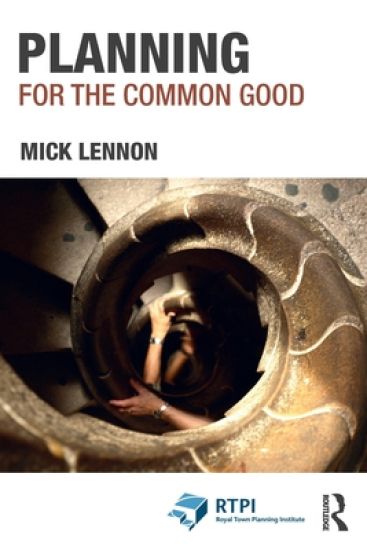
Planning for the Common Good

Planning for the Common Good

Mick Lennon

TAYLOR FRANCIS LTD
2021
nidottu
Appeals to the ‘common good’ or ‘public interest’ have long been used to justify planning as an activity. While often criticised, such appeals endure in spirit if not in name as practitioners and theorists seek ways to ensure that planning operates as an ethically attuned pursuit. Yet, this leaves us with the unavoidable question as to how an ethically sensitive common good should be understood. In response, this book proposes that the common good should not be conceived as something pre-existing and ‘out there’ to be identified and applied or something simply produced through the correct configuration of democracy. Instead, it is contended that the common good must be perceived as something ‘in here,’ which is known by engagement with the complexities of a context through employing the interpretive tools supplied to one by the moral dimensions of the life in which one is inevitably embedded. This book brings into conversation a series of thinkers not normally mobilised in planning theory, including Paul Ricoeur, Alasdair MacIntyre and Charles Taylor. These shine light on how the values carried by the planner are shaped through both their relationships with others and their relationship with the ‘tradition of planning’ – a tradition it is argued that extends as a form of reflective deliberation across time and space. It is contended that the mutually constitutive relationship that gives planning its raison d’être and the common good its meaning are conceived through a narrative understanding extending through time that contours the moral subject of planning as it simultaneously profiles the ethical orientation of the discipline. This book provides a new perspective on how we can come to better understand what planning entails and how this dialectically relates to the concept of the common good. In both its aim and approach, this book provides an original contribution to planning theory that reconceives why it is we do what we do, and how we envisage what should be done differently. It will be of interest to scholars, students and practitioners in planning, urban studies, sociology and geography.
Planning for the Common Good

Planning for the Common Good

Mick Lennon

TAYLOR FRANCIS LTD
2021
sidottu
Appeals to the ‘common good’ or ‘public interest’ have long been used to justify planning as an activity. While often criticised, such appeals endure in spirit if not in name as practitioners and theorists seek ways to ensure that planning operates as an ethically attuned pursuit. Yet, this leaves us with the unavoidable question as to how an ethically sensitive common good should be understood. In response, this book proposes that the common good should not be conceived as something pre-existing and ‘out there’ to be identified and applied or something simply produced through the correct configuration of democracy. Instead, it is contended that the common good must be perceived as something ‘in here,’ which is known by engagement with the complexities of a context through employing the interpretive tools supplied to one by the moral dimensions of the life in which one is inevitably embedded. This book brings into conversation a series of thinkers not normally mobilised in planning theory, including Paul Ricoeur, Alasdair MacIntyre and Charles Taylor. These shine light on how the values carried by the planner are shaped through both their relationships with others and their relationship with the ‘tradition of planning’ – a tradition it is argued that extends as a form of reflective deliberation across time and space. It is contended that the mutually constitutive relationship that gives planning its raison d’être and the common good its meaning are conceived through a narrative understanding extending through time that contours the moral subject of planning as it simultaneously profiles the ethical orientation of the discipline. This book provides a new perspective on how we can come to better understand what planning entails and how this dialectically relates to the concept of the common good. In both its aim and approach, this book provides an original contribution to planning theory that reconceives why it is we do what we do, and how we envisage what should be done differently. It will be of interest to scholars, students and practitioners in planning, urban studies, sociology and geography.
Meaning Making in Planning

Meaning Making in Planning

Mick Lennon

TAYLOR FRANCIS LTD
2023
sidottu
Planning theorists normally focus on issues of contest and critique. The field of planning theory is thereby replete with studies of conflict, collaboration and criticism. Considerably less critical attention is afforded to policy approaches that emerge, evolve and are widely adopted in the apparent absence of discord. This book addresses this knowledge gap. A case study of the emergence of green infrastructure policy in Ireland is used to both inform and illustrate a theory of ‘Policy Entitlement’. This interpretive approach focuses on meaning making in context to explain the counter-intuitive processes through which a new policy concept can emerge and reprofile planning activities by producing the seemingly pre-existing objective reality to which such policy is then applied and the discipline (re)orientated. This approach accounts for how a new planning concept can appear to resolve problematic policy ambiguity by suspending disagreement on issues where dispute could be expected. This book will be of interest to those studying planning theory and the policy process, as well as those concerned with the undertheorized but swift rise to prominence of green infrastructure planning.
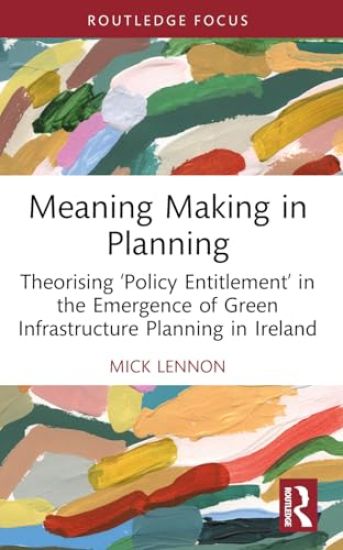
Meaning Making in Planning

Meaning Making in Planning

Mick Lennon

TAYLOR FRANCIS LTD
2025
nidottu
Planning theorists normally focus on issues of contest and critique. The field of planning theory is thereby replete with studies of conflict, collaboration and criticism. Considerably less critical attention is afforded to policy approaches that emerge, evolve and are widely adopted in the apparent absence of discord. This book addresses this knowledge gap. A case study of the emergence of green infrastructure policy in Ireland is used to both inform and illustrate a theory of ‘Policy Entitlement’. This interpretive approach focuses on meaning making in context to explain the counter-intuitive processes through which a new policy concept can emerge and reprofile planning activities by producing the seemingly pre-existing objective reality to which such policy is then applied and the discipline (re)orientated. This approach accounts for how a new planning concept can appear to resolve problematic policy ambiguity by suspending disagreement on issues where dispute could be expected. This book will be of interest to those studying planning theory and the policy process, as well as those concerned with the undertheorized but swift rise to prominence of green infrastructure planning.