Kirjojen hintavertailu. Mukana 11 699 587 kirjaa ja 12 kauppaa.

Kirjahaku

Etsi kirjoja tekijän nimen, kirjan nimen tai ISBN:n perusteella.

17 kirjaa tekijältä Mike Chappell

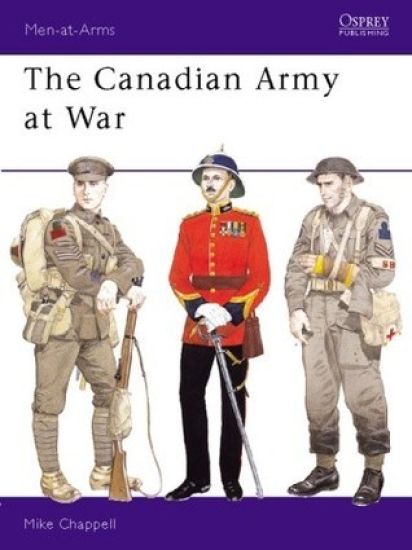
The Canadian Army at War

The Canadian Army at War

Mike Chappell

Osprey Publishing
1985
nidottu
Throughout the twentieth century, Canadian armies participated in the world's major conflicts, from the Boer War at the dawn of the century, to the Korean War in the 1950s. As part of the British empire, Canada supported Britain in South Africa, and came to the aid of the Allies in both world wars. This book chronicles the development of the Canadian Army and the legendary achievements of a nation which might have justifiably stayed aloof from the quarrels of others. As both author and illustrator, Mike Chappell paints an engaging picture of the history, equipment and uniforms of the Canadian Army.
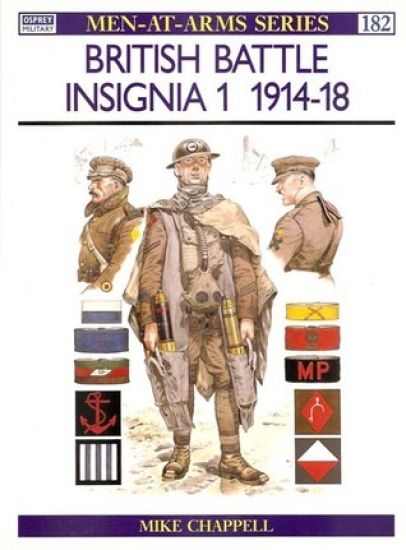
British Battle Insignia (1)

British Battle Insignia (1)

Mike Chappell

Osprey Publishing
1986
nidottu
The British soldiers who marched off to war in 1914 wore only regimental insignia, yet by the time of the armistice in November 1918, insignia in the British Army had undergone a considerable change. Now visible was a bewildering display of coloured devices on uniforms, helmets, vehicles, guns, signboards and flags. Regimental badges remained but were joined by divisional insignia. These were rarely seen in the front line. Instead the 'battle patch' had appeared for combat use. In this beautifully illustrated book Mike Chappell looks at the colourful variety of insignia used by the British Army during the Great War.
British Battle Insignia (2)

British Battle Insignia (2)

Mike Chappell

Osprey Publishing
1987
nidottu
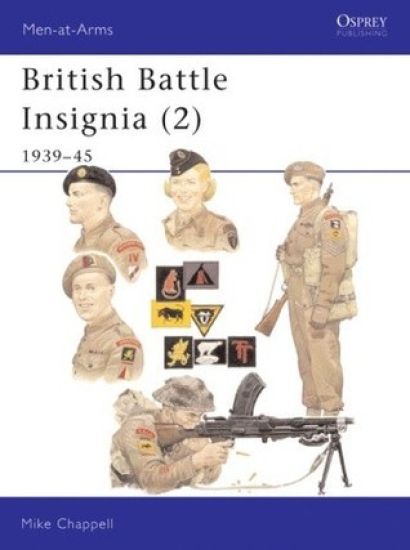
By the New Year of 1940 the War Office had agreed in principle to (a) the enhancement of officers' badges of rank with cloth in the colour of the arm-of-service; (b) strips of cloth in the same colours to be worn at the top of the sleeves by all ranks; and (c) the wearing of regimental flashes on Battledress. And so the rules for the wearing of battle insignia throughout the British Army were established. How far they were obeyed and how often they were ignored will become obvious to anyone reading Mike Chappell's splendid companion work to Men-At-Arms 182.
The British Army in the 1980s

The British Army in the 1980s

Mike Chappell

Osprey Publishing
1988
nidottu
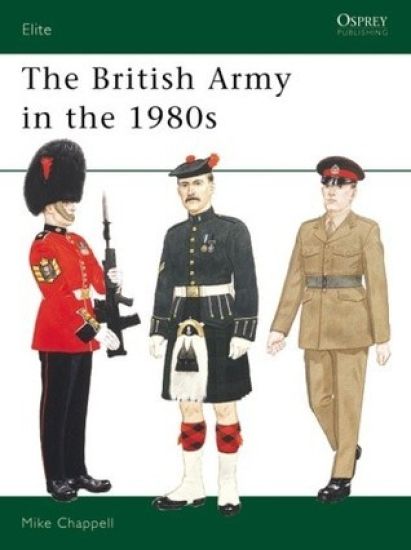
Published in 1987, this illustrated study provides a unique insight into the British Army of the time. Composed entirely of volunteers, its morale sustained by its curious and little-understood attitudes towards tradition, the British Army of the 1980s, with its reputation as one of the best in the world, attracted respect and admiration from the military expert and the layman alike. Written and illustrated by a former British Army infantryman with 22 years' experience, this book details the Army's history, organization, uniforms and distinctions. The text is backed by numerous illustrations including photographs and detailed colour figure artworks.
Moonbeams and Monsters

Moonbeams and Monsters

Mike Chappell

Independently Published
2019
nidottu
If you enjoy nonsense and fantastical poems, Mike Chappell's quirkily humorous verse will be for you. in you can meet monsters such as the mysterious Chu or the suspiciously polite monster of Milipu mountain, and various attempts to find love in surprising places and forms. Some of the poems are sad, some purely silly but all have a vein of nonsense running through them. Many of the poems, with their humour, rhymes and fantasy, can appeal to children but also to those of any age who like amusing verse.
The British Army in World War I (1)

The British Army in World War I (1)

Mike Chappell

Osprey Publishing
2003
nidottu
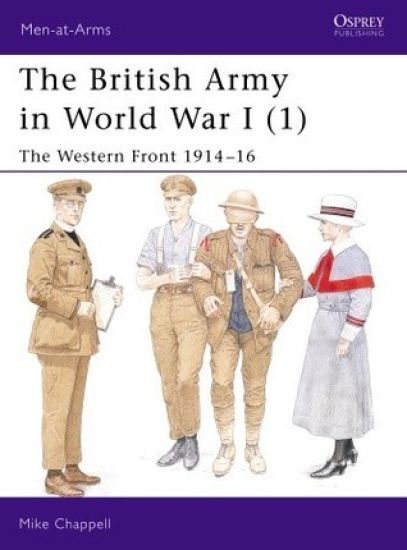
This book is the first of three concise but fact-packed titles on the British Army of the Great War. The units covered include the BEF, the Regular Army and the Royal Navy and Marine units operating on land. The text and the colourful and varied illustrations cover the organisation, uniforms, insignia, decorations, personal equipment and weapons of these famous troops. Also detailed are the training, communications, leadership, and campaign history of the various units that fought during this turbulent time, from the arrival of the BEF in France in August 1914 to the end of the bloody battle of the Somme in autumn 1916.
The British Army in World War I (2)

The British Army in World War I (2)

Mike Chappell

Osprey Publishing
2005
nidottu
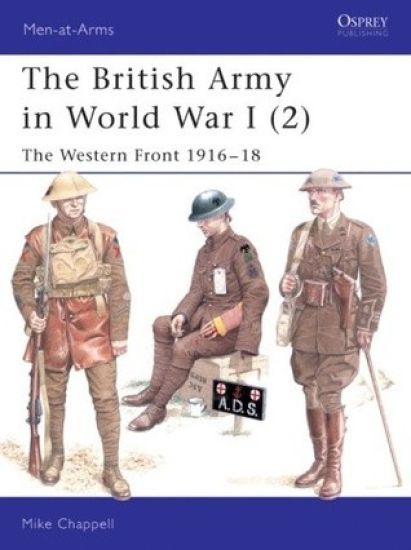
This volume covers the years of the "big pushes": the costly mistakes of the Somme in 1916, and Third Ypres - the infamous Passchendaele battle - in 1917. The author goes on to describe the successful defensive fighting against the great German offensive of spring 1918; and the Allies' final advance to victory on the Western Front. This is the second of three concise yet fact-filled titles on the British Army of the Great War, detailing organization, uniforms and insignia, weapons and training, leadership and campaign history.
The British Army in World War I (3)

The British Army in World War I (3)

Mike Chappell

Osprey Publishing
2005
nidottu
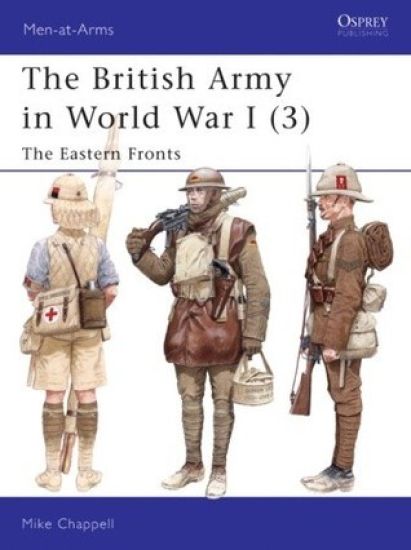
Although Britain's greatest commitment of land forces was on the Western Front, British, Empire and Dominion troops also fought in other theatres of operations – and in some cases continued to fight there after the Armistice had ended hostilities in the West. This last of our series of three titles describes these far-flung campaigns, in Italy, the Balkans, the Middle East, several parts of Africa, Russia, China, and even the North-West Frontier of India. The text is illustrated with contemporary photographs, and with meticulous colour plates of British, African, Indian and Australian troops, in the uniforms and equipment used on battle fronts from the desert sands to the snows of north Russia.
Wellington's Peninsula Regiments (1)

Wellington's Peninsula Regiments (1)

Mike Chappell

Osprey Publishing
2003
nidottu
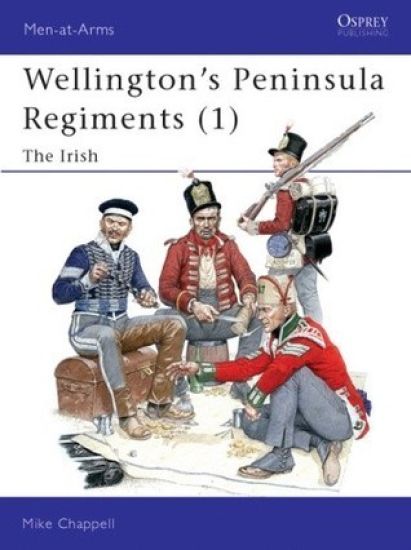
The famously hard-fighting Irish regiments of the British Army distinguished themselves not only in many of the main Peninsular battles, but also in several dramatic, but lesser known actions. This work contains new research into the uniforms and insignia - as well as the battle history - of the Irish regiments of Wellington's army that fought in the Peninsula from 1808 until 1814. It details the 88th Foot (Connaught Rangers), the 27th Foot (Enniskillens), the 4th Royal Irish Dragoon Guards and many others.
Wellington's Peninsula Regiments (2)

Wellington's Peninsula Regiments (2)

Mike Chappell

Osprey Publishing
2004
nidottu
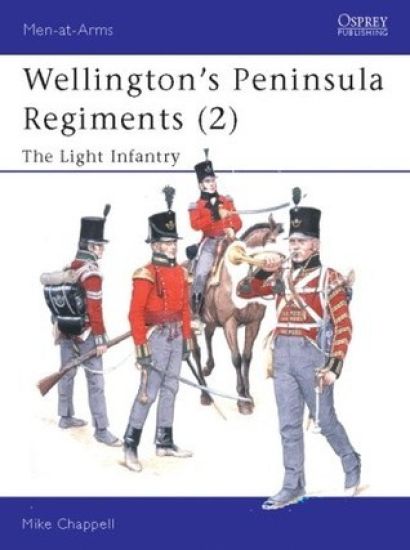
This book contains new research into the uniforms and insignia - and the battle history - of the crack Light Infantry regiments, which distinguished themselves on a score of battlefields in the Peninsular War, 1808-14. The Light Division was Wellington's crack formation, with a tremendous battle record gained through imaginative tactics and high training as well as courage. Information about the little-known second Light Division which served in eastern Spain is also included in this fascinating account of these elite troops. Highly detailed illustrations and anecdotes bring to life members of Wellington's Light Infantry regiment during the Peninsula War.
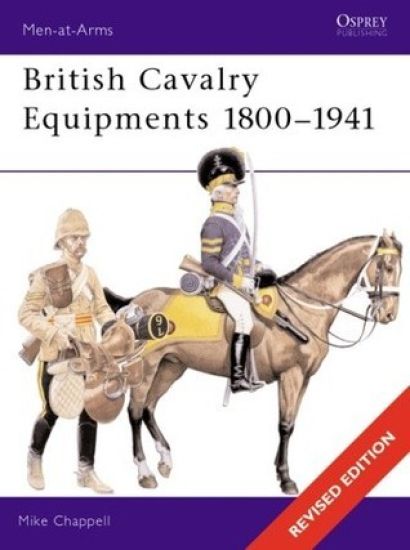
British Cavalry Equipments 1800–1941

British Cavalry Equipments 1800–1941

Mike Chappell

Osprey Publishing
2002
nidottu
From the opening of the 19th century to the beginning of World War II, this volume examines the development of British cavalry equipment between 1800 and 1941. The first moves towards standardization of equipment are discussed, as they trace the demise of the system whereby the colonels of individual regiments decided how their troops would be equipped. The book reveals the influence of the Napoleonic Wars on British cavalry equipment. Finally, it shows how the outbreak of World War II and the spread of mechanization heralded the inevitable abolition of the use of horses in military service.
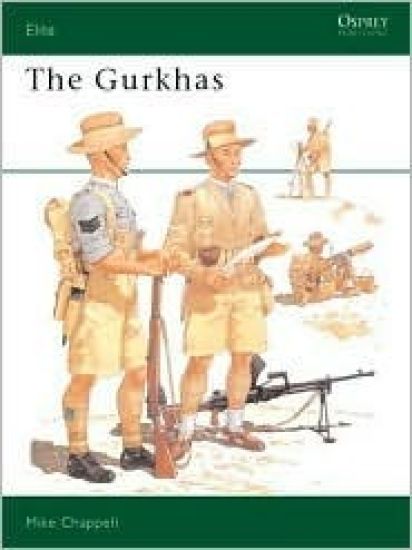
The Gurkhas

The Gurkhas

Mike Chappell

Osprey Publishing
1993
nidottu
The origins of the Gurkhas date back to 1815, when one of the most skilled and determined opponents that the British soldier had to overcome in battle was the Nepalese warrior. The British were so impressed with the military skills of these fighters that they began recruiting units exclusively from Nepal. From this beginning grew the now famous Gurkha units. This volume examines the development of the Gurkhas through the various wars and confrontations of the 19th century, through the First World War, Second World War and the various postwar conflicts including Malaya, Borneo and the Falklands.
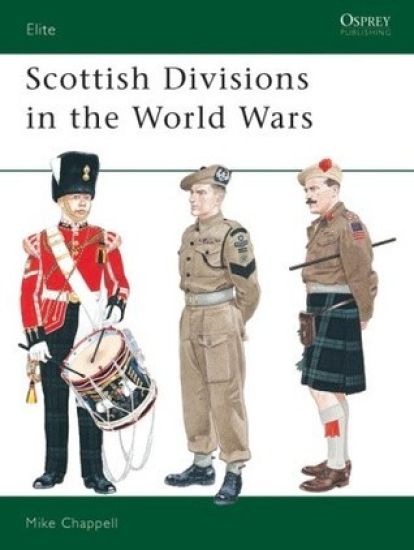
Scottish Divisions in the World Wars

Scottish Divisions in the World Wars

Mike Chappell

Osprey Publishing
1994
nidottu
Over the centuries of their existence the Scottish regiments of the British Army have gained a reputation in war that is the envy of all and which can be matched, or surpassed, by very few. The very description 'Scottish soldier' conjures up images ranging from the 'thin red streak tipped with a line of steel' of the 93rd Highlanders at Balaclava, and the charge of the Scots greys at Waterloo, to the more recent deeds of Scottish regiments in the Falkland Islands and the Persian Gulf. Mike Chappell chronicles the remarkable history of the Scottish units which fought in the two world wars.
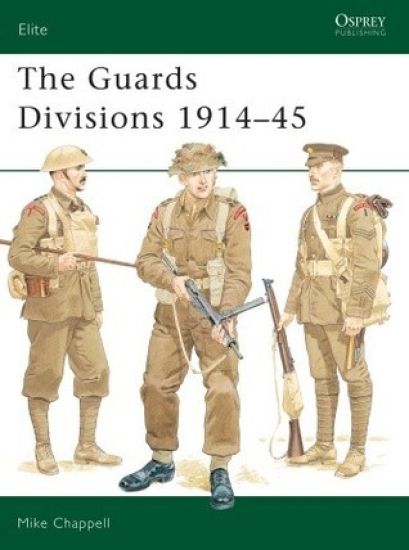
The Guards Divisions 1914–45

The Guards Divisions 1914–45

Mike Chappell

Osprey Publishing
1995
nidottu
The best example, and perhaps the only body of elite troops who have maintained their role as guardians of a royal household for over three centuries while building a reputation in war that is the envy of all, is Britain's household troops, the Guards. Over the years they have maintained the highest standards in peace and war, and have served as an example to the rest of the British Army, a benchmark in all matters military from drill and 'turnout' to leadership in battle. Veteran Osprey author Mike Chappell describes the history and uniform of the Guards Divisions from 1914-45.
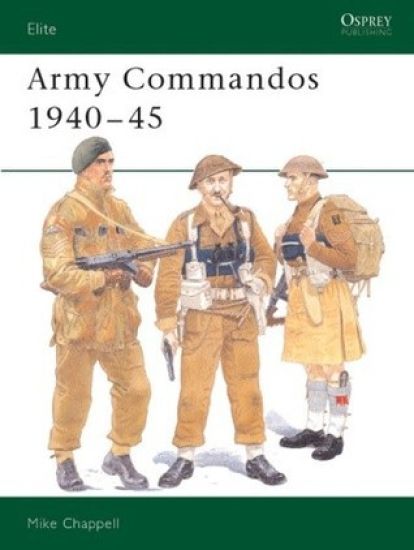
Army Commandos 1940–45

Army Commandos 1940–45

Mike Chappell

Osprey Publishing
1996
nidottu
The period from early 1940 to the end of 1942 was a time of gloom and uncertainty for the British, who stood alone against the assembled might of the Axis powers. They badly needed a champion, and were to find this in a small force of soldiers who inspired them with a series of daring raids against the coasts of 'occupied Europe', becoming the heroes of the British public and of the British Prime Minister who had created them. This title explores the wartime history of the British Army Commandos whose bravery did so much to raise the morale of the British public.
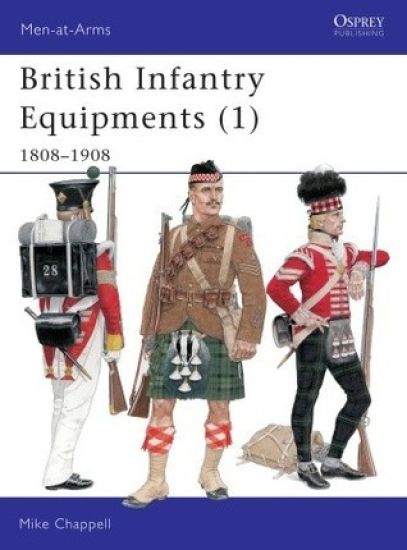
British Infantry Equipments (1)

British Infantry Equipments (1)

Mike Chappell

Osprey Publishing
1999
nidottu
The period covered by this book begins with the British infantryman entering the Peninsular War wearing the lethal knapsack equipment of the day, and ends with the introduction of the first equipment set made entirely of woven cotton webbing [the 1908 pattern described in the accompanying Men-at-Arms 108: British Infantry Equipments 1908-80]. Mike Chappel's detailed text presents an in-depth study of British infantry equipments from 1808-1908, in a volume complemented by plenty of illustrations and photographs, including eight full page colour plates by the author himself.
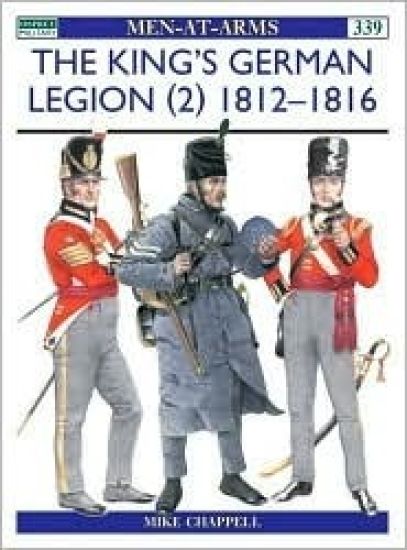
The King's German Legion (2)

The King's German Legion (2)

Mike Chappell

Osprey Publishing
2000
nidottu
This title is the completion of a two-part study of the King's German Legion – the largest and most respected of the foreign corps which fought as integrated elements of the British Army during the Napoleonic Wars. The light and heavy cavalry, light and line infantry, and horse and foot artillery of the KGL made major contributions to Wellington's victories in the latter part of the Peninsular War, and several units covered themselves with glory at Waterloo. Drawing upon new research in British and Hanoverian archival sources, Mike Chappell's detailed text and meticulous illustrations offer unprecedented details of this impressive fighting organisation.