Kirjojen hintavertailu. Mukana 11 627 670 kirjaa ja 12 kauppaa.

Kirjahaku

Etsi kirjoja tekijän nimen, kirjan nimen tai ISBN:n perusteella.

20 kirjaa tekijältä Mike Guardia

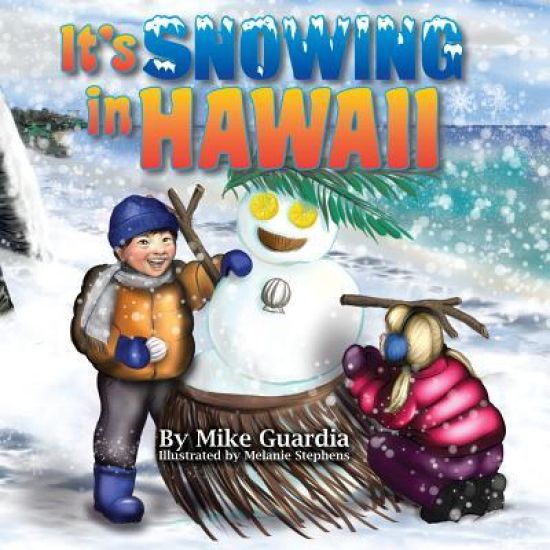
It's Snowing in Hawaii

It's Snowing in Hawaii

Mike Guardia

Magnum Books
2017
pokkari
"Oh me, Oh my It's Snowing in Hawaii "A magical journey through the snow-filled beaches of Honolulu... "Blending Hawaiian highlights with blizzardy fun, Mike Guardia's light tale is both amusing and rhythmic.Melanie Stephens' illustrations are rich in color and life, bringing extra joy to the text with subzero tropical flare...an interesting twist to a sightseeing journey through one of Hawaii's most popular areas." - The Children's Book Review The state of Hawaii is famous for its tropical weather and white-sand beaches. Get ready to say "Aloha" to the first snowstorm Hawaii's ever had Written in verse, It's Snowing in Hawaii takes you on a magical journey through snow-filled beaches of Honolulu. With Hawaiian flannel shirts, bearskin hula skirts, and figure skating on Pearl Harbor, young readers will enjoy the silly rhymes of a Hawaiian snow day. A portion of this book's proceeds will go to benefit the Children's Literacy Foundation.
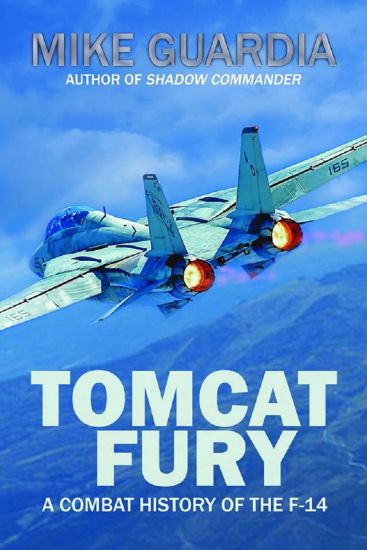
Tomcat Fury: A Combat History of the F-14
From the Gulf of Sidra to the skies over Afghanistan. The complete combat history of the F-14 Tomcat...as told by the pilots who flew it. For more than three decades, the Grumman F-14 Tomcat was the US Navy's premier carrier-based, multi-role fighter jet. From its harrowing combat missions over Libya to its appearance on the silver screen in movies like Top Gun and Executive Decision, the F-14 has become an icon of American air power. Now, for the first time in a single volume, Tomcat Fury explores the illustrious combat history of the F-14: from the Gulf of Sidra...to the Iran-Iraq War...to the skies over Afghanistan in the Global War on Terror.
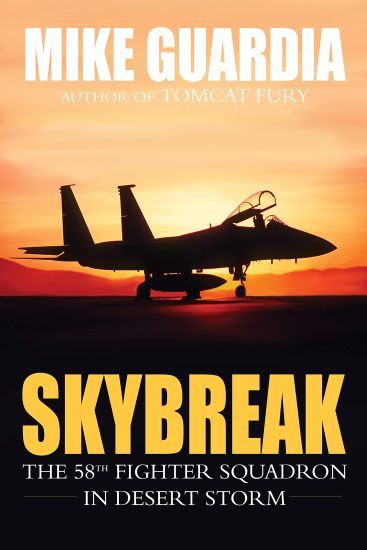
Skybreak

Skybreak

Mike Guardia

Magnum Books
2021
pokkari
The top MiG Killers of Operation Desert Storm.August 1990: Iraqi forces under the command of Saddam Hussein invaded the tiny emirate of Kuwait. Within hours, the Kuwaiti defenses collapsed under the onslaught of the Iraqi Army. In response, the US military led a coalition of thirty-four nations in what became known as Operation Desert Storm-a violent air and ground campaign to eject the Iraqis from Kuwait. At the tip of the spear were the men of the US Air Force's 58th Fighter Squadron. Mounted aboard their F-15C fighter jets, these young aviators took to the sky against the Iraqi Air Force. Although confident in their capabilities, these untested American pilots were flying into combat against the latest-and-greatest of Soviet-built aircraft - including the MiG-29 'Fulcrum.'Despite the odds, however, the men of the 58th Fighter Squadron decimated the Iraqi Air Force in one engagement after another. On the first day of the air war (January 17, 1991), Captain Jon "JB" Kelk claimed the first aerial victory of Desert Storm, downing a MiG-29 in combat. In less than 30 days, the 58th Fighter Squadron flew more than 1,600 combat sorties and destroyed 16 Iraqi aircraft - more than any other coalition air unit. Based on hours of interviews and archival research by author Mike Guardia, this book reveals an intimate, no-holds-barred account of modern aerial combat...as told by the men who lived it.Skybreak is their story.
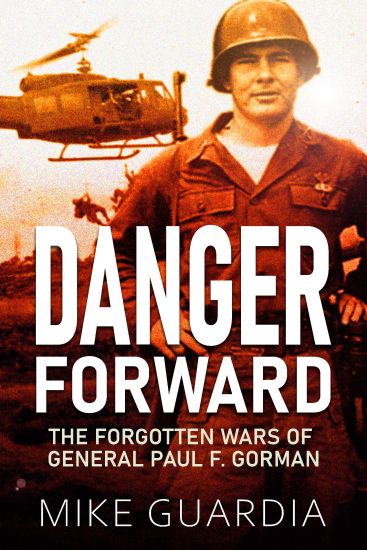
Danger Forward

Danger Forward

Mike Guardia

Magnum Books
2021
pokkari
Meet the forgotten hero of Vietnam...and chief architect of The Pentagon Papers. August 27, 1966: The men of 1st Battalion, 26th Infantry were standing strong in the face of enemy fire. For the past thirty-six hours, they had beaten back a relentless wave of enemy assaults. Two days earlier, the Viet Cong had attacked an American patrol along Highway 16 near Bong Trang. The ensuing firefight became so intense that three US infantry battalions were eventually drawn into the melee. History would call it the Battle of Bong Trang. As the battle raged into its second day, Lieutenant Colonel Paul F. Gorman - the commander of 1st Battalion, 26th Infantry - continued to call for artillery strikes and close air support against the enemy's positions. Despite being badly burned by a misplaced Napalm strike, Gorman maintained his composure and continued calling for fire support until the enemy quit the field. For his audacious leadership and courage under fire, Gorman was awarded the Distinguished Service Cross - the nation's second highest award for valor. A 1950 West Point graduate, Paul Gorman entered the officer ranks during the inaugural years of the Cold War. Like many of his classmates, Gorman served on the frontlines of Korea. Assigned to the 32d Infantry Regiment, he was decorated for valor in the numerous hilltop battles of 1952. Following the Korean Conflict, he commanded an infantry company in West Germany, where his daily duties revolved around defending NATO from the Red Menace. Between his two combat tours in Vietnam, Gorman became the principal architect of The Pentagon Papers, and served on the US delegation to the Paris Peace Talks. During the darkest days of the post-Vietnam malaise, Gorman stood at the forefront of revitalizing the US Army's training methods as it transitioned to an all-volunteer force. In his last assignment, Paul Gorman served as Commander-in-Chief of US Southern Command - during the time of Operation Urgent Fury in Grenada and when the US was actively supporting the Contras in Nicaragua. He retired as a four-star General in 1985. Based on hours of interviews and archival research by author Mike Guardia, this biography of Paul Gorman recounts the life and legacy of a true visionary and forgotten hero of the latter 20th Century.
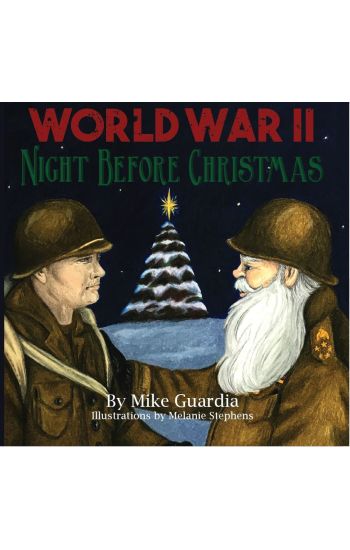
World War II Night Before Christmas

World War II Night Before Christmas

Mike Guardia

Magnum Books
2018
pokkari
T'was the night before Christmas, when along the frontlines... Santa makes a surprise visit to the American GIs in Europe - Christmas Eve, 1944. " Mike Guardia's beautifully illustrated new children's book "World War II Night Before Christmas" shares a heartfelt glimpse into the sacrifices Allied troops made during World War II, along with a joyful dose of Christmas spirit. " - Big Blend Radio and TV Magazine
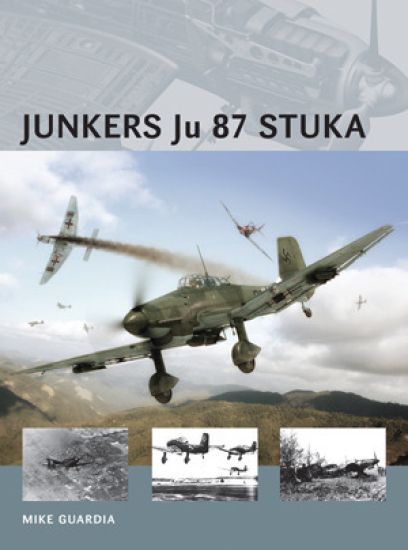
Junkers Ju 87 Stuka

Junkers Ju 87 Stuka

Mike Guardia

Osprey Publishing
2014
nidottu
A definitive technical guide to the Junkers Ju 87 Stuka.In the opening days of the Blitzkrieg campaign, few aircraft could invoke as much terror as the Junkers Ju 87. Nicknamed the “Stuka” (an abbreviation of Sturzkampfflugzeug – the German term for “dive-bomber”), the Ju 87 was perhaps the most feared tactical bomber of the ETO. With its fixed landing gear and inverted gull wings, the Stuka was the most recognizable aircraft of the Blitzkrieg era.With profile plates, close-up photographs and battlescene artwork, this book reveals the design and development history of the aircraft and how the inclusion of its dive-activated siren changed it from a reliable and sturdy dive bomber into a psychological weapon, spreading panic in ground units. Mike Guardia goes on to explain how the Stuka became easy prey for Allied aircraft and how its influence waned in the final years of the war.
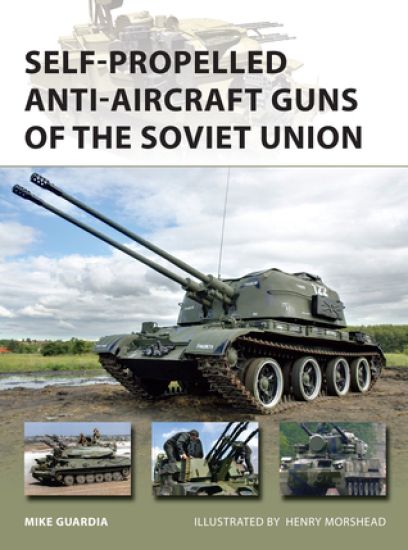
Self-Propelled Anti-Aircraft Guns of the Soviet Union
During the Cold War, the Soviet Army was perhaps the deadliest fighting force the world had ever seen. Within its mechanized forces, the Soviets accomplished something that their American counterparts never could – the fielding of a self-propelled anti-aircraft gun (SPAAG) that could keep pace with its heavy armored formations. This volume examines the design, development and operational history of the Soviet Union's Cold War SPAAGs: the ZSU-37, ZSU-57-2, the infamous ZSU-23-4, and the 9K22 Tunguska (better known by its NATO reporting name: SA-19 ‘Grison’). These vehicles excelled in their air defense role, and many US Department of Defense publications were dedicated to examining how to defeat the ZSU and its radar tracking system. These formidable weapons equipped Russian forces in Afghanistan and were encountered again in Iraq during Operation Desert Storm and Iraqi Freedom, cementing their place in the landscape of modern warfare. This study explores the full history of the SPAAGs with revealing photographs, technical illustrations and detailed analysis.
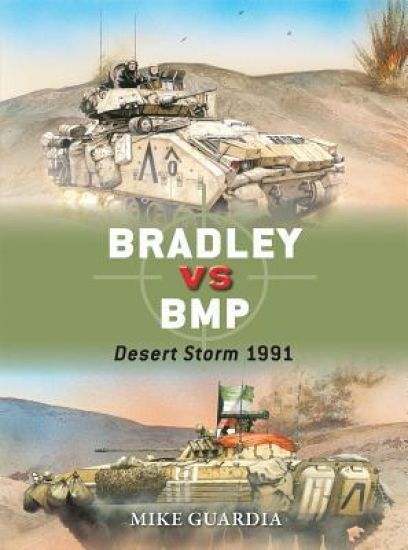
Bradley vs BMP

Bradley vs BMP

Mike Guardia

Osprey Publishing
2016
nidottu
The Gulf War of 1991 saw decisive battles between two rival infantry fighting vehicles developed during the Cold War: the Soviet BMP and the US Bradley. In the mid-1960s, the Soviet Union unveiled the BMP, the first true infantry fighting vehicle. A revolutionary design, the BMP marked a significant departure from the traditional armoured personnel carrier, with a lower silhouette and heavier armament than rival APCs. One of the most fearsome light-armoured vehicles of its day, it caused great consternation on the other side of the Iron Curtain as the Americans scrambled to design a machine to rival the BMP. The result was the M2/M3 Bradley. These Cold War icons first clashed – not on the plains of Europe, but in southern Iraq during the Gulf War of 1991. Featuring specially commissioned full-colour artwork, this is the absorbing story of the origins, development and combat performance of the BMP and Bradley, culminating in the bloody battles of the Gulf War.
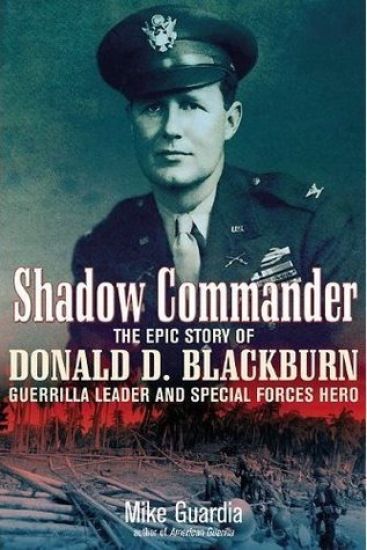
Shadow Commander

Shadow Commander

Mike Guardia

Casemate Publishers
2011
sidottu
Praise for Mike Guardia: “…meticulously researched, with facts verified by exhaustive sleuthing…a fine work of investigative history.”–Military Writers Society of America The fires on Bataan burned on the evening of April 9, 1942, illuminating the white flags of surrender against the night time sky. Woefully outnumbered, outgunned, and ill-equipped, battered remnants of the American-Philippine army surrendered to the forces of the Rising Sun. Yet amongst the chaos and devastation of the American defeat, Army Captain Donald D. Blackburn refused to lay down his arms. With future Special Forces legend Russell Volckmann, Blackburn escaped from Bataan and fled to the mountainous jungles of North Luzon, where they raised a private army of over 22,000 men against the Japanese. Once there, Blackburn organised a guerrilla regiment from among the native tribes in the Cagayan Valley.“Blackburn’s Headhunters,” as they came to be known, devastated the Japanese 14th Army within the western provinces of North Luzon and destroyed the Japanese naval base at Aparri, the largest enemy anchorage in the Philippines. After the war, Blackburn remained on active duty and played a key role in initiating Special Forces operations in Southeast Asia. Following his return to the United States, Blackburn was appointed“Special Assistant for Counterinsurgency and Special Activities,” where he was the architect of the famous Son Tay Prison Raid. This book follows Donald D. Blackburn through both his youthful days of desperate combat against an Empire, and through his days as a commander, imparting his lessons to the newly realised ranks of America’s own Special Forces.
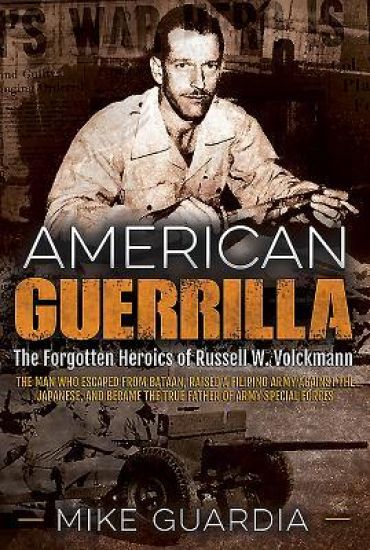
American Guerrilla

American Guerrilla

Mike Guardia

Casemate Publishers
2019
nidottu
With his parting words “I shall return,” General Douglas MacArthur sealed the fate of the last American forces on Bataan. Yet one young Army Captain named Russell Volckmann refused to surrender. He disappeared into the jungles of north Luzon where he raised a Filipino army of over 22,000 men. For the next three years he led a guerrilla war against the Japanese, killing over 50,000 enemy soldiers. At the same time he established radio contact with MacArthur’s HQ in Australia and directed Allied forces to key enemy positions. When General Yamashita finally surrendered, he made his initial overtures not to MacArthur, but to Volckmann.This book establishes how Volckmann’s leadership was critical to the outcome of the war in the Philippines. His ability to synthesize the realities and potential of guerrilla warfare led to a campaign that rendered Yamashita’s forces incapable of repelling the Allied invasion. Had it not been for Volckmann, the Americans would have gone in “blind” during their counter-invasion, reducing their efforts to a trial-and-error campaign that would undoubtedly have cost more lives, materiel, and potentially stalled the pace of the entire Pacific War.Second, this book establishes Volckmann as the progenitor of modern counterinsurgency doctrine and the true “Father” of Army Special Forces - a title that history has erroneously awarded to Colonel Aaron Bank of the ETO. In 1950, Volckmann wrote two Army field manuals: Operations Against Guerrilla Forces and Organization and Conduct of Guerrilla Warfare, though today few realize he was their author. Together, they became the Army’s first handbooks outlining the precepts for both special warfare and counter-guerrilla operations. Taking his argument directly to the Army Chief of Staff, Volckmann outlined the concept for Army Special Forces. At a time when U.S. military doctrine was conventional in outlook, he marketed the ideas of guerrilla warfare as a critical force multiplier for any future conflict, ultimately securing the establishment of the Army’s first special operations unit—the 10th Special Forces Group.Volckmann himself remains a shadowy figure in modern military history, his name absent from every major biography on MacArthur, and in much of the Special Forces literature. Yet as modest, even secretive, as Volckmann was during his career, it is difficult to imagine a man whose heroic initiative had more impact on World War II. This long overdue book not only chronicles the dramatic military exploits of Russell Volckmann, but analyzes how his leadership paved the way for modern special warfare doctrine.
American Armor in the Pacific

American Armor in the Pacific

Mike Guardia

Casemate Publishers
2020
nidottu
This latest in the Casemate Illustrated series explores American armor during the Pacific Campaign of WWII, from 1942-45. During this period there were over twenty major tank battles and operations where tanks provided heavy support to infantry units. These operations include the battle of Tarawa and the Bougainville Campaign. Relying heavily on first-person accounts, the strategies and tactics of the opposing forces are discussed.This book also looks at the Pacific theater, and how American armor was employed with great success in that theater of war. Detailed information on American and Japanese armored forces, including development, equipment, capabilities, organization, and order of battle, is given.
Air War on the Eastern Front

Air War on the Eastern Front

Mike Guardia

Casemate Publishers
2020
nidottu
The Red Air Force versus the Luftwaffe in the skies over Eastern Europe. June 1941: Having conquered most of Western Europe, Adolf Hitler turned his attention to the vast Soviet Union. Disregarding his Non-Aggression Pact with Joseph Stalin, Hitler launched Operation Barbarossa, a full-scale invasion of the Soviet homeland... aimed squarely at Moscow. In the skies over Russia, the battle-hardened airmen of the Luftwaffe made short work of the Red Air Force during opening days of Barbarossa. To make matters worse, Stalin had executed many of his best pilots during the perennial "purges" of the 1930s. Thus, much of the Red Air Force was destroyed on the ground before meeting the Luftwaffe in the skies. By 1944, however, the Soviet airmen had regained the initiative and fervently wrested air superiority from the now-ailing Axis Powers.
Arracourt 1944

Arracourt 1944

Mike Guardia

Casemate Publishers
2022
nidottu
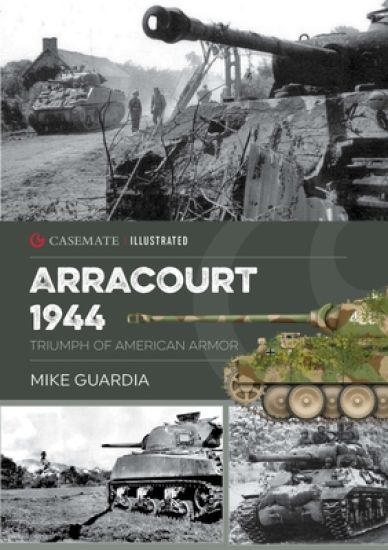
September 1944: With the Allies closing in on the Rhine, Adolf Hitler orders a counterattack on General Patton's Third Army in France. Near the small town of Arracourt, France, elements of the US 4th Armored Division met the grizzled veterans of the 5th Panzer Army in combat. Atop their M4 Shermans, American tank crews squared off against the technologically superior Mark V Panther tanks of the Wermacht. Yet through a combination of superior tactics, leadership, teamwork, and small-unit initiative, the outnumbered American forces won a decisive victory against the 5th Panzer Army. Indeed, of the 262 tanks and mobile assault guns fielded by German forces, 200 were damaged or destroyed by enemy fire. The Americans, by contrast, lost only 48 tanks. Following the collapse of the German counterattack at Arracourt, General Patton's Third Army found itself within striking distance of the Third Reich's borderlands. The battle of Arracourt was the US Army's largest tank battle until the Ardennes Offensive in December 1944. It helped pave the way for the final Allied assault into Germany, and showed how tactical ingenuity and adaptive leadership can overcome and an enemy's superior size or technological strength.
US Army and Marine Corps MRAPs

US Army and Marine Corps MRAPs

Mike Guardia

Osprey Publishing
2013
nidottu
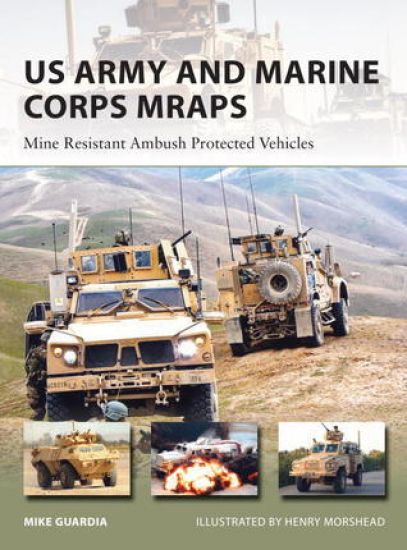
The Mine Resistant Ambush Protected (MRAP) vehicle is the newest land warfare system in the United States Army and Marine Corps inventory. Designed to meet the challenges of operating in a counterinsurgency environment, the MRAP has taken survivability to a new level. MRAPs are currently manufactured by three companies: BAE Systems, Navistar International Military Group, and Force Protection Inc. Each company manufactures an MRAP according to one of three classifications set by the US Department of Defense: Category I, Category II, or Category III. The Category I MRAPs are designed for urban combat. Category II covers the MRAPs designed for convoy security, medical evacuation, and explosive ordnance disposal. The Category III MRAP performs the same function as Category II but is designed to carry more personnel. Since their introduction in 2007, MRAPs have performed remarkably in the asymmetric warfare environment. Their unique design and survivability characteristics have saved the lives hundreds of soldiers who otherwise would have been lost to landmines or IED attacks. As with any combat system, however, the MRAP is not without its drawbacks.
Crusader: General Donn Starry and the Army of His Times
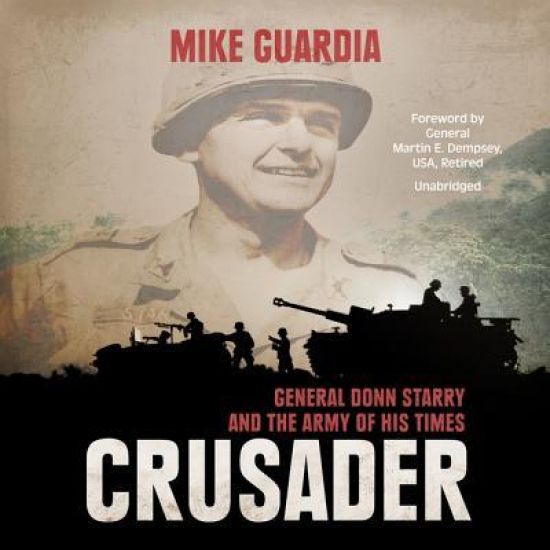
Although he missed combat in World War II and Korea, Donn Starry became one of the most influential commanders of the Vietnam War, and after Vietnam was one of the intellectual giants who reshaped the US Army and its doctrines. Throughout his career he worked to improve training, leadership, and conditions for the men who served under him.Starry was a leading advocate for tank warfare in Vietnam, and his recommendations helped shape the contours for American armor in Southeast Asia--and paved the way for his success as commander of Eleventh Armored Cavalry during the invasion of Cambodia.When commander of Fort Knox and the Armor Center and School in the 1970s, Starry redeveloped armor tactics and doctrine and improved training. In his sixteen months as commander of V Corps, he thoroughly tested the doctrine of Active Defense, then used his observations to create a new doctrine, AirLand Battle, which paved the way for overwhelming victory in the Gulf War. Like most battlefield commanders from the Vietnam era, Starry's legacy is often overshadowed by the controversy of the war itself and the turmoil of the immediate postwar Army. However, with the invasion of Cambodia and the development of AirLand Battle, it is hard to imagine anyone who has had a greater impact on modern maneuver warfare.In this new biography of General Donn Starry, armor officer Mike Guardia examines the life and work of this pioneering, crusading officer using extracts from interviews with veterans and family, and from Starry's personal papers.
Crusader: General Donn Starry and the Army of His Times
Although he missed combat in World War II and Korea, Donn Starry became one of the most influential commanders of the Vietnam War, and after Vietnam was one of the intellectual giants who reshaped the US Army and its doctrines. Throughout his career he worked to improve training, leadership, and conditions for the men who served under him.Starry was a leading advocate for tank warfare in Vietnam, and his recommendations helped shape the contours for American armor in Southeast Asia--and paved the way for his success as commander of Eleventh Armored Cavalry during the invasion of Cambodia.When commander of Fort Knox and the Armor Center and School in the 1970s, Starry redeveloped armor tactics and doctrine and improved training. In his sixteen months as commander of V Corps, he thoroughly tested the doctrine of Active Defense, then used his observations to create a new doctrine, AirLand Battle, which paved the way for overwhelming victory in the Gulf War. Like most battlefield commanders from the Vietnam era, Starry's legacy is often overshadowed by the controversy of the war itself and the turmoil of the immediate postwar Army. However, with the invasion of Cambodia and the development of AirLand Battle, it is hard to imagine anyone who has had a greater impact on modern maneuver warfare.In this new biography of General Donn Starry, armor officer Mike Guardia examines the life and work of this pioneering, crusading officer using extracts from interviews with veterans and family, and from Starry's personal papers.