Kirjojen hintavertailu. Mukana 12 016 292 kirjaa ja 12 kauppaa.

Kirjahaku

Etsi kirjoja tekijän nimen, kirjan nimen tai ISBN:n perusteella.

7 kirjaa tekijältä Mike Wayne

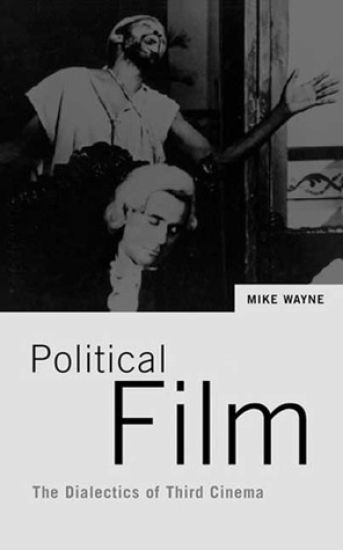
Political Film

Political Film

Mike Wayne

Pluto Press
2001
pokkari
Third Cinema is a cinema committed to social and cultural emancipation. In this book, Mike Wayne argues that Third Cinema is absolutely central to key debates concerning contemporary film practices and cultures. As a body of films, Third Cinema expands our horizons of the medium and its possibilities. Wayne develops Third Cinema theory by exploring its dialectical relations with First Cinema (dominant,commercial) and Second Cinema (arthouse, auteur). Discussing an eclectic range of films, from Evita to Dollar Mambo, The Big Lebowski to The Journey, Amistad to Camp de Thiaroye, Political Film explores the affinities and crucial political differences between First and Third Cinema. Third Cinema’s relationship with Second Cinema is explored via the cinematic figure of the bandit (Bandit Queen, The General, Eskiya). The continuities and differences with European precursors such as Eisenstein, Vertov, Lukacs, Brecht and Walter Benjamin are also assessed. The book is a polemical call for a film criticism that is politically engaged with the life of the masses.
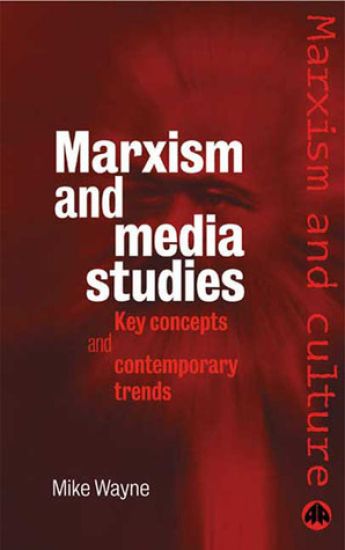
Marxism and Media Studies

Marxism and Media Studies

Mike Wayne

Pluto Press
2003
pokkari
This is an accessible guide to key Marxist concepts and how to apply them to contemporary cultural analysis. Drawing on Marx, Lukacs, Gramsci, Habermas, Jameson and others, the book retools and redeems key concepts such as class, the mode of production, culture industries, the state, base-superstructure, ideology, hegemony, knowledge and social interests, and commodity fetishism. It also includes analysis of film, television, the internet and print media. Using case studies including Disney, Big Brother to the spirits and spectres in such films as The Others, The Devil's Backbone and Dark City, it illuminates the fetishisms of culture and society under capital. Exploring the relevance of each concept to understanding the media, Wayne explains why Marxism is an important critical methodology for the media student to engage with. He foregrounds the theoretical and political shifts that have led to its marginalisation in recent years, and highlights how and why these trends are changing as once more, people return to Marx and Marxism to understand the world around them.
England's Discontents

England's Discontents

Mike Wayne

Pluto Press
2018
sidottu
England's Discontents unpacks the genealogy of British identities over the last two hundred years as they have been shaped by the main political cultures and their interactions with cultural politics. Conservatism, social liberalism, economic liberalism, social democracy and socialism in partnership and conflict, have forged different models of national belonging and identity. Wayne draws on Gramsci's work to reassess debates about Britishness and renew Gramsci's relevance to understanding our contemporary discontents. In doing so, he reveals that England's enduring attachment to economic liberalism is in danger of eroding all other political cultures, even conservatism, liberalism and the British state.
England's Discontents

England's Discontents

Mike Wayne

Pluto Press
2018
pokkari
England's Discontents unpacks the genealogy of British identities over the last two hundred years as they have been shaped by the main political cultures and their interactions with cultural politics. Conservatism, social liberalism, economic liberalism, social democracy and socialism in partnership and conflict, have forged different models of national belonging and identity. Wayne draws on Gramsci's work to reassess debates about Britishness and renew Gramsci's relevance to understanding our contemporary discontents. In doing so, he reveals that England's enduring attachment to economic liberalism is in danger of eroding all other political cultures, even conservatism, liberalism and the British state.
Marxism Goes to the Movies

Marxism Goes to the Movies

Mike Wayne

Routledge
2019
sidottu
Introducing the key concepts and thinkers within the Marxist tradition, Marxism Goes to the Movies demonstrates their relevance to film theory and practice past and present.Author Mike Wayne argues that Marxist filmmaking has engaged with and transformed this popular medium, developing its potential for stimulating revolutionary consciousness. As the crisis of capitalism deepens, this history and these resources are vital for a better future. Marxism is one of the few approaches that can bring together political, economic, formal and cultural analysis into a unified approach of studying film, and how films in turn can help us understand and even critically interrogate these forces. The book examines how filmmakers, who have been influenced by Marxism, have made some of the most significant contributions to film culture globally, and provides historical perspective on the development of Marxism and film. Each chapter covers a broad theme that is broken down into sections that are cross-referenced throughout, providing helpful navigation of the material. Clear and concise in its arguments, this is an ideal introduction for students of Marxism and film, inviting readers to deepen their knowledge and understanding of the subject.
Marxism Goes to the Movies

Marxism Goes to the Movies

Mike Wayne

Routledge
2019
nidottu
Introducing the key concepts and thinkers within the Marxist tradition, Marxism Goes to the Movies demonstrates their relevance to film theory and practice past and present.Author Mike Wayne argues that Marxist filmmaking has engaged with and transformed this popular medium, developing its potential for stimulating revolutionary consciousness. As the crisis of capitalism deepens, this history and these resources are vital for a better future. Marxism is one of the few approaches that can bring together political, economic, formal and cultural analysis into a unified approach of studying film, and how films in turn can help us understand and even critically interrogate these forces. The book examines how filmmakers, who have been influenced by Marxism, have made some of the most significant contributions to film culture globally, and provides historical perspective on the development of Marxism and film. Each chapter covers a broad theme that is broken down into sections that are cross-referenced throughout, providing helpful navigation of the material. Clear and concise in its arguments, this is an ideal introduction for students of Marxism and film, inviting readers to deepen their knowledge and understanding of the subject.
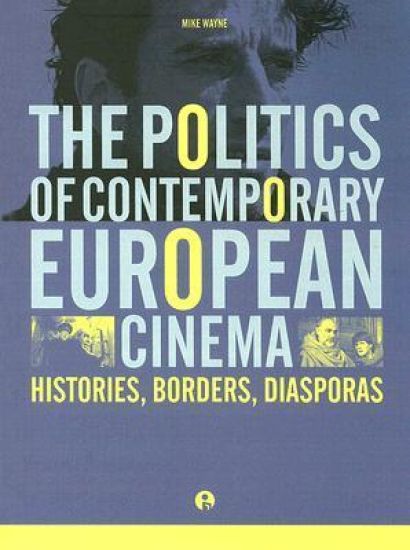
Politics of Contemporary European Cinema
How does contemporary European Cinema reflect the drive for political and economic integration and recent trends in globalisation, if at all? This book is a valuable excursion into the politics of European cinema and extensively addresses questions like this. Mike Wayne identifies some key themes pertinent to a study of the contemporary cultural and political dynamics of European cinema from the mid1980's, including the fall of the Berlin wall and the end of the Soviet Empire.