Kirjojen hintavertailu. Mukana 12 437 711 kirjaa ja 12 kauppaa.

Kirjahaku

Etsi kirjoja tekijän nimen, kirjan nimen tai ISBN:n perusteella.

5 kirjaa tekijältä Mikhail Suslov, Mark Bassin

Geopolitical Imagination

Geopolitical Imagination

Mikhail Suslov; Mark Bassin

ibidem-Verlag, Jessica Haunschild u Christian Schon
2020
nidottu
In his timely book, Mikhail Suslov discusses contemporary Russian geopolitical culture and argues that a better knowledge of geopolitical concepts and fantasies is instrumental for understanding Russias policies. Specifically, he analyzes such concepts as Eurasianism, Holy Russia, Russian civilization, Russia as a continent, Novorossia, and others. He demonstrates that these concepts reached unprecedented ascendance in the Russian public debates, tending to overshadow other political and domestic discussions. Suslov argues that the geopolitical imagination, structured by these concepts, defines the identity of post-Soviet Russia, while this complex of geopolitical representations engages, at the same time, with the broader, international criticism of the Western liberal world order and aligns itself with the conservative defense of cultural authenticity across the globe. Geopolitical ideologies and utopias discussed in the book give the post-Soviet political mainstream the intellectual instruments to think about Russias exclusion -- imaginary or otherwise -- from the processes of a global world which is re-shaping itself after the end of the Cold War; they provide tools to construct the self-perception of Russia as a sovereign great-power, a self-sufficient civilisation, and as one of the poles in a multipolar world; and they help to establish the Messianic vision of Russia as the beacon of order, tradition, and morality in a sea of chaos and corruption.
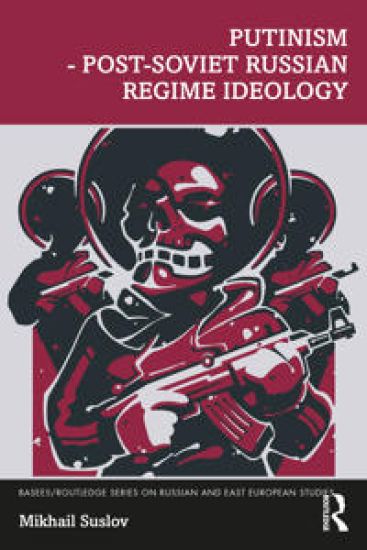
Putinism – Post-Soviet Russian Regime Ideology

Putinism – Post-Soviet Russian Regime Ideology

Mikhail Suslov

TAYLOR FRANCIS LTD
2024
sidottu
A key question for the contemporary world: What is Putin’s ideology? This book analyses this ideology, which it terms “Putinism”. It examines a range of factors that feed into the ideology – conservative thought in Russia from the nineteenth century onwards, Russian and Soviet history and their memorialisation, Russian Orthodox religion and its political connections, a focus on traditional values, and Russia’s sense of itself as a unique civilisation, different from the West and due a special, respected place in the world. The book highlights that although the resulting ideology lacks coherence and universalism comparable to that of Soviet-era Marxism-Leninism, it is nevertheless effective in aligning the population to the regime and is flexible and applicable in different circumstances. And that therefore it is not attached to Putin as a person, is likely to outlive him, and is potentially appealing elsewhere in the world outside Russia, especially to countries that feel belittled by the West and let down by the West’s failure to resolve problems of global injustice and inequality.
Putinism – Post-Soviet Russian Regime Ideology

Putinism – Post-Soviet Russian Regime Ideology

Mikhail Suslov

TAYLOR FRANCIS LTD
2024
nidottu
A key question for the contemporary world: What is Putin’s ideology? This book analyses this ideology, which it terms “Putinism”. It examines a range of factors that feed into the ideology – conservative thought in Russia from the nineteenth century onwards, Russian and Soviet history and their memorialisation, Russian Orthodox religion and its political connections, a focus on traditional values, and Russia’s sense of itself as a unique civilisation, different from the West and due a special, respected place in the world. The book highlights that although the resulting ideology lacks coherence and universalism comparable to that of Soviet-era Marxism-Leninism, it is nevertheless effective in aligning the population to the regime and is flexible and applicable in different circumstances. And that therefore it is not attached to Putin as a person, is likely to outlive him, and is potentially appealing elsewhere in the world outside Russia, especially to countries that feel belittled by the West and let down by the West’s failure to resolve problems of global injustice and inequality.
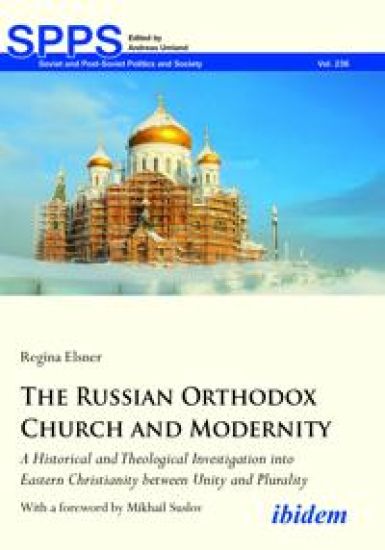
The Russian Orthodox Church and Modernity

The Russian Orthodox Church and Modernity

Regina Elsner; Mikhail Suslov

Ibidem Press
2021
nidottu
The Russian Orthodox Church (ROC) faced various iterations of modernization throughout its history. This conflicted encounter continues in the ROC's current resistance against-what it perceives as-Western modernity including liberal and secular values. This study examines the historical development of the ROC's arguments against-and sometimes preferences for-modernization and analyses which positions ended up influencing the official doctrine. The book's systematic analysis of dogmatic treatises shows the ROC's considerable ability of constructive engagement with various aspects of the modern world. Balancing between theological traditions of unity and plurality, the ROC's today context of operating within an authoritarian state appears to tip the scale in favour of unity.