Kirjojen hintavertailu. Mukana 12 390 323 kirjaa ja 12 kauppaa.

Kirjahaku

Etsi kirjoja tekijän nimen, kirjan nimen tai ISBN:n perusteella.

11 kirjaa tekijältä Miklos Veto

The Religious Metaphysics of Simone Weil

The Religious Metaphysics of Simone Weil

Miklos Veto

State University of New York Press
1994
pokkari
Simone Weil is one of the major religious writers of the twentieth century. Hers is a unique blend of spiritual experience, social concern, and philosophical theory. She had marvelous command of the Western philosophical tradition, yet she also had profound insights into Oriental philosophies.Since its publication in France, Veto's book has been considered by most scholars as the standard work on Simone Weil. Now this important book is available in English. It is the only available reconstruction of the entire philosophy of Simone Weil. It operates out of the perspective of the spiritual concerns of her maturity, yet it never fails to return to the issues and the positions of the early texts. It carries out the reconstruction according to some major philosophical themes, but gives its due share to the French thinkers' social and political preoccupations as well. The book is erudite, yet simple, written in a clear, concise and yet often eloquent language.
The Thought of Jonathan Edwards

The Thought of Jonathan Edwards

Miklos Veto; Harry S Stout; Wilson H Kimnach

Wipf Stock Publishers
2021
pokkari
Jonathan Edwards is the greatest theologian of colonial America as well as its first important philosopher. As a theologian, he represents without any concession Calvinistic Orthodoxy, re-thought and re-lived through the experience of the Great Awakening. The large majority of his writings are of a theological character, yet this theology is articulated and expressed through a systematic philosophical reflection. Edwardsian thought covers three major areas: First, being, grace, and glory; then, the doctrine of the will extending to the study of the original sin and evil; finally, an entirely original theory of knowledge synthesizing spirituality, aesthetics, and epistemology. The present book, the first edition of which appeared in French almost thirty years ago, is a uniquely comprehensive study of the work of Jonathan Edwards. It discusses all the aspects of his thought over against the background of classical Protestant theology and of seventeenth- and eighteenth-century Western philosophy. Our time witnesses a significant renewal of interest in Jonathan Edwards. Professor Veto's book should prove to be a major contribution to assist and to guide the readers of "America's Theologian."
The Thought of Jonathan Edwards

The Thought of Jonathan Edwards

Miklos Veto; Harry S Stout

Wipf Stock Publishers
2021
sidottu
Jonathan Edwards is the greatest theologian of colonial America as well as its first important philosopher. As a theologian, he represents without any concession Calvinistic Orthodoxy, re-thought and re-lived through the experience of the Great Awakening. The large majority of his writings are of a theological character, yet this theology is articulated and expressed through a systematic philosophical reflection. Edwardsian thought covers three major areas: First, being, grace, and glory; then, the doctrine of the will extending to the study of the original sin and evil; finally, an entirely original theory of knowledge synthesizing spirituality, aesthetics, and epistemology. The present book, the first edition of which appeared in French almost thirty years ago, is a uniquely comprehensive study of the work of Jonathan Edwards. It discusses all the aspects of his thought over against the background of classical Protestant theology and of seventeenth- and eighteenth-century Western philosophy. Our time witnesses a significant renewal of interest in Jonathan Edwards. Professor Veto's book should prove to be a major contribution to assist and to guide the readers of "America's Theologian."
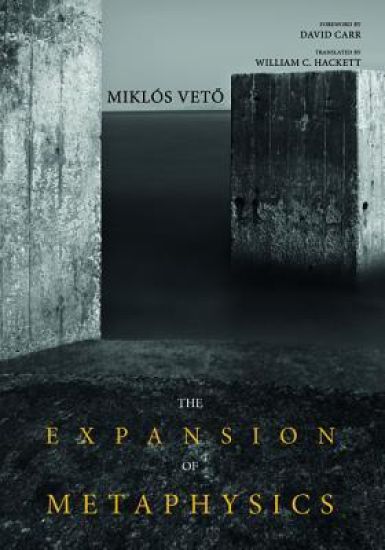
The Expansion of Metaphysics

The Expansion of Metaphysics

Miklos Veto; David T Carr

Cascade Books
2018
pokkari
The culmination of a lifetime's preoccupation with crucial human concerns too often curiously marginalized by the history of philosophy, The Expansion of Metaphysics sheds new light on freedom and the will by making the phenomenon of novelty philosophically intelligible. The a priori synthesis of Kant is joined to Judeo-Christian themes (the kenosis of Christ in the incarnation and the tzimtzum of God in the creation) in order to develop a doctrine of ""superabundance"" (freedom and love) and ""singularity"" (with the Work of Art and the Child as paradigms). Space and time are reanalyzed as structural forms of human existence as Vető guides the reader into the depths and heights of reality, climaxing in a metaphysics of good and evil. ""From one of the foremost scholars of German Idealism in our day there comes a book that gives us his personal vision of metaphysics. Miklos Vető's The Expansion of Metaphysics presents a Christian metaphysics, one broadened from classical and romantic models to take proper account of the image, the new, and the singular, and finished with a capacious and engaging understanding of essence. Among other things, this is a book of wisdom. No one who reads it can remain unchanged by its teachings."" --Kevin Hart, The University of Virginia ""Miklos Vető has been well known for decades as an illuminating interpreter of Berulle, Jonathan Edwards, Schelling and Simone Weil--to name a few. It is high time to discover that he could read them because he is a philosopher in his own right. . . . As a book, everyone will find it thoroughly enjoyable. And one must thank Chris Hackett for a fine translation of Vető's always elegant text."" --Jean-Yves Lacoste, Clare Hall, Australian Catholic University, Cambridge ""In its trans-epochal reach, Miklos Vető's Expansion of Metaphysics . . . enables students of philosophy to ask the big questions once again: about self, will, evil, the good, love, creation, and God. The agent of this expansion is a renewal of Kant's transcendental phenomenology and of its premodern sources: recovering the agency of will beyond being, of self and other, which is the agency of the good, agency of the loving creator whose gifts perpetually renewed, are being and existence."" --Peter Ochs, Professor, Department of Religious Studies, University of Virginia Miklos Vető is a Hungarian-born French philosopher who taught successively at Marquette, Yale, Abidjan, Rennes, and Poitiers universities. Widely known as a historian of German Idealism, his works have been translated into many languages. He is the author of The Religious Metaphysics of Simone Weil. William C. Hackett is Adjunct Professor of Philosophy and the Honors Program at Belmont University. He is the translator of several works from French to English, including Jean Wahl's Human Existence and Transcendence.
The Expansion of Metaphysics

The Expansion of Metaphysics

Miklos Veto; David T Carr

Cascade Books
2018
sidottu
The culmination of a lifetime's preoccupation with crucial human concerns too often curiously marginalized by the history of philosophy, The Expansion of Metaphysics sheds new light on freedom and the will by making the phenomenon of novelty philosophically intelligible. The a priori synthesis of Kant is joined to Judeo-Christian themes (the kenosis of Christ in the incarnation and the tzimtzum of God in the creation) in order to develop a doctrine of ""superabundance"" (freedom and love) and ""singularity"" (with the Work of Art and the Child as paradigms). Space and time are reanalyzed as structural forms of human existence as Vető guides the reader into the depths and heights of reality, climaxing in a metaphysics of good and evil. ""From one of the foremost scholars of German Idealism in our day there comes a book that gives us his personal vision of metaphysics. Miklos Vető's The Expansion of Metaphysics presents a Christian metaphysics, one broadened from classical and romantic models to take proper account of the image, the new, and the singular, and finished with a capacious and engaging understanding of essence. Among other things, this is a book of wisdom. No one who reads it can remain unchanged by its teachings."" --Kevin Hart, The University of Virginia ""Miklos Vető has been well known for decades as an illuminating interpreter of Berulle, Jonathan Edwards, Schelling and Simone Weil--to name a few. It is high time to discover that he could read them because he is a philosopher in his own right. . . . As a book, everyone will find it thoroughly enjoyable. And one must thank Chris Hackett for a fine translation of Vető's always elegant text."" --Jean-Yves Lacoste, Clare Hall, Australian Catholic University, Cambridge ""In its trans-epochal reach, Miklos Vető's Expansion of Metaphysics . . . enables students of philosophy to ask the big questions once again: about self, will, evil, the good, love, creation, and God. The agent of this expansion is a renewal of Kant's transcendental phenomenology and of its premodern sources: recovering the agency of will beyond being, of self and other, which is the agency of the good, agency of the loving creator whose gifts perpetually renewed, are being and existence."" --Peter Ochs, Professor, Department of Religious Studies, University of Virginia Miklos Vető is a Hungarian-born French philosopher who taught successively at Marquette, Yale, Abidjan, Rennes, and Poitiers universities. Widely known as a historian of German Idealism, his works have been translated into many languages. He is the author of The Religious Metaphysics of Simone Weil. William C. Hackett is Adjunct Professor of Philosophy and the Honors Program at Belmont University. He is the translator of several works from French to English, including Jean Wahl's Human Existence and Transcendence.

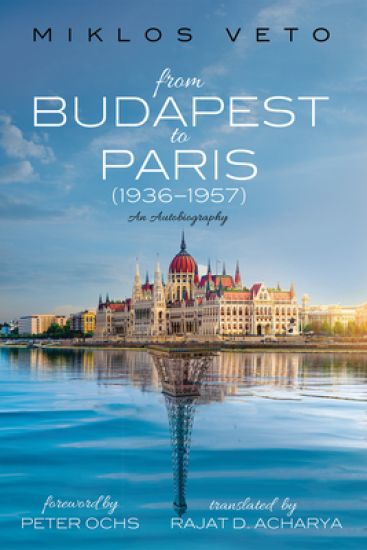
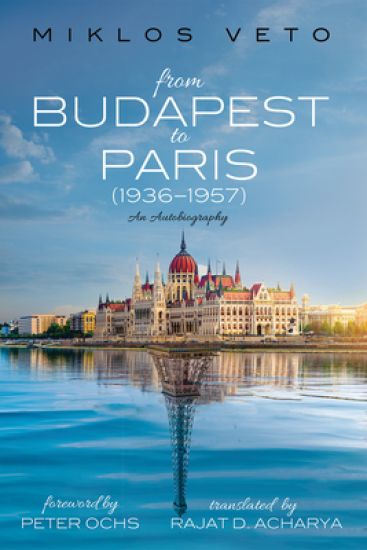
From Budapest to Paris (1936-1957)

From Budapest to Paris (1936-1957)

Miklos Veto; Peter Ochs

Resource Publications (CA)
2020
pokkari
This book is a searching reflection by one of the important philosophers of our time upon his own life and identity, interwoven with history, religion and culture. Born in 1936 in Budapest, Miklos Veto was a firsthand witness and protagonist of the great events of the twentieth century: as a child he lost his parents during the Holocaust, and then took part in the anti-Soviet Revolution of 1956, after which he escaped through Yugoslavian refugee camps and arrived in France. At the age of seventeen, he encountered Catholic faith through an intense spiritual experience. After studying at the Sorbonne in Paris and in Oxford, Veto undertook an academic career which spanned three continents, teaching at Yale and other universities in the United States, becoming director of the Department of Philosophy of the University of Abidjan (Ivory Coast), and settling back in France, with his wife and three children. He never lost contact with his native Hungary, where his contribution was recognized after the fall of the Berlin Wall, and in 2008 he was named exterior member of the Hungarian Academy of Sciences. This autobiography presents especially the founding period of Veto's life, with a ""postface"" on the last sixty years.
From Budapest to Paris (1936-1957)

From Budapest to Paris (1936-1957)

Miklos Veto; Peter Ochs

Resource Publications (CA)
2020
sidottu
This book is a searching reflection by one of the important philosophers of our time upon his own life and identity, interwoven with history, religion and culture. Born in 1936 in Budapest, Miklos Veto was a firsthand witness and protagonist of the great events of the twentieth century: as a child he lost his parents during the Holocaust, and then took part in the anti-Soviet Revolution of 1956, after which he escaped through Yugoslavian refugee camps and arrived in France. At the age of seventeen, he encountered Catholic faith through an intense spiritual experience. After studying at the Sorbonne in Paris and in Oxford, Veto undertook an academic career which spanned three continents, teaching at Yale and other universities in the United States, becoming director of the Department of Philosophy of the University of Abidjan (Ivory Coast), and settling back in France, with his wife and three children. He never lost contact with his native Hungary, where his contribution was recognized after the fall of the Berlin Wall, and in 2008 he was named exterior member of the Hungarian Academy of Sciences. This autobiography presents especially the founding period of Veto's life, with a ""postface"" on the last sixty years.