Kirjojen hintavertailu. Mukana 11 699 587 kirjaa ja 12 kauppaa.

Kirjahaku

Etsi kirjoja tekijän nimen, kirjan nimen tai ISBN:n perusteella.

115 kirjaa tekijältä Milan Kundera

Ignorance

Ignorance

Milan Kundera

HARPER PERENNIAL
2003
nidottu
A man and women enjoy a strange synchronicity when they meet upone returning to their homeland after two decades of exile and try to resume a relationship long in stasis. Reader's Guide available. Reprint. 60,000 first printing.
The Art of the Novel

The Art of the Novel

Milan Kundera

HARPER PERENNIAL
2003
nidottu
"Incites us to reflect on fiction and philosophy, knowledge and truth, and brilliantly illustrates the art of the essay." -- The New Republic"Every novelist's work contains an implicit vision of the history of the novel, an idea of what the novel is. I have tried to express the idea of the novel that is inherent in my own novels." -- Milan KunderaKundera brilliantly examines the evolution, construction, and essence of the novel as an art form through the lens of his own work and through the work of such important and diverse figures as Rabelais, Cervantes, Sterne, Diderot, Flaubert, Tolstoy, Musil, Kafka, and perhaps the least known of all the great novelists of our time, Hermann Broch.Kundera's discussion of his own work includes his views on the role of historical events in fiction, the meaning of action, and the creation of character in the post-psychological novel.
The Unbearable Lightness of Being

The Unbearable Lightness of Being

Milan Kundera

HARPERCOLLINS PUBLISHERS INC
2004
sidottu
A special 20th anniversary hardcover edition of this classic work of world literatureWhen The Unbearable Lightness of Being was first published in English, it was hailed as "a work of the boldest mastery, originality, and richness" by critic Elizabeth Hardwick and named one of the best books of 1984 by the New York Times Book Review. It went on to win the Los Angeles Times Book Prize for Fiction and quickly became an international bestseller. Twenty years later, the novel has established itself as a modern classic. A young woman in love with a man torn between his love for her and his incorrigible womanizing; one of his mistresses and her humbly faithful lover--these are the two couples whose story is told in this masterful novel.Controlled by day, Tereza's jealousy awakens by night, transformed into ineffably sad death-dreams, while Tomas, a successful surgeon, alternates loving devotion to the dependent Tereza with the ardent pursuit of other women. Sabina, an independent, free-spirited artist, lives her life as a series of betrayals -- of parents, husband, country, love itself -- whereas her lover, the intellectual Franz, loses all because of his earnest goodness and fidelity.In a world in which lives are shaped by irrevocable choices and by fortuitous events, a world in which everything occurs but once, existence seems to lose its substance, its weight. Hence we feel, says the novelist, "the unbearable lightness of being" -- not only as the consequence of our private acts but also in the public sphere, and the two inevitably intertwine.This magnificent novel encompasses the extremes of comedy and tragedy, and embraces, it seems, all aspects of human existence. It juxtaposes geographically distant places (Prague, Geneva, Paris, Thailand, the United States, a forlorn Bohemian village); brilliant and playful reflections (on "eternal return," on kitsch, on man and animals--Tomas and Tereza have a beloved doe named Karenin); and a variety of styles (from the farcical to the elegiac) to take its place as perhaps the major achievement of one of the world's truly great writers.
The Curtain: An Essay in Seven Parts

The Curtain: An Essay in Seven Parts

Milan Kundera

HARPER PERENNIAL
2007
nidottu
Traces the author's personal view of the history and significance of the novel in western civilization, arguing that a novel's development crosses international and language boundaries while serving to reveal previously unknown aspects of a reader's existence. By the author of The Art of the Novel. Reprint.
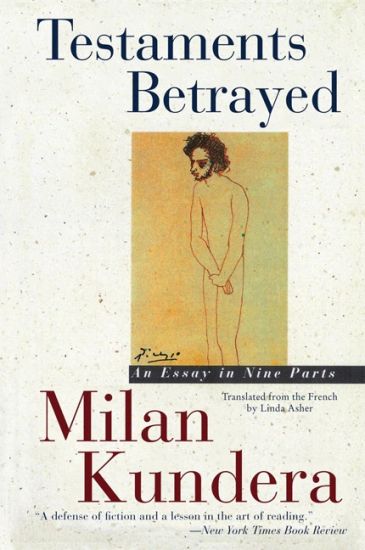
Testaments Betrayed: Essay in Nine Parts, an

Testaments Betrayed: Essay in Nine Parts, an

Milan Kundera

HARPER PERENNIAL
1996
nidottu
"A defense of fiction and a lesson in the art of reading." --New York Times Book Review"Testaments Betrayed is to be savored paragraph by paragraph. . . . It must be purchased, read, pondered, and argued within the margins. And frequently reread." -- Washington PostA brilliant and thought-provoking essay from one of the twentieth century's masters of fiction, Testaments Betrayed is written like a novel: the same characters appear and reappear throughout the nine parts of the book, as do the principal themes that preoccupy the author. Kundera is a passionate defender of the moral rights of the artist and the respect due a work of art and its creator's wishes. The betrayal of both--often by their most passionate proponents--is one of the key ideas that informs this strikingly original and elegant book.
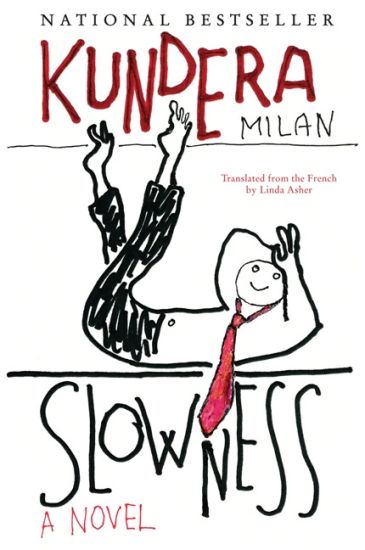
Slowness

Slowness

Milan Kundera

HARPER PERENNIAL
1997
nidottu
"Irresistible. . . . Slowness is an ode to sensuous leisure, to the enjoyment of pleasure rather than just the search for it." -- MirabellaMilan Kundera's lightest novel, a divertimento, an opera buffa, Slowness is also the first of this author's fictional works to have been written in French.Disconcerted and enchanted, the reader follows the narrator of Slowness through a midsummer's night in which two tales of seduction, separated by more than two hundred years, interweave and oscillate between the sublime and the comic. Underlying this libertine fantasy is a profound meditation on contemporary life: about the secret bond between slowness and memory, about the connection between our era's desire to forget and the way we have given ourselves over to the demon of speed. And about "dancers" possessed by the passion to be seen, for whom life is merely a perpetual show emptied of every intimacy and every joy.
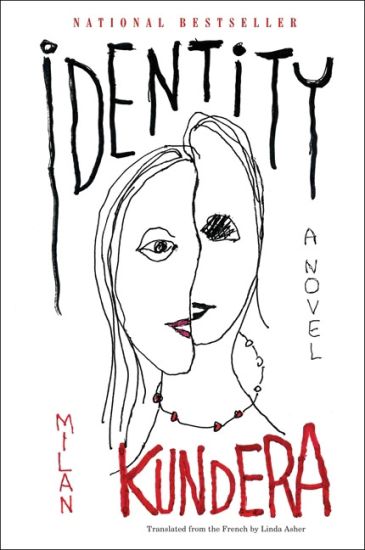
Identity

Identity

Milan Kundera

HARPER PERENNIAL
1999
nidottu
"Kundera, master of the twosome, finds erotic and existential threads everywhere in daily behavior. Like his previous books, Identity is a cluster of jeweled observations. . . . But Identity has a special charm: suspense. . . . It] gets us turning the pages in excitement and alarm, and Kundera's wit keeps us turning them to the very end." -- San Francisco ChronicleIn a narrative as intense as it is brief, a moment of confusion sets in motion a complex chain of events which forces the reader to cross and recross the divide between fantasy and reality.Sometimes--perhaps only for an instant--we fail to recognize a companion; for a moment their identity ceases to exist, and thus we come to doubt our own. The effect is at its most acute in a couple, where our existence is given meaning by our perception of a lover, and theirs of us.With his astonishing skill at building on and out from the significant moment, Milan Kundera has placed such a situation and the resulting wave of panic at the core of this novel. Hailed as a "a fervent and compelling romance, a moving fable about the anxieties of love and separateness" (Baltimore Sun), it is not to be missed.
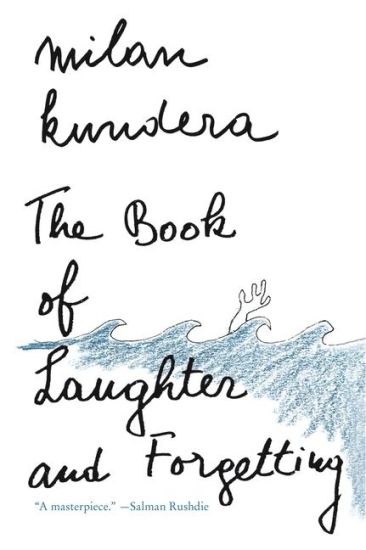
The Book of Laughter and Forgetting

The Book of Laughter and Forgetting

Milan Kundera

HARPER PERENNIAL
1999
nidottu
"An absolutely dazzling entertainment. . . . Arousing on every level--political, erotic, intellectual, and above all, humorous." --Newsweek"The Book of Laughter and Forgetting calls itself a novel, although it is part fairy tale, part literary criticism, part political tract, part musicology, and part autobiography. It can call itself whatever it wants to, because the whole is genius." --New York TimesRich in its stories, characters, and imaginative range, The Book of Laughter and Forgetting is the novel that brought Milan Kundera his first big international success in the late 1970s. Like all his work, it is valuable for far more than its historical implications. In seven wonderfully integrated parts, different aspects of human existence are magnified and reduced, reordered and emphasized, newly examined, analyzed, and experienced.
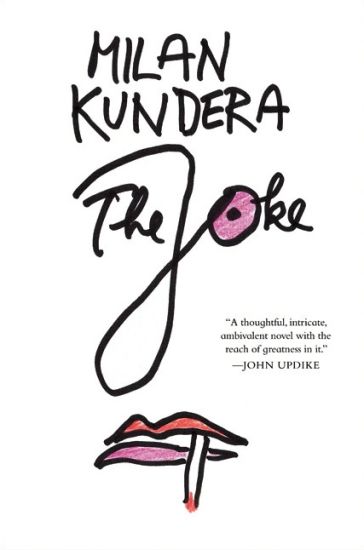
The Joke

The Joke

Milan Kundera

HARPER PERENNIAL
1994
nidottu
"A thoughtful, intricate, ambivalent novel with the reach of greatness in it." --John Updike"It is impossible to do justice here to the subtleties, comedy, and wisdom of this very beautiful novel. Milan Kundera is an artist, clearly one of the best to be found anywhere, who says that the good (and evil) that issues from men's souls matters much more than the deeds of a State. And he says it with passion, with good humor, and with love." --Salman RushdieAll too often, this brilliant novel of thwarted love and revenge miscarried has been read for its political implications. Now, more than a quarter century after The Joke was first published and several years after the collapse of the Soviet-imposed Czechoslovak regime, it becomes easier to put such implications into perspective in favor of valuing the book (and all Milan Kundera 's work) as what it truly is: great, stirring literature that sheds new light on the eternal themes of human existence.This edition provides English-language readers an important further means toward revaluation of The Joke. For reasons he describes in his Author's Note, Milan Kundera devoted much time to creating a completely revised translation that reflects his original as closely as any translation possibly can: reflects it in its fidelity not only to the words and syntax but also to the characteristic dictions and tonalities of the novel's narrators. The result is nothing less than the restoration of a classic.
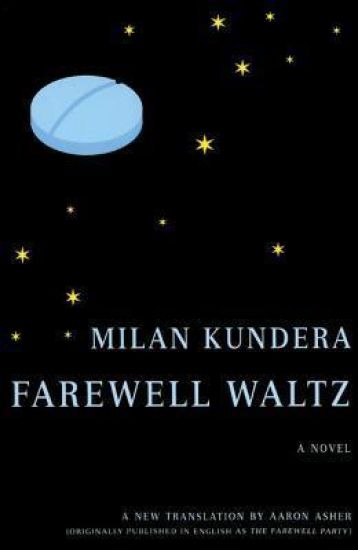
Farewell Waltz

Farewell Waltz

Milan Kundera

HARPER PERENNIAL
1998
nidottu
"After Farewell Waltz there cannot be any doubt. Kundera is a master of contemporary literature. This novel is both an an example of virtuosity and a descent into the human soul." --L'UniteSet in an old-fashioned Central European spa town, Farewell Waltz poses the most serious questions with a blasphemous lightness that makes us see that the modern world has deprived us even of the right to tragedy.In this dark farce of a novel, eight characters are swept up in an accelerating dance: a pretty nurse and her repairman boyfriend; an oddball gynecologist; a rich American (at once saint and Don Juan); a popular trumpeter and his beautiful, obsessively jealous wife; and an disillusioned former political prisoner about to leave his country and his young woman ward. It is perhaps the most brilliantly plotted and sheer entertaining of Milan Kundera's novels.Written in Bohemia in 1969-70, the book was first published (in 1976) in France under the title La valse aux adieux (Farewell Waltz), and later in thirty-four other countries. This beautiful translation, made from the French text prepared by the novelist himself, fully reflects Kundera's own tone and intentions, and offers an opportunity for both the discovery and the rediscovery of one of the very best of a great writer's works.
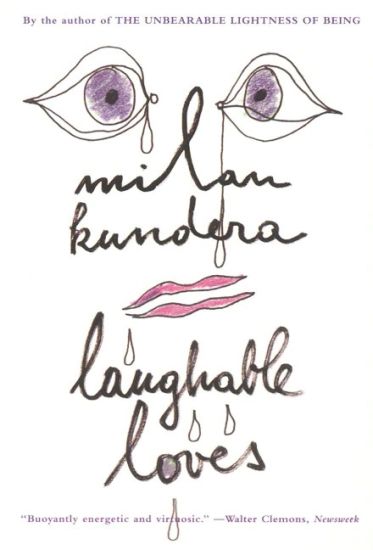
Laughable Loves

Laughable Loves

Milan Kundera

HARPER PERENNIAL
1999
nidottu
"An intellectual heavyweight and a pure literary virtuoso, Milan Kundera takes some of Freud's most cherished complexes and irreverently whirls them about in acts of legerdemain that capture our darkest, deepest human passions. . . . The tales in Laughable Loves surprise and illuminate. . . . Kundera's world is complex, full of mockeries and paradoxes. Life is often brutal and humiliating; it is often blasphemous, funny, irritating." -- Cleveland Plain DealerMilan Kundera is a master of graceful illusion and illuminating surprise. In one of these stories a young man and his girlfriend pretend that she is a stranger he picked up on the road--only to become strangers to each other in reality as their game proceeds. In another a teacher fakes piety in order to seduce a devout girl, then jilts her and yearns for God. In yet another girls wait in bars, on beaches, and on station platforms for the same lover, a middle-aged Don Juan who has gone home to his wife. Games, fantasies, and schemes abound in all the stories while different characters react in varying ways to the sudden release of erotic impulses.
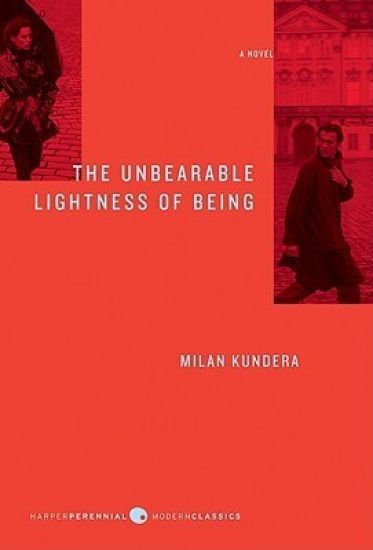
The Unbearable Lightness of Being

The Unbearable Lightness of Being

Milan Kundera

HARPER PERENNIAL
2009
nidottu
International Bestseller - Winner of the Los Angeles Times Book Prize for Fiction"Far more than a conventional novel. It is a meditation on life, on the erotic, on the nature of men and women and love . . . full of telling details, truths large and small, to which just about every reader will respond." -- PeopleIn The Unbearable Lightness of Being, acclaimed author Milan Kundera tells the story of two couples, a young woman in love with a man torn between his love for her and his incorrigible womanizing, and one of his mistresses and her humbly faithful lover. In a world in which lives are shaped by irrevocable choices and by fortuitous events, a world in which everything occurs but once, existence seems to lose its substance, its weight. Hence, we feel "the unbearable lightness of being" not only as the consequence of our pristine actions but also in the public sphere, and the two inevitably intertwine.This magnificent novel, now available in a beautifully designed Harper Perennial Deluxe Edition with French flaps and deckle edged paper, is a story of passion and politics, infidelity and ideas, and encompasses the extremes of comedy and tragedy, illuminating all aspects of human existence.
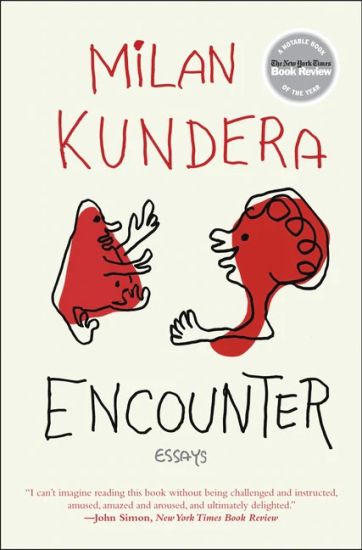
Encounter

Encounter

Milan Kundera

HARPER PERENNIAL
2011
nidottu
"I can't imagine reading this book without being challenged and instructed, amused, amazed and aroused, and ultimately delighted." --John Simon, New York Times Book ReviewMilan Kundera's brilliant collection of essays is a passionate defense of art in an era that, he argues, no longer values art or beauty. With the same dazzling mix of emotion and ideas that characterizes his bestselling novels, the internationally acclaimed author revisits the artists whose works help us better understand what it means to be human. Elegant, startlingly original, and provocative, Encounter combines many of the author's signature themes with personal reflections and stories.
Jacques and His Master

Jacques and His Master

Milan Kundera

HARPER PERENNIAL
2013
nidottu
A deliciously witty and entertaining "variation" on Diderot's novel Jacques le Fatalist, written for Milan Kundera's "private pleasure" in the aftermath of the Russian invasion of Czechoslovakia.When the "heavy Russian irrationality" fell on Czechoslovakia, Milan Kundera explains, he felt drawn to the spirit of the eighteenth century--"And it seemed to me that nowhere was it to be found more densely concentrated than in that banquet of intelligence, humor, and fantasy, Jacques le Fataliste."The upshot was this "Homage to Diderot," which has now been performed throughout the United States and Europe. Here, Jacques and His Master, newly translated by Simon Callow, is a text that will delight Kundera's admirers throughout the English-speaking world.
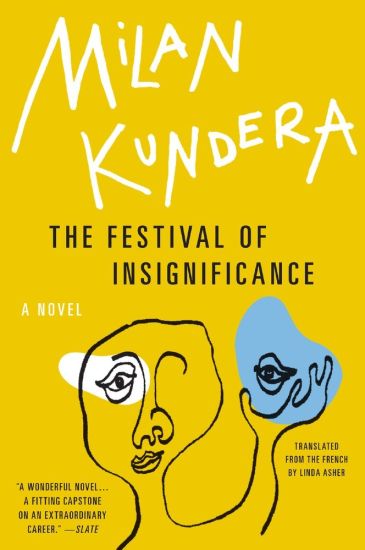
The Festival of Insignificance

The Festival of Insignificance

Milan Kundera

HARPER PERENNIAL
2023
nidottu
"Slender but weighty. . . . What is moving about this novel is its embrace of what has always driven Kundera, the delicate state of living between being and nothingness."-- Boston GlobeFrom the internationally acclaimed, bestselling author of The Unbearable Lightness of Being, an entertaining and enchanting novel--"a fitting capstone on an extraordinary career." (Slate)Casting light on the most serious of problems and at the same time saying not one serious sentence; being fascinated by the reality of the contemporary world and at the same time completely avoiding realism--that's The Festival of Insignificance. Readers who know Milan Kundera's earlier books know that the wish to incorporate an element of the "unserious" in a novel is not at all unexpected of him. In Immortality, Goethe and Hemingway stroll through several chapters together talking and laughing. And in Slowness, Vera, the author's wife, says to her husband: "you've often told me you meant to write a book one day that would have not a single serious word in it...I warn you: watch out. Your enemies are lying in wait."Kundera is finally and fully realizing his old aesthetic dream in this novel that we could easily view as a summation of his whole work. A strange sort of summation. Strange sort of epilogue. Strange sort of laughter, inspired by our time, which is comical because it has lost all sense of humor. What more can we say? Nothing. Just read.
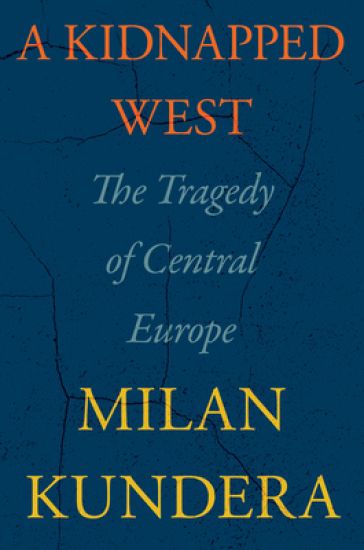
A Kidnapped West: The Tragedy of Central Europe
"We should welcome the context Kundera gives for the struggles between Russia and Europe, and the plight of those caught between them. His defense of small languages, small cultures, and small nations feels pressing."--Claire Messud, Harper's Magazine"Kundera focuses on the relationship of Europe's central 'small nations' like Czechoslovakia and Ukraine to Western culture and argues that their cultural identities were increasingly threatened."--New York Book Review A short collection of brilliant early essays that offers a fascinating context for Milan Kundera's subsequent career and holds a mirror to much recent European history. It is also remarkably prescient with regard to Russia's current aggression in Ukraine and its threat to the rest of Europe.Milan Kundera's early nonfiction work feels especially resonant in our own time. In these pieces, Kundera pleads the case of the "small nations" of Europe who, by culture, are Western with deep roots in Europe, despite Russia imposing its own Communist political regimes in Hungary, Czechoslovakia, Poland, Ukraine, and elsewhere. Kundera warns that the real tragedy here is not Russia but Europe, whose own identity and culture are directly challenged and threatened in a way that could lead to their destruction. He is sounding the alarm, which chimes loud and clear in our own twenty-first century.The 1983 essay translated by Edmund White ("The Tragedy of Central Europe"), and the 1967 lecture delivered to the Czech Writers' Union in the middle of the Prague Spring by the young Milan Kundera ("Literature and the Small Nations"), translated for the first time by Linda Asher, are both written in a voice that is at once personal, vehement, and anguished. Here, Kundera appears already as one of our great European writers and truly our contemporary. Each piece is prefaced by a short presentation by French historian Pierre Nora and Czech-born French political scientist Jacques Rupnik.
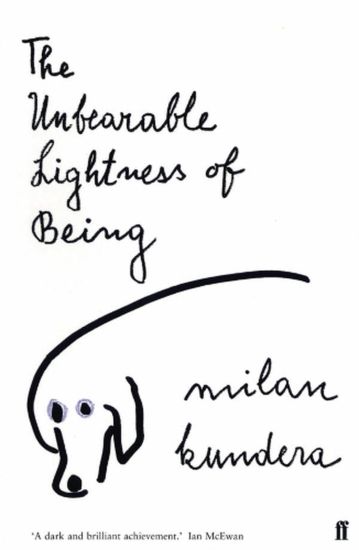
The Unbearable Lightness of Being

The Unbearable Lightness of Being

Milan Kundera

Faber Faber
2000
nidottu
40th anniversary edition of the bestselling modern classic: Milan Kundera's iconic novel of love and politics in communist Czechoslovakia.'Shamelessly clever ... Exhilaratingly subversive and funny.' Independent'A modern classic ... As relevant now as when it was first published. ' John BanvilleA young woman is in love with a successful surgeon: a man torn between his love for her and his womanising. His mistress, a free-spirited artist, lives her life as a series of betrayals, while her other lover stands to lose everything because of his noble qualities. In a world where lives are shaped by choices and events, and everything occurs but once, existence seems to lose its substance and weight - and we feel 'the unbearable lightness of being'.Kundera's classic provoked a whole generation, encompassing passion and philosophy, body and soul, the Prague Spring and modern America, political acts and private desires, comedy and tragedy - in fact, all of human existence.What readers are saying:'Some books change your mind, some change your heart, the very best change your whole world ... A mighty piece of work, that will shape your life forever.''One of the best books I've ever read ... A book about love and life, full of surprises. Beautiful.''This book is going to change your life ... It definitely leaves you with a hangover after you're done reading.''Kundera writes about love as if in a trance so the beauty of it is enchanting and dreamy ... Will stay with you.'
Jacques and his Master

Jacques and his Master

Milan Kundera

Faber Faber
2002
nidottu
Jacques and His Master is a deliciously witty and entertaining 'variation' on Diderot's novel Jacques le fataliste, written for Milan Kundera's 'private pleasure' in the aftermath of the Russian invasion of Czechoslovakia. When the 'heavy Russian irrationality' fell on Czechoslovakia he felt drawn to the spirit of the eighteenth century - 'And it seemed to me that nowhere was it to be found more densely concentrated than in that banquet of intelligence, humour and fantasy, Jacques le Fataliste'. This translation by Simon Callow has delighted Kundera's admirers throughout the English-speaking world.
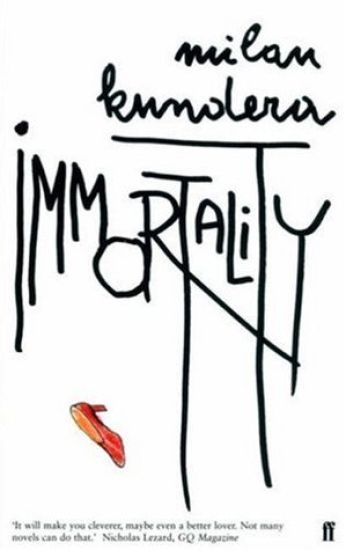
Immortality

Immortality

Milan Kundera

Faber Faber
2000
nidottu
The New York Times bestseller by the author of modern classic The Unbearable Lightness of Being.'Like all great writers, Kundera leaves indelible marks on his readers' imaginations.' Salman Rushdie From a playful gesture between an old woman in a swimming pool and a youthful lifeguard springs the heroine of a novel: Agnès. In the course of her daily life - Saturday chores, saunas, lunch in the hectic Paris streets - memories arise of her dead father, an unexpected widower. Their conversations flood back, and Agnès realises that her secret inheritance was his way of granting her freedom. As she mentally revisits her childhood, from formative loves to her intense relationship with her sister, her past casts light on her present: her marriage, daughter, and eventual death.Exploring identity and existence, eroticism and modernity - with cameos from Goethe, Dali, Hemingway, and beyond - Immortality illuminates the nature of selfhood with inimitable wit, grace and intellectual nimbleness. 'A serial feast, a banquet for the brain.' Observer'A joy to read. Wise, rueful, whimsically philosophical, Kundera teases the reader with provocations and paradoxes.' Evening Standard