Kirjojen hintavertailu. Mukana 11 627 469 kirjaa ja 12 kauppaa.

Kirjahaku

Etsi kirjoja tekijän nimen, kirjan nimen tai ISBN:n perusteella.

5 kirjaa tekijältä Miles J. Unger

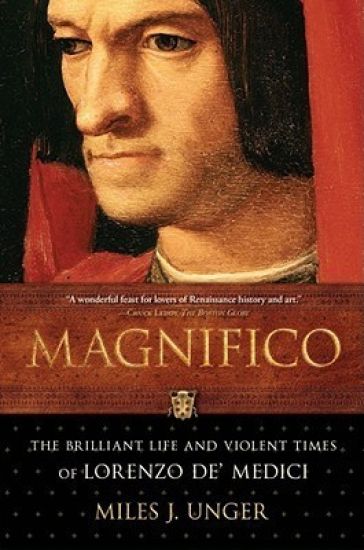
Magnifico: The Brilliant Life and Violent Times of Lorenzo De' Medici
Magnifico is a vividly colorful portrait of Lorenzo de' Medici, the uncrowned ruler of Florence during its golden age. A true "Renaissance man," Lorenzo dazzled contemporaries with his prodigious talents and magnetic personality. Known to history as Il Magnifico (the Magnificent), Lorenzo was not only the foremost patron of his day but also a renowned poet, equally adept at composing philosophical verses and obscene rhymes to be sung at Carnival. He befriended the greatest artists and writers of the time -- Leonardo, Botticelli, Poliziano, and, especially, Michelangelo, whom he discovered as a young boy and invited to live at his palace -- turning Florence into the cultural capital of Europe. He was the leading statesman of the age, the fulcrum of Italy, but also a cunning and ruthless political operative. Miles Unger's biography of this complex figure draws on primary research in Italian sources and on his intimate knowledge of Florence, where he lived for several years. Lorenzo's grandfather Cosimo had converted the vast wealth of the family bank into political power, but from his earliest days Lorenzo's position was precarious. Bitter rivalries among the leading Florentine families and competition among the squabbling Italian states meant that Lorenzo's life was under constant threat. Those who plotted his death included a pope, a king, and a duke, but Lorenzo used his legendary charm and diplomatic skill -- as well as occasional acts of violence -- to navigate the murderous labyrinth of Italian politics. Against all odds he managed not only to survive but to preside over one of the great moments in the history of civilization. Florence in the age of Lorenzo was a city of contrasts, of unparalleled artistic brilliance and unimaginable squalor in the city's crowded tenements; of both pagan excess and the fire-and-brimstone sermons of the Dominican preacher Savonarola. Florence gave birpth to both the otherworldly perfection of Botticelli's Primavera and the gritty realism of Machiavelli's The Prince. Nowhere was this world of contrasts more perfectly embodied than in the life and character of the man who ruled this most fascinating city.
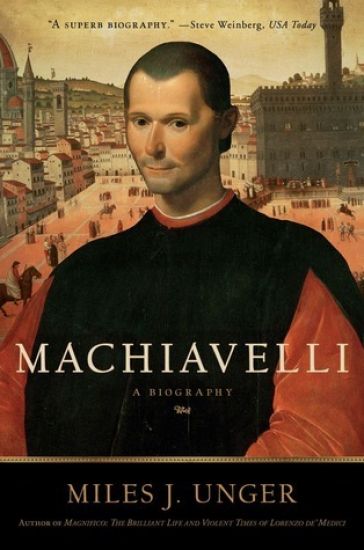
Machiavelli

Machiavelli

Miles J. Unger

Simon Schuster
2012
pokkari
Few philosophers are more often referred to and more often misunderstood than Machiavelli. He was truly a product of the Renaissance, and he was as much a revolutionary in the field of political philosophy as Leonardo or Michelangelo were in painting and sculpture. He watched his native Florence lose its independence to the French, thanks to poor leadership from the Medici successors to the great Lorenzo (Il Magnifico). Machiavelli was a keen observer of people, and he spent years studying events and people before writing his famous books. Descended from minor nobility, Machiavelli grew up in a household that was run by a vacillating and incompetent father. He was well educated and smart, and he entered government service as a clerk. He eventually became an important figure in the Florentine state but was defeated by the deposed Medici and Pope Julius II. He was tortured but eventually freed by the restored Medici. No longer employed, he retired to his home to write the books for which he is remembered. Machiavelli had seen the best and the worst of human nature, and he understood how the world operated. He drew his observations from life, and he was appropriately cynical in his writing, given what he had personally experienced. He was an outstanding writer, and his work remains fascinating nearly 500 years later.
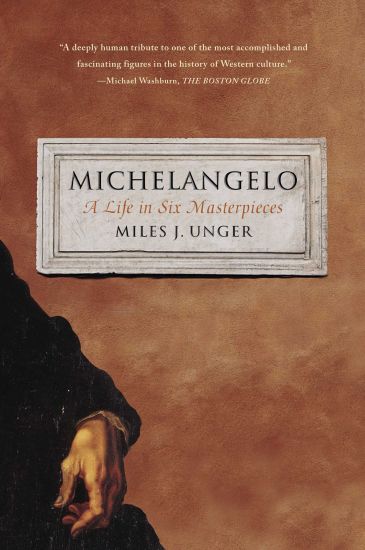
Michelangelo

Michelangelo

Miles J. Unger

Simon Schuster
2016
pokkari
Among the immortals-Leonardo, Rembrandt, Picasso-Michelangelo stands alone as a master of painting, sculpture, and architecture. He was not only the greatest artist in an age of giants, but a man who reinvented the practice of art itself. Throughout his long career he clashed with patrons by insisting that he had no master but his own demanding muse and promoting the novel idea that it was the artist, rather than the lord who paid for it, who was creative force behind the work. Miles Unger narrates the astonishing life of this driven and difficult man through six of his greatest masterpieces. Each work expanded the expressive range of the medium, from the Pietà Michelangelo carved as a brash young man, to the apocalyptic Last Judgment, the work of an old man tested by personal trials. Throughout the course of his career he explored the full range of human possibility. In the gargantuan David he depicts Man in the glory of his youth, while in the tombs he carved for the Medici he offers a sustained meditation on death and the afterlife. In the Sistine Chapel ceiling he tells the epic story of Creation, from the perfection of God's initial procreative act to the corruption introduced by His imperfect children. In the final decades of his life, his hands too unsteady to wield the brush and chisel, he exercised his mind by raising the soaring vaults and dome of St. Peter's in a final tribute to his God. A work of deep artistic understanding, Miles Unger's Michelangelobrings to life the irascible, egotistical, and undeniably brilliant man whose artistry continues to amaze and inspire us after 500 years.
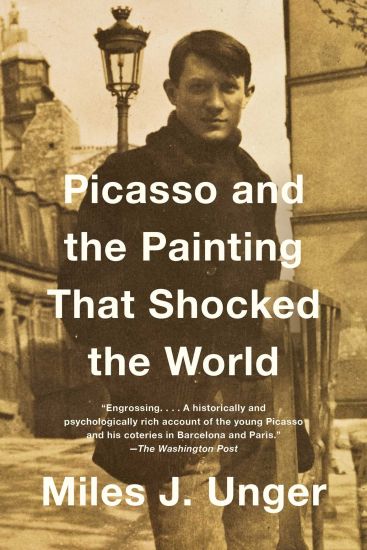
Picasso and the Painting That Shocked the World
One of The Christian Science Monitor's Best Nonfiction Books of the Year "An engrossing read...a historically and psychologically rich account of the young Picasso and his coteries in Barcelona and Paris" (The Washington Post) and how he achieved his breakthrough and revolutionized modern art through his masterpiece, Les Demoiselles d'Avignon. In 1900, eighteen-year-old Pablo Picasso journeyed from Barcelona to Paris, the glittering capital of the art world. For the next several years he endured poverty and neglect before emerging as the leader of a bohemian band of painters, sculptors, and poets. Here he met his first true love and enjoyed his first taste of fame. Decades later Picasso would look back on these years as the happiest of his long life. Recognition came first from the avant-garde, then from daring collectors like Leo and Gertrude Stein. In 1907, Picasso began the vast, disturbing masterpiece known as Les Demoiselles d'Avignon. Inspired by the painting of Paul C zanne and the inventions of African and tribal sculpture, Picasso created a work that captured the disorienting experience of modernity itself. The painting proved so shocking that even his friends assumed he'd gone mad, but over the months and years it exerted an ever greater fascination on the most advanced painters and sculptors, ultimately laying the foundation for the most innovative century in the history of art. In Picasso and the Painting That Shocked the World, Miles J. Unger "combines the personal story of Picasso's early years in Paris--his friendships, his romances, his great ambition, his fears--with the larger story of modernism and the avant-garde" (The Christian Science Monitor). This is the story of an artistic genius with a singular creative gift. It is "riveting...This engrossing book chronicles with precision and enthusiasm a painting with lasting impact in today's art world" (Publishers Weekly, starred review), all of it played out against the backdrop of the world's most captivating city.
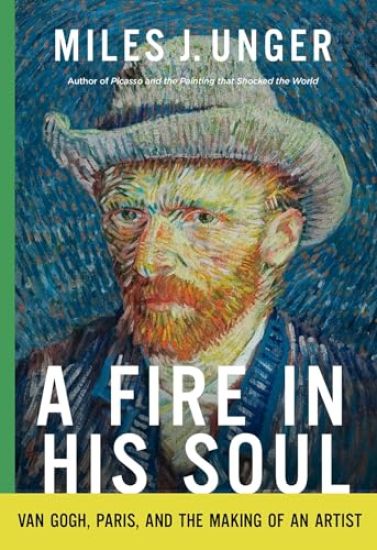
A Fire in His Soul

A Fire in His Soul

Miles J. Unger

Pegasus Books
2025
sidottu
The fascinating story of Vincent van Gogh’s two groundbreaking years in Paris, where he transformed himself from a provincial unknown into one of the world’s great visionary artists.Vincent Van Gogh arrived in the French capital on the last day of February 1886, a month short of his thirty-third birthday. He was a man beaten down by life, half-starved, and nearly broken psychologically. He was saved by his brother Theo, who provided him with room, board, and, most crucially, emotional support while he attempted to master the difficult craft of painting. Thus far, Vincent's crude scenes of peasant life rendered in murky shades of brown and gray were both hackneyed and amateurish. Theo, a successful art dealer at a prestigious Parisian firm, dismissed them as gloomy, unappealing, and, worst of all, unmarketable. By the time Vincent left Paris, almost exactly two years later, he’d transformed himself into one of the most original artists of the age, turning out works of hallucinatory intensity in vivid hues and stamped with his own distinctive personality. A Fire in His Soul chronicles this remarkable transformation. It’s a tale filled with tragedy and triumph, personal anguish and creative fulfillment, as Vincent, through sheer force of will, reinvents himself as a painter of unparalleled expressive power. Along the way, the reader will discover an unfamiliar Van Gogh: not the solitary genius of the popular imagination, shunned by an uncomprehending world and conjuring masterpieces from the depths of his lonely soul. In Paris, he was at the center of a community of like-minded seekers. Here, Van Gogh was able to engage in a lively dialogue with fellow artists almost as daring as he was, expanding his notion of what art could and should be. It was in the cafes and studios of Montmartre and in the grand galleries of the Louvre and Luxembourg, that Van Gogh received his artistic education—a crash course that at first disoriented him but ultimately sparked his creative breakthrough. Working alongside such legendary figures as Gauguin, Toulouse-Lautrec, Seurat, and Signac, Vincent perfected his technique and launched an artistic revolution.