Kirjojen hintavertailu. Mukana 11 342 296 kirjaa ja 12 kauppaa.

Kirjahaku

Etsi kirjoja tekijän nimen, kirjan nimen tai ISBN:n perusteella.

7 kirjaa tekijältä Miles Russell

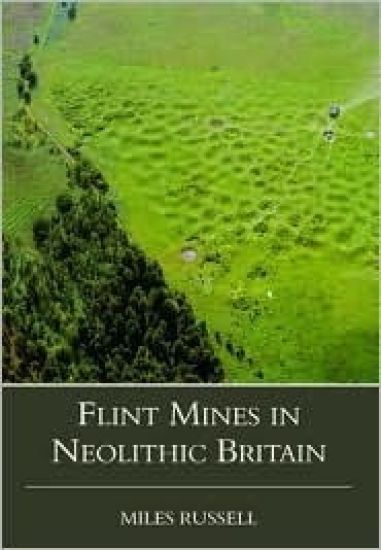
Neolithic Flint Mines in Britain

Neolithic Flint Mines in Britain

Miles Russell

NPI Media Group
2000
sidottu
Although much has been written about Neolithic enclosures and long mounds, there has been little discussion about the third form of early monument - the flint mine. Drawing on nineteenth-century antiquarian investigations, unpublished excavation archives and recent fieldwork and excavation, Miles Russell has produced the first full account of the subject.
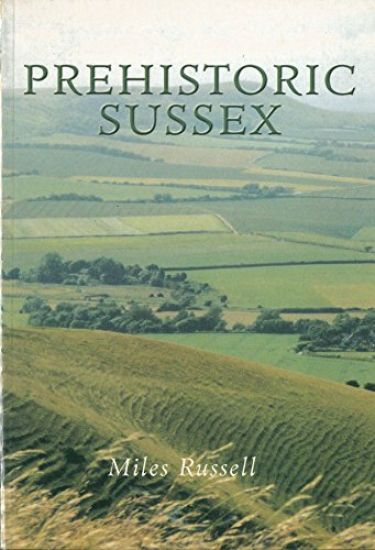
Prehistoric Sussex

Prehistoric Sussex

Miles Russell

NPI Media Group
2002
nidottu
Sussex possesses some of the most important and imposing archaeological remains in the country. This is the first book since the 1950s to collate and present the evidence for pre-Roman society in Sussex.
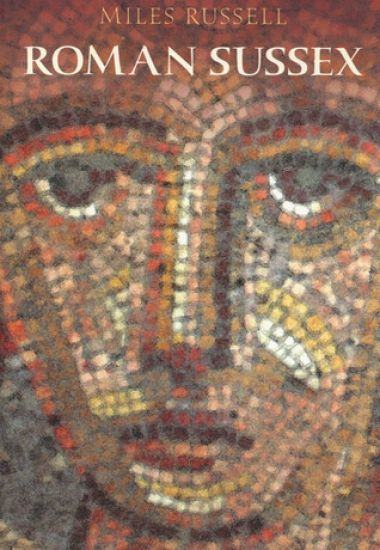
Roman Sussex

Roman Sussex

Miles Russell

The History Press Ltd
2006
nidottu
Starting with the first named resident of the county, Tiberius Claudius Togidubnus, Great King of Britain (with his palace at Fishbourne) and friend of the Roman emperor Claudius, this book reassesses the story of the Roman invasion of Britain and looks in detail at the earliest examples of Roman culture in Britain.
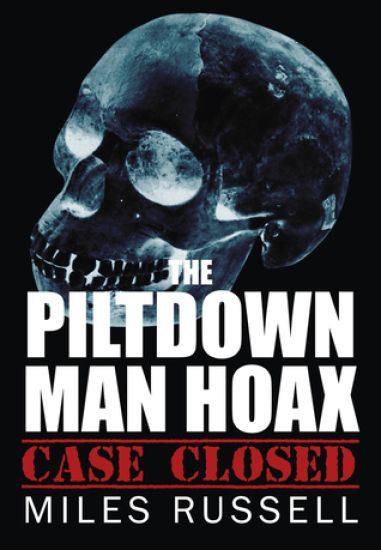
The Piltdown Man Hoax

The Piltdown Man Hoax

Miles Russell

The History Press Ltd
2012
nidottu
Piltdown. Even today the name sends a shiver down the collective spine of the scientific community, for this was the most dramatic and daring fraud ever perpetrated upon the world of science and academia. Between 1908 and 1912, a series of amazing discoveries relating to what appeared to be the earliest human were made close to the little village of Piltdown in Sussex. These remains belonged to the developmental ‘missing link’ between man and ape. The basic principles of evolution, first propounded by Charles Darwin some fifty years before, now appeared as indisputable fact. The Manchester Guardian ran the first headline: ‘THE EARLIEST MAN?: REMARKABLE DISCOVERY IN SUSSEX. A SKULL MILLIONS OF YEARS OLD’ it screamed, adding that the discovery was ‘one of the most important of our time’. The news spread quickly around the world, with many voicing their eagerness to examine the find. Few archaeological discoveries have the capacity to be front-page news twice over, but ‘Piltdown Man’ is a rare exception. Forty-one years after he first became famous, the ‘Earliest Englishman’ was again hot news. It was late November 1953, and the world was about to discover that Piltdown Man had been a hoax. Not just any hoax mind, the London Star declared it to be ‘THE BIGGEST SCIENTIFIC HOAX OF THE CENTURY’.
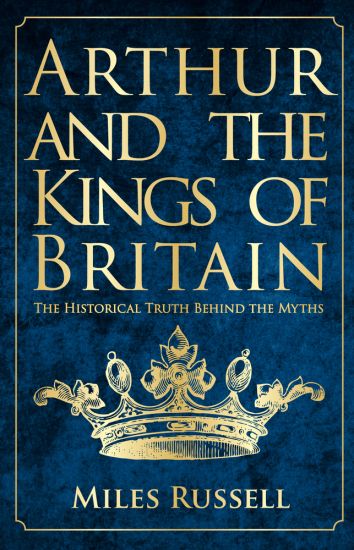
Arthur and the Kings of Britain

Arthur and the Kings of Britain

Miles Russell

Amberley Publishing
2018
pokkari
Written in 1136 by Geoffrey of Monmouth, the Historia Regum Britanniae (History of the Kings of Britain) purported to chronicle the British monarchy from the arrival of the Trojan Brutus, grandson of Aeneas, through to the seventh century AD. The Historia was a medieval best-seller, and copies spread across the whole of western Europe. It was the first work to outline the story of King Arthur. The Historia has long been dismissed as an unreliable piece of medieval propaganda. A new examination of the text, however, shows that it is very much more than that. Miles Russell explains how individual elements can be traced back to the first century BC, a time when Britain was making first contact with Rome. Geoffrey of Monmouth’s skill was to weave these early traditions together with material culled from post-Roman sources in order to create a national epic. In doing so, he also created King Arthur, a composite character whose real origins and context are explained here. This important work establishes Geoffrey of Monmouth as no mere peddler of historical fiction, but as the man who preserved the earliest foundation myths of Britain. It is time to re-evaluate the Historia Regum Britanniaeand shine a new light into the so-called ‘Dark Ages’.
The Early Neolithic Architecture of the South Downs
A study of the early forms of Neolithic monumental architecture based on the author's thesis, with evidence taken from the results of excavations and surveys, published and unpublished material and antiquarian accounts. The evidence is divided into various monument types: horizontal and vertical land cuts, linear mounds, shafts and pits and various ditch and bank enclosures. Russell explains his research agenda, methodology, presents the evidence and questions the functional attributes and classification systems for many of the monuments.