Kirjojen hintavertailu. Mukana 11 699 587 kirjaa ja 12 kauppaa.

Kirjahaku

Etsi kirjoja tekijän nimen, kirjan nimen tai ISBN:n perusteella.

5 kirjaa tekijältä Millicent Bell

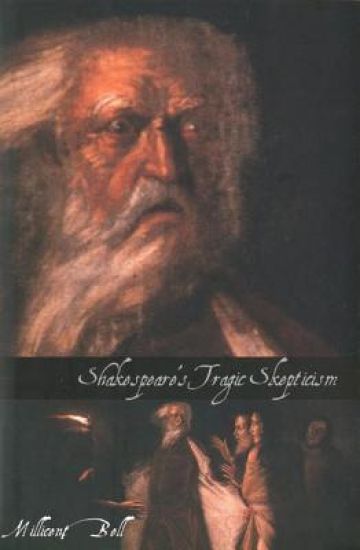
Shakespeare’s Tragic Skepticism

Shakespeare’s Tragic Skepticism

Millicent Bell

Yale University Press
2003
sidottu
Readers of Shakespeare’s greatest tragedies have long noted the absence of readily explainable motivations for some of Shakespeare’s greatest characters: why does Hamlet delay his revenge for so long? Why does King Lear choose to renounce his power? Why is Othello so vulnerable to Iago’s malice? But while many critics have chosen to overlook these omissions or explain them away, Millicent Bell demonstrates that they are essential elements of Shakespeare’s philosophy of doubt. Examining the major tragedies, Millicent Bell reveals the persistent strain of philosophical skepticism. Like his contemporary, Montaigne, Shakespeare repeatedly calls attention to the essential unknowability of our world.In a period of social, political, and religious upheaval, uncertainty hovered over matters great and small—the succession of the crown, the death of loved ones from plague, the failure of a harvest. Tumultuous social conditions raised ultimate questions for Shakespeare, Bell argues, and ultimately provoked in him a skepticism which casts shadows of existential doubt over his greatest masterpieces.
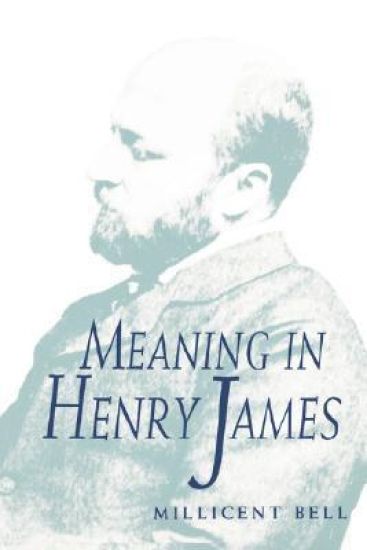
Meaning in Henry James

Meaning in Henry James

Millicent Bell

Harvard University Press
1993
nidottu
Henry James rebelled intuitively against the tyranny and banality of plots. Believing a life to have many potential paths and a self to hold many destinies, he hung the evocative shadow of "what might have been" over much of what he wrote. Yet James also realized that no life can be lived--and no story written--except by submission to some outcome. The limiting conventions of society and literature are, he found, almost inescapable. In a major, comprehensive new study of James's work, Millicent Bell explores this oscillation between hope and fatalism, indeterminacy and form, and uncertainty and meaning. In the process Bell provides fresh insight into how we read and interpret fiction.Bell demonstrates how James's texts steadfastly, almost perversely at times, preserve a sense of alternative possibilities. James involves his characters in overlapping scenarios drawn from folklore, drama, literature, or naturalist formula. The reader engages, with the hero or heroine, in imagining many plots other than the one that finally--and often ambiguously--emerges. The story arouses expectations, proposes courses, then cancels them successively. In complicity with author and character, the reader crafts the story in an adventure of constant revision and anticipation. Literary meaning becomes an experience as well as a goal. In the end, revelations and resolutions, even if unclear or partial, assume an altered significance in light of the earlier imaginings.Not surprisingly, James's deepest sympathies lay with those characters who resisted entrapment by cultural expectations--his idealistic free spirits like Isabel, his marriage renouncers like Fleda Vetch, his largely silent and detached witnesses to life like Strether and the generous Maisie. They are frequently the victims of callous manipulators who box them into oppressive roles or who literally "plot against" them. By looking closely at James's critiques of the "clever" categorical mind and at his loving and complex portraits of characters of unfulfilled potentiality, Bell celebrates the paradoxes of James's story-denying fiction.In extended analyses of "Daisy Miller," Washington Square, The Portrait of a Lady; The Bostonians, The Princess Casamassima, "The Aspern Papers," The Spoils of Poynton, "The Turn of the Screw," What Maisie Knew, "The Beast in the Jungle," "The Jolly Corner," The Wings of the Dove, and The Ambassadors, Bell relates James's work to influential movements of the day, notably impressionism and naturalism. She examines the influence of Hawthorne, Emerson, Flaubert, Balzac, and Zola on James at various periods throughout his career. Drawing on rich traditions of criticism and on stimulating recent theories, Bell forges a critical approach both accessible and profound for this elegant reading of one of the greatest writers of this or any time.
Hawthorne and the Real

Hawthorne and the Real

Millicent Bell

Ohio State University Press
2021
pokkari
In this edited collection commemorating the bicentennial of Hawthorne's birth in 1804, Millicent Bell gathers essays by distinguished scholars and critics that examine the ways in which Hawthorne related himself to the "real" in his own world and expressed that relation in his writing. Radically revising the older view that he was detached from conditions of actual life in 19th-century American society, the authors undertake to show how current social conditions, current events, and political movements taking place at a crucial point in American history were an evident part of Hawthorne's consciousness. The essays situate his imaginative writings in a contemporary context of common experience and rediscover a Hawthorne alert to pressing problems of his day, especially slavery, feminism, and reform in general-the very issues that motivated his contemporaries on the eve of the Civil War. Hawthorne was, with his own complicity, long described as a writer of unreal romances (as he preferred to call his novels) or "allegories of the heart" as he termed some of his short stories. But the literary mode of his fiction has long needed to be redefined. The essays in this collection contribute to the turn in recent Hawthorne criticism which shows how deeply implicated in realism his writing was. This volume should long continue to provide new starting points for changing views of a great writer. Contributors: Millicent Bell Nina Baym Michael T. Gilmore Leland S. Person David Leverenz Larry J. Reynolds Lawrence Buell Rita K. Gollin John Carlos Row Brenda Wineapple
Hawthorne's View of the Artist

Hawthorne's View of the Artist

Millicent Bell

Hassell Street Press
2021
nidottu
This work has been selected by scholars as being culturally important and is part of the knowledge base of civilization as we know it.This work is in the public domain in the United States of America, and possibly other nations. Within the United States, you may freely copy and distribute this work, as no entity (individual or corporate) has a copyright on the body of the work.Scholars believe, and we concur, that this work is important enough to be preserved, reproduced, and made generally available to the public. To ensure a quality reading experience, this work has been proofread and republished using a format that seamlessly blends the original graphical elements with text in an easy-to-read typeface.We appreciate your support of the preservation process, and thank you for being an important part of keeping this knowledge alive and relevant.