
Kirjahaku
Etsi kirjoja tekijän nimen, kirjan nimen tai ISBN:n perusteella.
8 kirjaa tekijältä Milton Hindus
The causal problem has become topical once again. While we are no longer causalists or believers in the universal truth of the causal principle we continue to think of causes and effects, as well as of causal and noncausal relations among them. Instead of becoming indeterminists we have enlarged determinism to include noncausal categories. And we are still in the process of characterizing our basic concepts and principles concerning causes and effects with the help of exact tools. This is because we want to explain, not just describe, the ways of things. The causal principle is not the only means of understanding the world but it is one of them.The demand for a fourth edition of this distinguished book on the subject of causality is clear evidence that this principle continues to be an important and popular area of philosophic enquiry. Non-technical and clearly written, this book focuses on the ontological problem of causality, with specific emphasis on the place of the causal principle in modern science. Mario Bunge first defines the terminology employed and describes various formulations of the causal principle. He then examines the two primary critiques of causality, the empiricist and the romantic, as a prelude to the detailed explanation of the actual assertions of causal determinism.Bunge analyzes the function of the causal principle in science, touching on such subjects as scientific law, scientific explanation, and scientific prediction. In so doing, he offers an education to layman and specialist alike on the history of a concept and its opponents. Professor William A. Wallace, author of Causality and Scientific Explanation said of an earlier edition of this work: "I regard it as a truly seminal work in this field."
Louis Ferdinand Céline (the pseudonym of Louis Destouches) was a famous novelist and ferocious anti-Semitic pamphleteer who rose to fame before Hitler, but perfectly represented the fascist mind-set that swept across Europe between 1932 and 1944. Never a Nazi himself, he was author of Journey to the End of the Night, Death on the Installment Plan, Guignol's Band, Homage to Zola, and a series of "pamphlets." The latter are a potpourri of racist editorials, ballet scenarios, and anti-Semitic confessions so violent that an aesthete like Andre Gide thought them parodies of other anti-Semitic literature. Little wonder the Nazis regarded Céline as a fellow-traveler. He retreated with the Nazis across the Rhine and sought refuge with them, first in Germany and then in Denmark. In 1951, he benefitted from an amnesty as a wounded veteran of both World Wars. Before his death in 1961 he had regained his popularity with the public and was regarded as a classic writer. Now that the body of his work is in translation, Céline's fame in the literary world circles the globe.Céline, perhaps more than any other analysis, helps shed some light on this enigmatic figure. It establishes his literary importance, and, at the same time, examines his anti-Semitism. After a final meeting, Hindus declared that "Celine is a splinter in my mind that I've got either to absorb completely or eject completely." The reader of this fascinating critical memoir of one of the twentieth century's most controversial literary figures is apt to be left with a similar dilemma.

The Proustian Vision is a book written by Milton Hindus that explores the literary works of Marcel Proust, a French novelist, essayist, and critic. The book delves into Proust's unique style of writing, which is characterized by his ability to capture the complexities of human emotions, memories, and experiences. Hindus offers a comprehensive analysis of Proust's most famous work, In Search of Lost Time, and provides readers with an in-depth understanding of the themes, motifs, and symbols that are prevalent throughout the novel. He also examines Proust's life and the influences that shaped his writing, including his experiences as a member of the French aristocracy, his struggle with illness, and his relationships with family and friends. The book is divided into several chapters, each of which focuses on a different aspect of Proust's writing. Hindus discusses the role of memory and time in Proust's work, the use of sensory imagery, the importance of social class and status, and the themes of love, jealousy, and desire. He also explores Proust's use of language and his innovative narrative techniques, such as the use of stream-of-consciousness and the incorporation of multiple perspectives. Overall, The Proustian Vision is a fascinating exploration of one of the most important and influential writers of the 20th century. It offers readers a deeper appreciation for Proust's work and provides valuable insights into the complexities of the human experience.This scarce antiquarian book is a facsimile reprint of the old original and may contain some imperfections such as library marks and notations. Because we believe this work is culturally important, we have made it available as part of our commitment for protecting, preserving, and promoting the world's literature in affordable, high quality, modern editions, that are true to their original work.


The Crippled Giant: A Bizarre Adventure in Contemporary Letters
Milton Hindus
Literary Licensing, LLC
2011
nidottu
The causal problem has become topical once again. While we are no longer causalists or believers in the universal truth of the causal principle we continue to think of causes and effects, as well as of causal and noncausal relations among them. Instead of becoming indeterminists we have enlarged determinism to include noncausal categories. And we are still in the process of characterizing our basic concepts and principles concerning causes and effects with the help of exact tools. This is because we want to explain, not just describe, the ways of things. The causal principle is not the only means of understanding the world but it is one of them.The demand for a fourth edition of this distinguished book on the subject of causality is clear evidence that this principle continues to be an important and popular area of philosophic enquiry. Non-technical and clearly written, this book focuses on the ontological problem of causality, with specific emphasis on the place of the causal principle in modern science. Mario Bunge first defines the terminology employed and describes various formulations of the causal principle. He then examines the two primary critiques of causality, the empiricist and the romantic, as a prelude to the detailed explanation of the actual assertions of causal determinism.Bunge analyzes the function of the causal principle in science, touching on such subjects as scientific law, scientific explanation, and scientific prediction. In so doing, he offers an education to layman and specialist alike on the history of a concept and its opponents. Professor William A. Wallace, author of Causality and Scientific Explanation said of an earlier edition of this work: "I regard it as a truly seminal work in this field."
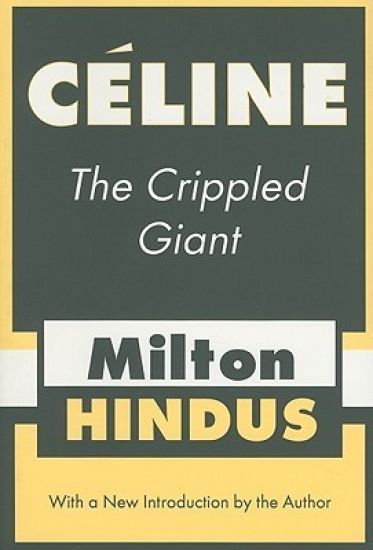
Louis Ferdinand Céline (the pseudonym of Louis Destouches) was a famous novelist and ferocious anti-Semitic pamphleteer who rose to fame before Hitler, but perfectly represented the fascist mind-set that swept across Europe between 1932 and 1944. Never a Nazi himself, he was author of Journey to the End of the Night, Death on the Installment Plan, Guignol's Band, Homage to Zola, and a series of "pamphlets." The latter are a potpourri of racist editorials, ballet scenarios, and anti-Semitic confessions so violent that an aesthete like Andre Gide thought them parodies of other anti-Semitic literature. Little wonder the Nazis regarded Céline as a fellow-traveler. He retreated with the Nazis across the Rhine and sought refuge with them, first in Germany and then in Denmark. In 1951, he benefitted from an amnesty as a wounded veteran of both World Wars. Before his death in 1961 he had regained his popularity with the public and was regarded as a classic writer. Now that the body of his work is in translation, Céline's fame in the literary world circles the globe.Céline, perhaps more than any other analysis, helps shed some light on this enigmatic figure. It establishes his literary importance, and, at the same time, examines his anti-Semitism. After a final meeting, Hindus declared that "Celine is a splinter in my mind that I've got either to absorb completely or eject completely." The reader of this fascinating critical memoir of one of the twentieth century's most controversial literary figures is apt to be left with a similar dilemma.