Kirjojen hintavertailu. Mukana 11 627 363 kirjaa ja 12 kauppaa.

Kirjahaku

Etsi kirjoja tekijän nimen, kirjan nimen tai ISBN:n perusteella.

12 kirjaa tekijältä Miranda Seymour

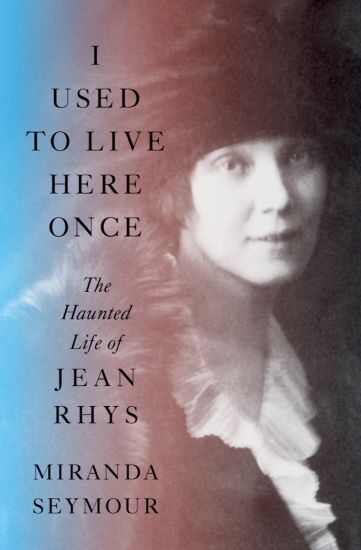
I Used to Live Here Once

I Used to Live Here Once

Miranda Seymour

William Collins
2022
sidottu
‘An absolute belter of a biography’ MARINA HYDE A Times Literary Non-Fiction Book of the Year 2022 An LA Times Best Book of the Year 2022 An intimate, revealing and profoundly moving biography of Jean Rhys, acclaimed author of Wide Sargasso Sea. An obsessive and troubled genius, Jean Rhys is one of the most compelling and unnerving writers of the twentieth century. Memories of a conflicted Caribbean childhood haunt the four fictions that Rhys wrote during her extraordinary years as an exile in 1920s Paris and later in England. Rhys’s experiences of heartbreak, poverty, notoriety, breakdowns and even imprisonment all became grist for her writing, forming an iconic ‘Rhys woman’ whose personality – vulnerable, witty, watchful and angry – was often mistaken, and still is, for a self-portrait. Many details of Rhys’s life emerge from her memoir, Smile Please and the stories she wrote throughout her long and challenging career. But it’s a shock to discover that no biographer – until now – has researched the crucial seventeen years that Rhys spent living on the remote Caribbean island of Dominica; the island which haunted Rhys’s mind and her work for the rest of her life. Luminous and penetrating, Seymour’s biography reveals a proud and fiercely independent artist, one who experienced tragedy and extreme poverty, alcohol and drug dependency, romantic and sexual turmoil – and yet was never a victim. I Used to Live Here Once enables one of our most excitingly intuitive biographers to uncover the hidden truth about a fascinatingly elusive woman. The figure who emerges for Seymour is powerful, cultured, self-mocking, self-absorbed, unpredictable and often darkly funny. Persuasive, surprising and compassionate, this unforgettable biography brings Jean Rhys to life as never before.
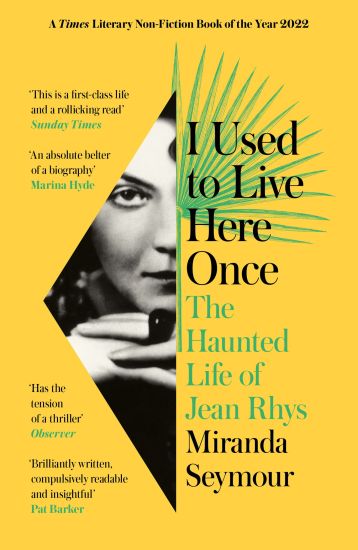
I Used to Live Here Once

I Used to Live Here Once

Miranda Seymour

HARPERCOLLINS PUBLISHERS
2023
nidottu
‘An absolute belter of a biography’ MARINA HYDE A Times Literary Non-Fiction Book of the Year 2022 An LA Times Best Book of the Year 2022 An intimate, revealing and profoundly moving biography of Jean Rhys, acclaimed author of Wide Sargasso Sea. An obsessive and troubled genius, Jean Rhys is one of the most compelling and unnerving writers of the twentieth century. Memories of a conflicted Caribbean childhood haunt the four fictions that Rhys wrote during her extraordinary years as an exile in 1920s Paris and later in England. Rhys’s experiences of heartbreak, poverty, notoriety, breakdowns and even imprisonment all became grist for her writing, forming an iconic ‘Rhys woman’ whose personality – vulnerable, witty, watchful and angry – was often mistaken, and still is, for a self-portrait. Many details of Rhys’s life emerge from her memoir, Smile Please and the stories she wrote throughout her long and challenging career. But it’s a shock to discover that no biographer – until now – has researched the crucial seventeen years that Rhys spent living on the remote Caribbean island of Dominica; the island which haunted Rhys’s mind and her work for the rest of her life. Luminous and penetrating, Seymour’s biography reveals a proud and fiercely independent artist, one who experienced tragedy and extreme poverty, alcohol and drug dependency, romantic and sexual turmoil – and yet was never a victim. I Used to Live Here Once enables one of our most excitingly intuitive biographers to uncover the hidden truth about a fascinatingly elusive woman. The figure who emerges for Seymour is powerful, cultured, self-mocking, self-absorbed, unpredictable and often darkly funny. Persuasive, surprising and compassionate, this unforgettable biography brings Jean Rhys to life as never before.
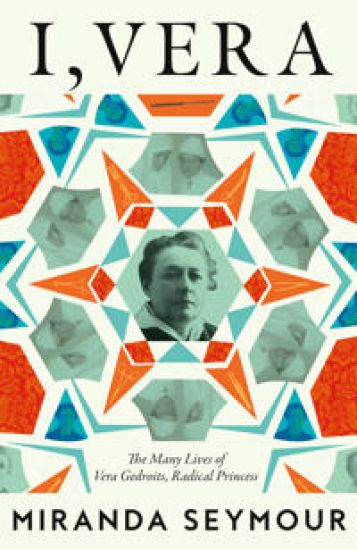
I, Vera

I, Vera

Miranda Seymour

HARPERCOLLINS PUBLISHERS
2026
sidottu
Princess Vera Giedroytz was a towering, sweet-faced lesbian Princess who habitually wore a man’s suit, played billiards with brilliance, and regularly performed true medical miracles of surgery, while on occasion forcibly ejecting an inquisitive Rasputin from her operating theatre by throwing him down the stairs. In 1909, already lauded as a genius, Vera had been appointed by the doomed Tsarina to teach the women of the Romanov family how to assist Vera with her operations. Previously, while working for Cesar Roux at the world’s best known medical institute in Lausanne, Vera had become the world’s first woman surgeon. Later, back in Russia in 1905, she had supervised and revolutionised frontline surgery in the Russo Japanese War (1905). She won the Red Cross’s highest honors – and saved the life of an enemy soldier, the Prince of Japan, while working in nightmarish conditions: a hospital train under fire; a clay-sealed tent in temperatures that regularly reached 22C below zero. In 1919, Vera was sent to Kiev, where her hospital reforms, innovative work and academic papers crowned an extraordinary career as the only female surgeon in the world – and the first to demonstrate the life-saving abdominal procedure that Vera had evolved while working as the sole physician in a factory near her family home outside Moscow, following her return from Lausanne. In Kiev throughout the 1920s, Vera managed to combine a professional career with an unexpected burst of literary achievement. The Princess-Surgeon’s prose, including a Chekhovian diary of her years as a factory doctor, has been compared to that of Pasternak. In 1930, after founding a Ukraine hospital for facial reconstruction and being invited to head a senior department of the Kiev Medical Institute, Vera and her widowed lover (and medical assistant) Countess Maria Nirod were seized one midnight, and taken away at gunpoint during the Soviet purge of scientific intellectuals. Their whereabouts for the next ten months was never disclosed. Vera’s pension was cancelled. The hospital and institute were closed. Living in extreme poverty, still with her lover and the Countess’s children, an uncowed Vera died in 1932 of uterine cancer – for which, fearing malicious intervention, she refused treatment. She was 61. The Princess’s name was banished from official Soviet medical records and her tremendous contribution to medicine and the revolutionising of wartime surgery remains unacknowledged to this day. Now, Miranda Seymour recovers this lost story of a brilliant, politically outspoken woman who chose to make Ukraine her homeland, someone adored by her friends and patients, and whose achievements outrank even those of Florence Nightingale.
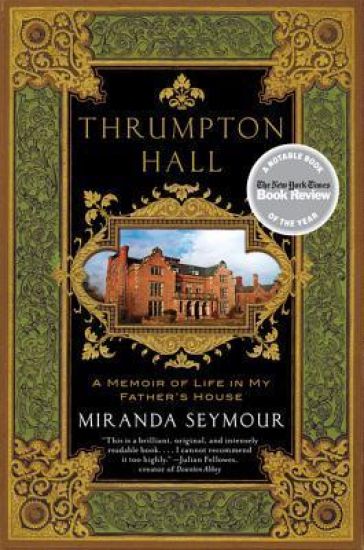
Thrumpton Hall

Thrumpton Hall

Miranda Seymour

HARPER PERENNIAL
2009
nidottu
A biography and family memoir by turns hilarious and heart-wrenching, Miranda Seymour's Thrumpton Hall is a riveting, frequently shocking, and ultimately unforgettable true story of the devastating consequences of obsessive desire and misplaced love."Dear Thrumpton, how I miss you tonight." When twenty-one-year-old George Seymour wrote these words in 1944, the object of his affection was not a young woman but the beautiful country house in Nottinghamshire that he desired above all else. Miranda Seymour would later be raised at Thrumpton Hall--her upbringing far from idyllic, as life revolved around her father's odd capriciousness. The house took priority over everything, even his family--until the day when George Seymour, in his golden years, began dressing in black leather and riding powerful motorbikes around the countryside in the company of surprising friends.For fans of Downton Abbey--the show's creator, Julian Fellowes, called it "brilliant, original, and intensely readable"--Thrumpton Hall is a poignant and memorable true story of family.
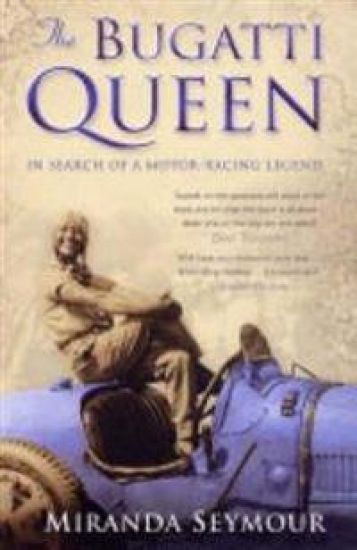
Bugatti Queen

Bugatti Queen

Miranda Seymour

SimonSchuster
2005
pokkari
A beautifully written and hugely acclaimed account of a fascinating twentieth-century life: Hélène Delangle, also known as Hellé Nice, dancer, lover -- and record-breaking racing driver.
Mary Shelley

Mary Shelley

Miranda Seymour

Grove Press / Atlantic Monthly Press
2002
nidottu
An evocative portrait of Mary Shelley captures the turbulent and dramatic life of a woman who, at the age of sixteen, eloped with poet Percy Bysshe Shelley, dealt with the loss of four children and tragic drowning of her husband, and created the world's most imaginative literary monster in Frankenstein. Reprint.
I Used to Live Here Once: The Haunted Life of Jean Rhys
Jean Rhys is one of the most compelling writers of the twentieth century. Memories of her Caribbean girlhood haunt the four short and piercingly brilliant novels that Rhys wrote during her extraordinary years as an exile in 1920s Paris and later in England, a body of fiction--above all, the extraordinary Wide Sargasso Sea--that has a passionate following today. And yet her own colorful life, including her early years on the Caribbean island of Dominica, remains too little explored, until now.In I Used to Live Here Once, Miranda Seymour sheds new light on the artist whose proud and fiercely solitary life profoundly informed her writing. Rhys experienced tragedy and extreme poverty, alcohol and drug dependency, romantic and sexual turmoil, all of which contributed to the "Rhys woman" of her oeuvre. Today, readers still intuitively relate to her unforgettable characters, vulnerable, watchful, and often alarmingly disaster-prone outsiders; women with a different way of moving through the world. And yet, while her works often contain autobiographical material, Rhys herself was never a victim. The figure who emerges for Seymour is cultured, self-mocking, unpredictable--and shockingly contemporary.Based on new research in the Caribbean, a wealth of never-before-seen papers, journals, letters, and photographs, and interviews with those who knew Rhys, I Used to Live Here Once is a luminous and penetrating portrait of a fascinatingly elusive artist.
I Used to Live Here Once: The Haunted Life of Jean Rhys
Jean Rhys is one of the most compelling writers of the twentieth century. Memories of her Caribbean girlhood haunt the four short and piercingly brilliant novels that Rhys wrote during her extraordinary years as an exile in 1920s Paris and later in England, a body of fiction--above all, the extraordinary Wide Sargasso Sea--that has a passionate following today. And yet her own colorful life, including her early years on the Caribbean island of Dominica, remains too little explored, until now.In I Used to Live Here Once, Miranda Seymour sheds new light on the artist whose proud and fiercely solitary life profoundly informed her writing. Rhys experienced tragedy and extreme poverty, alcohol and drug dependency, romantic and sexual turmoil, all of which contributed to the "Rhys woman" of her oeuvre. Today, readers still intuitively relate to her unforgettable characters, vulnerable, watchful, and often alarmingly disaster-prone outsiders; women with a different way of moving through the world. And yet, while her works often contain autobiographical material, Rhys herself was never a victim. The figure who emerges for Seymour is cultured, self-mocking, unpredictable--and shockingly contemporary.Based on new research in the Caribbean, a wealth of never-before-seen papers, journals, letters, and photographs, and interviews with those who knew Rhys, I Used to Live Here Once is a luminous and penetrating portrait of a fascinatingly elusive artist.
In Byron's Wake

In Byron's Wake

Miranda Seymour

SimonSchuster Ltd
2019
pokkari
BYRON'S WAKEThe Extraordinary Story of Lord Byron's Wife and Daughter:Annabella Milbanke and Ada Lovelace The only legitimate daughter of Lord Byron, Ada Lovelace was to become a pioneer of the computer revolution. This masterful new biography is a portrait of two remarkable women, Ada and her mother Annabella, haunted by the mercurial spirit of the notorious poet.
In Byron's Wake

In Byron's Wake

Miranda Seymour

Pegasus Books
2020
nidottu
A masterful portrait of two remarkable women, revealing how two turbulent lives were always haunted by the dangerously enchanting, quicksilver spirit of that extraordinary father whom Ada never knew: Lord Byron.In 1815, the clever and courted Annabella Milbanke married the notorious and brilliant Lord Byron. Just one year later, she fled, taking with her their baby daughter, Ada Lovelace. Byron himself escaped into exile and died as a revolutionary hero in 1824. Brought up by a mother who became one of the most progressive reformers of Victorian England, Byron's little girl was introduced to mathematics as a means of calming her wild spirits. As a child invalid, Ada dreamed of building a steam-driven flying horse. As an exuberant and boldly unconventional young woman, she amplified her explanations of Charles Babbage's unbuilt calculating engine to predict the dawn of the modern computer age.During her life, Lady Byron was praised as a paragon of virtue; within ten years of her death, she was vilified as a disgrace to her sex. Well over a hundred years later, Annabella Milbanke is still perceived as a prudish wife and cruelly controlling mother. But her hidden devotion to Byron and her tender ambitions for his mercurial, brilliant daughter reveal a deeply complex but unexpectedly sympathetic personality.Drawing on fascinating new material, Seymour reveals the ways in which Byron, long after his death, continued to shape the lives and reputations both of his wife and his daughter.