Kirjojen hintavertailu. Mukana 11 717 486 kirjaa ja 12 kauppaa.

Kirjahaku

Etsi kirjoja tekijän nimen, kirjan nimen tai ISBN:n perusteella.

32 kirjaa tekijältä Mircea Eliade

Essential Sacred Writings

Essential Sacred Writings

Mircea Eliade

HarperOne
1991
nidottu
Formerly published as "From Primitives to Zen", this book is a collection of religious writings from traditions other than Christianity and Judaism. Selections are excerpted from texts such as the Quran, the Book of the Dead, the Rig Veda, the Bhagavad Gita, the Homeric Hymns and the Popul Vuh. The thematic arrangement allows readers to compare the essential structure and the divergent variety of religious expression throughout the ages and around the world. Descriptions of deities from various sources are arranged together as are myths of creation and of origin, understandings of death and depictions of the afterlife, teachings on the relationship between humanity and the sacred, various religious rituals and practices, prayers and hymns. Indexes allow the reader to substitute an ethnic or geographic arrangement for the thematic one.
The Sacred and Profane

The Sacred and Profane

Mircea Eliade

HarperOne
1968
nidottu
A groundbreaking work on myth, symbol, and ritual by one of the most acclaimed historians of our time. In The Sacred and the Profane, Mircea Eliade observes that while contemporary people believe their world is entirely profane or secular, they still at times find themselves connected unconsciously to the memory of something sacred. It's this premise that both drives Eliade's exhaustive exploration of the sacred -- as it has manifested in space, time, nature and the cosmos, and life itself -- and buttresses his expansive view of the human experience.
The Quest

The Quest

Mircea Eliade

University of Chicago Press
1984
nidottu
In The Quest Mircea Eliade stresses the cultural function that a study of the history of religions can play in a secularized society. He writes for the intelligent general reader in the hope that what he calls a new humanism "will be engendered by a confrontation of modern Western man with unknown or less familiar worlds of meaning." "Each of these essays contains insights which will be fruitful and challenging for professional students of religion, but at the same time they all retain the kind of cultural relevance and clarity of style which makes them accessible to anyone seriously concerned with man and his religious possibilities."—Joseph M. Kitagawa, Religious Education
The Forge and the Crucible

The Forge and the Crucible

Mircea Eliade

University of Chicago Press
1979
nidottu
Primitive man's discovery of the ability to change matter from one state to another brought about a profound change in spiritual behavior. In The Forge and the Crucible, Mircea Eliade follows the ritualistic adventures of these ancient societies, adventures rooted in the people's awareness of an awesome new power. The new edition of The Forge and the Crucible contains an updated appendix, in which Eliade lists works on Chinese alchemy published in the past few years. He also discusses the importance of alchemy in Newton's scientific evolution.
A History of Religious Ideas, Volume 1

A History of Religious Ideas, Volume 1

Mircea Eliade

University of Chicago Press
1981
nidottu
"No one has done so much as Mr. Eliade to inform literature students in the West about 'primitive' and Oriental religions...Everyone who cares about the human adventure will find new information and new angles of vision."--Martin E. Marty, "New York Times Book Review"
Journal I, 1945-1955

Journal I, 1945-1955

Mircea Eliade

University of Chicago Press
1990
sidottu
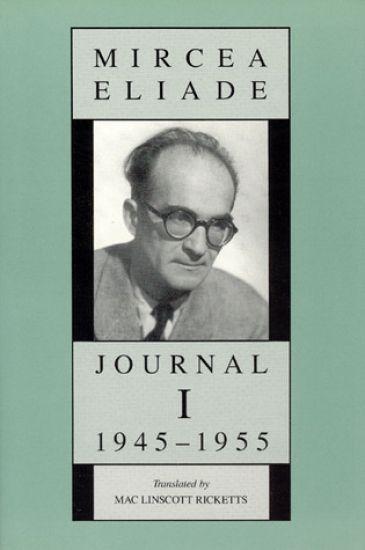
Journal I is a story of revewal—of the new life that began for Mircea Eliade in the fall of 1945 when he became an expatriate. Eliade came to Paris virtually empty-handed, following the death of his first wife and the Soviet takeover of Romania, which made him a persona non grata there. He had left half a lifetime in Romania: his parents, whom he never saw again; his library; unpublished and unfinished manuscripts, including the journal notebooks prior to 1940; an academic career; and Zalmoxis, the journal of religious studies he founded. During the lean years in Paris Eliade lived and worked in small, cold rooms; prepared meals on a Primus stove; pawned his valuables; and asked friends for loans. Eventually he secured a research stipend from the Bollingen Foundation. His ten years in Paris were among his most productive; the books he wrote during this period brought him worldwide acclaim as a historian of religions. He records his first meetings with Carl Jung, Pierre Teilhard de Chardin, Gershom Scholem, Georges Bataille, André Breton, Raffaele Pettazzoni, and many other scholars and writers. Eliade also continued to write literary works. Numerous entries describe his five-year struggle with his novel The Forbidden Forest. Spanning the twelve fateful years from 1936 to 1948, it expresses within a fictional framework the central themes of Eliade's work on religions. Writing the novel was a Herculean task in which Eliade summarized and memorialized his old Romanian life.
Images and Symbols

Images and Symbols

Mircea Eliade

Princeton University Press
1991
pokkari
Mircea Eliade--one of the most renowned expositors of the psychology of religion, mythology, and magic--shows that myth and symbol constitute a mode of thought that not only came before that of discursive and logical reasoning, but is still an essential function of human consciousness. He describes and analyzes some of the most powerful and ubiquitous symbols that have ruled the mythological thinking of East and West in many times and at many levels of cultural development.
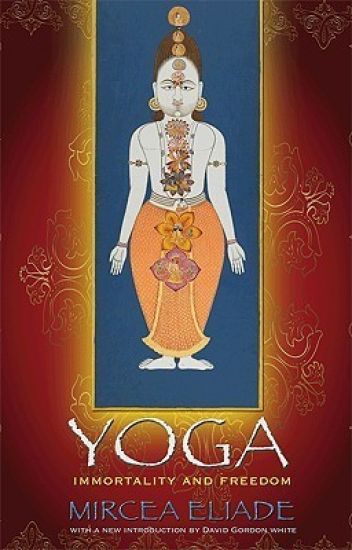
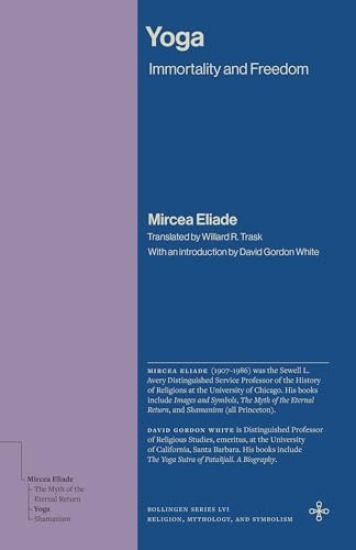
Yoga: Immortality and Freedom

Yoga: Immortality and Freedom

Mircea Eliade

PRINCETON UNIVERSITY PRESS
2009
nidottu
In this landmark book, first published in English in 1958, renowned scholar of religion Mircea Eliade lays the groundwork for a Western understanding of Yoga. Drawing on years of study and experience in India, Eliade provides a comprehensive survey of Yoga in theory and practice from its earliest antecedents in the Vedas through the twentieth century. A new introduction by David Gordon White provides invaluable insight into Eliade's life and work, highlighting the key moments in Eliade's academic and spiritual education, as well as the personal experiences that shaped his worldview. Yoga is not only one of Eliade's most important books, it is also his most personal--the only one to analyze a religious tradition that he had truly lived.
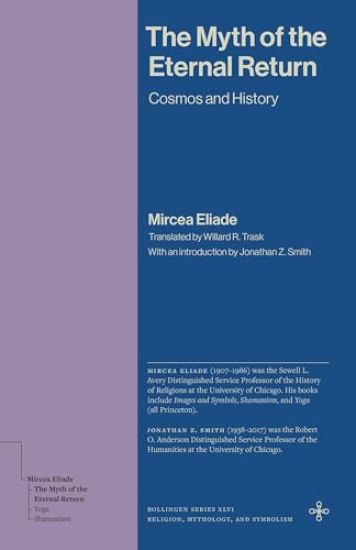
The Myth of the Eternal Return

The Myth of the Eternal Return

Mircea Eliade

Princeton University Press
2018
pokkari
First published in English in 1954, this founding work of the history of religions secured the North American reputation of the Romanian émigré-scholar Mircea Eliade. Making reference to an astonishing number of cultures and drawing on scholarship published in no fewer than half a dozen European languages, The Myth of the Eternal Return illuminates the religious beliefs and rituals of a wide variety of archaic religious cultures. While acknowledging that a return to their practices is impossible, Eliade passionately insists on the value of understanding their views to enrich the contemporary imagination of what it is to be human. This book includes an introduction from Jonathan Z. Smith that provides essential context and encourages readers to engage in an informed way with this classic text.
Shamanism

Shamanism

Mircea Eliade

Princeton University Press
2020
pokkari
The foundational work on shamanism now available as a Princeton Classics paperbackShamanism is an essential work on the study of this mysterious and fascinating phenomenon. The founder of the modern study of the history of religion, Mircea Eliade surveys the tradition through two and a half millennia of human history, moving from the shamanic traditions of Siberia and Central Asia—where shamanism was first observed—to North and South America, Indonesia, Tibet, China, and beyond. In this authoritative survey, Eliade illuminates the magico-religious life of societies that give primacy of place to the figure of the shaman—at once magician and medicine man, healer and miracle-doer, priest, mystic, and poet. Synthesizing the approaches of psychology, sociology, and ethnology, Shamanism remains the reference book of choice for those interested in this practice.
The Myth of the Eternal Return

The Myth of the Eternal Return

Mircea Eliade

PRINCETON UNIVERSITY PRESS
2026
sidottu
A landmark work in the history of religions from a pioneer in the field First published in English in 1954, this founding work in the historical study of religions secured the North American reputation of the Romanian émigré-scholar Mircea Eliade. Referring to an astonishing number of cultures and drawing on scholarship in no fewer than half a dozen European languages, The Myth of the Eternal Return illuminates the religious beliefs and rituals of a wide variety of ancient cultures and argues that understanding them still has the power to enrich our conception of what it means to be human.
The Myth of the Eternal Return

The Myth of the Eternal Return

Mircea Eliade

PRINCETON UNIVERSITY PRESS
2026
pokkari
A landmark work in the history of religions from a pioneer in the field First published in English in 1954, this founding work in the historical study of religions secured the North American reputation of the Romanian émigré-scholar Mircea Eliade. Referring to an astonishing number of cultures and drawing on scholarship in no fewer than half a dozen European languages, The Myth of the Eternal Return illuminates the religious beliefs and rituals of a wide variety of ancient cultures and argues that understanding them still has the power to enrich our conception of what it means to be human.
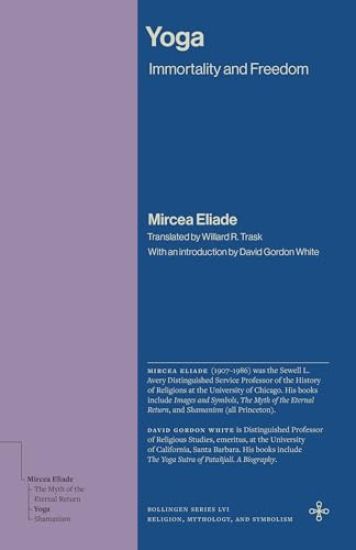
Yoga

Yoga

Mircea Eliade

PRINCETON UNIVERSITY PRESS
2026
sidottu
A groundbreaking account of the theory and practice of yoga, from the Vedas to the twentieth century In this landmark book, renowned scholar of religion Mircea Eliade lays the groundwork for a Western understanding of yoga. Drawing on years of study and experience in India, Eliade provides a comprehensive survey of yoga in theory and practice from its earliest antecedents in the Vedas through the twentieth century. In his introduction, David Gordon White provides invaluable insight into Eliade’s life and work, highlighting the key moments in his intellectual and spiritual education, as well as the personal experiences that shaped his worldview. Yoga is not only one of Eliade’s most important books, but also his most personal—the only one to analyze a religious tradition that he had truly lived.
Yoga

Yoga

Mircea Eliade

PRINCETON UNIVERSITY PRESS
2026
pokkari
A groundbreaking account of the theory and practice of yoga, from the Vedas to the twentieth century In this landmark book, renowned scholar of religion Mircea Eliade lays the groundwork for a Western understanding of yoga. Drawing on years of study and experience in India, Eliade provides a comprehensive survey of yoga in theory and practice from its earliest antecedents in the Vedas through the twentieth century. In his introduction, David Gordon White provides invaluable insight into Eliade’s life and work, highlighting the key moments in his intellectual and spiritual education, as well as the personal experiences that shaped his worldview. Yoga is not only one of Eliade’s most important books, but also his most personal—the only one to analyze a religious tradition that he had truly lived.
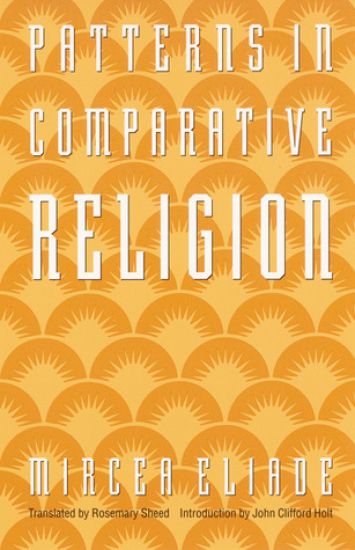
Patterns in Comparative Religion

Patterns in Comparative Religion

Mircea Eliade

Bison Books
1996
pokkari
In this era of increased knowledge the essence of religious phenomena eludes the psychologists, sociologists, linguists, and other specialists because they do not study it as religious. According to Mircea Eliade, they miss the one irreducible element in religious phenomena—the element of the sacred. Eliade abundantly demonstrates universal religious experience and shows how humanity's effort to live within a sacred sphere has manifested itself in myriad cultures from ancient to modern times; how certain beliefs, rituals, symbols, and myths have, with interesting variations, persisted.
Symbolism, the Sacred, and the Arts

Symbolism, the Sacred, and the Arts

Mircea Eliade

Continuum International Publishing Group Ltd.
1997
nidottu
Major work is distinguished by an intensity of inspiration and an overwhelming sense of personal vision. This merging of inspiration and vision permits the creation of a classic oeuvre whose creator is deemed to be a 'master of his craft, ' or perhaps better, 'a seminal mind.' Such is the work of the historian of religious, Mirceas Eliade. In his lifelong quest to understand the presence of the Sacred throughout human history, Eliade has been fascinated by two central themes: Creation and Time.
Two Strange Tales

Two Strange Tales

Mircea Eliade

Shambhala Publications Inc
2001
pokkari
"No event in our world is "real, " my friend. Everything that occurs in this universe is illusory... And in a world of appearances, in which no thing and no event has any permanence, any reality of its own--whoever is master of certain forces can do anything he wishes..." So speaks a character in "Two Strange Tales, " a pair of novellas in which Westerners are caught up in the uncanny realm of Eastern religion and magic. In "Nights at Serampore," three European scholars, traveling deep into the forests of Bengal, are inexplicably cast into another time and space where they witness the violent murder of a young Hindu wife. In "The Secret of Dr. Honingberger," a respectable Rumanian physician vanishes without a trace after experimenting with yogic techniques in his quest for the legendary invisible world called Shambhala. In "Two Strange Tales, " author Mircea Eliade combined yogic folklore with the literary genre of the supernatural suspense tale so as to reveal dimensions of experience that are inaccessible to other intellectual approaches. These well-crafted stories will appeal to both lovers of the supernatural and those fascinated by mysticism of the East.