Kirjojen hintavertailu. Mukana 11 627 362 kirjaa ja 12 kauppaa.

Kirjahaku

Etsi kirjoja tekijän nimen, kirjan nimen tai ISBN:n perusteella.

4 kirjaa tekijältä Mireya Solis

Banking on Multinationals

Banking on Multinationals

Mireya Solis

Stanford University Press
2004
sidottu
Banking on Multinationals addresses two fundamental puzzles in Japanese industrial policy: Why does the Japanese state—better known for its attempts to control markets, protect infant industries, and maximize national exports—administer the world's largest public program to support the expansion of multinational corporations? And why does the Japanese state not fear loss of control over mobile multinational corporations and erosion of the domestic export base through foreign direct investment (FDI)? Solís's explanation of Japan's lead in state financing of FDI takes into account both the industrial policy goals behind the extension of FDI loans and the political uses of subsidized credit to appease economically weak but politically powerful constituencies. As the first systematic study of Japan's public FDI loan program, Banking on Multinationals reveals a previously unexamined dimension of Japanese government policy and helps explain the uncanny ability of stagnant sectors and small firms to participate in FDI activities. Rather than simply espousing the familiar idea that Japan's preeminent role as banker to multinationals is evidence of mercantilism in Japanese foreign economic policy, this book brings to life the domestic political conflicts underlying FDI policy.

Dilemmas of a Trading Nation

Dilemmas of a Trading Nation

Mireya Solis

Brookings Institution
2017
nidottu
Japan is at a critical moment in determining its trade policy as it strives for renewed economic growth. Its economy still struggling after two decades of low growth, Japan now faces a difficult moment as it confronts this ongoing challenge to economic renewal. Tokyo could deploy a proactive trade policy to help it rise again as one of the world's greatest trading nations. It could also, at the same time, attack the structural problems that have hindered its economic competitiveness and kept it from becoming a leading voice in the drafting of rules for this century's global economy. Or, it could do nothing and remain shackled to the domestic political constraints that have kept it from playing a central role in international trade negotiations.In Dilemmas of a Trading Nation, Mireya Solis describes how Japan's economic choices are important for the United States, as well. The two nations are the most important members of the Trans-Pacific Partnership (TPP), the trade agreement concluded in 2015 intended to spur trade in the world's fastest-growing economic region. The arrest of Japan's economic decline, the credibility of America's resolve to remain a Pacific power, and the deepening of the bilateral alliance are all influenced significantly by the outcome of the TPP agreement. But the domestic politics of trade policy have never been as unwieldy as policymakers across the Pacific aim to negotiate ever more ambitious trade and to marshal domestic support for them. Dilemmas of a Trading Nation describes how, for both Japan and the United States, the stakes involved in addressing the tradeoffs of trade policy design could not be higher.
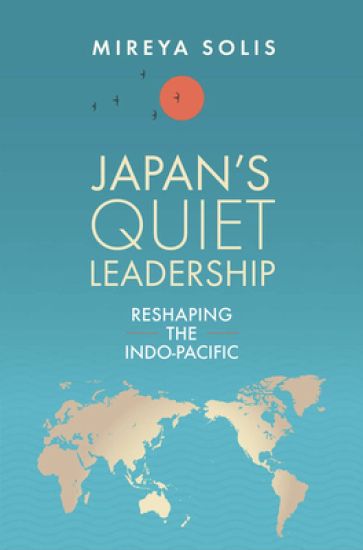
Japan’s Quiet Leadership

Japan’s Quiet Leadership

Mireya Solis

BLOOMSBURY PUBLISHING PLC
2023
nidottu
Why has Japan emerged from the “lost decades” unscathed from the populist wave and a far more consequential actor in the geopolitics of the Indo-Pacific? In answering this question, Japan’s Quiet Leadership provides a sweeping look at Japan’s domestic economic and political evolution, its economic statecraft, and the array of geopolitical challenges that have triggered a gradual but substantial shift in the country’s security profile. This deep dive into Japan’s trajectory over the last three decades underscores Japan’s hidden strengths in its democratic resilience, social stability, and proactive diplomacy; while reckoning with the profound challenges the nation faces: depopulation, rising inequality, voter disengagement, and threats to Asia’s long peace. The book traces the profound currents of change coursing through the Japanese polity and its external environment; and the myriad ways in which Japan’s experience has become more relevant to countries coping with slow growth, adverse demographics, adjustment to economic globalization, and the emergence of a powerful and assertive China. This is a story of Japan’s reinvention as a network power to overcome the harsh realities of diminishing relative capabilities. In reshaping the Indo-Pacific, Tokyo deployed a robust economic strategy of trade integration and infrastructure finance; and a proactive security diplomacy cultivating new partnerships with regional and extra-regional actors and deepening the alliance with the United States. Nevertheless, acute geopolitical rifts, Japan’s pandemic insularity, and the securitization of international economic relations are testing Japan’s statecraft of connectivity. The tasks at home are no less pressing: delivering on the green, digital, and human capital transformations, avoiding the return of the politics of indecision at the helm of the nation, and fostering democratic dynamism. This book illuminates where the Japanese polity, economy, and people are heading as we move past the Abe era, and well into the 2020s and beyond.
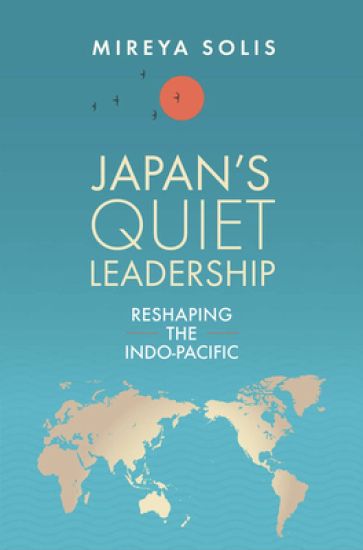
Japan’s Quiet Leadership

Japan’s Quiet Leadership

Mireya Solis

BLOOMSBURY PUBLISHING PLC
2023
sidottu
Why has Japan emerged from the “lost decades” unscathed from the populist wave and a far more consequential actor in the geopolitics of the Indo-Pacific? In answering this question, Japan’s Quiet Leadership provides a sweeping look at Japan’s domestic economic and political evolution, its economic statecraft, and the array of geopolitical challenges that have triggered a gradual but substantial shift in the country’s security profile. This deep dive into Japan’s trajectory over the last three decades underscores Japan’s hidden strengths in its democratic resilience, social stability, and proactive diplomacy; while reckoning with the profound challenges the nation faces: depopulation, rising inequality, voter disengagement, and threats to Asia’s long peace. The book traces the profound currents of change coursing through the Japanese polity and its external environment; and the myriad ways in which Japan’s experience has become more relevant to countries coping with slow growth, adverse demographics, adjustment to economic globalization, and the emergence of a powerful and assertive China. This is a story of Japan’s reinvention as a network power to overcome the harsh realities of diminishing relative capabilities. In reshaping the Indo-Pacific, Tokyo deployed a robust economic strategy of trade integration and infrastructure finance; and a proactive security diplomacy cultivating new partnerships with regional and extra-regional actors and deepening the alliance with the United States. Nevertheless, acute geopolitical rifts, Japan’s pandemic insularity, and the securitization of international economic relations are testing Japan’s statecraft of connectivity. The tasks at home are no less pressing: delivering on the green, digital, and human capital transformations, avoiding the return of the politics of indecision at the helm of the nation, and fostering democratic dynamism. This book illuminates where the Japanese polity, economy, and people are heading as we move past the Abe era, and well into the 2020s and beyond.