Kirjojen hintavertailu. Mukana 12 390 323 kirjaa ja 12 kauppaa.

Kirjahaku

Etsi kirjoja tekijän nimen, kirjan nimen tai ISBN:n perusteella.

12 kirjaa tekijältä Miriam Cooke

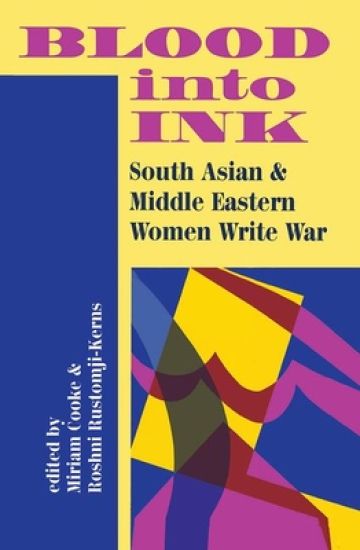
Blood Into Ink

Blood Into Ink

Miriam Cooke

Routledge
2019
sidottu
"These writings on war by Middle Eastern and South Asian women are passionate, bitter, and deeply attached to place and circumstance. They should be part of our essential reading. At the tail end of this century, they help to remap a vivid, splintering world".--Meena Alexander, author of "Fault Lines". Lightning Print On Demand Title
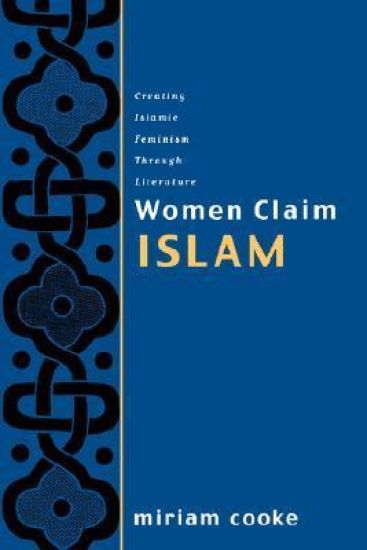
Women Claim Islam

Women Claim Islam

Miriam Cooke

Routledge
2000
nidottu
This provocative collection addresses the ways in which Arab women writers are using Islam to empower themselves, and theorizes the conditions that have made the appearance of these new voices possible.
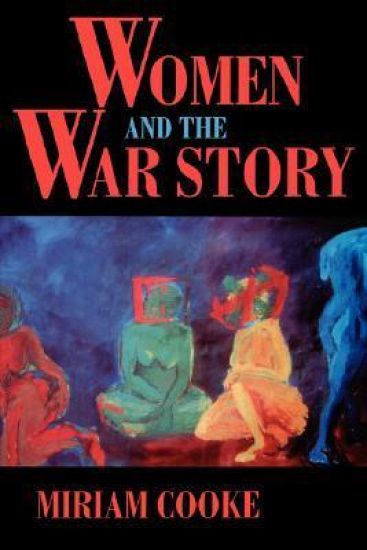
Women and the War Story

Women and the War Story

Miriam Cooke

University of California Press
1997
pokkari
In a book that radically and fundamentally revises the way we think about war, Miriam Cooke charts the emerging tradition of women's contributions to what she calls the "War Story," a genre formerly reserved for men. Concentrating on the contemporary literature of the Arab world, Cooke looks at how alternatives to the master narrative challenge the authority of experience and the permission to write. She shows how women who write themselves and their experiences into the War Story undo the masculine contract with violence, sexuality, and glory. There is no single War Story, Cooke concludes; the standard narrative--and with it the way we think about and conduct war--can be changed. As the traditional time, space, organization, and representation of war have shifted, so have ways of describing it. As drug wars, civil wars, gang wars, and ideological wars have moved into neighborhoods and homes, the line between combat zones and safe zones has blurred. Cooke shows how women's stories contest the acceptance of a dyadically structured world and break down the easy oppositions--home vs. front, civilian vs. combatant, war vs. peace, victory vs. defeat--that have framed, and ultimately promoted, war.
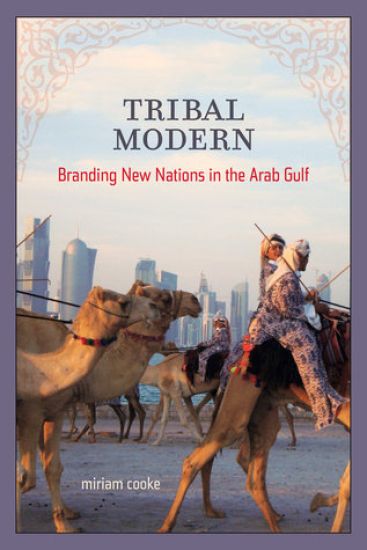
Tribal Modern

Tribal Modern

Miriam Cooke

University of California Press
2014
pokkari
In the 1970s, one of the most torrid and forbidding regions in the world burst on to the international stage. The discovery and subsequent exploitation of oil allowed tribal rulers of the U.A.E, Qatar, Bahrain, and Kuwait to dream big. How could fishermen, pearl divers and pastoral nomads catch up with the rest of the modernized world? Even today, society is skeptical about the clash between the modern and the archaic in the Gulf. But could tribal and modern be intertwined rather than mutually exclusive? Exploring everything from fantasy architecture to neo-tribal sports and from Emirati dress codes to neo-Bedouin poetry contests, Tribal Modern explodes the idea that the tribal is primitive and argues instead that it is an elite, exclusive, racist, and modern instrument for branding new nations and shaping Gulf citizenship and identity - an image used for projecting prestige at home and power abroad.
War's Other Voices

War's Other Voices

Miriam Cooke

Cambridge University Press
1988
sidottu
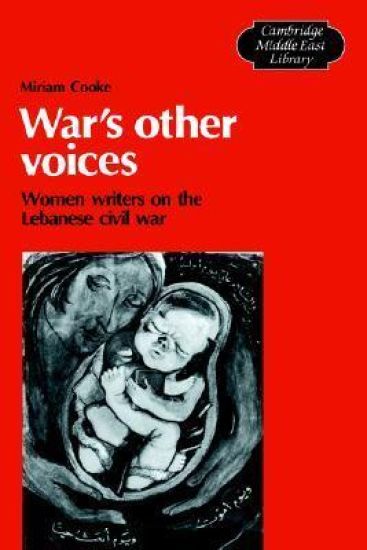
This book challenges the assumption that men write of war, women of the hearth. The Lebanese war has seen the publication of many more works of fiction by women than by men. Miriam Cooke has termed these women the Beirut Decentrists, as they are decentred or excluded from both literary canon and social discourse. Although they may not share religious or political affiliation, they do share a perspective, which holds them together. The author traces the transformation in consciousness that has taken place among women who observed and recorded the progress towards chaos in Lebanon. During the so-called 'two-year' war of 1975–6 little comment was made about those (usually men in search of economic security) who left the saturnalia of violence, but with time attitudes changed. Women became aware that they had stayed out of a sense of responsibility for others and that they had survived. Consciousness of survival was catalytic: the Beirut Decentrists began to describe a society that had gone beyond the masculinisation normal in most wars and achieved an almost unprecedented fernininisation. Emigration, the expected behaviour for men before 1975, was rejected. Staying, the expected behaviour for women before 1975, became the sine qua non for Lebanese citizenship. The writings of the Beirut Decentrists offer hope of a way out of the anarchy. If men and women could espouse the Lebanese women's sense of responsibility, the energy that had fuelled the unrelenting savagery could be turned to reconstruction. But that was before the invasion of 1982.
War's Other Voices

War's Other Voices

Miriam Cooke

Syracuse University Press
1996
nidottu
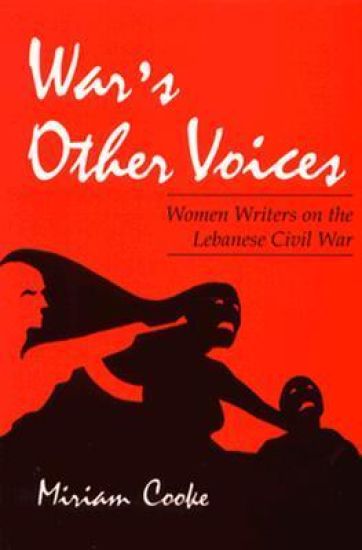
This is a study of Arab writers such as Ghada al-Samman, Hanan al-Shaikh, Emily Nasrallah and Etel Adnan. It presents a constructive literary approach to the ravages of the civil war in the Lebanon. The ways in which women's consciousness is awakened in terms of female liberation is a theme.
Hayati, My Life

Hayati, My Life

Miriam Cooke

Syracuse University Press
2000
sidottu
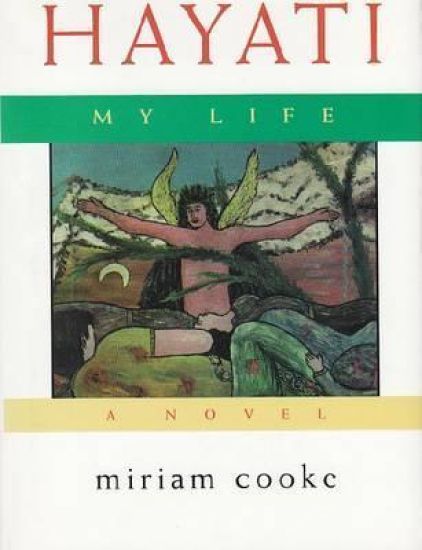
Miriam Cooke’s melic prose animates the existence of each of the women portrayed in her new novel. With Samya, we live in Palestine of the 1920s and are imprisoned during the imposition of the British Mandate; with Assia we experience the massacre of Deir Assin, the death of a son, and the establishment of the State of Israel; with Maryam we survive war and diaspora-the Suez War, the Intifada, the Iran-Iraq War, and the scattering of a family to three different countries. Finally, with the mute painter Araf’s rape, we experience the Iraqi invasion of Kuwait, and when Hibba returns to Jerusalem the circle is complete. The historical and political aspects of Hayati (a term of endearment, literally meaning “my life”) chart fresh territory for the American reader, showing us a Palestine and an Arab people we do not know from the inside and from a deeply imaginative and humanistic perspective. Cooke makes evident a trenchant grasp of the mechanics of everyday living-the politics may be Palestine-specific, but the theme of endurance is universal. Many novels entertain, while others inform. In this effective and dramatic post-modern novel, Cooke succeeds in accomplishing both.
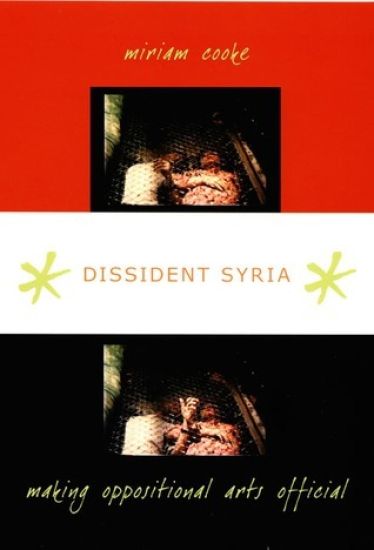
Dissident Syria

Dissident Syria

miriam cooke

Duke University Press
2007
sidottu
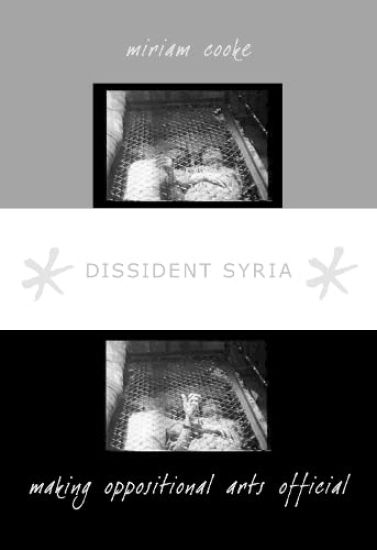
From 1970 until his death in 2000, Hafiz Asad ruled Syria with an iron fist. His regime controlled every aspect of daily life. Seeking to preempt popular unrest, Asad sometimes facilitated the expression of anti-government sentiment by appropriating the work of artists and writers, turning works of protest into official agitprop. Syrian dissidents were forced to negotiate between the desire to genuinely criticize the authoritarian regime, the risk to their own safety and security that such criticism would invite, and the fear that their work would be co-opted as government propaganda, as what miriam cooke calls “commissioned criticism.” In this intimate account of dissidence in Asad’s Syria, cooke describes how intellectuals attempted to navigate between charges of complicity with the state and treason against it.A renowned scholar of Arab cultures, cooke spent six months in Syria during the mid-1990s familiarizing herself with the country’s literary scene, particularly its women writers. While she was in Damascus, dissidents told her that to really understand life under Hafiz Asad, she had to speak with playwrights, filmmakers, and, above all, the authors of “prison literature.” She shares what she learned in Dissident Syria. She describes touring a sculptor’s studio, looking at the artist’s subversive work as well as at pieces commissioned by the government. She relates a playwright’s view that theater is unique in its ability to stage protest through innuendo and gesture. Turning to film, she shares filmmakers’ experiences of making movies that are praised abroad but rarely if ever screened at home. Filled with the voices of writers and artists, Dissident Syria reveals a community of conscience within Syria to those beyond its borders.
Dissident Syria

Dissident Syria

miriam cooke

Duke University Press
2007
pokkari
From 1970 until his death in 2000, Hafiz Asad ruled Syria with an iron fist. His regime controlled every aspect of daily life. Seeking to preempt popular unrest, Asad sometimes facilitated the expression of anti-government sentiment by appropriating the work of artists and writers, turning works of protest into official agitprop. Syrian dissidents were forced to negotiate between the desire to genuinely criticize the authoritarian regime, the risk to their own safety and security that such criticism would invite, and the fear that their work would be co-opted as government propaganda, as what miriam cooke calls “commissioned criticism.” In this intimate account of dissidence in Asad’s Syria, cooke describes how intellectuals attempted to navigate between charges of complicity with the state and treason against it.A renowned scholar of Arab cultures, cooke spent six months in Syria during the mid-1990s familiarizing herself with the country’s literary scene, particularly its women writers. While she was in Damascus, dissidents told her that to really understand life under Hafiz Asad, she had to speak with playwrights, filmmakers, and, above all, the authors of “prison literature.” She shares what she learned in Dissident Syria. She describes touring a sculptor’s studio, looking at the artist’s subversive work as well as at pieces commissioned by the government. She relates a playwright’s view that theater is unique in its ability to stage protest through innuendo and gesture. Turning to film, she shares filmmakers’ experiences of making movies that are praised abroad but rarely if ever screened at home. Filled with the voices of writers and artists, Dissident Syria reveals a community of conscience within Syria to those beyond its borders.
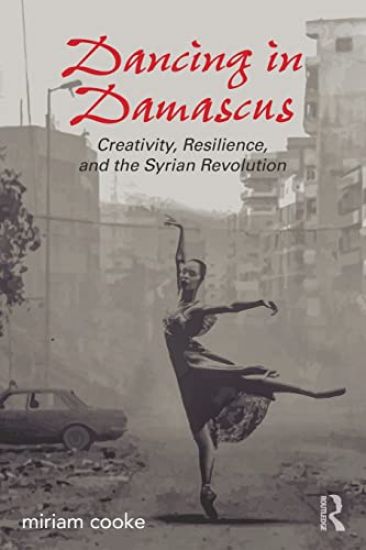
Dancing in Damascus

Dancing in Damascus

Miriam Cooke

Routledge
2016
sidottu
On March 17, 2011, many Syrians rose up against the authoritarian Asad regime that had ruled them with an iron fist for forty years. Initial successes were quickly quashed, and the revolution seemed to devolve into a civil war pitting the government against its citizens and extremist mercenaries. As of late 2015, almost 300,000 Syrians have been killed and over half of a total population of 23 million forced out of their homes. Nine million are internally displaced and over four million are wandering the world, many on foot or in leaky boats. Countless numbers have been disappeared. These shocking statistics and the unstoppable violence notwithstanding, the revolution goes on.The story of the attempted crushing of the revolution is known. Less well covered has been the role of artists and intellectuals in representing to the world and to their people the resilience of revolutionary resistance and defiance. How is it possible that artists, filmmakers and writers have not been cowed into numbed silence but are becoming more and more creative? How can we make sense of their insistence that despite the apocalypse engulfing the country their revolution is ongoing and that their works participate in its persistence? With smartphones, pens, voices and brushes, these artists registered their determination to keep the idea of the revolution alive. Dancing in Damascus traces the first four years of the Syrian revolution and the activists’ creative responses to physical and emotional violence.
Dancing in Damascus

Dancing in Damascus

Miriam Cooke

Routledge
2016
nidottu
On March 17, 2011, many Syrians rose up against the authoritarian Asad regime that had ruled them with an iron fist for forty years. Initial successes were quickly quashed, and the revolution seemed to devolve into a civil war pitting the government against its citizens and extremist mercenaries. As of late 2015, almost 300,000 Syrians have been killed and over half of a total population of 23 million forced out of their homes. Nine million are internally displaced and over four million are wandering the world, many on foot or in leaky boats. Countless numbers have been disappeared. These shocking statistics and the unstoppable violence notwithstanding, the revolution goes on.The story of the attempted crushing of the revolution is known. Less well covered has been the role of artists and intellectuals in representing to the world and to their people the resilience of revolutionary resistance and defiance. How is it possible that artists, filmmakers and writers have not been cowed into numbed silence but are becoming more and more creative? How can we make sense of their insistence that despite the apocalypse engulfing the country their revolution is ongoing and that their works participate in its persistence? With smartphones, pens, voices and brushes, these artists registered their determination to keep the idea of the revolution alive. Dancing in Damascus traces the first four years of the Syrian revolution and the activists’ creative responses to physical and emotional violence.
Nazira Zeineddine

Nazira Zeineddine

Miriam Cooke

Oneworld Publications
2010
sidottu
In 1928, a young Lebanese woman, Nazira Zeineddine al-Halabi, wrote a book called "Unveiling and Veiling", an indictment of patriarchal oppression in which she boldly stated that the veil was un-Islamic, directly challenging the teachings of "wiser" male scholars. Considered by many an attack on Islam, it rocked the Muslim world and was banned by many clerics, although it quickly went into a second edition and was translated into several languages. In this latest addition to Makers of the Muslim World series, Miriam Cooke offers an intimate portrait of the life and work of this pioneering champion of Islamic feminism.