Kirjojen hintavertailu. Mukana 12 390 323 kirjaa ja 12 kauppaa.

Kirjahaku

Etsi kirjoja tekijän nimen, kirjan nimen tai ISBN:n perusteella.

8 kirjaa tekijältä Mitchell Abidor

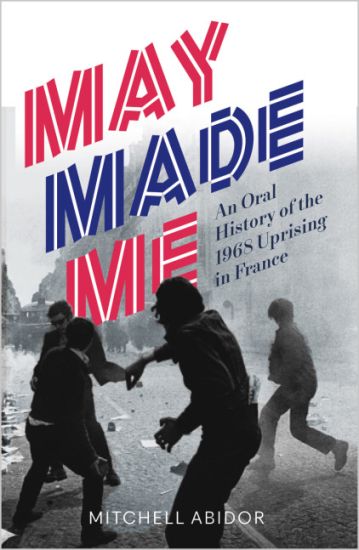
May Made Me

May Made Me

Mitchell Abidor

Pluto Press
2018
pokkari
The mass protests that shook France in May 1968 were exciting, dangerous, creative and influential, changing European politics to this day. Students demonstrated, workers went on general strike, factories and universities were occupied. At the height of its fervour, it brought the entire national economy to a halt. The protests reached such a point that political leaders feared civil war or revolution. Fifty years later, here are the eye-opening oral testimonies of those young rebels. By listening to the voices of students and workers, as opposed to those of their leaders, May '68 appears not just as a mass event, but rather as an event driven by millions of individuals, achieving a mosaic human portrait of France at the time. This book reveals the legacy of the uprising: how those explosive experiences changed both those who took part, and the course of history. May Made Me will record these moments before history moves on yet again.
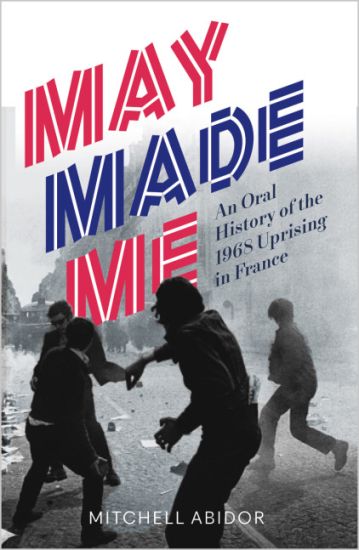
May Made Me

May Made Me

Mitchell Abidor

Pluto Press
2018
sidottu
The mass protests that shook France in May 1968 were exciting, dangerous, creative and influential, changing European politics to this day. Students demonstrated, workers went on general strike, factories and universities were occupied. At the height of its fervour, it brought the entire national economy to a halt. The protests reached such a point that political leaders feared civil war or revolution. Fifty years later, here are the eye-opening oral testimonies of those young rebels. By listening to the voices of students and workers, as opposed to those of their leaders, May '68 appears not just as a mass event, but rather as an event driven by millions of individuals, achieving a mosaic human portrait of France at the time. This book reveals the legacy of the uprising: how those explosive experiences changed both those who took part, and the course of history. May Made Me will record these moments before history moves on yet again.
Victor Serge

Victor Serge

Mitchell Abidor

PLUTO PRESS
2025
pokkari
Ideological schisms have always been a feature of the left, but for much of the early twentieth century they could be deadly. Few revolutionary figures managed to chart such a unique course through the turbulent currents of anarchism and Bolshevism as Victor Serge. Today, thanks to his classic memoirs and novels, Serge is highly esteemed by virtually all segments of the left. But who was this man, who led such a thrilling life on the frontlines of history? An anarchist? A Bolshevik? A Trotskyist? Or did he evolve into something else entirely? In this comprehensive account of the life, work and political evolution of Victor Serge, Mitchell Abidor rescues his subject, in all his complexity, from the constraints of any single label. Painting a portrait of a man whose political ideas shifted continually, in response to the major events of his life, we are introduced to several Victor Serges: the youthful anarchist in Belgium and France; the leading Bolshevik in Moscow; the anti-Stalinist who faced imprisonment and expulsion from the Soviet Union. Examining the lacunae and errors of fact in his memoirs, the hidden Serge is ultimately revealed for what he was: an unruly revolutionary of both great courage and contradictions.
Communards: The Story of the Paris Commune of 1871 As Told by Those Who Fought for It
Communards: The Story of the Paris Commune of 1871, As Told by those Who Fought for It. Texts selected, edited, and translated by Mitchell Abidor. Published by Marxists Internet Archive Publications, 2010. In this unique collection of texts translated into English for the first time, we hear the genuine voices of the Paris Commune of 1871. Every Communard drew something different from the experience of the Commune, and "Communards" allows all of them to have their say. "If socialism wasn't born of the Commune, it is from the Commune that dates that portion of international revolution that no longer wants to give battle in a city in order to be surrounded and crushed, but which instead wants, at the head of the proletarians of each and every country, to attack national and international reaction and put an end to the capitalist regime." - Edouard Vaillant, a member of the Paris Commune. Documents include the records of stormy meetings of the Commune deciding on the execution of hostages, minutes of meetings of the First International throughout the siege as well as reminiscences of participants written down 25 years after the event. Much of this would be new to French-speakers; it is all new for those who do not normally read in the French language. No history of the Commune may be written in the future without reference to "Communards." Communards is available only through Erythros Press and Media and proceeds go towards the operations of the Marxists Internet Archive.
May Made Me: An Oral History of the 1968 Uprising in France
Q: "You threw paving stones at the cops]?" A: "Oh yeah. I had no problem doing that. And I threw marbles as well that we stole from stores. And towards the end we even managed to steal tractors from construction sites and we knocked over trees with them." The mass protests that shook France in May 1968 were exciting, dangerous, creative, and influential, changing European politics to this day. Students demonstrated, workers went on general strike, and factories and universities were occupied. Before it was all over, children, homemakers, and the elderly were swept up in the life-changing events that targeted bureaucratic capitalism and the staid Communist Party. The French state was on the ropes and feared civil war or revolution. Decades later, here are the eye-opening oral testimonies of those young rebels who demanded the impossible. Published on the 50th anniversary of those momentous events, May Made Me presents the legacy of the uprising: how those explosive experiences changed both the individual and history. "These powerful and moving testimonies create an eye-opening account of the inspiring events of May '68, which are more relevant for today's activists than ever before." --Paul Mason, author of Postcapitalism: A Guide to Our Future
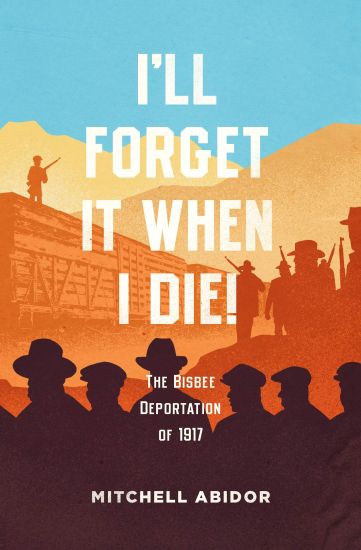
I'll Forget It When I Die!

I'll Forget It When I Die!

Mitchell Abidor

AK Press
2021
nidottu
On July 12, 1917, in the mining town of Bisbee Arizona, twelve hundred striking miners and their supporters were rounded up by forces organized by the town sheriff and the mining companies, marched through the town, parked in the town's baseball field, and then put in boxcars and shipped into the New Mexican desert. The deportees were largely members or supporters of the radical IWW labor union and mostly foreign-born. The roundup and deportation was part of a xenophobic and anti-radical campaign being carried out by bosses and the government throughout the country in the early days of US participation in World War I. The mine owners then took control of the town and patrols prevented any union miners from even entering it. This little-known story is a shocking and fascinating one on its own, but the sentiments exploited and exposed in Bisbee in 1917 speak to America today.
Ariane, A Russian Girl

Ariane, A Russian Girl

Claude Anet; Mitchell Abidor

New York Review Books
2023
nidottu
In this long-overdue translation of the novel that inspired the 1957 Audrey Hepburn and Gary Cooper film Love in the Afternoon, a young woman finds independence and love with an older man in pre-revolutionary Moscow--a relationship depicted with a complexity and sexual frankness that feels remarkably ahead of its time. Ariane, A Russian Girl, the tale of a young girl in pre-revolutionary Russia who is unafraid to exercise her sexual independence, is the basis for the Audrey Hepburn film Love in the Afternoon, though the book has a much sharper edge than the film. Beautiful, spirited, brilliant Ariane is seventeen and lives with her aunt in the provinces. Determined to go to Moscow to study at university, Ariane is perfectly willing to use her looks and charm on men the better to get ahead. Once settled in Moscow, Ariane meets Constantine Michel, a man of the world who casually proposes an affair, while warning her not to grow too attached to him. Soon enough the two are involved, even as it is Ariane, increasingly, who holds Constantine at bay emotionally, deploying irony and cynicism and often leaving him at a loss. Constantine, fascinated and infuriated, grows resentfully aware he does not know much of anything about Ariane, whom, among other things, he had taken to be a good deal older than, on her eighteenth birthday, he discovers her to be. What is she holding back? What is she trying to prove? What is the true story of Ariane and how it will end? A story of eros and love to equal the best of Colette, Ariane, A Russian Girl is a realistic and gripping story about vulnerability and determination and what it means to grow up.
Liberties Journal of Culture and Politics

Liberties Journal of Culture and Politics

Giles Kepel; Ingrid Rowland; Vladimir Kara-Murza; Enrique Krauze; Paul Muldoon; Mitchell Abidor; Agnes Callard; Henri Cole; William Deresiewicz; Benjamin Moser; David Nirenberg; Peter Phillips; Becca Rothfeld; Paul Starr; David Thomson; Chaim Nacham Bialik

Liberties Journal Foundation
2021
pokkari
“A Meteor of Intelligent Substance” “Something was Missing in our Culture, and Here It Is” “Liberties sure is needed in these times.”In a short time since its launch, Liberties - A Journal of Culture and Politics, a quarterly, has become essential reading for those engaged in the cultural and political issues and causes of our time. The writers in Liberties offer deep experience from across borders, national identities, political affiliations and artistic achievements. As the introductory essay in the inaugural edition noted, “At this journal we are betting on what used to be called the common reader, who would rather reflect than belong and asks of our intellectual life more than a choice between orthodoxies.” Each issue of Liberties features original in-depth essays and compelling new poetry from some of the world's most significant writers, artists, and scholars, as well as introducing new talent, to inspire and impact the intellectual and creative lifeblood of today’s culture and politics. This spring issue of Liberties includes: Giles Kepel on the Murder of Samuel Paty; Ingrid Rowland’s Long Live the Classics!; Vladimir Kara-Murza Surviving Putin’s Poisons; Paul Starr on Reckoning with National Failure from Covid; Becca Rothfeld on Today's Sanctimony Literature; Enrique Krauze explores What is Latin America?; William Deresiewicz on Why Great Visual Art Forces Us to Think; Benjamin Moser on Rediscovering Frans Hals; David Nirenberg on What We Can Learn from Earlier Plagues; Agnes Callard’s view of Romance without Love, Love without Romance; Mitchell Abidor looks back to “Social Media” in 1895 to Understand a Crowd’s “Wisdom”; The Tallis Scholars' Peter Phillips on the Secrets of Josquin; David Thomson on Movies’ Poetic Desire; Poetry from Henri Cole, Chaim Nachman Bialik, and Paul Muldoon; and, Leon Wieseltier (editor) asks "Where Are the Americans?” and Celeste Marcus (managing editor) writes for a Pluralistic Heart.