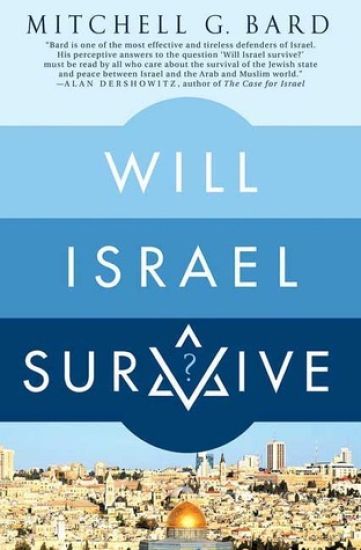
Since it first declared independence six decades ago, Israel has endured constant threats to its existence. Though the Palestinian conflict continues to hold the world's attention, it is in fact only one of the nation's long-term concerns. Aside from terrorists seeking to destroy it, Israel must contend with tensions between secular and religious Jews, the demographic challenges posed by a quickly growing Arab population, internal political divisions, and disputes over the water sources that are critical to its survival. In the face of these many challenges, the country's future can seem precarious indeed.
From 1984 to 1991, Israel conducted a series of dramatic rescues, bringing thousands of Ethiopian Jews to the state of Israel. Codenamed Operation Sheba, this effort involved various covert means, including large-scale airlifts and exchanges for arms, to save these Jews from intolerable conditions in Ethiopia and the Sudan. But as dramatic and uplifting as this effort was, there are still troubling questions about why it took so many years for Israel to act on behalf its African compatriots. This is the complete story behind the Israeli rescue of the Jews of Ethiopia—how tragedy was turned into triumph.These rescue operations represented the culmination of complex political maneuvering in Israel and illustrated what Israeli resolve can accomplish when Jewish lives are endangered. It was an inspiring effort—as William Safire wrote at the time, thousands of black people are being brought to a country not as slaves, but as citizens. On the other hand, there is much to deplore how long it took for the leaders of Israel to recognize and take action to save this ancient African branch of the Jewish Diaspora, known as the Falasha. The reasons are the result of the complex intersection of Israeli geostrategy, pressure from the American Jewish community, and Ethiopian domestic politics, as well as racism and debates about the Jewishness of the Falasha community.
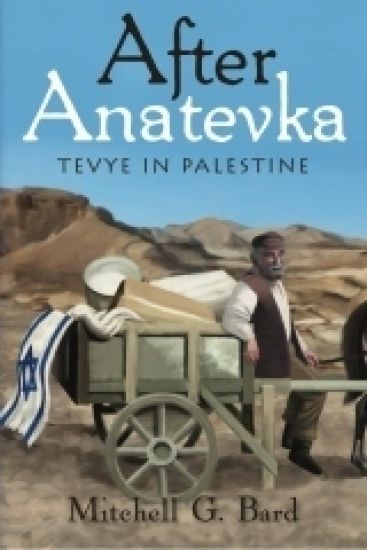
AFTER ANATEVKA follows Sholom Aleichem's timeless character, Tevye the milkman, as he moves his family from Russia to Palestine. Tevye, the wisecracking, Bible-quoting man of God, tells the story of his family's new life against the backdrop of the conflict between Jews and Arabs in the Holy Land prior to the establishment of the State of Israel. In AFTER ANATEVKA, Tevye decides to take his wife and three youngest daughters (the three eldest remain in Russia with their husbands) to live on a kibbutz where he must adjust to a secular lifestyle and struggle with the tension between the kibbutzniks' "religion" of labor and his Jewish beliefs. While Tevye is uncomfortable with the lack of religiosity on the kibbutz, he is gratified to be the one who can teach the laws and traditions of Judaism to the members. As the most learned man on the secular kibbutz, Tevye takes on his long desired role to be the authority on Jewish law who is sought out for answers to difficult questions of law and religion. The clash between tradition and life in Palestine manifests itself, however, in Tevye's relationship with his daughters, who become assimilated in the kibbutz culture. For example, Tevye is thrilled to learn that one daughter wants to marry the son of a wealthy Jew from the city, but is dismayed when he discovers the young man is a socialist who is estranged from his family. A second daughter, Devorah, works in the kibbutz infirmary and falls in love with an injured fighter from the Jewish underground. When the injured fighter is arrested, Devorah goes to take his place. To Tevye's chagrin, she eschews a traditional female role and becomes a soldier who eventually assists with the illegal immigration of Jews to Palestine. Through her efforts to save Jews, Tevye learns the full horror of the Holocaust. For Tevye's wife, Golde, the most important thing in life is keeping her family together. After Golde unexpectedly gives birth to twins, a boy and a girl, Tevye finally has a son. Meanwhile, Golde secretly stays in touch with her daughters Hodel and Tzeitel in Russia and Chava, who married out of the faith and moves to the United States. Tevye has disowned Chava and, despite Golde's pleas, refuses to utter her name. Despite the time and distance apart, Golde dreams that the family will someday be reunited. AFTER ANATEVKA is set against the backdrop of the Zionist conflict with the Arabs. Tevye develops a relationship with a Bedouin sheikh, who explains why the Arab claim to Palestine is as valid as that of the Jews, which convinces Tevye war is inevitable. Before fighting for survival in Palestine, however, the Zionists must first win the political battle at the United Nations where a vote will be held to determine whether Palestine should be divided into a Jewish and an Arab state. Millions of people around the world are familiar with the stories of Sholom Aleichem from the movie and play, Fiddler on the Roof, which was an amalgamation of stories about Tevye and his family. The author wrote other stories involving Tevye, however, which were not in Fiddler. AFTER ANATEVKA is inspired by one of those stories, "Tevye Goes To Palestine."
In the last sixty years, Israel has faced seven different wars. During that time, the country has been under immense scrutiny and been the recipient of false accusations. This leaves the public with many questions: Does Israel want peace with the Arab nations? How do Islamic views affect Israel? Using a number of sources, Mitchell G. Bard uncovers Israel's true history. His book includes the following: - A discussion of various wars involving Israel (including the war of 1948) - Multiple maps that help the reader visualize the wars - An analysis of terrorism directed at Israel - An alphabetical index - A discussion of the media's role in how it portrays Israel - A review of successful and unsuccessful peace efforts - An overview of US-Israel relations Bard also offers a synopsis of Israel's roots, beginning with the great myth: that the Jews have no claim to their own land. Bard focuses on Israel's relationships with neighboring countries, but he also includes suggested readings for those interested in further research. You'll learn about the Jewish Virtual Library, an online source that's constantly updated and offers reliable options for study. Dive into this versatile read as Bard investigates common myths about Israel and reveals the truth.