Kirjojen hintavertailu. Mukana 12 158 844 kirjaa ja 12 kauppaa.

Kirjahaku

Etsi kirjoja tekijän nimen, kirjan nimen tai ISBN:n perusteella.

6 kirjaa tekijältä Mitsuo Gen, Runwei Cheng, Lin Lin

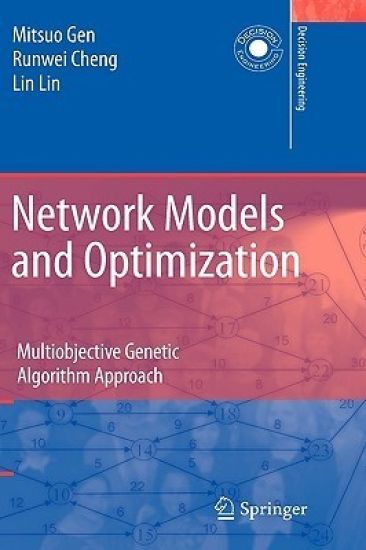
Network Models and Optimization

Network Models and Optimization

Mitsuo Gen; Runwei Cheng; Lin Lin

Springer London Ltd
2008
sidottu
Network models are critical tools in business, management, science and industry. “Network Models and Optimization” presents an insightful, comprehensive, and up-to-date treatment of multiple objective genetic algorithms to network optimization problems in many disciplines, such as engineering, computer science, operations research, transportation, telecommunication, and manufacturing. The book extensively covers algorithms and applications, including shortest path problems, minimum cost flow problems, maximum flow problems, minimum spanning tree problems, traveling salesman and postman problems, location-allocation problems, project scheduling problems, multistage-based scheduling problems, logistics network problems, communication network problem, and network models in assembly line balancing problems, and airline fleet assignment problems. The book can be used both as a student textbook and as a professional reference for practitioners who use network optimization methods to model and solve problems.
Network Models and Optimization

Network Models and Optimization

Mitsuo Gen; Runwei Cheng; Lin Lin

Springer London Ltd
2010
nidottu
Network models are critical tools in business, management, science and industry. “Network Models and Optimization” presents an insightful, comprehensive, and up-to-date treatment of multiple objective genetic algorithms to network optimization problems in many disciplines, such as engineering, computer science, operations research, transportation, telecommunication, and manufacturing. The book extensively covers algorithms and applications, including shortest path problems, minimum cost flow problems, maximum flow problems, minimum spanning tree problems, traveling salesman and postman problems, location-allocation problems, project scheduling problems, multistage-based scheduling problems, logistics network problems, communication network problem, and network models in assembly line balancing problems, and airline fleet assignment problems. The book can be used both as a student textbook and as a professional reference for practitioners who use network optimization methods to model and solve problems.
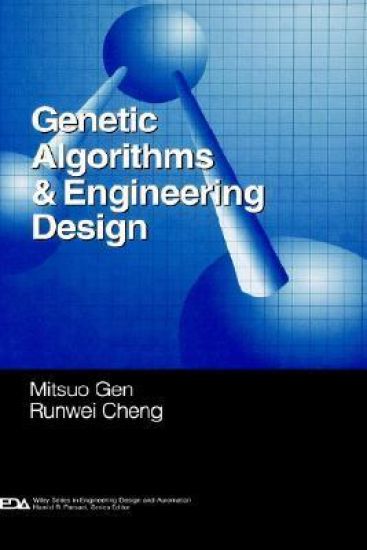
Genetic Algorithms and Engineering Design

Genetic Algorithms and Engineering Design

Mitsuo Gen; Runwei Cheng

John Wiley Sons Inc
1997
sidottu
The last few years have seen important advances in the use of genetic algorithms to address challenging optimization problems in industrial engineering. Genetic Algorithms and Engineering Design is the only book to cover the most recent technologies and their application to manufacturing, presenting a comprehensive and fully up-to-date treatment of genetic algorithms in industrial engineering and operations research. Beginning with a tutorial on genetic algorithm fundamentals and their use in solving constrained and combinatorial optimization problems, the book applies these techniques to problems in specific areas—sequencing, scheduling and production plans, transportation and vehicle routing, facility layout, location-allocation, and more. Each topic features a clearly written problem description, mathematical model, and summary of conventional heuristic algorithms. All algorithms are explained in intuitive, rather than highly-technical, language and are reinforced with illustrative figures and numerical examples. Written by two internationally acknowledged experts in the field, Genetic Algorithms and Engineering Design features original material on the foundation and application of genetic algorithms, and also standardizes the terms and symbols used in other sources—making this complex subject truly accessible to the beginner as well as to the more advanced reader. Ideal for both self-study and classroom use, this self-contained reference provides indispensable state-of-the-art guidance to professionals and students working in industrial engineering, management science, operations research, computer science, and artificial intelligence. The only comprehensive, state-of-the-art treatment available on the use of genetic algorithms in industrial engineering and operations research . . . Written by internationally recognized experts in the field of genetic algorithms and artificial intelligence, Genetic Algorithms and Engineering Design provides total coverage of current technologies and their application to manufacturing systems. Incorporating original material on the foundation and application of genetic algorithms, this unique resource also standardizes the terms and symbols used in other sources—making this complex subject truly accessible to students as well as experienced professionals. Designed for clarity and ease of use, this self-contained reference: *Provides a comprehensive survey of selection strategies, penalty techniques, and genetic operators used for constrained and combinatorial optimization problems *Shows how to use genetic algorithms to make production schedules, solve facility/location problems, make transportation/vehicle routing plans, enhance system reliability, and much more *Contains detailed numerical examples, plus more than 160 auxiliary figures to make solution procedures transparent and understandable
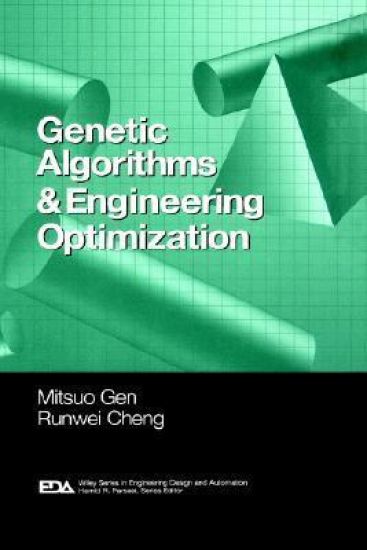
Genetic Algorithms and Engineering Optimization

Genetic Algorithms and Engineering Optimization

Mitsuo Gen; Runwei Cheng

John Wiley Sons Inc
2000
sidottu
A comprehensive guide to a powerful new analytical tool by two of its foremost innovators The past decade has witnessed many exciting advances in the use of genetic algorithms (GAs) to solve optimization problems in everything from product design to scheduling and client/server networking. Aided by GAs, analysts and designers now routinely evolve solutions to complex combinatorial and multiobjective optimization problems with an ease and rapidity unthinkable withconventional methods. Despite the continued growth and refinement of this powerful analytical tool, there continues to be a lack of up-to-date guides to contemporary GA optimization principles and practices. Written by two of the world's leading experts in the field, this book fills that gap in the literature. Taking an intuitive approach, Mitsuo Gen and Runwei Cheng employ numerous illustrations and real-world examples to help readers gain a thorough understanding of basic GA concepts-including encoding, adaptation, and genetic optimizations-and to show how GAs can be used to solve an array of constrained, combinatorial, multiobjective, and fuzzy optimization problems. Focusing on problems commonly encountered in industry-especially in manufacturing-Professors Gen and Cheng provide in-depth coverage of advanced GA techniques for: * Reliability design * Manufacturing cell design * Scheduling * Advanced transportation problems * Network design and routing Genetic Algorithms and Engineering Optimization is an indispensable working resource for industrial engineers and designers, as well as systems analysts, operations researchers, and management scientists working in manufacturing and related industries. It also makes an excellent primary or supplementary text for advanced courses in industrial engineering, management science, operations research, computer science, and artificial intelligence.
Introduction to Evolutionary Algorithms

Introduction to Evolutionary Algorithms

Xinjie Yu; Mitsuo Gen

Springer London Ltd
2012
nidottu
Evolutionary algorithms are becoming increasingly attractive across various disciplines, such as operations research, computer science, industrial engineering, electrical engineering, social science and economics. Introduction to Evolutionary Algorithms presents an insightful, comprehensive, and up-to-date treatment of evolutionary algorithms. It covers such hot topics as: • genetic algorithms, • differential evolution, • swarm intelligence, and • artificial immune systems. The reader is introduced to a range of applications, as Introduction to Evolutionary Algorithms demonstrates how to model real world problems, how to encode and decode individuals, and how to design effective search operators according to the chromosome structures with examples of constraint optimization, multiobjective optimization, combinatorial optimization, and supervised/unsupervised learning. This emphasis on practical applications will benefit all students, whether they choose to continue their academic career or to enter a particular industry. Introduction to Evolutionary Algorithms is intended as a textbook or self-study material for both advanced undergraduates and graduate students. Additional features such as recommended further reading and ideas for research projects combine to form an accessible and interesting pedagogical approach to this widely used discipline.
Introduction to Evolutionary Algorithms

Introduction to Evolutionary Algorithms

Xinjie Yu; Mitsuo Gen

Springer London Ltd
2010
sidottu
Evolutionary algorithms are becoming increasingly attractive across various disciplines, such as operations research, computer science, industrial engineering, electrical engineering, social science and economics. Introduction to Evolutionary Algorithms presents an insightful, comprehensive, and up-to-date treatment of evolutionary algorithms. It covers such hot topics as: • genetic algorithms, • differential evolution, • swarm intelligence, and • artificial immune systems. The reader is introduced to a range of applications, as Introduction to Evolutionary Algorithms demonstrates how to model real world problems, how to encode and decode individuals, and how to design effective search operators according to the chromosome structures with examples of constraint optimization, multiobjective optimization, combinatorial optimization, and supervised/unsupervised learning. This emphasis on practical applications will benefit all students, whether they choose to continue their academic career or to enter a particular industry. Introduction to Evolutionary Algorithms is intended as a textbook or self-study material for both advanced undergraduates and graduate students. Additional features such as recommended further reading and ideas for research projects combine to form an accessible and interesting pedagogical approach to this widely used discipline.