Kirjojen hintavertailu. Mukana 11 244 527 kirjaa ja 12 kauppaa.

Kirjahaku

Etsi kirjoja tekijän nimen, kirjan nimen tai ISBN:n perusteella.

18 kirjaa tekijältä Modern Language Association

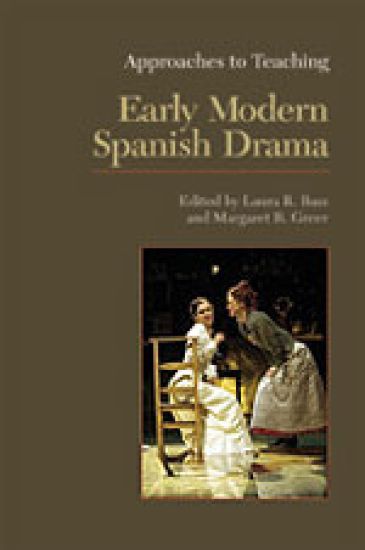
Approaches to Teaching Early Modern Spanish Drama

Approaches to Teaching Early Modern Spanish Drama

Modern Language Association

Modern Language Association of America
2006
sidottu
At the start of the twenty-first century, performances of early modern Spanish drama experienced resurgent popularity—not only in Spain but also on stages across Europe, Latin America, and the United States. In the academy the comedia, which includes comic, tragicomic, and tragic works, is widely taught in a range of contexts to a variety of students, in Spanish and in translation. Given the steady increase of Spanish as the language of choice in foreign language departments, these courses will continue to flourish. This volume offers guidance to teachers in helping students engage with and understand these late-sixteenth- and early-seventeenth-century works.Part 1, “Materials,” evaluates editions and anthologies in English and Spanish; identifies important critical works and historical studies; and surveys illustrated books, films, and Internet resources. In part 2, “Approaches,” experienced teachers discuss the way the plays challenged the interests of the monarchial state; examine the obsession with honor shared by Spanish men and women alike; explain the key role costume played in providing both pleasure and meaning; and explore how late-twentieth-century films reflect elements of these early Spanish plays. Other approaches center on five women playwrights; delve into the complex theological and philosophical underpinnings of the plays; pair the plays with Shakespearean drama; show how Spanish plays influenced French dramatists; and trace the appeal of the Don Juan figure.
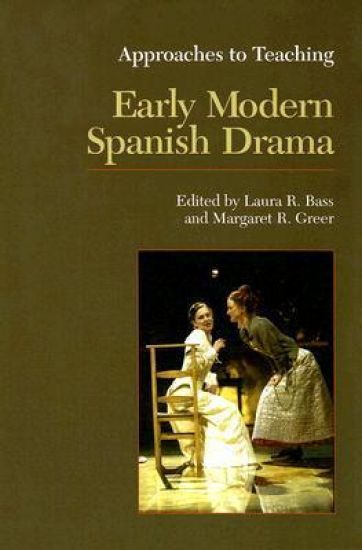
Approaches to Teaching Early Modern Spanish Drama

Approaches to Teaching Early Modern Spanish Drama

Modern Language Association

Modern Language Association of America
2006
nidottu
At the start of the twenty-first century, performances of early modern Spanish drama experienced resurgent popularity—not only in Spain but also on stages across Europe, Latin America, and the United States. In the academy the comedia, which includes comic, tragicomic, and tragic works, is widely taught in a range of contexts to a variety of students, in Spanish and in translation. Given the steady increase of Spanish as the language of choice in foreign language departments, these courses will continue to flourish. This volume offers guidance to teachers in helping students engage with and understand these late-sixteenth- and early-seventeenth-century works.Part 1, “Materials,” evaluates editions and anthologies in English and Spanish; identifies important critical works and historical studies; and surveys illustrated books, films, and Internet resources. In part 2, “Approaches,” experienced teachers discuss the way the plays challenged the interests of the monarchial state; examine the obsession with honor shared by Spanish men and women alike; explain the key role costume played in providing both pleasure and meaning; and explore how late-twentieth-century films reflect elements of these early Spanish plays. Other approaches center on five women playwrights; delve into the complex theological and philosophical underpinnings of the plays; pair the plays with Shakespearean drama; show how Spanish plays influenced French dramatists; and trace the appeal of the Don Juan figure.
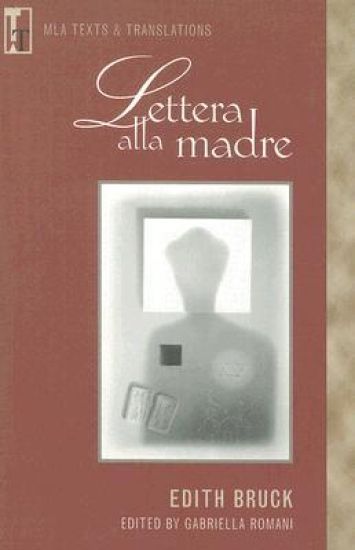
Lettera Alla Madre

Lettera Alla Madre

Modern Language Association

Modern Language Association of America
2006
nidottu
Through literary works and public appearances, Edith Bruck, born 1932 in Hungary, has devoted her life to bearing witness to what she experienced in the Nazi concentration camps. In 1954 she settled in Rome and is today the most prolific writer of Holocaust narrative in Italian. The book is composed in two parts. "Lettera alla madre"—an imaginary dialogue between Bruck and her mother, who died in Auschwitz—probes the question of self-identity, the pain of loss and displacement, the power of language to help recover the past, and the ultimate impossibility of that recovery. "Tracce," a story of a journey without return, completes the diptych. Bruck's experimental fusion of memoir and fiction portrays the Holocaust from a female perspective and highlights the role of gender in the creation of memory.
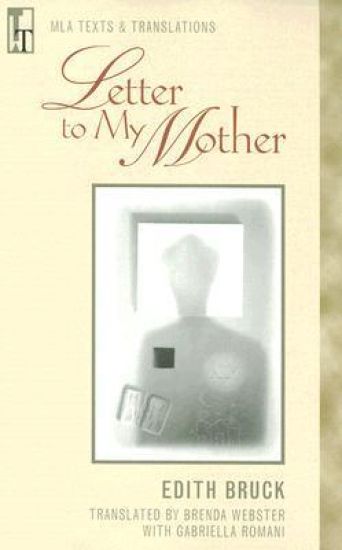
Letter to My Mother

Letter to My Mother

Modern Language Association

Modern Language Association of America
2006
nidottu
Through literary works and public appearances, Edith Bruck, born 1932 in Hungary, has devoted her life to bearing witness to what she experienced in the Nazi concentration camps. In 1954 she settled in Rome and is today the most prolific writer of Holocaust narrative in Italian. The book is composed in two parts. "Letter to My Mother"—an imaginary dialogue between Bruck and her mother, who died in Auschwitz—probes the question of self-identity, the pain of loss and displacement, the power of language to help recover the past, and the ultimate impossibility of that recovery. "Traces," a story of a journey without return, completes the diptych. Bruck's experimental fusion of memoir and fiction portrays the Holocaust from a female perspective and highlights the role of gender in the creation of memory.
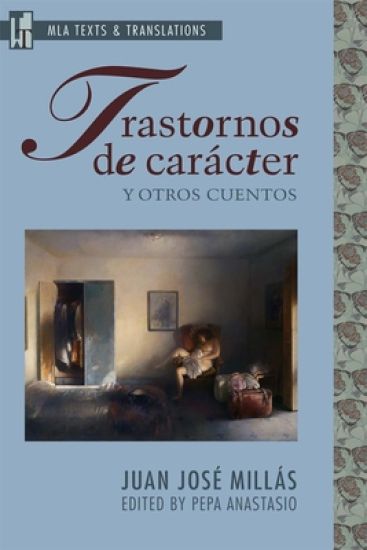
Trastornos de Caracter

Trastornos de Caracter

Modern Language Association

Modern Language Association of America
2007
nidottu
The stories of Juan José Millás, who began writing in the 1970s, depart from both the socially engaged, traditional realism and the linguistic experimentation of post-Francoist Spain. They are populated by strange characters: a man who discovers a passage that connects all the armoires on earth, a woman who finds her obsessions to be better company than her cats, a vacationer who prefers his pancreas to the Bahamas as a destination. Influenced by both Gabriel García Marquéz and Franz Kafka and resonant with Freudian concepts, Millás's fiction—ironic, humorous, dreamlike—raises questions about identity, society, and what is normal.In her introduction, Pepa Anastasio places Millás in the context of modern Spain and provides commentary on the style and themes of a contemporary writer little of whose work has yet appeared in English translation.
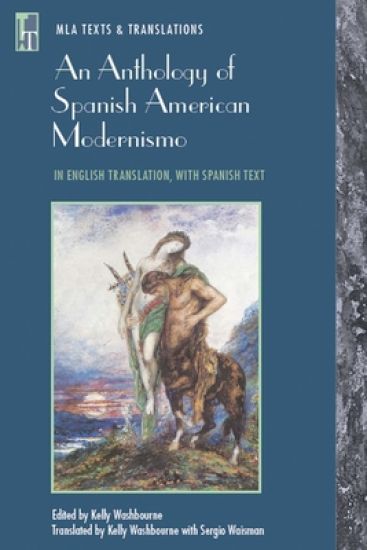
An Anthology of Spanish American Modernismo

An Anthology of Spanish American Modernismo

Modern Language Association

Modern Language Association of America
2007
nidottu
The poetic movement that was Spanish American modernismo ran from the early 1880s to 1916: it expressed the desire both to join universal literature—aesthetic modernity—and to break colonial ties with Spanish belles lettres. The new translations in this bilingual anthology, many of them first translations, present eighteen modernista poets from Argentina, Bolivia, Colombia, Cuba, Mexico, Nicaragua, Peru, and Uruguay. This volume in the MLA series Texts and Translations is designed to provide the student of Spanish American literature with work not easily accessible in Spanish and English and to introduce modernismo, an often misunderstood movement, to a wider audience.
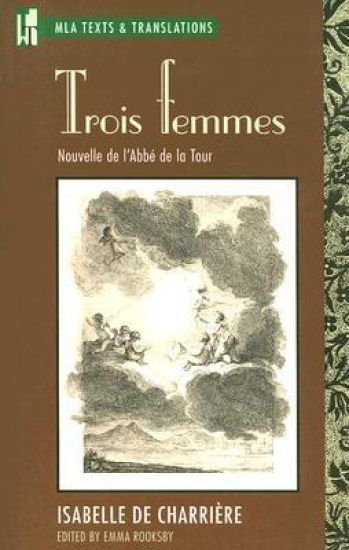
Trois Femmes

Trois Femmes

Modern Language Association

Modern Language Association of America
2007
nidottu
In the aftermath of the French Revolution, three women who have fled France—the straitlaced aristocrat Emilie, her lighthearted maid Joséphine, and the worldly Constance—try to make new lives for themselves in Altendorf, Germany. Their experiences, difficulties, and choices address the philosophical question, Are moral theories adequate guides to good conduct?In her introduction to this late-eighteenth-century novel by Charrière, Emma Rooksby discusses the sentimental tradition, Enlightenment ideas, epistolary fiction, Charrière's career, and the difficult situation of women and women writers in postrevolutionary France.
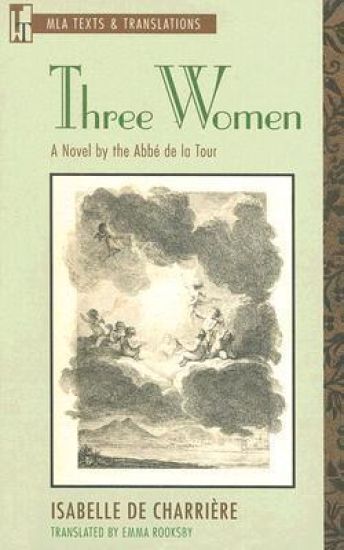
Three Women

Three Women

Modern Language Association

Modern Language Association of America
2007
nidottu
In the aftermath of the French Revolution, three women who have fled France—the straitlaced aristocrat Emilie, her lighthearted maid Joséphine, and the worldly Constance—try to make new lives for themselves in Altendorf, Germany. Their experiences, difficulties, and choices address the philosophical question, Are moral theories adequate guides to good conduct?In her introduction to this late-eighteenth-century novel by Charrière, Emma Rooksby discusses the sentimental tradition, Enlightenment ideas, epistolary fiction, Charrière's career, and the difficult situation of women and women writers in postrevolutionary France.
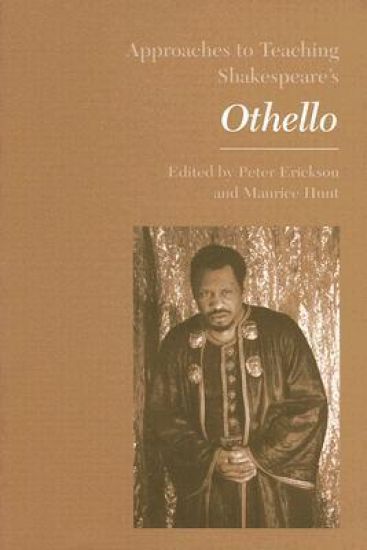
Approaches to Teaching Shakespeare's Othello

Approaches to Teaching Shakespeare's Othello

Modern Language Association

Modern Language Association of America
2005
nidottu
Investigating the paramount issues of race, gender, and sexuality in Othello; teaching the drama as an adventure play, as a tragedy and a comedy, as an antirevenge play; assessing the complex motivations of Iago; exploring the range of actors' interpretations of Othello's character over the centuries--these are only a few of the pedagogical strategies discussed in this volume. Part 1, "Materials," is designed to help instructors manage the wealth of resources available for teaching Othello. The editors carefully assess editions of Othello and of Shakespeare's collected works; review the textual history of the play; survey studies that address gender and race as historical concepts; and examine visual representations of Othello, particularly film adaptations. The essays in the second part, "Approaches," are divided into six topical sections. The first group considers race in Othello, in the Renaissance, and in the contemporary classroom. The second section addresses male desire, the fluidity of gender roles, and competing male and female fantasies. The generic forces that shape Othello are examined in the third section. The final sections explore classroom strategies, survey performances of the play, and formulate innovative ways to teach the sources and analogs of Othello.
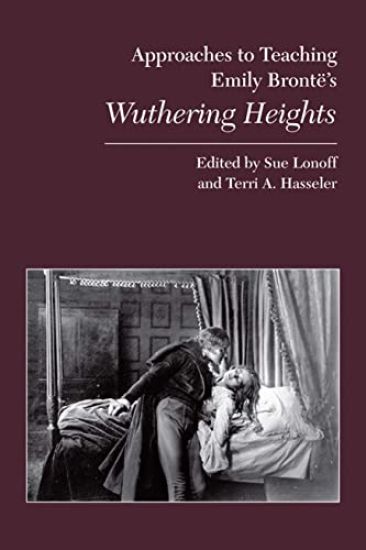
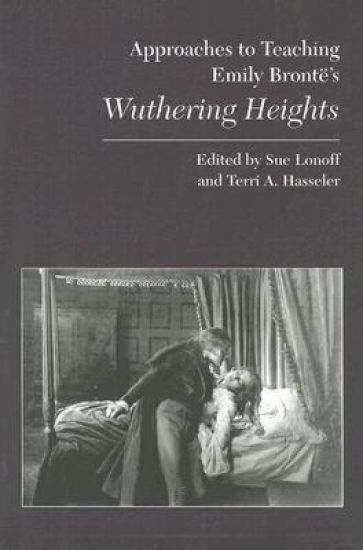
Approaches to Teaching Emily Bronte's Wuthering Heights

Approaches to Teaching Emily Bronte's Wuthering Heights

Modern Language Association

Modern Language Association of America
2006
sidottu
Among the classroom strategies described in part 2, "Approaches," are the following: - Uncovering the hidden elements of race, gender, and class through close analysis of the narrative- Teaching the novel from the vantage point of gothic conventions, biographies of Bronte family members, and the debates about the place of the novel in the canon- Familiarizing students with historical and legal documents to reveal social and economic issues of the period like child custody and women's property rights- Comparing film and TV adaptations with one another and with the novel itself
Approaches to Teaching Emily Bronte's Wuthering Heights

Approaches to Teaching Emily Bronte's Wuthering Heights

Modern Language Association

Modern Language Association of America
2006
nidottu
Among the classroom strategies described in part 2, Approaches, are the following: - Uncovering the hidden elements of race, gender, and class through close analysis of the narrative- Teaching the novel from the vantage point of gothic conventions, biographies of Bronte family members, and the debates about the place of the novel in the canon- Familiarizing students with historical and legal documents to reveal social and economic issues of the period like child custody and women's property rights- Comparing film and TV adaptations with one another and with the novel itself
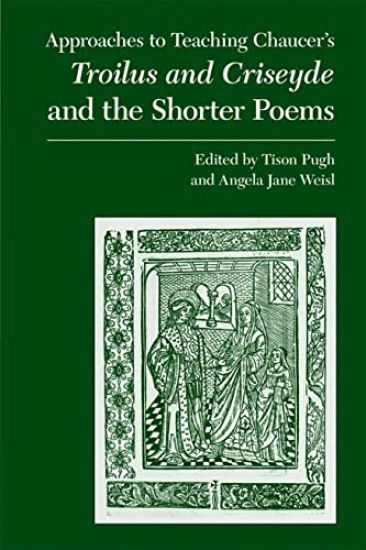
Approaches to Teaching Chaucer's Troilus and Criseyde and the Shorter Poems

Approaches to Teaching Chaucer's Troilus and Criseyde and the Shorter Poems

Modern Language Association

Modern Language Association of America
2006
sidottu
This Approaches to Teaching volume aims to provide students with a vision of Chaucer that highlights the great variety, breadth, and depth of his entire body of work. Although Chaucerians recognize that Troilus and Criseyde and the shorter poems are as entertaining and complex as the more familiar Canterbury Tales, teachers of medieval English do not readily include these texts in their courses. The materials collected here offer instructors ideas and strategies for making Chaucer’s lesser-taught works as memorable and engrossing for students as any of the narrative gems in Canterbury Tales.Part 1, “Materials,” discusses available teaching resources, focusing not only on the many editions of Chaucer’s works in Middle English but also on translations for teachers whose students turn to modern English as a study aid.The essays in part 2, “Approaches,” begin by exploring the poetry’s backgrounds, including sources and genre; the growth of the English vernacular as a literary language; Chaucer’s conception of history in its Christian, classical, and English political senses; the role of manuscript study in illuminating the historical record; and Chaucer’s representation of gender. The section on teaching the poems features essays that offer suggestions for overcoming students’ difficulties with Middle English, consider the relation between Chaucer and his readers, assess various theoretical models, and show how a wide range of visual imagery can be used in the classroom. A final section on course contexts includes essays on teaching these poems for the first time, as well as designing classes for nonmajors and graduate students. The volume concludes with an appendix on reading Chaucer aloud with students.
Approaches to Teaching Chaucer's Troilus and Criseyde and the Shorter Poems

Approaches to Teaching Chaucer's Troilus and Criseyde and the Shorter Poems

Modern Language Association

Modern Language Association of America
2006
nidottu
This Approaches to Teaching volume aims to provide students with a vision of Chaucer that highlights the great variety, breadth, and depth of his entire body of work. Although Chaucerians recognize that Troilus and Criseyde and the shorter poems are as entertaining and complex as the more familiar Canterbury Tales, teachers of medieval English do not readily include these texts in their courses. The materials collected here offer instructors ideas and strategies for making Chaucer’s lesser-taught works as memorable and engrossing for students as any of the narrative gems in Canterbury Tales.Part 1, “Materials,” discusses available teaching resources, focusing not only on the many editions of Chaucer’s works in Middle English but also on translations for teachers whose students turn to modern English as a study aid.The essays in part 2, “Approaches,” begin by exploring the poetry’s backgrounds, including sources and genre; the growth of the English vernacular as a literary language; Chaucer’s conception of history in its Christian, classical, and English political senses; the role of manuscript study in illuminating the historical record; and Chaucer’s representation of gender. The section on teaching the poems features essays that offer suggestions for overcoming students’ difficulties with Middle English, consider the relation between Chaucer and his readers, assess various theoretical models, and show how a wide range of visual imagery can be used in the classroom. A final section on course contexts includes essays on teaching these poems for the first time, as well as designing classes for nonmajors and graduate students. The volume concludes with an appendix on reading Chaucer aloud with students.
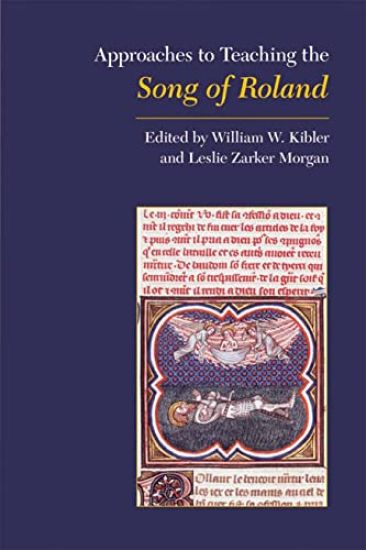
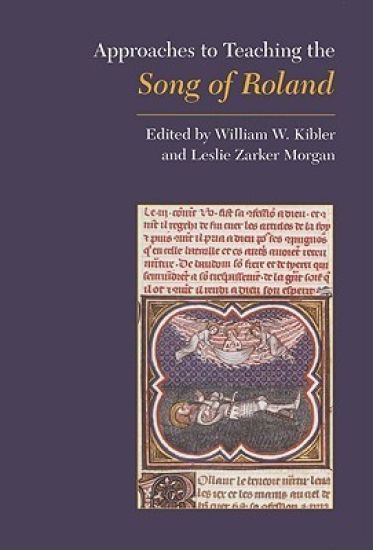
Approaches to Teaching the Song of Roland

Approaches to Teaching the Song of Roland

Modern Language Association

Modern Language Association of America
2006
sidottu
Each book contains a CD featuring performances of the Song of Roland.The Song of Roland is a well-known hallmark of medieval French literature, yet students often read only excerpts and receive general introductions to the poem and its context. The challenges of teaching Roland include its age and subject matter, its form and composition in Old French, and its representation of Christians and Muslims. This volume in the MLA series Approaches to Teaching World Literature aims to help nonspecialist instructors teach Roland more comprehensively and to offer seasoned medievalists ways to invigorate their pedagogical tactics. Part 1, “Materials,” surveys available editions, a wide range of secondary studies devoted to the poem, and electronic aids to teaching. Essays in part 2, “Approaches,” elaborate on the poem’s contexts, avatars, language techniques, and characters and episodes; describe the diverse classroom strategies that experienced instructors have implemented; and review the voluminous critical canon about the poem.The musical quality of the Song of Roland is vital for students to grasp. A compact disc accompanying the volume showcases reconstructions of sung performances of the Song of Roland in Old French. The examples offered here illuminate the rich quality of Roland’s archaic language and demonstrate a few efforts to recover its lost music. Paired with performances of Roland are melodies used as models for singing the poem.
Approaches to Teaching the Song of Roland

Approaches to Teaching the Song of Roland

Modern Language Association

Modern Language Association of America
2006
nidottu
Each book contains a CD featuring performances of the Song of Roland.The Song of Roland is a well-known hallmark of medieval French literature, yet students often read only excerpts and receive general introductions to the poem and its context. The challenges of teaching Roland include its age and subject matter, its form and composition in Old French, and its representation of Christians and Muslims. This volume in the MLA series Approaches to Teaching World Literature aims to help nonspecialist instructors teach Roland more comprehensively and to offer seasoned medievalists ways to invigorate their pedagogical tactics. Part 1, “Materials,” surveys available editions, a wide range of secondary studies devoted to the poem, and electronic aids to teaching. Essays in part 2, “Approaches,” elaborate on the poem’s contexts, avatars, language techniques, and characters and episodes; describe the diverse classroom strategies that experienced instructors have implemented; and review the voluminous critical canon about the poem.The musical quality of the Song of Roland is vital for students to grasp. A compact disc accompanying the volume showcases reconstructions of sung performances of the Song of Roland in Old French. The examples offered here illuminate the rich quality of Roland’s archaic language and demonstrate a few efforts to recover its lost music. Paired with performances of Roland are melodies used as models for singing the poem.
MLA Handbook

MLA Handbook

Modern Language Association

Modern Language Association of America
2016
nidottu
The Modern Language Association, the authority on research and writing, takes a fresh look at documenting sources in the eighth edition of the MLA Handbook. Works are published today in a dizzying range of formats. A book, for example, may be read in print, online, or as an e-book—or perhaps listened to in an audio version. On the Web, modes of publication are regularly invented, combined, and modified. Previous editions of the MLA Handbook provided separate instructions for each format, and additional instructions were required for new formats. In this groundbreaking new edition of its best-selling handbook, the MLA recommends instead one universal set of guidelines, which writers can apply to any type of source.Shorter and redesigned for easy use, the eighth edition of the MLA Handbook guides writers through the principles behind evaluating sources for their research. It then shows them how to cite sources in their writing and create useful entries for the works-cited list.